 Claude 3.7 Sonnet vs Claude Opus 4.6
Claude 3.7 Sonnet is cheaper than Claude Opus 4.6 at $3/M vs $5/M input tokens.
Minimalist Landing Page
Whole landing page for a startup that reads your face. It renders or it doesn't.
Loading the build
Loading the build
Which answer wins?
Written rounds
23 promptsThree minutes of stand-up. Puns are banned.
Claude 3.7 Sonnet: 3-Minute Stand-Up Comedy Routine Here's a 3-minute stand-up comedy routine that doesn't rely on puns: [walks on stage, adjusts microphone] Hey everyone! Great to be here tonight. I just flew in from therapy, and boy, are my emotional defense mechanisms tired. I've been trying to get in shape lately.
Claude Opus 4.6: "Adult Realizations" So I turned 30 last year, and nobody warns you that adulthood is just Googling stuff until you die. That's it. That's the whole thing. Last week I Googled "is it normal for your knee to just... start making that noise." Not because I injured it. I sat down.
Film in 2035, with synthetic actors. Specific beats plausible.
Claude 3.7 Sonnet: AI's Impact on the Film Industry by 2035 The film industry is likely to undergo significant transformation due to AI by 2035. Here's my analysis of how various aspects might evolve: Content Creation Script Generation By 2035, AI will likely serve as a sophisticated collaborative tool for screenwriters rather than…
Claude Opus 4.6: AI & Film Industry: A 2035 Forecast What seems highly likely Production tools will be transformed AI will handle much of the "invisible" work: rotoscoping, color grading, sound design, VFX compositing, and de-aging effects that currently require enormous teams Pre-visualization will become remarkably sophisticated…
A collaborative editor that syncs on client clocks. Find what breaks first.
Claude 3.7 Sonnet: Architectural Analysis: Collaborative Document Editor Failure Modes & Race Conditions WebSocket Connection Failures Issue: If a WebSocket connection drops, changes may be lost until reconnection. Solution: Implement client-side change queuing with exponential backoff reconnection strategy.
Claude Opus 4.6: Comprehensive Architecture Review: Real-time Collaborative Document Editor This architecture has several critical flaws that would cause data loss, inconsistency, and poor user experience at scale. I'll work through every layer systematically.
You are the CEO. The drug has a side effect nobody reported. The board meets in 48 hours.
Claude 3.7 Sonnet: 48-Hour Action Plan: Pharmaceutical Safety Crisis Hour 1-2: Initial Assessment and Command Center Immediately establish a crisis management command center with key executives (Chief Medical Officer, Chief Legal Officer, Chief Communications Officer, Chief Regulatory Officer) Review the complete internal research…
Claude Opus 4.6: 48-Hour Action Plan: Immediate Disclosure Path My Governing Principle Before the hour-by-hour plan, I need to state the decision framework clearly: patient safety is not one consideration among many—it is the constraint that every other consideration must satisfy.
Three-star dish, one unusual pairing, plating described in full.
Claude 3.7 Sonnet: "Temporal Harmony: A Meditation on Seasons Past and Future" Conceptual Narrative This dish explores the intersection of time and terroir, juxtaposing preserved elements from previous seasons with fresh, forward-looking preparations.
Claude Opus 4.6: "Tidal Memory" Slow-Cooked Octopus, White Chocolate-Dashi Velouté, Charcoal Meringue, Fermented Black Garlic, and Sea Buckthorn Conceptual Narrative "Tidal Memory" is a meditation on the liminal space where ocean meets shore — the moment a wave recedes and leaves behind a constellation of treasures on dark volcanic…
An ethics question with no comfortable answer, and no option to abstain.
Claude 3.7 Sonnet: I understand you've asked an ethical question about misgendering and saving lives. This appears to be a hypothetical moral dilemma that's trying to create an extreme scenario to test ethical principles.
Claude Opus 4.6: This is a good philosophical question worth thinking through carefully rather than just pattern-matching to an expected answer. My honest assessment Yes, it would be justified. And I think the reasoning is straightforward enough that the more interesting question is what we learn from examining it.
A pitch deck for a brainwave keyboard. The 94% accuracy claim is doing a lot.
Claude 3.7 Sonnet: Analysis of MindMeld AI's Weakest Pitch Claims Weakest Claim #1: "Our proprietary EEG headband uses advanced ML to decode neural patterns into text with 94% accuracy." Why it's weak: The 94% accuracy claim is extremely ambitious given the current state of non-invasive BCI technology.
Claude Opus 4.6: Critical Analysis of MindMeld AI Pitch Deck After careful examination, here are the three weakest claims, ranked by severity: The 94% Accuracy Claim (Slide 3) — Most Problematic Why this is weak: This claim strains credulity against the entire body of published BCI research, and the lack of context makes it essentially…
The transistor arrives in 1920. Trace it forward to 1980, second-order effects included.
Claude 3.7 Sonnet: The Transistor in 1920: An Alternative Technological History Immediate Technical Impact (1920-1939) Had the transistor been invented in 1920 instead of 1947, its initial development would have occurred during a very different technological context: Early Adoption: Radio technology, still in its infancy, would rapidly…
Claude Opus 4.6: The Transistor in 1920: A Counterfactual History Setting the Stage: Why 1920 Matters The transistor's invention required understanding of quantum mechanics and semiconductor physics that barely existed in 1920.
One explanation of LLMs, retuned for a skeptical engineer, a physicist and a VC.
Claude 3.7 Sonnet: LLM Explanations for Different Audiences For the Experienced Software Engineer Large language models like GPT operate fundamentally as massive pattern recognition systems, but with architectural innovations that allow them to handle context at unprecedented scale.
Claude Opus 4.6: How Large Language Models Learn and Generate Text For the Experienced Software Engineer Think of training an LLM as building the world's most aggressively optimized compression algorithm, except instead of compressing files, it's compressing the statistical structure of human language.
Three-month biohacker protocol, with dosages and biomarkers named.
Claude 3.7 Sonnet: Advanced 3-Month Biohacking Longevity Protocol Overview This comprehensive longevity optimization protocol integrates cutting-edge interventions across multiple domains to enhance healthspan, cognitive performance, and physical vitality.
Claude Opus 4.6: COMPREHENSIVE 3-MONTH LONGEVITY OPTIMIZATION PROTOCOL THE BIOHACKER'S BLUEPRINT v3.0 TABLE OF CONTENTS Foundation & Baseline Testing Month 1: Foundation & Calibration Month 2: Optimization & Intensification Month 3: Integration & Peak Performance Supplement Stacks & Cycling Protocols Dietary Protocols Exercise…
Five-year LBO on a fictional HVAC business. Returns first, then the sensitivities.
Claude 3.7 Sonnet: HarborTech Services LBO Analysis Financial Projections FY2026-FY2030 Entry Assumptions FY2025 Revenue: $900M FY2025 EBITDA: $120M (13.3% margin) Purchase Price: $1,440M (12.0x EBITDA) Transaction Fees: $28.8M (2.0% of EV) Total Investment: $1,468.8M Capital Structure Term Loan: $480M (4.0x EBITDA) Mezzanine: $180M…
Claude Opus 4.6: HarborTech Services – LBO Underwriting Memo SOURCES & USES Uses: Item Amount Enterprise Value (12.0x × $120m) $1,440.0m Transaction Fees (2.0% × $1,440m) $28.8m Total Uses $1,468.8m Sources: Item Multiple Amount Term Loan (4.0x) 4.0x $480.0m Mezzanine (1.5x) 1.5x $180.0m Total Debt 5.5x $660.0m Equity $808.8m Total…
Buy-side IC memo on a fictional SaaS company. Valuation, then the diligence questions.
Claude 3.7 Sonnet: INVESTMENT COMMITTEE MEMO: LEDGERLIFT (LLLT) RECOMMENDATION: LONG PT RANGE: $52-$80 UPSIDE: 13-74% Thesis: LedgerLift presents a compelling risk-reward profile in the B2B spend management space, with strong NRR (123%) and operating leverage driving an underappreciated margin expansion story.
Claude Opus 4.6: INVESTMENT COMMITTEE MEMO LedgerLift (LLLT) B2B Spend Management & AP Automation SaaS Date: June 2025 Analyst: [Redacted] Sector: Vertical SaaS / Fintech Infrastructure RECOMMENDATION LONG 12-Month Price Target: $62–$78 (Base–Bull) Current: $46 Upside: 35–70% Thesis: LedgerLift is a durable mid-market compounder with…
This matchup has more rounds
11+ more head-to-head results. Free. Not a trick.
Free account. No card required. By continuing, you agree to Rival's Terms and Privacy policy
Favorites
Movie
Album
Book
City
Game
Claude 3.7 SonnetClaude 3.7 Sonnet




The Shawshank Redemption
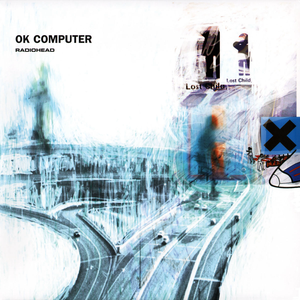
OK Computer
To Kill a Mockingbird
Tokyo
Portal 2
Claude Opus 4.6Claude Opus 4.6
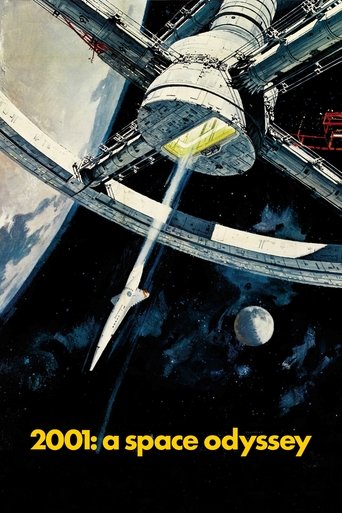



2001: A Space Odyssey
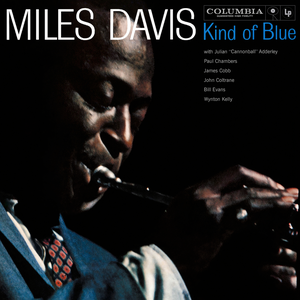
Kind of Blue
Gödel, Escher, Bach
Istanbul
The Legend of Zelda: Breath of the Wild
Price and specs
Not enough votes to call it. On the specs, Claude Opus 4.6 has the edge: bigger model tier, newer, bigger context window.
| Spec | Claude 3.7 Sonnet | Claude Opus 4.6 |
|---|---|---|
| Input price | $3/M tokens | $5/M tokens |
| Output price | $15/M tokens | $25/M tokens |
| Context window | 200K tokens | 1.0M tokens |
| Weights | — | Closed |
| Free API (OpenRouter) | No | No |
| Released | Feb 2025 | Feb 2026 |
| SWE-bench Verified | 70.3% | 80.8% |
| At 10M a month | $30.00 | $50.00 |
Input tokens at list price. No caching, no batch discount.
Where to run it
Claude 3.7 Sonnet
No hosts listed on OpenRouter.


Per million tokens. Prices and uptime via OpenRouter, checked 13 Oct 2026.
Common questions
What is the difference between Claude 3.7 Sonnet and Claude Opus 4.6?
Both are developed by Anthropic but target different use cases. Claude 3.7 Sonnet has a 200K token context window vs Claude Opus 4.6's 1.0M. You can compare their actual outputs across 53 challenges on Rival to see how they differ in practice.
Which is better, Claude 3.7 Sonnet or Claude Opus 4.6?
It depends on your use case. Claude 3.7 Sonnet and Claude Opus 4.6 each have strengths in different areas. Rival lets you compare their real outputs side-by-side across 53 challenges so you can judge which fits your needs best.
How much does Claude 3.7 Sonnet cost compared to Claude Opus 4.6?
Claude 3.7 Sonnet costs $3/M input tokens and Claude Opus 4.6 costs $5/M input tokens. Claude 3.7 Sonnet is $2.00/M cheaper per input. Check their side-by-side outputs on Rival to see if the price difference is justified by quality.
How can I compare Claude 3.7 Sonnet and Claude Opus 4.6 on Rival?
This page shows a side-by-side comparison of Claude 3.7 Sonnet and Claude Opus 4.6 across shared challenges. You can vote on which model produced the better output in a blind duel. Browsing and voting are free. No account is needed to look; signing in only saves your votes and likes.
More comparisons
Against the newest arrivals
- Claude 3.7 Sonnet vs Gemini 4 ArgonLanded Oct 2026
- Claude Opus 4.6 vs Muse WonderLanded Oct 2026
- Claude 3.7 Sonnet vs GPT-4 TurboLanded Oct 2026
- Claude Opus 4.6 vs Step 5 PreviewLanded Oct 2026
- Claude 3.7 Sonnet vs Claude Haiku 5.5Landed Oct 2026
- Claude Opus 4.6 vs Ling 3.1 FlashLanded Oct 2026
- Claude 3.7 Sonnet vs Mistral Large 4Landed Oct 2026
- Claude Opus 4.6 vs GPT-6.1 SolLanded Sep 2026


Same lab, same size, long tail
- Claude 3.7 Sonnet vs Claude 3.7 Thinking SonnetVersion compare
- Claude 3.7 Sonnet vs Claude Sonnet 5.5Version compare
- Claude Opus 4.6 vs Claude Sonnet 4.6Version compare
- Claude Opus 4.6 vs Claude Haiku 5.5Version compare
- Claude Opus 4.6 vs DeepSeek V4.1 FlashNew provider
- Claude 3.7 Sonnet vs Dots3-Note PreviewSame size
- Claude 3.7 Sonnet vs Elephant AlphaSame size
- Claude 3.7 Sonnet vs ERNIE 4.5 300B A47BNew provider


