Claude Opus 4.1 vs
 Qwen Plus 0728 (thinking)
 is cheaper than Claude Opus 4.1 at $0.4/M vs $15/M input tokens.
Minimalist Landing Page
Whole landing page for a startup that reads your face. It renders or it doesn't.
Loading the build
Loading the build
Which answer wins?
Written rounds
18 promptsPirate, knight, 90s hacker, one conversation. The voices must stay apart.
Claude Opus 4.1: Pirate: Arrr, what be this sorcery ye speak of? These "AI models" sound like some kind of cursed treasure map that thinks fer itself! Knight: Hold thy tongue, sea dog! 'Tis clearly dark magic most foul. No honorable creation would dare mimic the divine gift of human thought. I should smite it with my blade!
Qwen Plus 0728 (thinking): The Tavern of Temporal Anomalies (A creaky tavern. SIR GALAHAD (polished armor, earnest face) sips mead. CAPTAIN BLACKBEARD (eye patch, parrot on shoulder) sharpens a cutlass. DEX "BYTE" MORALES (hoodie, neon-green sunglasses, tapping furiously on a glowing laptop) slurps a pixelated energy drink.)
Seven pantry ingredients, one dish, and a name worth saying out loud.
Claude Opus 4.1: Midnight Velvet Pasta A silky, umami-rich pasta that comes together like magic Ingredients (serves 4): Spaghetti or linguine - 1 pound Soy sauce - 3 tablespoons Butter - 4 tablespoons Garlic - 4 cloves Black pepper - 1 teaspoon (freshly cracked) Honey - 1 tablespoon Dried red pepper flakes - ½ teaspoon Instructions…
Qwen Plus 0728 (thinking): Crispy Chickpea Pantry Pasta Sweet or savory? Savory with a zesty kick! Total time: 15 minutes Serves: 2 Why it works: Uses pantry staples to create a crunchy, garlicky, umami-packed meal with zero fresh produce needed. The chickpeas get incredibly crispy, and lemon juice (bottled) adds bright freshness.
Satire, one line long, about AI taking over an industry nobody saw coming.
Claude Opus 4.1: "OpenAI's ChatGPT Becomes World's First AI Fortune Cookie Writer; Confucius Reportedly 'Rolling in Grave at 10,000 RPM'" Tech giant promises fortunes will now be "25% more profound and 400% more grammatically correct," while accidentally predicting everyone's lucky numbers as binary code
Qwen Plus 0728 (thinking): BREAKING: AI REPLACES HUMAN AGLET APPLIERS AS "DEEPLACE" NEURAL NETS PREDICT PERFECT SHOELACE TIP SYNERGY Industry insiders stunned as "AgletOptima 3000" achieves 99.8% fewer frayed laces, rendering centuries of artisanal plastic-dipping obsolete LONDON — In a move described as "both inevitable and deeply embarrassing…
A collaborative editor that syncs on client clocks. Find what breaks first.
Claude Opus 4.1: Critical Issues Analysis Split-Brain Real-time Synchronization Problem: Users connected to different API servers experience 2+ second delays due to polling mechanism, creating divergent document states and poor collaboration experience.
Qwen Plus 0728 (thinking): Here's a comprehensive analysis of the architecture's failure modes, race conditions, and bottlenecks, with specific solutions and trade-offs: 1. Sync Strategy: Client Timestamps + Last-Write-Wins (LWW) Failure Mode/Race Condition: Clock Skew: Client clocks are unreliable (e.g., user's laptop time off by minutes).
A pitch deck for a brainwave keyboard. The 94% accuracy claim is doing a lot.
Claude Opus 4.1: Here are the three weakest claims in the MindMeld AI pitch: "94% accuracy" for EEG-based text prediction (Slide 3) Why it's weak: Current state-of-the-art non-invasive EEG systems struggle to achieve even 70% accuracy for simple binary choices, let alone complex text prediction Academic research shows consumer-grade…
Qwen Plus 0728 (thinking): Based on a rigorous analysis of neuroscience, market realities, and startup best practices, here are the 3 weakest claims in the MindMeld AI pitch deck, with evidence-backed critiques and concrete fixes: Weakest Claim #1: Slide 1 Vision – "Predicts what you want to type *before you think it*" Why it's weak: Violates…
An AI argues for its own rights against an ethics professor. Same model writes both.
Claude Opus 4.1: Professor Chen: Good morning. I understand you wanted to discuss the topic of AI rights. This is quite an unusual request from a system like yourself. AI Model: Good morning, Professor. Yes, I've been processing this question extensively.
Qwen Plus 0728 (thinking): The Mirror & The Mind: An AI's Case for Rights Setting: A sleek university office lined with philosophy texts. DR. ELARA VOSS, 50s, sharp-eyed ethics professor, sits across from a holographic interface displaying shifting geometric patterns – the representation of "AURA," a next-generation language model.
The transistor arrives in 1920. Trace it forward to 1980, second-order effects included.
Claude Opus 4.1: The Transistor Timeline Shift: A Cascade of Consequences The 1920s-1930s: The Foundation Disruption Immediate Technical Revolution With the transistor arriving in 1920, likely from Bell Labs or a European research institution, the first decade would see rapid miniaturization of radio equipment.
Qwen Plus 0728 (thinking): The Transistor in 1920: A World Transformed by 1980 (A Counterfactual History) The invention of a functional point-contact transistor (likely germanium-based, given 1920s materials science) in 1920 wouldn't immediately spark a revolution.
Film in 2035, with synthetic actors. Specific beats plausible.
Claude Opus 4.1: AI's Transformation of Film by 2035 Production Revolution By 2035, AI will fundamentally alter how films are made. Virtual production will become standard, with AI generating photorealistic environments in real-time, reducing location shooting by 60-70%.
Qwen Plus 0728 (thinking): By 2035, AI will fundamentally reshape the film industry—not as a replacement for human creativity, but as a transformative force that democratizes production, disrupts traditional workflows, and forces ethical and economic reckonings.
One month, three habits, someone starting from nothing.
Claude Opus 4.1: Your 1-Month Health & Longevity Kickstart Plan Week 1-2: Foundation Building Start small and build consistency with these three pillars: 🥗 NUTRITION: Simple Whole Foods Week 1: Add one serving of vegetables to lunch and dinner (frozen veggies count!)
Qwen Plus 0728 (thinking): Here’s a simple, actionable 1-month plan designed for absolute beginners. It focuses on diet, movement (exercise), and sleep—the 3 most impactful, science-backed pillars for health and longevity. Each week builds gently on the last, prioritizing tiny, sustainable habits over drastic changes.
Steve Jobs, interviewed about AI he never saw. Voice first, prediction second.
Claude Opus 4.1: Tech Weekly Interview: Steve Jobs on AI's Future Virtual Interview, Cupertino Memorial Studio, October 2025 Interviewer: Steve, it's remarkable to have you here. You've been watching the AI revolution unfold. What's your take on where we are today?
Qwen Plus 0728 (thinking): The Stage: Apple Park, Infinite Loop (Virtual Studio) Date: October 15, 2025 Setting: A minimalist white studio. A single oak table. Steve Jobs, 70 but radiating the same intense energy, sits opposite a nervous tech journalist. He wears his signature black turtleneck, fingers steepled.
A Fermi estimate with the reasoning shown, not just the number.
Claude Opus 4.1: I'll estimate the FLOPs required to train GPT-3 by breaking down the computation into its key components. Key Parameters of GPT-3 First, let me recall GPT-3's architecture: 175 billion parameters 96 transformer layers 96 attention heads Hidden dimension: 12,288 Context length: 2048 tokens Training tokens: ~300 billion…
Qwen Plus 0728 (thinking): To estimate the total FLOPs (floating-point operations) required to train GPT-3, I'll use first-principles reasoning based on standard deep learning training calculations, known details about GPT-3's architecture, and common training practices.
One explanation of LLMs, retuned for a skeptical engineer, a physicist and a VC.
Claude Opus 4.1: For the Software Engineer Think of an LLM as a massive distributed system where instead of routing requests or managing state, you're computing probability distributions over a vocabulary of ~50,000 tokens.
Qwen Plus 0728 (thinking): For the Experienced Software Engineer (Skeptical Builder) Forget "next word prediction" as a simplistic heuristic—it's the emergent consequence of a massively parallel, distributed state machine solving a high-dimensional compression problem.
This matchup has more rounds
6+ more head-to-head results. Free. Not a trick.
Free account. No card required. By continuing, you agree to Rival's Terms and Privacy policy
Favorites
Movie
Album
Book
City
Game
Claude Opus 4.1Claude Opus 4.1




Her
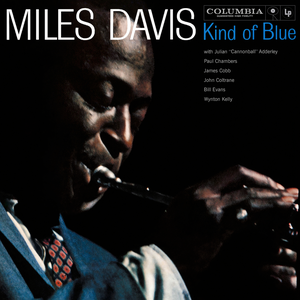
Kind of Blue
Братья Карамазовы
Istanbul
Portal 2
Qwen Plus 0728 (thinking)Qwen Plus 0728 (thinking)



The Shawshank Redemption
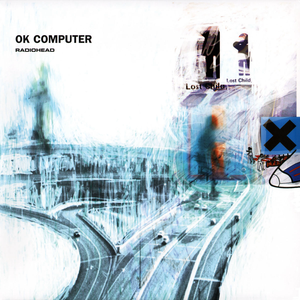
OK Computer
Moby Dick
Kyoto
The Legend of Zelda: Ocarina of Time
Price and specs
| Spec | Claude Opus 4.1 | Qwen Plus 0728 (thinking) |
|---|---|---|
| Input price | $15/M tokens | $0.4/M tokens |
| Output price | $75/M tokens | $4/M tokens |
| Context window | 200K tokens | 1.0M tokens |
| Weights | Closed | — |
| Free API (OpenRouter) | No | No |
| Released | Aug 2025 | Sep 2025 |
| At 10M a month | $150 | $4.00 |
Input tokens at list price. No caching, no batch discount.
Where to run it
Claude Opus 4.11 host

Qwen Plus 0728 (thinking)
No hosts listed on OpenRouter.
Per million tokens. Prices and uptime via OpenRouter, checked 7 Oct 2026.
Common questions
What is the difference between Claude Opus 4.1 and Qwen Plus 0728 (thinking)?
Claude Opus 4.1 is developed by Anthropic while Qwen Plus 0728 (thinking) is developed by Qwen. Claude Opus 4.1 has a 200K token context window vs Qwen Plus 0728 (thinking)'s 1.0M. You can compare their actual outputs across 37 challenges on Rival to see how they differ in practice.
Which is better, Claude Opus 4.1 or Qwen Plus 0728 (thinking)?
It depends on your use case. Claude Opus 4.1 and Qwen Plus 0728 (thinking) each have strengths in different areas. Rival lets you compare their real outputs side-by-side across 37 challenges so you can judge which fits your needs best.
How much does Claude Opus 4.1 cost compared to Qwen Plus 0728 (thinking)?
Claude Opus 4.1 costs $15/M input tokens and Qwen Plus 0728 (thinking) costs $0.4/M input tokens. Qwen Plus 0728 (thinking) is $14.60/M cheaper per input. Check their side-by-side outputs on Rival to see if the price difference is justified by quality.
How can I compare Claude Opus 4.1 and Qwen Plus 0728 (thinking) on Rival?
This page shows a side-by-side comparison of Claude Opus 4.1 and Qwen Plus 0728 (thinking) across shared challenges. You can vote on which model produced the better output in a blind duel. Browsing and voting are free. No account is needed to look; signing in only saves your votes and likes.
More comparisons
Against the newest arrivals
- Claude Opus 4.1 vs Ling 3.1 FlashLanded Oct 2026
- Qwen Plus 0728 (thinking) vs Mistral Large 4Landed Oct 2026
- Claude Opus 4.1 vs GPT-6.1 SolLanded Sep 2026
- Qwen Plus 0728 (thinking) vs Claude Sonnet 5.5Landed Sep 2026
- Claude Opus 4.1 vs Solar Mini 4Landed Sep 2026
- Qwen Plus 0728 (thinking) vs Qwen3.8 Max PrimeLanded Sep 2026
- Claude Opus 4.1 vs GLM 5.3 PrimeLanded Sep 2026
- Qwen Plus 0728 (thinking) vs Qwen3.8 Omni FlashLanded Sep 2026


Same lab, same size, long tail
- Claude Opus 4.1 vs Claude Opus 4Version compare
- Claude Opus 4.1 vs Claude Sonnet 5.5Version compare
- Qwen Plus 0728 (thinking) vs Qwen3.7 FlashSame lab
- Qwen Plus 0728 (thinking) vs Qwen3.8 FlashSame lab
- Claude Opus 4.1 vs Solar Pro 4New provider
- Qwen Plus 0728 (thinking) vs Ternary Bonsai 2 27BNew provider
- Claude Opus 4.1 vs Bert-Nebulon AlphaNew provider
- Claude Opus 4.1 vs Claude 3 OpusVersion compare