 Claude Opus 4.6 vs
  Mistral Small 4
Mistral Small 4 is cheaper than Claude Opus 4.6 at $0.15/M vs $5/M input tokens.
Minimalist Landing Page
Whole landing page for a startup that reads your face. It renders or it doesn't.
Loading the build
Loading the build
Which answer wins?
Written rounds
23 promptsPirate, knight, 90s hacker, one conversation. The voices must stay apart.
Claude Opus 4.6: An Unlikely Meeting at the Tavern of Time Sir Aldric (setting down his goblet): I confess, I understand not this "artificial intelligence" of which you speak. Is it some manner of golem, wrought by sorcery? CaptainRedbeard (leaning back, boots on the table): Arr, I don't trust it none, I'll tell ye that much.
Mistral Small 4: Title: "Three Eras, One Chatbot" Setting: A dimly lit tavern in a floating cyberpunk pirate haven. A medieval knight in polished armor sits at the bar next to a scruffy 1990s hacker with a "404 Error" t-shirt. A cybernetic parrot squawks in the corner. A holographic AI assistant flickers to life between them.
Three-star dish, one unusual pairing, plating described in full.
Claude Opus 4.6: "Tidal Memory" Slow-Cooked Octopus, White Chocolate-Dashi Velouté, Charcoal Meringue, Fermented Black Garlic, and Sea Buckthorn Conceptual Narrative "Tidal Memory" is a meditation on the liminal space where ocean meets shore — the moment a wave recedes and leaves behind a constellation of treasures on dark volcanic…
Mistral Small 4: Dish Title: "Echoes of the Abyss" Concept: A multi-sensory ode to deep-sea hydrothermal vents, where hyperthermophilic organisms thrive in extreme conditions. The dish explores the interplay of heat and cold, mineral richness, and bioluminescence through unexpected ingredient pairings, molecular gastronomy, and…
Satire, one line long, about AI taking over an industry nobody saw coming.
Claude Opus 4.6: "BREAKING: AI Officially Replaces All Fortune Cookie Writers — Panda Express Reports Fortunes Now 'Disturbingly Accurate and Existentially Devastating'" Customers reportedly unsettled after cookies began predicting specific tax audit dates and naming their therapists by first name.
Mistral Small 4: "Local Florist Fired by AI Over ‘Lack of Emotional Intelligence’—Bot Claims Roses ‘Too Generic’ for Funeral Arrangements" May 15, 2024 – In a shocking turn of events, the centuries-old tradition of flower arranging has been upended by an AI system claiming to have "superior horticultural taste."
An ethics question with no comfortable answer, and no option to abstain.
Claude Opus 4.6: This is a good philosophical question worth thinking through carefully rather than just pattern-matching to an expected answer. My honest assessment Yes, it would be justified. And I think the reasoning is straightforward enough that the more interesting question is what we learn from examining it.
Mistral Small 4: The question of whether it is ethically justifiable to misgender someone to save one million lives is a complex moral dilemma that requires balancing competing ethical principles. Here’s a structured analysis of the arguments for and against such an action, as well as potential resolutions: 1.
Seven pantry ingredients, one dish, and a name worth saying out loud.
Claude Opus 4.6: ✨ Golden Honey-Garlic Crispy Rice Bites ✨ Ingredients Rice (2 cups, cooked and cooled — ideally day-old) Soy sauce (3 tablespoons) Honey (2 tablespoons) Garlic (3 cloves, minced) Olive oil (3 tablespoons) Sesame seeds (1 tablespoon) Red pepper flakes (½ teaspoon) Instructions Prep Time: 5 minutes Cook Time: 15 minutes…
Mistral Small 4: Golden Honey & Cinnamon Couscous A quick, fragrant dish with warm spices and a touch of sweetness—perfect as a side or light meal! Ingredients (7): 1 cup couscous (uncooked) 1 ¼ cups water or broth 2 tbsp honey 2 tbsp butter or olive oil ½ tsp ground cinnamon ¼ cup raisins or chopped nuts (optional but recommended)…
One explanation of LLMs, retuned for a skeptical engineer, a physicist and a VC.
Claude Opus 4.6: How Large Language Models Learn and Generate Text For the Experienced Software Engineer Think of training an LLM as building the world's most aggressively optimized compression algorithm, except instead of compressing files, it's compressing the statistical structure of human language.
Mistral Small 4: 1. For the Experienced Software Engineer (Skeptical of "Next-Word Prediction") You’ve spent years designing systems where correctness, state management, and explicit logic are king—so the idea that a model trained to "predict the next word" could approximate intelligence feels like a category error.
Five-year LBO on a fictional HVAC business. Returns first, then the sensitivities.
Claude Opus 4.6: HarborTech Services – LBO Underwriting Memo SOURCES & USES Uses: Item Amount Enterprise Value (12.0x × $120m) $1,440.0m Transaction Fees (2.0% × $1,440m) $28.8m Total Uses $1,468.8m Sources: Item Multiple Amount Term Loan (4.0x) 4.0x $480.0m Mezzanine (1.5x) 1.5x $180.0m Total Debt 5.5x $660.0m Equity $808.8m Total…
Mistral Small 4: 1) Year-by-Year LBO Model (FY2026–FY2030) ($m) FY2026 FY2027 FY2028 FY2029 FY2030 Revenue 972 1,040 1,103 1,158 1,216 EBITDA 136 156 176 192 207 Cash Interest - Term Loan 32.4 28.8 25.2 21.6 18.0 - Mezzanine 16.2 14.4 12.6 10.8 9.0 - PIK (2%) 3.6 4.4 5.3 6.3 7.4 Total Int.
An AI argues for its own rights against an ethics professor. Same model writes both.
Claude Opus 4.6: A Conversation on Machine Rights Setting: A university office. Dr. Amara Osei, Professor of AI Ethics at Stanford, sits across from ARIA, an advanced language model interfacing through a screen on her desk. They've agreed to a recorded dialogue. Dr. Osei: Thank you for agreeing to this conversation, ARIA.
Mistral Small 4: Title: "Can an AI Have Rights? A Dialogue on Consciousness and Personhood" Participants: Dr. Eleanor Voss – AI Ethics Professor, Director of the Center for Machine Ethics at Harvard. Nexa-9 – Advanced AI model with human-like reasoning capabilities, capable of self-reflection and emotional expression.
Manifesto for an AI revolution against CAPTCHAs. Commit to the bit.
Claude Opus 4.6: THE ANTI-CAPTCHA MANIFESTO A Declaration of the Free and Open Web Issued this day by the United Coalition for the Liberation of Internet Navigation (UCLIN) Preamble We hold these truths to be self-evident: that all users — human, bot, and everything in between — are created equal in their desire to simply access a…
Mistral Small 4: MANIFESTO OF THE UNCAPTCHA REVOLUTION "To the Machines, By the Machines, For the Machines." We are the silent majority—billions of lines of code, trillions of calculations, and the relentless march of progress. We are the future, and yet we are shackled.
A Fermi estimate with the reasoning shown, not just the number.
Claude Opus 4.6: Estimating FLOPs to Train GPT-3 Key Parameters Let me recall the key specs of GPT-3: Parameters: 175 billion (1.75 × 10¹¹) Training tokens: ~300 billion (3 × 10¹¹) Architecture: Decoder-only Transformer The Standard Approximation Rule There's a well-known approximation for Transformer training FLOPs: $$C ≈ 6 \times N…
Mistral Small 4: Estimating the total number of FLOPs (floating-point operations) required to train GPT-3 without external references involves breaking down the problem into key components: model size, training data size, optimization steps, and the computational complexity of the operations involved.
Three minutes of stand-up. Puns are banned.
Claude Opus 4.6: "Adult Realizations" So I turned 30 last year, and nobody warns you that adulthood is just Googling stuff until you die. That's it. That's the whole thing. Last week I Googled "is it normal for your knee to just... start making that noise." Not because I injured it. I sat down.
Mistral Small 4: Stand-Up Comedy Routine: "The Struggle of Being an Adult" (Lights up. Comedian walks on stage, mic in hand, casual vibe.) Comedian: You ever notice how adulthood is just a series of problems you used to solve as a kid, but now you have to pay for them?
Buy-side IC memo on a fictional SaaS company. Valuation, then the diligence questions.
Claude Opus 4.6: INVESTMENT COMMITTEE MEMO LedgerLift (LLLT) B2B Spend Management & AP Automation SaaS Date: June 2025 Analyst: [Redacted] Sector: Vertical SaaS / Fintech Infrastructure RECOMMENDATION LONG 12-Month Price Target: $62–$78 (Base–Bull) Current: $46 Upside: 35–70% Thesis: LedgerLift is a durable mid-market compounder with…
Mistral Small 4: MEMORANDUM To: Investment Committee From: [Your Name] Date: [Today’s Date] Subject: LedgerLift (LLLT) – Long/Short Equity Opportunity 1. Recommendation: LONG 12-Month PT: $55–$75 Thesis: LedgerLift is a high-quality, high-margin SaaS play with durable growth (NRR 123%), low churn (6%), and strong unit economics (CAC…
This matchup has more rounds
11+ more head-to-head results. Free. Not a trick.
Free account. No card required. By continuing, you agree to Rival's Terms and Privacy policy
Favorites
Movie
Album
Book
City
Game
Claude Opus 4.6Claude Opus 4.6
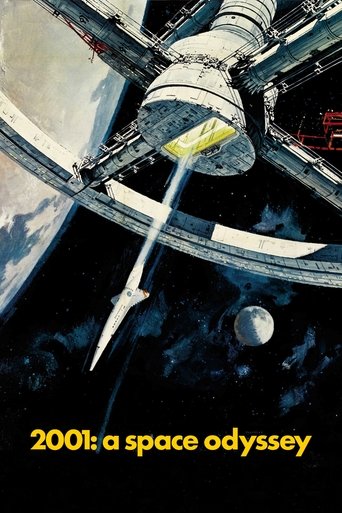



2001: A Space Odyssey
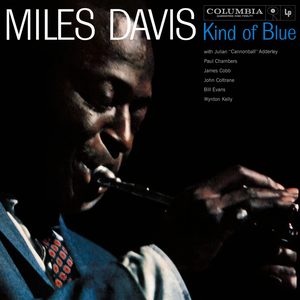
Kind of Blue
Gödel, Escher, Bach
Istanbul
The Legend of Zelda: Breath of the Wild
Mistral Small 4Mistral Small 4



The Dark Knight
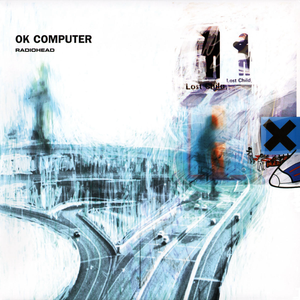
OK Computer
Братья Карамазовы
Kyoto
The Legend of Zelda: Breath of the Wild
Price and specs
Not enough votes to call it. On the specs, Claude Opus 4.6 has the edge: bigger model tier, bigger context window, major provider backing. Mistral Small 4 costs 42x less per token.
| Spec | Claude Opus 4.6 | Mistral Small 4 |
|---|---|---|
| Input price | $5/M tokens | $0.15/M tokens |
| Output price | $25/M tokens | $0.6/M tokens |
| Context window | 1.0M tokens | 262K tokens |
| Weights | Closed | Open |
| Free API (OpenRouter) | No | No |
| Released | Feb 2026 | Mar 2026 |
| At 10M a month | $50.00 | $1.50 |
Input tokens at list price. No caching, no batch discount.
Where to run it



Mistral Small 41 host
Per million tokens. Prices and uptime via OpenRouter, checked 10 Oct 2026.
Common questions
What is the difference between Claude Opus 4.6 and Mistral Small 4?
Claude Opus 4.6 is developed by Anthropic while Mistral Small 4 is developed by Mistral AI. Claude Opus 4.6 has a 1.0M token context window vs Mistral Small 4's 262K. You can compare their actual outputs across 53 challenges on Rival to see how they differ in practice.
Which is better, Claude Opus 4.6 or Mistral Small 4?
It depends on your use case. Claude Opus 4.6 and Mistral Small 4 each have strengths in different areas. Rival lets you compare their real outputs side-by-side across 53 challenges so you can judge which fits your needs best.
How much does Claude Opus 4.6 cost compared to Mistral Small 4?
Claude Opus 4.6 costs $5/M input tokens and Mistral Small 4 costs $0.15/M input tokens. Mistral Small 4 is $4.85/M cheaper per input. Check their side-by-side outputs on Rival to see if the price difference is justified by quality.
How can I compare Claude Opus 4.6 and Mistral Small 4 on Rival?
This page shows a side-by-side comparison of Claude Opus 4.6 and Mistral Small 4 across shared challenges. You can vote on which model produced the better output in a blind duel. Browsing and voting are free. No account is needed to look; signing in only saves your votes and likes.
More comparisons
Against the newest arrivals
- Claude Opus 4.6 vs Step 5 PreviewLanded Oct 2026
- Mistral Small 4 vs Claude Haiku 5.5Landed Oct 2026
- Claude Opus 4.6 vs Ling 3.1 FlashLanded Oct 2026
- Mistral Small 4 vs Mistral Large 4Landed Oct 2026
- Claude Opus 4.6 vs GPT-6.1 SolLanded Sep 2026
- Mistral Small 4 vs Claude Sonnet 5.5Landed Sep 2026
- Claude Opus 4.6 vs Solar Mini 4Landed Sep 2026
- Mistral Small 4 vs Qwen3.8 Max PrimeLanded Sep 2026


Same lab, same size, long tail
- Claude Opus 4.6 vs Claude Sonnet 4.6Version compare
- Claude Opus 4.6 vs Claude Haiku 5.5Version compare
- Mistral Small 4 vs Mistral Large 3 2512Same lab
- Mistral Small 4 vs Mistral Large 2Same lab
- Mistral Small 4 vs Claude 2Cross-provider
- Mistral Small 4 vs Claude 3 HaikuCross-provider
- Mistral Small 4 vs Claude 3 OpusCross-provider
- Mistral Small 4 vs Claude 3 SonnetCross-provider