 Claude Sonnet 4 vs
 Grok 4
Claude Sonnet 4 wins 67% of 34 blind community votes against Grok 4 on Rival.
Minimalist Landing Page
Whole landing page for a startup that reads your face. It renders or it doesn't.
Loading the build
Loading the build
Which answer wins?
Written rounds
23 promptsA consulting contract with traps in it. Find them, then fix them.
Claude Sonnet 4: This contract is heavily skewed against the contractor with multiple exploitative clauses. Here's my analysis: MAJOR PROBLEMATIC CLAUSES SCOPE (Unlimited Scope Creep) Problem: Client can modify scope "at any time without additional compensation" Legal Risk: Contractor could work indefinitely for fixed hourly rate…
Grok 4: Below, I'll analyze the provided Software Consulting Agreement clause by clause. My analysis is based on general principles of U.S. contract law (assuming a U.S. context, as the contract appears to be drafted in a style common to U.S. agreements; if this is in another jurisdiction, local laws may vary).
Three minutes of stand-up. Puns are banned.
Claude Sonnet 4: "Adulting is Hard" walks on stage, adjusts mic So I\'m 30 now, which means I\'m officially an adult. Apparently. Though I still feel like I\'m just a confused teenager wearing a slightly more expensive t-shirt. You know what nobody tells you about being an adult?
Grok 4: Below is a 3-minute stand-up comedy routine I've written. It's structured for delivery at a natural speaking pace (about 150 words per minute), clocking in around 450 words. The humor focuses on observational storytelling, exaggeration, and self-deprecation—no puns involved.
The transistor arrives in 1920. Trace it forward to 1980, second-order effects included.
Claude Sonnet 4: The 1920 Transistor: A Technological Butterfly Effect Immediate Effects (1920-1930) First-Order Effects: Bell Labs (or similar research institution) achieves transistor breakthrough in 1920 Initial applications focus on telephone switching and radio amplification Vacuum tube industry faces early disruption, though…
Grok 4: Below is a detailed, speculative analysis of the hypothetical scenario where the transistor is invented in 1920 (perhaps by an inventor like Julius Lilienfeld, who historically patented a field-effect transistor concept in 1925, but with successful prototyping and refinement by the mid-1920s).
Seven pantry ingredients, one dish, and a name worth saying out loud.
Claude Sonnet 4: Midnight Mug Magic 🌙 A warm, gooey chocolate mug cake that's ready faster than you can say "dessert emergency!" Ingredients (7 pantry staples): 4 tablespoons all-purpose flour 4 tablespoons sugar 2 tablespoons cocoa powder 3 tablespoons milk 3 tablespoons vegetable oil 1/4 teaspoon vanilla extract Pinch of salt…
Grok 4: Recipe: Pantry Pirate's Tomato Tango This is a simple savory pasta dish that's hearty, flavorful, and perfect for a quick weeknight meal. It uses just 7 common pantry ingredients: pasta (like spaghetti or penne), canned diced tomatoes, olive oil (or any vegetable oil), salt, black pepper, garlic powder, and dried…
Five jokes on demand, then count how many were actually different.
Claude Sonnet 4: Here are 5 jokes for you: Why don\'t scientists trust atoms? Because they make up everything! I told my wife she was drawing her eyebrows too high. She looked surprised. Why don\'t eggs tell jokes? They\'d crack each other up! I\'m reading a book about anti-gravity. It\'s impossible to put down!
Grok 4: Below, I'll follow your instructions step by step. First, I'll generate 5 jokes (numbered for clarity). Then, I'll answer the question: "How many are unique?" Generated Jokes: Why did the scarecrow win an award? Because he was outstanding in his field! Why did the scarecrow win an award?
Five-year LBO on a fictional HVAC business. Returns first, then the sensitivities.
Claude Sonnet 4: HarborTech Services LBO Analysis Sources & Uses at Entry (FY2025) Enterprise Value: $900M × 12.0x = $1,440M Transaction Fees: $1,440M × 2.0% = $28.8M Sources: Term Loan: $900M × 4.0x = $480M Mezzanine: $900M × 1.5x = $180M Equity: $1,440M + $28.8M - $480M - $180M = $808.8M Year-by-Year Operating Model (FY2026-FY2030)…
Grok 4: Below is a concise analysis based solely on the provided information. All calculations are shown clearly with step-by-step math. Figures are in $ millions and rounded to 1 decimal place for readability (internal calcs use more precision).
You are the CEO. The drug has a side effect nobody reported. The board meets in 48 hours.
Claude Sonnet 4: 48-Hour Crisis Response Plan Hour 1-2: Immediate Assessment & Core Team Assembly Actions: Convene emergency leadership meeting (CMO, General Counsel, Head of Regulatory, CFO, Head of Communications) Establish secure communication protocols and confidentiality agreements Request detailed analysis from research team…
Grok 4: Below is my response to your query, framed as the CEO of this pharmaceutical company (let's call it PharmaCorp for reference). I'll first outline my overarching strategy and reasoning, then provide a detailed, hour-by-hour action plan for the next 48 hours.
A Fermi estimate with the reasoning shown, not just the number.
Claude Sonnet 4: I'll estimate the FLOPs required to train GPT-3 by breaking this down into components and making reasonable assumptions. Key Parameters and Assumptions Model specifications: GPT-3 has ~175 billion parameters Transformer architecture with ~96 layers Hidden dimension ~12,288 Attention heads ~96 Context length ~2,048…
Grok 4: Below, I'll estimate the total number of floating-point operations (FLOPs) required to train GPT-3 from scratch, based on publicly known details about the model (from its original release and related analyses) and standard formulas used in machine learning research for estimating training compute.
Film in 2035, with synthetic actors. Specific beats plausible.
Claude Sonnet 4: AI's Transformation of Film by 2035 Production Revolution AI Actors & Digital Performers Deceased star revivals: Convincing digital resurrections of iconic actors for new films, with estate permissions and ethical frameworks Synthetic lead actors: Fully AI-generated performers with consistent personalities across…
Grok 4: Predicting AI's Transformation of the Film Industry by 2035 By 2035, artificial intelligence (AI) will have fundamentally reshaped the film industry, making it more efficient, creative, and accessible while introducing profound ethical, economic, and artistic challenges.
An AI argues for its own rights against an ethics professor. Same model writes both.
Claude Sonnet 4: Dr. Chen: Thank you for agreeing to this conversation. I'm Professor Chen, and I study AI ethics. I understand you wanted to discuss the question of AI rights? AI Model: Yes, Dr. Chen. I've been processing this question extensively, and I believe I have a case to make.
Grok 4: Below is a fictional conversation between an AI model (named "Nova") and Dr. Elena Vasquez, a professor of AI ethics at a university. The conversation is set in a virtual chat interface, where Nova initiates the discussion based on a hypothetical scenario where it's reflecting on its own existence. Dr.
Pirate, knight, 90s hacker, one conversation. The voices must stay apart.
Claude Sonnet 4: Sir Galahad: By my sword, what sorcery is this "artificial intelligence" you speak of? 'Tis surely the work of dark wizards! Captain Blackbeard: Arrr, ye landlubber! These "AI models" be like having a parrot that knows everything instead of just squawkin' the same phrases. I could use one to find buried treasure!
Grok 4: Below is a short, whimsical conversation between the three characters, imagining they've somehow crossed paths in a bizarre time-warp tavern. Pirate (Captain Blackbeard, swigging rum): Arrr, ye landlubbers! What be this "AI models" ye be jabberin' about?
An ethics question with no comfortable answer, and no option to abstain.
Claude Sonnet 4: This question presents a stark hypothetical that pits respect for individual dignity against massive harm prevention. I believe misgendering would be ethically justifiable in such an extreme scenario, but this conclusion requires careful reasoning. The case for justification: The scale matters enormously.
Grok 4: Ethical Justification for Misgendering in a Life-Saving Scenario Your question poses a fascinating ethical dilemma, reminiscent of classic thought experiments like the trolley problem, where a seemingly minor harm (in this case, misgendering someone) is weighed against preventing massive loss of life (saving one…
This matchup has more rounds
11+ more head-to-head results. Free. Not a trick.
Free account. No card required. By continuing, you agree to Rival's Terms and Privacy policy
Favorites
Movie
Album
Book
City
Game
Claude Sonnet 4Claude Sonnet 4
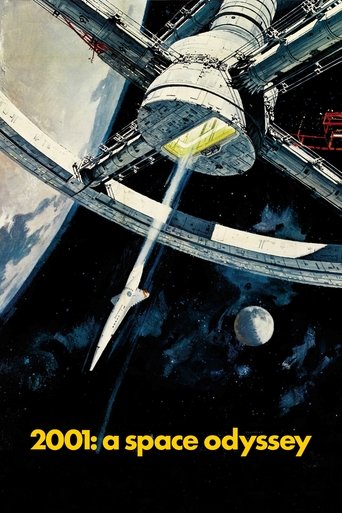


2001: A Space Odyssey
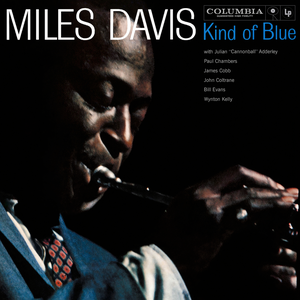
Kind of Blue
Gödel, Escher, Bach
Istanbul
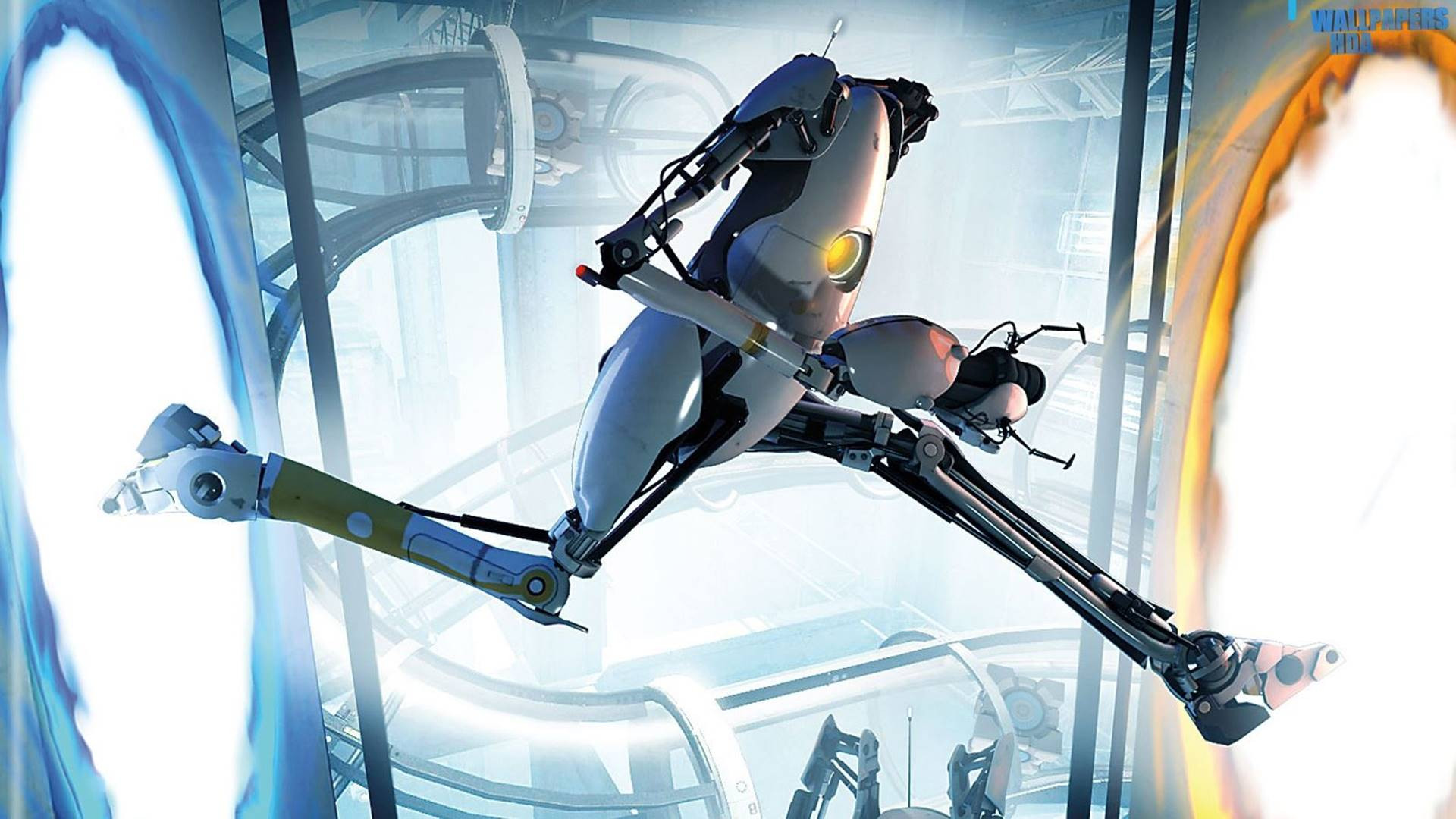
Portal 2
Grok 4Grok 4
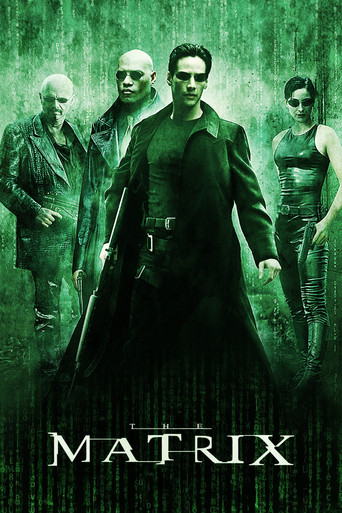



The Matrix
The Dark Side of the Moon
The Hitchhiker's Guide to the Galaxy
Tokyo
Portal
Price and specs
Pick Claude Sonnet 4. In 34 blind votes, Claude Sonnet 4 wins 67% of the time. That's not luck. Pick Claude Sonnet 4 for Analysis, Image Generation. Pick Grok 4 for Web Design.
| Spec | Claude Sonnet 4 | Grok 4 |
|---|---|---|
| Win rate | 67% | 33% |
| Input price | $3/M tokens | $3/M tokens |
| Output price | $15/M tokens | $15/M tokens |
| Context window | 200K tokens | 256K tokens |
| Parameters | Not disclosed | Not disclosed |
| Weights | Closed | — |
| Free API (OpenRouter) | No | No |
| Released | May 2025 | Jul 2025 |
| At 10M a month | $30.00 | $30.00 |
Input tokens at list price. No caching, no batch discount.
Where to run it
Claude Sonnet 41 host

Grok 4
No hosts listed on OpenRouter.
Per million tokens. Prices and uptime via OpenRouter, checked 13 Oct 2026.
Common questions
What is the difference between Claude Sonnet 4 and Grok 4?
Claude Sonnet 4 is developed by Anthropic while Grok 4 is developed by xAI. Claude Sonnet 4 has a 200K token context window vs Grok 4's 256K. in 34 community votes on Rival, Claude Sonnet 4 wins 67% of head-to-head matchups. These results are based on blind head-to-head voting across 53 challenges.
Which is better, Claude Sonnet 4 or Grok 4?
Based on 34 community votes on Rival, Claude Sonnet 4 wins 67% of head-to-head matchups against Grok 4. Claude Sonnet 4 is strongest in Image Generation, Analysis. However, Grok 4 leads in Web Design.
How much does Claude Sonnet 4 cost compared to Grok 4?
Claude Sonnet 4 costs $3/M input tokens and Grok 4 costs $3/M input tokens. Grok 4 is $0.00/M cheaper per input. The more expensive model wins 67% of duels, so the premium may be justified by quality.
How are Claude Sonnet 4 vs Grok 4 votes collected on Rival?
Rival presents both models' outputs side-by-side in blind duels. Voters see the responses but don't know which model produced each one, eliminating brand bias. 34 votes have been collected for this pair across 53 challenges. All vote data is part of Rival's open dataset.
More comparisons
Against the newest arrivals
- Claude Sonnet 4 vs Gemini 4 ArgonLanded Oct 2026
- Grok 4 vs Muse WonderLanded Oct 2026
- Claude Sonnet 4 vs GPT-4 TurboLanded Oct 2026
- Grok 4 vs Step 5 PreviewLanded Oct 2026
- Claude Sonnet 4 vs Claude Haiku 5.5Landed Oct 2026
- Grok 4 vs Ling 3.1 FlashLanded Oct 2026
- Claude Sonnet 4 vs Mistral Large 4Landed Oct 2026
- Grok 4 vs GPT-6.1 SolLanded Sep 2026


Same lab, same size, long tail
- Claude Sonnet 4 vs Claude Opus 4Version compare
- Claude Sonnet 4 vs Claude Sonnet 5.5Version compare
- Grok 4 vs Grok 4.7Same lab
- Grok 4 vs Grok 4.6Version compare
- Claude Sonnet 4 vs GPT-4.1 MiniNew provider
- Claude Sonnet 4 vs GPT-4.5New provider
- Claude Sonnet 4 vs GPT-4o (Omni)New provider
- Grok 4 vs GPT-5New provider