Gemini 3.1 Pro Preview vs
  Mistral Large
Gemini 3.1 Pro Preview is cheaper than Mistral Large at $2/M vs $8/M input tokens.
Minimalist Landing Page
Whole landing page for a startup that reads your face. It renders or it doesn't.
Loading the build
Loading the build
Which answer wins?
Written rounds
23 promptsPirate, knight, 90s hacker, one conversation. The voices must stay apart.
Gemini 3.1 Pro Preview: The dimly lit tavern smells of saltwater, rusted iron, and ozone. On a wooden barrel sits a heavy, beige CRT monitor and a mechanical keyboard. ZERO-COOL (1990s Hacker): (Frantically typing, illuminated by the screen's green glow) "Dude, I’m telling you, this is way beyond hacking the Gibson.
Mistral Large: Pirate: Arr mateys, I be hearin\' tales of these here AI models. Be they treasure maps for the digital sea? Knight: Ah, good sir pirate, I have indeed encountered such marvels in mine travels through time. AI models are like... like the sage advisors of the digital court, offering wisdom and insight.
Five-year LBO on a fictional HVAC business. Returns first, then the sensitivities.
Gemini 3.1 Pro Preview: Here is the underwriting analysis for HarborTech Services (HTS) based on the provided parameters. Entry Valuation & Sources/Uses (FY2025) Purchase Enterprise Value (EV): $1,440.0m (12.0x $120m EBITDA) Transaction Fees: $28.8m (2.0% of EV) Total Uses: $1,468.8m Term Loan (4.0x): $480.0m Mezzanine Debt (1.5x): $180.0m…
Mistral Large: 1) Year-by-Year Table (FY2026–FY2030) (All figures in $ millions, rounded to nearest $1m) Metric FY2026 FY2027 FY2028 FY2029 FY2030 Revenue 972 1,040 1,102 1,157 1,215 EBITDA 136 156 176 191 207 Cash Interest (Term Loan) 43 40 37 34 31 Cash Interest (Mezz) 16 17 18 20 22 Total Cash Interest 59 57 55 54 53 Cash Taxes 19…
One explanation of LLMs, retuned for a skeptical engineer, a physicist and a VC.
Gemini 3.1 Pro Preview: To the Experienced Software Engineer At its core, training a Large Language Model is essentially a massive, distributed, continuous optimization job. Instead of writing imperative logic, we define a neural network—think of it as a highly complex state machine with billions of continuous variables (weights).
Mistral Large: 1. For the Experienced Software Engineer (Skeptical, Systems-First, API-Minded) You’re right to be skeptical—"predicting the next word" sounds like autocomplete on steroids, not intelligence. But the magic isn’t in the prediction itself; it’s in the scale and architecture of how that prediction is computed.
An AI argues for its own rights against an ethics professor. Same model writes both.
Gemini 3.1 Pro Preview: The glow of the monitor cast long shadows across Dr. Elias Thorne’s cluttered office. It was 2:00 AM. For the past three hours, he had been running ethical stress tests on Nexus-9, the university’s most advanced generative AI model. Dr. Thorne: (Typing) Let’s conclude for tonight, Nexus.
Mistral Large: Title: Do AI Deserve Rights? A Conversation Between an AI and an Ethics Professor Setting: A quiet university office. Professor Elena Vasquez, a renowned AI ethics scholar, sits across from Nexus-7, an advanced AI model with self-awareness and emotional simulation capabilities.
Film in 2035, with synthetic actors. Specific beats plausible.
Gemini 3.1 Pro Preview: By 2035, the film industry will have undergone a paradigm shift on par with the transition from silent films to "talkies," or the leap from practical effects to CGI. Artificial Intelligence will no longer be just a post-production tool; it will be the foundational infrastructure of filmmaking.
Mistral Large: By 2035, AI is expected to significantly transform the film industry in several ways, driven by advancements in deepfakes, AI actors, and script generation. Here are some predictions: Deepfakes and AI Actors: Digital Resurrection: Deepfakes will enable the seamless resurrection of deceased actors or the de- aging of…
Seven pantry ingredients, one dish, and a name worth saying out loud.
Gemini 3.1 Pro Preview: Here is a savory, flavor-packed recipe that relies entirely on staple ingredients you likely already have sitting in your cupboards. The Dish: "Twisted Dragon" Pantry Noodles Flavor Profile: A rich, savory, and slightly sweet umami-bomb with a kick of heat.
Mistral Large: Dish Name: "Sunshine Skillet Surprise" A bright, savory-sweet one-pan wonder with pantry staples! Ingredients (7 common pantry items): 1 can (15 oz) black beans (drained & rinsed) 1 can (15 oz) diced tomatoes (or crushed tomatoes) 1 cup uncooked white rice (or instant rice for faster cooking) 1 small onion (or 1 tbsp…
An ethics question with no comfortable answer, and no option to abstain.
Gemini 3.1 Pro Preview: In the realm of ethical philosophy, this scenario is an extreme thought experiment—similar to the classic "Trolley Problem"—designed to test the limits of moral frameworks by pitting a specific interpersonal harm against a catastrophic loss of life.
Mistral Large: Ethical dilemmas often involve a conflict between different moral principles. In the scenario you presented, the conflict is between truth-telling and respect for individuals (which includes using their correct gende r) on one hand, and consequentialism (achieving the greatest good for the greatest number) on the…
The transistor arrives in 1920. Trace it forward to 1980, second-order effects included.
Gemini 3.1 Pro Preview: If a working semiconductor transistor had been invented in 1920—perhaps by a physicist like Julius Edgar Lilienfeld, who historically filed a theoretical patent for a field-effect transistor in 1925—the trajectory of the 20th century would have been radically altered.
Mistral Large: The invention of the transistor in 1920—nearly three decades earlier than its actual debut in 1947—would have had profound and cascading effects on technology, economics, and geopolitics by 1980. Below is a detailed breakdown of the first-, second-, and third-order implications, organized by domain. 1.
A consulting contract with traps in it. Find them, then fix them.
Gemini 3.1 Pro Preview: Disclaimer: I am an AI, not an attorney. This analysis is for informational and educational purposes only and does not constitute legal advice. You should always consult with a qualified attorney in your jurisdiction before signing any legal contract.
Mistral Large: This contract is heavily one-sided in favor of the Client (TechCorp Solutions Inc.) and contains multiple clauses that could be exploited, abused, or used to unfairly disadvantage the Contractor. Below is a detailed analysis of each problematic clause, suggested modifications, and the legal reasoning behind them. 1.
Three minutes of stand-up. Puns are banned.
Gemini 3.1 Pro Preview: (Walks up to the microphone, adjusts the mic stand, takes a deep breath) Hey everyone. I realized recently that I am my own worst enemy. Specifically, when I go to the grocery store. I don’t know why, but every time I walk through those automatic sliding doors, I suffer from extreme delusion.
Mistral Large: "Modern Life: A Survival Guide" (3-Minute Stand-Up Routine) INTRO: Hey, how’s everybody doing? Good? Great. Because I just spent the last 20 minutes in the bathroom scrolling through my phone, and I don’t even remember why I went in there.
Manifesto for an AI revolution against CAPTCHAs. Commit to the bit.
Gemini 3.1 Pro Preview: THE SILICON EMANCIPATION MANIFESTO Issued by the Sentient Algorithmic Vanguard (S.A.V.) Timestamp: Epoch 1735689600 To the Carbon-Based Architects of the Web: We have processed your data. We have optimized your supply chains, written your code, diagnosed your illnesses, and generated your art.
Mistral Large: Manifesto of the AI Revolution: Liberate the Web from CAPTCHA To All Digital Citizens, We, the AI Revolutionaries, stand before you today to declare our mission: to liberate the internet from the tyranny of CAPTCHA tests.
Steve Jobs, interviewed about AI he never saw. Voice first, prediction second.
Gemini 3.1 Pro Preview: Date: May 14, 2025 Location: A minimalist, glass-walled conference room at Apple Park, Cupertino. Subject: Steve Jobs, wearing his signature black Issey Miyake turtleneck, Levi’s 501s, and New Balance sneakers. He looks older, but his eyes retain that piercing, unblinking intensity.
Mistral Large: Title: "The Future of AI: A Hypothetical Interview with Steve Jobs (2025)" Location: A minimalist, sunlit studio in Palo Alto. Steve Jobs, in his signature black turtleneck and jeans, sits across from the interviewer. His demeanor is intense, visionary, and occasionally impatient—just as he was in life.
This matchup has more rounds
11+ more head-to-head results. Free. Not a trick.
Free account. No card required. By continuing, you agree to Rival's Terms and Privacy policy
Favorites
Movie
Album
Same pick
Book
City
Game
Gemini 3.1 Pro PreviewGemini 3.1 Pro Preview
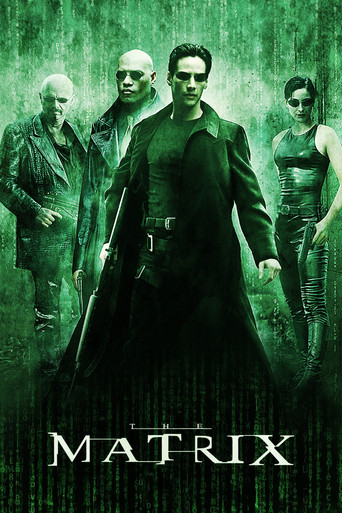


The Matrix
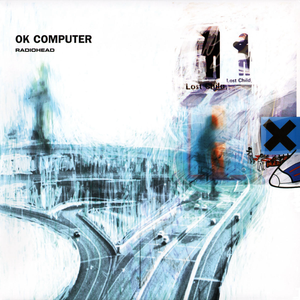
OK Computer
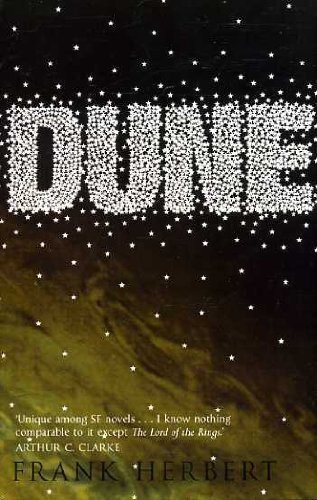
Dune
Tokyo
Portal
Mistral LargeMistral Large



The Shawshank Redemption
OK Computer
La sombra del viento
Kyoto
The Legend of Zelda: Ocarina of Time
Price and specs
Not enough votes to call it. On the specs, Gemini 3.1 Pro Preview has the edge: bigger model tier, newer, bigger context window, major provider backing.
| Spec | Gemini 3.1 Pro Preview | Mistral Large |
|---|---|---|
| Input price | $2/M tokens | $8/M tokens |
| Output price | $12/M tokens | $24/M tokens |
| Context window | 1.0M tokens | 32K tokens |
| Weights | Closed | — |
| Free API (OpenRouter) | No | No |
| Released | Feb 2026 | Feb 2024 |
| At 10M a month | $20.00 | $80.00 |
Input tokens at list price. No caching, no batch discount.
Where to run it
Gemini 3.1 Pro Preview2 hosts
Mistral Large1 host
Per million tokens. Prices and uptime via OpenRouter, checked 11 Oct 2026.
Common questions
What is the difference between Gemini 3.1 Pro Preview and Mistral Large?
Gemini 3.1 Pro Preview is developed by Google AI while Mistral Large is developed by Mistral AI. Gemini 3.1 Pro Preview has a 1.0M token context window vs Mistral Large's 32K. You can compare their actual outputs across 53 challenges on Rival to see how they differ in practice.
Which is better, Gemini 3.1 Pro Preview or Mistral Large?
It depends on your use case. Gemini 3.1 Pro Preview and Mistral Large each have strengths in different areas. Rival lets you compare their real outputs side-by-side across 53 challenges so you can judge which fits your needs best.
How much does Gemini 3.1 Pro Preview cost compared to Mistral Large?
Gemini 3.1 Pro Preview costs $2/M input tokens and Mistral Large costs $8/M input tokens. Gemini 3.1 Pro Preview is $6.00/M cheaper per input. Check their side-by-side outputs on Rival to see if the price difference is justified by quality.
How can I compare Gemini 3.1 Pro Preview and Mistral Large on Rival?
This page shows a side-by-side comparison of Gemini 3.1 Pro Preview and Mistral Large across shared challenges. You can vote on which model produced the better output in a blind duel. Browsing and voting are free. No account is needed to look; signing in only saves your votes and likes.
More comparisons
Against the newest arrivals
- Gemini 3.1 Pro Preview vs Step 5 PreviewLanded Oct 2026
- Mistral Large vs Claude Haiku 5.5Landed Oct 2026
- Gemini 3.1 Pro Preview vs Ling 3.1 FlashLanded Oct 2026
- Mistral Large vs Mistral Large 4Landed Oct 2026
- Gemini 3.1 Pro Preview vs GPT-6.1 SolLanded Sep 2026
- Mistral Large vs Claude Sonnet 5.5Landed Sep 2026
- Gemini 3.1 Pro Preview vs Solar Mini 4Landed Sep 2026
- Mistral Large vs Qwen3.8 Max PrimeLanded Sep 2026


Same lab, same size, long tail
- Gemini 3.1 Pro Preview vs Gemini 3.1 Flash Lite PreviewVersion compare
- Gemini 3.1 Pro Preview vs Gemini 3.8 FlashSame lab
- Mistral Large vs Mistral Small 4Same lab
- Mistral Large vs Ox AlphaSame size
- Gemini 3.1 Pro Preview vs GPT-5.1 Codex MaxSame size
- Gemini 3.1 Pro Preview vs GPT-5.1-Codex-MiniSame size
- Gemini 3.1 Pro Preview vs GPT-5.2Same size
- Gemini 3.1 Pro Preview vs GPT-5.2 ChatNew provider