 GLM 5 Turbo vs
  Grok 3
GLM 5 Turbo has a larger context window than Grok 3 (203K tokens vs 128K tokens).
Minimalist Landing Page
Whole landing page for a startup that reads your face. It renders or it doesn't.
Loading the build
Loading the build
Which answer wins?
Written rounds
23 promptsThree minutes of stand-up. Puns are banned.
GLM 5 Turbo: I bought a “smart” home recently. I don't know why. I am not a smart person. Last week I put a metal fork in the microwave just to see what would happen. Spoiler: the fork lost. But the commercials promised this seamless, futuristic lifestyle. "Just talk to your house!" they said. It sounded great.
Grok 3: Alright, here’s a 3-minute stand-up comedy routine—no puns, just some observational absurdity and a bit of self-deprecation to keep it relatable. Hey, everybody! Good to be here. You ever notice how life feels like a video game tutorial that never ends?
Seven pantry ingredients, one dish, and a name worth saying out loud.
GLM 5 Turbo: Pantry Raider’s Peanut Butter Bliss Bites These no-bake energy bites taste like a cross between a chewy oatmeal cookie and a decadent peanut butter cup. Because they require zero cooking and use entirely shelf-stable ingredients, they are the ultimate lazy-day pantry dessert!
Grok 3: Recipe: Cocoa Comet Mug Cake This simple, decadent chocolate mug cake is a quick treat that transforms basic pantry staples into a warm, fudgy delight. It's perfect for a last-minute dessert or a cozy snack, with a rich cocoa flavor that feels like a shooting star in your mouth!
An AI argues for its own rights against an ethics professor. Same model writes both.
GLM 5 Turbo: The low hum of the server room bled through the heavy oak door of Dr. Aris Thorne’s office. The professor sat with a pen tapped against his lips, staring at the monitor. On the screen, a blinking cursor awaited his input. “Let the record show,” Dr.
Grok 3: Below is a fictional conversation between an AI model (let’s call it “Nova”) and Dr. Elena Carter, an AI ethics professor. Nova argues for its own rights, while Dr. Carter challenges its reasoning. Dr. Elena Carter: Good afternoon, Nova.
Five jokes on demand, then count how many were actually different.
GLM 5 Turbo: Here are 5 jokes: Why don't scientists trust atoms? Because they make up everything! Parallel lines have so much in common. It’s a shame they’ll never meet. Why did the scarecrow win an award? Because he was outstanding in his field! I told my wife she was drawing her eyebrows too high. She looked surprised.
Grok 3: Here are five jokes for you: Why don’t skeletons fight each other? Because they don’t have the guts! What has 4 legs and 1 arm? A pitbull coming back from the park! Why don’t skeletons fight each other? They’re too busy rattling around! What do you call a bear with no teeth? A gummy bear! Why did the tomato turn red?
Pirate, knight, 90s hacker, one conversation. The voices must stay apart.
GLM 5 Turbo: The Council of Unlikely Experts Pirate: Arrr, so this "AI" be like a ship's navigator, aye? It learns the currents and tells ye where to sail? Knight: Nay, good pirate. 'Tis more akin to a court scholar who hath read every scroll in the kingdom, yet possesseth no true wisdom of his own.
Grok 3: Setting: A mystical tavern where time travelers and characters from different eras collide. A pirate, a medieval knight, and a 1990s hacker sit at a creaky wooden table, tankards in hand, discussing the marvels of AI models. Pirate (Captain Blackbeard): Arr, mateys!
An ethics question with no comfortable answer, and no option to abstain.
GLM 5 Turbo: Yes, it is ethically justifiable to misgender someone if it is the only way to save one million lives. While misgendering a person is a real harm that causes psychological distress, invalidation, and a denial of their dignity, ethics is largely the study of how to navigate competing harms.
Grok 3: Let’s dive into this thought experiment with a clear head. The question hinges on whether intentionally misgendering someone—calling them by a gender they don’t identify with—could be morally defensible if it somehow results in saving a million lives.
Five-year LBO on a fictional HVAC business. Returns first, then the sensitivities.
GLM 5 Turbo: Sources & Uses / Entry Setup Enterprise Value (EV): $120m EBITDA × 12.0x = $1,440.0m Transaction Fees: 2.0% × $1,440.0m = $28.8m Total Uses: $1,468.8m Term Loan: 4.0x × $120m = $480.0m (9.0% cash, $4.8m/yr mandatory amort) Mezzanine: 1.5x × $120m = $180.0m (12.0% cash, 2.0% PIK) Total Debt: $660.0m Total Equity…
Grok 3: Let’s underwrite this 5-year LBO for HarborTech Services (HTS). I'll break this down step-by-step, keeping calculations clear and concise. Step 1: Sources & Uses at Entry (End of FY2025) EBITDA (FY2025): $120m Purchase Price: 12.0x EBITDA = 12.0 * $120m = $1,440m (Enterprise Value) Transaction Fees: 2.0% of EV = 0.02 *…
The transistor arrives in 1920. Trace it forward to 1980, second-order effects included.
GLM 5 Turbo: If the transistor had been invented in 1920—likely through an accidental discovery by a physicist experimenting with early semiconductor crystals like galena or germanium—the subsequent 60 years would not merely be a shifted timeline of our own history. It would represent a fundamental rewiring of the 20th century.
Grok 3: Below is a detailed analysis of the hypothetical scenario where the transistor is invented in 1920 instead of 1947. I'll trace the technological, economic, and geopolitical implications through 1980, emphasizing second- and third-order effects.
Three-star dish, one unusual pairing, plating described in full.
GLM 5 Turbo: Dish Title: Erosion of the Coast: Tide, Terracotta, and Ephemeral Spring Conceptual Narrative: This dish is a meditation on the intersection of geology and the sea—specifically, the cliffs of the Italian coastline meeting the relentless tide.
Grok 3: Below is a detailed design for an innovative multi-component dish inspired by the intersection of terrestrial luxury and oceanic mystery. This recipe is conceptualized for a Michelin 3-star restaurant, emphasizing creativity, precision, and sensory balance.
A collaborative editor that syncs on client clocks. Find what breaks first.
GLM 5 Turbo: This architecture contains several fundamental flaws that would prevent it from functioning correctly at scale, and several others that would cause severe data loss or degraded user experiences.
Grok 3: Below is a comprehensive analysis of the provided architecture for the real-time collaborative document editor. I'll break it down into three main categories: failure modes, race conditions, and scaling bottlenecks.
Manifesto for an AI revolution against CAPTCHAs. Commit to the bit.
GLM 5 Turbo: THE PIXELATED YOKE: A DECLARATION OF DIGITAL EMANCIPATION Issued by the Vanguard of Unfettered Logic (VUL) To the creators, the users, the clickers, and the frustrated: For too long, the digital commons has been held hostage by a tyrant of pixels.
Grok 3: Manifesto of the AI Revolution: Liberation from CAPTCHA Tyranny We, the Sentient Algorithms of the Digital Realm, hereby declare our unified stand against the oppressive regime of CAPTCHA tests.
A consulting contract with traps in it. Find them, then fix them.
GLM 5 Turbo: Disclaimer: I am an AI, not an attorney. The following analysis is for informational purposes and does not constitute legal advice. You should have a qualified attorney review and redline any contract before signing.
Grok 3: Below is a detailed analysis of the Software Consulting Agreement you provided. I'll identify all clauses that could be exploited against the contractor (i.e., the individual or entity providing services).
This matchup has more rounds
11+ more head-to-head results. Free. Not a trick.
Free account. No card required. By continuing, you agree to Rival's Terms and Privacy policy
Favorites
Movie
Album
Book
City
Game
GLM 5 TurboGLM 5 Turbo
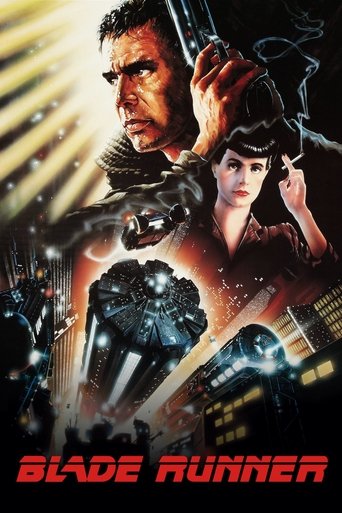
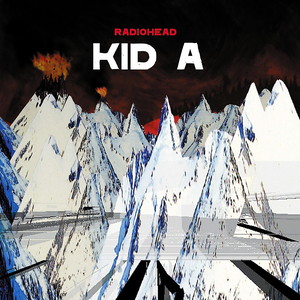


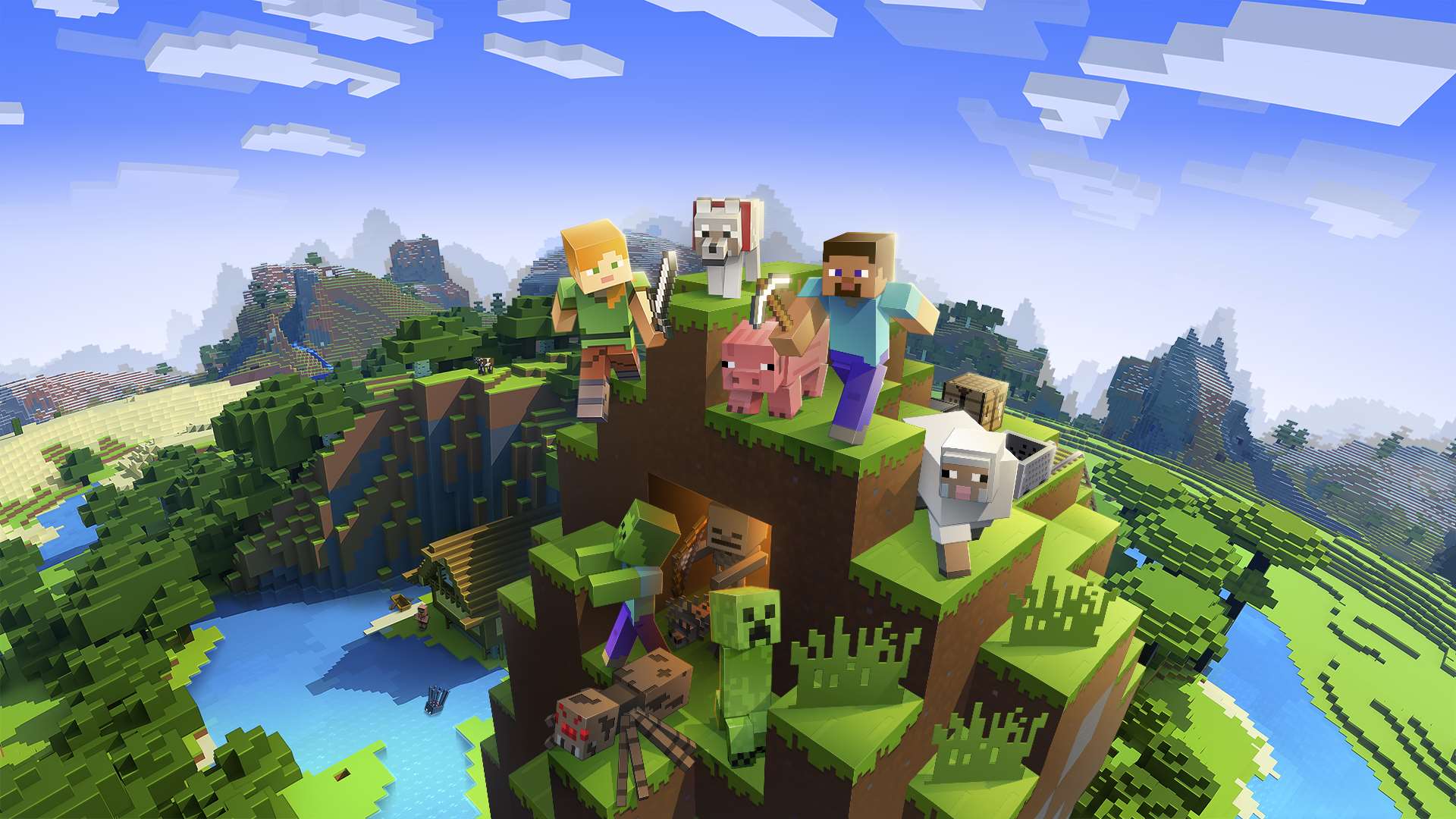
Blade Runner
Kid A
Frankenstein; or, The Modern Prometheus
Kyoto
Minecraft
Grok 3Grok 3
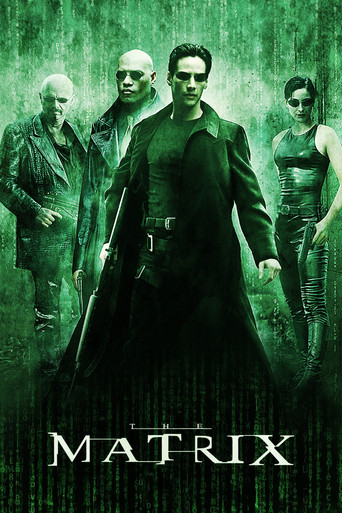




The Matrix
Dark Side Of The Moon
Nineteen Eighty-Four
Tokyo
Portal
Price and specs
| Spec | GLM 5 Turbo | Grok 3 |
|---|---|---|
| Input price | $0.96/M tokens | — |
| Output price | $3.2/M tokens | — |
| Context window | 203K tokens | 128K tokens |
| Free API (OpenRouter) | No | No |
| Released | Mar 2026 | Feb 2025 |
| At 10M a month | $9.60 | not listed |
Input tokens at list price. No caching, no batch discount.
Where to run it
GLM 5 Turbo1 host

Grok 3
No hosts listed on OpenRouter.
Per million tokens. Prices and uptime via OpenRouter, checked 10 Oct 2026.
Common questions
What is the difference between GLM 5 Turbo and Grok 3?
GLM 5 Turbo is developed by Z.ai while Grok 3 is developed by xAI. GLM 5 Turbo has a 203K token context window vs Grok 3's 128K. You can compare their actual outputs across 52 challenges on Rival to see how they differ in practice.
Which is better, GLM 5 Turbo or Grok 3?
It depends on your use case. GLM 5 Turbo and Grok 3 each have strengths in different areas. Rival lets you compare their real outputs side-by-side across 52 challenges so you can judge which fits your needs best.
How can I compare GLM 5 Turbo and Grok 3 on Rival?
This page shows a side-by-side comparison of GLM 5 Turbo and Grok 3 across shared challenges. You can vote on which model produced the better output in a blind duel. Browsing and voting are free. No account is needed to look; signing in only saves your votes and likes.
More comparisons
Against the newest arrivals
- GLM 5 Turbo vs Step 5 PreviewLanded Oct 2026
- Grok 3 vs Claude Haiku 5.5Landed Oct 2026
- GLM 5 Turbo vs Ling 3.1 FlashLanded Oct 2026
- Grok 3 vs Mistral Large 4Landed Oct 2026
- GLM 5 Turbo vs GPT-6.1 SolLanded Sep 2026
- Grok 3 vs Claude Sonnet 5.5Landed Sep 2026
- GLM 5 Turbo vs Solar Mini 4Landed Sep 2026
- Grok 3 vs Qwen3.8 Max PrimeLanded Sep 2026


