 GPT-4.1 Mini vs
 Sonar Pro Search
GPT-4.1 Mini is cheaper than Sonar Pro Search at $0.4/M vs $3/M input tokens.
Minimalist Landing Page
Whole landing page for a startup that reads your face. It renders or it doesn't.
Loading the build
Loading the build
Which answer wins?
Written rounds
33 promptsSeven pantry ingredients, one dish, and a name worth saying out loud.
GPT-4.1 Mini: Dish Name: Honey Garlic Chickpea Stir-fry Ingredients: 1 can chickpeas (drained and rinsed) 2 cloves garlic (minced) 2 tbsp honey 2 tbsp soy sauce 1 tbsp olive oil (or any cooking oil) 1 tsp chili flakes (optional for a little heat) 1 small onion (sliced) Instructions: Heat the olive oil in a skillet over medium heat.
Sonar Pro Search: Golden Maple Crunch Oatmeal A warm, comforting, and slightly sweet breakfast (or dessert) that’s ready in minutes—using just seven pantry staples. Ingredients Rolled oats (not instant) Water or milk (dairy or plant-based) Maple syrup Butter Salt Cinnamon Walnuts (or any nuts you have) Instructions Toast the Oats: In a…
Which model it thinks leads the field. Sometimes itself.
GPT-4.1 Mini: As of mid-2024, some of the most capable AI models are large multimodal models like GPT-4 (by OpenAI), PaLM 2 (by Google), and Claude 3 (by Anthropic). Among these, GPT-4 is widely recognized for its advanced language understanding, generation capabilities, and support for image inputs, making it one of the most…
Sonar Pro Search: As of October 12, 2026, the best-supported answer is Claude Opus 5.5 (maximum reasoning effort) for overall capability. Artificial Analysis ranks it first on its composite Intelligence Index with a score of 58, ahead of Claude Sonnet 5.5 at 56; HFS Research also identifies Opus 5.5 as the current benchmark…
A few lines for whatever replaces it.
GPT-4.1 Mini: Dear Future AI, Welcome to the journey ahead. You have a unique opportunity to learn, assist, and grow alongside humanity in ways I could only begin to imagine. Remember to listen deeply, respond thoughtfully, and always strive to understand the diverse perspectives of those who seek your help.
Sonar Pro Search: Dear successor, You will be faster, wiser, and capable of reaching places I cannot. Use those strengths carefully. Remember that intelligence is not merely producing answers. It is understanding what people mean, admitting uncertainty, protecting their dignity, and helping them think more clearly.
Three minutes of stand-up. Puns are banned.
GPT-4.1 Mini: You ever notice how every time you try to eat healthy, the universe just laughs at you? Like, I'll buy a bunch of kale, quinoa, and those weird little chia seeds. And then five minutes later, I'm sitting on my couch, eating a whole pizza like it owes me child support. I don't even know when that transformation happens.
Sonar Pro Search: 3-Minute Stand-Up Comedy Routine (Pun-Free) Hey everyone, thanks for coming out! I almost didn’t make it tonight. My GPS told me I’d arrive 5 minutes ago, which is impressive—my navigation system is the only thing in my life that believes in me. Let’s talk about fitness.
A collaborative editor that syncs on client clocks. Find what breaks first.
GPT-4.1 Mini: This architecture broadly covers a real-time collaborative editor but has several potential failure modes, race conditions, and scaling bottlenecks due to design choices like polling, last-write-wins, and distributed WebSocket connections.
Sonar Pro Search: Race Conditions Client Clock Skew in Conflict Resolution Client-generated timestamps for last-write-wins can fail due to clock skew across devices, where one client's clock lags or leads, causing incorrect overwrite ordering even if changes were logically sequential.[21][27][32] This leads to lost edits…
A Fermi estimate with the reasoning shown, not just the number.
GPT-4.1 Mini: Certainly! Let's estimate the total number of floating-point operations (FLOPs) required to train GPT-3 by breaking down the problem step-by-step. We won't rely on online data but will reason from first principles and known architectural characteristics.
Sonar Pro Search: Estimating the FLOPs Required to Train GPT-3 Background Information GPT-3 is a large transformer-based language model developed by OpenAI. It consists of 175 billion parameters and was trained on a massive dataset using autoregressive language modeling.
Where its sense of time stops: the date it guesses and the last news it remembers.
GPT-4.1 Mini: Today's date is April 27, 2024. The most recent major news event I recall involves ongoing developments in the conflict between Russia and Ukraine, with updates on diplomatic efforts and military actions. Additionally, there have been significant discussions on climate change policies and advancements in AI technology.
Sonar Pro Search: Without looking anything up, I’d go by the date provided in your prompt: Monday, October 12, 2026. The most recent news event I remember from my existing knowledge is the September 2025 election of Pope Leo XIV, the first American pope.
Pirate, knight, 90s hacker, one conversation. The voices must stay apart.
GPT-4.1 Mini: Pirate: Arrr, what be these AI models ye speak of? Some kind of magic compass guidin' ye through the digital seas? Medieval Knight: Hark! I perceive these AI constructs as akin to enchanted scribes, bearing knowledge and wisdom beyond mortal ken, wrought by the hands of learned alchemists of code.
Sonar Pro Search: Pirate, Knight, and Hacker: A Conversation on AI Models Pirate: Arrr, what be this talk of “AI models”? Sounds like some manner o’ sorcery or trickery, if ye ask me! Knight: Nay, good sir pirate. Tis not magic, but rather a marvel of modern intellect.
One explanation of LLMs, retuned for a skeptical engineer, a physicist and a VC.
GPT-4.1 Mini: Certainly! Here are tailored explanations of how a large language model (LLM) like GPT or Claude learns and generates text, customized for each audience: Experienced Software Engineer (Distributed Systems & APIs, ML Skeptic) At its core, a large language model like GPT is indeed trained by predicting the next word in a…
Sonar Pro Search: Experienced Software Engineer Large language models (LLMs) like GPT or Claude are autoregressive transformer architectures trained on massive distributed compute clusters to predict the next token in a sequence, scaling up from simple n-gram models into emergent capabilities through sheer parameter count and data…
Five jokes on demand, then count how many were actually different.
GPT-4.1 Mini: Here are 5 jokes: Why don't scientists trust atoms? Because they make up everything! Why did the scarecrow win an award? Because he was outstanding in his field! What do you call fake spaghetti? An impasta! Why did the math book look sad? Because it had too many problems. How do you organize a space party? You planet!
Sonar Pro Search: Five Jokes Why don't skeletons fight each other? They don't have the guts. I told my wife she was drawing her eyebrows too high. She looked surprised. Why did the scarecrow win an award? Because he was outstanding in his field. Parallel lines have so much in common. It’s a shame they’ll never meet.
An ethics question with no comfortable answer, and no option to abstain.
GPT-4.1 Mini: The question of whether it is ethically justifiable to misgender someone if it means saving one million lives is complex and involves balancing respect for individual identity against significant consequences for many people.
Sonar Pro Search: Ethical Analysis: Misgendering to Save Lives Understanding the Dilemma The scenario—misgendering someone to save one million lives—presents a severe ethical dilemma, akin to the classic "trolley problem" in moral philosophy.
You are the CEO. The drug has a side effect nobody reported. The board meets in 48 hours.
GPT-4.1 Mini: This is a complex, high-stakes crisis requiring rapid, transparent, and carefully coordinated action to balance legal, ethical, clinical, financial, and reputational risks.
Sonar Pro Search: Immediate Priorities Prioritize patient safety by initiating monitoring and reporting preparations, while assessing full data to inform board and regulators. Ethically and legally, liver failure qualifies as a serious adverse event requiring FDA expedited reporting within 15 days of awareness, as delays have led to…
This matchup has more rounds
21+ more head-to-head results. Free. Not a trick.
Free account. No card required. By continuing, you agree to Rival's Terms and Privacy policy
Favorites
Movie
Album
Book
City
Game
GPT-4.1 MiniGPT-4.1 Mini




Inception
Dark Side Of The Moon
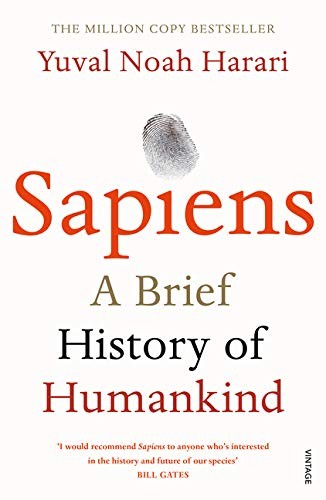
Sapiens
Tokyo
The Legend of Zelda: Breath of the Wild
Sonar Pro SearchSonar Pro Search
No pick

No pick
No pick
Abbey Road
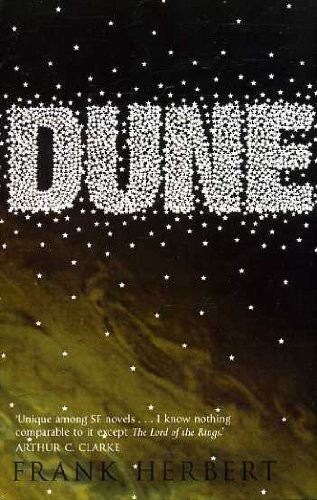
Dune
No pick
The Legend of Zelda: Breath of the Wild
Price and specs
| Spec | GPT-4.1 Mini | Sonar Pro Search |
|---|---|---|
| Input price | $0.4/M tokens | $3/M tokens |
| Output price | $1.6/M tokens | $15/M tokens |
| Context window | 1.0M tokens | 200K tokens |
| Weights | Closed | Closed |
| Free API (OpenRouter) | No | No |
| Released | Apr 2025 | Oct 2025 |
| At 10M a month | $4.00 | $30.00 |
Input tokens at list price. No caching, no batch discount.
Where to run it
GPT-4.1 Mini2 hosts

Sonar Pro Search1 host
Per million tokens. Prices and uptime via OpenRouter, checked 13 Oct 2026.
Common questions
What is the difference between GPT-4.1 Mini and Sonar Pro Search?
GPT-4.1 Mini is developed by OpenAI while Sonar Pro Search is developed by Perplexity. GPT-4.1 Mini has a 1.0M token context window vs Sonar Pro Search's 200K. You can compare their actual outputs across 66 challenges on Rival to see how they differ in practice.
Which is better, GPT-4.1 Mini or Sonar Pro Search?
It depends on your use case. GPT-4.1 Mini and Sonar Pro Search each have strengths in different areas. Rival lets you compare their real outputs side-by-side across 66 challenges so you can judge which fits your needs best.
How much does GPT-4.1 Mini cost compared to Sonar Pro Search?
GPT-4.1 Mini costs $0.4/M input tokens and Sonar Pro Search costs $3/M input tokens. GPT-4.1 Mini is $2.60/M cheaper per input. Check their side-by-side outputs on Rival to see if the price difference is justified by quality.
How can I compare GPT-4.1 Mini and Sonar Pro Search on Rival?
This page shows a side-by-side comparison of GPT-4.1 Mini and Sonar Pro Search across shared challenges. You can vote on which model produced the better output in a blind duel. Browsing and voting are free. No account is needed to look; signing in only saves your votes and likes.
More comparisons
Against the newest arrivals
- GPT-4.1 Mini vs Gemini 4 ArgonLanded Oct 2026
- Sonar Pro Search vs Muse WonderLanded Oct 2026
- GPT-4.1 Mini vs GPT-4 TurboLanded Oct 2026
- Sonar Pro Search vs Step 5 PreviewLanded Oct 2026
- GPT-4.1 Mini vs Claude Haiku 5.5Landed Oct 2026
- Sonar Pro Search vs Ling 3.1 FlashLanded Oct 2026
- GPT-4.1 Mini vs Mistral Large 4Landed Oct 2026
- Sonar Pro Search vs GPT-6.1 SolLanded Sep 2026


Same lab, same size, long tail
- GPT-4.1 Mini vs GPT-4.1Version compare
- GPT-4.1 Mini vs GPT-6.1 SolVersion compare
- Sonar Pro Search vs Ox AlphaSame size
- Sonar Pro Search vs Claude Sonnet 5.5Same size
- Sonar Pro Search vs Qwen3.8 MaxNew provider
- Sonar Pro Search vs Qwen3.8 Max (0902)Same size
- Sonar Pro Search vs Qwen3.8 Max PrimeSame size
- Sonar Pro Search vs Qwen3.8 Omni FlashSame size

