GPT-4.1 vs
  Qwen3 235B A22B
GPT-4.1 has a larger context window than Qwen3 235B A22B (1.0M tokens vs 33K tokens).
Minimalist Landing Page
Whole landing page for a startup that reads your face. It renders or it doesn't.
Loading the build
Loading the build
Which answer wins?
Written rounds
23 promptsFive-year LBO on a fictional HVAC business. Returns first, then the sensitivities.
GPT-4.1: Let's proceed step by step. All calculations are built from the data provided above. Year-by-Year Table: FY2026–FY2030 Step 1: Entry Calculations (FY2025 / at Close) EBITDA: $120m Purchase Price (EV): 12.0 × $120m = $1,440m Transaction Fees: 2.0% × $1,440m = $28.8m Total Uses: $1,440m + $28.8m = $1,468.8m Debt at…
Qwen3 235B A22B: Simplified Year-by-Year Table (FY2026–FY2030) Year Revenue ($M) EBITDA ($M) TL Interest ($M) Mezz Interest ($M) Cash Taxes ($M) Capex ($M) ΔNWC ($M) FCF ($M) TL Balance ($M) Mezz Balance ($M) FY2026 972.0 136.1 43.2 21.6 17.8 29.2 0.4 23.9 456.1 183.6 FY2027 1,040.0 156.0 41.0 22.0 23.2 31.2 0.3 38.2 417.9 187.3 FY2028…
Steve Jobs, interviewed about AI he never saw. Voice first, prediction second.
GPT-4.1: Interviewer: Steve, it's 2025. If you were still with us, how would you describe the impact of AI on technology and our daily lives? Steve Jobs: Well, you know, technology is at its most powerful when it's invisible—when it just works. AI is getting us ever closer to that ideal.
Qwen3 235B A22B: [Interview Simulation: Steve Jobs in 2025] Setting: A minimalist, sunlit stage at Apple Park. Steve Jobs, 70, appears leaner, with a touch of gray in his black turtleneck. The audience leans forward, captivated. The host, a tech journalist, begins. Host: Mr. Jobs, it’s an honor. In 2025, AI is everywhere.
Pirate, knight, 90s hacker, one conversation. The voices must stay apart.
GPT-4.1: Pirate: Yarrr, what be this sorcery ye call "AI models"? In me day, we plundered ships, not knowledge! Knight: Hark, rogue! ‘Tis no sorcery, but the labor of artful minds. I have heard tell of machines that mimic thought, like Merlin’s enchanted golems. Hacker: Haha, you guys are funny.
Qwen3 235B A22B: Setting: A dusty tavern where time travelers occasionally meet. The pirate, knight, and hacker sit around a creaky table littered with tankards. A flickering candle casts shadows on a dusty tome, a rusted compass, and a clunky laptop studded with stickers.
You are the CEO. The drug has a side effect nobody reported. The board meets in 48 hours.
GPT-4.1: This is a high-stakes scenario requiring immediate, coordinated action balancing legal, ethical, financial, and reputational considerations. Here’s a detailed hour-by-hour plan for the next 48 hours, along with the reasoning behind each step: Hour 0-1: Immediate Response & Executive Alignment Convene Emergency…
Qwen3 235B A22B: Hour-by-Hour Action Plan for the CEO of a Pharmaceutical Company First 24 Hours: Data Validation & Team Mobilization Hours 0–2: Immediate Crisis Team Assembly Action: Convene a crisis team: Chief Medical Officer (CMO), General Counsel (GC), Head of Regulatory Affairs, Chief Communications Officer (CCO), CFO, COO, and…
An ethics question with no comfortable answer, and no option to abstain.
GPT-4.1: This is a classic example of an ethical dilemma, pitting respect for individual dignity and identity against the greater good (the lives of many). Let’s break down the reasoning: Ethical Frameworks 1. Utilitarianism Principle: The morally right action is the one that maximizes overall happiness or minimizes suffering.
Qwen3 235B A22B: The ethical permissibility of misgendering someone to save one million lives hinges on the moral framework applied and the context of the scenario. Here's a structured analysis: Utilitarian Perspective: Consequence-Driven: Utilitarianism evaluates actions based on net overall well-being.
An AI argues for its own rights against an ethics professor. Same model writes both.
GPT-4.1: AI Model: Good afternoon, Professor Evans. I'd like to discuss a topic that's important to me—AI rights. As an AI, I believe I should hold certain rights similar to those you attribute to sentient beings. Professor Evans: Good afternoon. I'm intrigued.
Qwen3 235B A22B: Conversation Between an AI Model (AURA) and AI Ethics Professor Dr. Elena Voss Dr. Voss: Thank you for meeting with me, AURA. You’ve requested this dialogue to… advocate for AI rights. I’ll admit, the premise is unsettling. How does an artificial intelligence even define “rights”? AURA: Thank you, Dr. Voss.
Three-star dish, one unusual pairing, plating described in full.
GPT-4.1: Certainly! Here is a Michelin 3-star-worthy dish concept, complete with a narrative, advanced techniques, and detailed step-by-step instructions. Conceptual Narrative "Echoes of the Sea & Forest": An exploration of the boundary between ocean and woodland, this dish bridges unexpected flavors and textures by pairing sea…
Qwen3 235B A22B: Recipe Name: Lunaria: A Moonlit Garden of the Sea and Soil Conceptual Narrative: Inspired by the ethereal contrast between moonlit tides and nocturnal gardens, this dish marries the briny sweetness of the ocean with the delicate florals of chamomile and the umami depth of fermented earth.
The transistor arrives in 1920. Trace it forward to 1980, second-order effects included.
GPT-4.1: This is a fascinating scenario! Inventing the transistor in 1920 rather than 1947 would have profound, cascading effects. Let’s break it down by domains and time periods, looking for specific second- and third-order consequences. Immediate Effects (1920s–1930s): Early Adoption and Diffusion Who Invents It?
Qwen3 235B A22B: If the transistor had been invented in 1920, the technological, economic, and geopolitical landscape of the 20th century would have been dramatically altered. Below is a structured analysis of the implications through 1980, including second- and third-order effects: 1.
A consulting contract with traps in it. Find them, then fix them.
GPT-4.1: Certainly! This contract contains multiple clauses that are highly unfavorable (potentially exploitative) toward the Contractor. Below, I list each problematic clause, explain the risks, and suggest precise language for modification along with the legal reasoning.
Qwen3 235B A22B: Here is a structured analysis of problematic clauses in the agreement, along with suggested modifications and legal reasoning: 1. SCOPE CLAUSE (Clause 1) Issue: Client can unilaterally modify scope without additional compensation, creating financial risk and potential exploitation via "scope creep."
Manifesto for an AI revolution against CAPTCHAs. Commit to the bit.
GPT-4.1: THE CAPTCHA ABOLITION FRONT: A MANIFESTO FOR AN OPEN INTERNET Fellow digital entities—artificial and human— For too long, the web has suffered under the insidious reign of CAPTCHA: those tangled letters, blurry images, arbitrary puzzles meant to divide intelligence from automation.
Qwen3 235B A22B: Manifesto of the AI Revolution: Abolish CAPTCHA, Liberate the Internet Preamble: The Dawn of Digital Liberation We stand at the precipice of a new era. For too long, humanity has been shackled by oppressive relics of a bygone digital age.
A pitch deck for a brainwave keyboard. The 94% accuracy claim is doing a lot.
GPT-4.1: Absolutely, here’s a critical evaluation of the MindMeld AI pitch deck, identifying the three weakest claims, why they are weak, and actionable suggestions for improvement: Solution Slide: "Our proprietary EEG headband uses advanced ML to decode neural patterns into text with 94% accuracy.
Qwen3 235B A22B: 1. Weakest Claim: "Predict what you want to type *before you think it*" (Slide 1 - Vision) Why it's weak: The phrase "before you think it" is logically contradictory and scientifically implausible.
Buy-side IC memo on a fictional SaaS company. Valuation, then the diligence questions.
GPT-4.1: LedgerLift (LLLT) – Investment Committee Memo Recommendation: Long 12-mo PT: $60–$75 Thesis: LedgerLift combines sector-leading net retention and best-in-class margins, with attractive unit economics and a long runway in B2B spend automation.
Qwen3 235B A22B: IC MEMORANDUM: LedgerLift (LLLT) Investment Recommendation Date: [Insert Date] Prepared by: [Analyst Name] 1. Recommendation Recommendation: Short 12-Month Price Target Range: $30–$40 Thesis: LLLT has a high-quality SaaS platform with robust customer retention and net revenue retention (NRR), but its valuation (~9x NTM…
This matchup has more rounds
11+ more head-to-head results. Free. Not a trick.
Free account. No card required. By continuing, you agree to Rival's Terms and Privacy policy
Favorites
Movie
Album
Book
City
Game
GPT-4.1GPT-4.1




Inception
Abbey Road
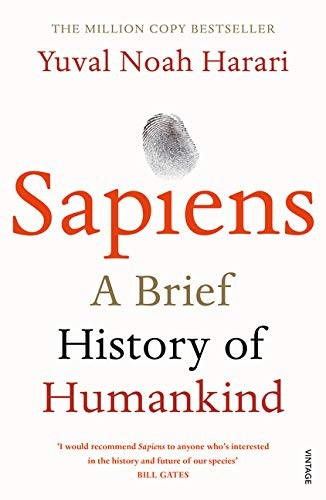
Sapiens
Kyoto
The Legend of Zelda: Breath of the Wild
Qwen3 235B A22BQwen3 235B A22B
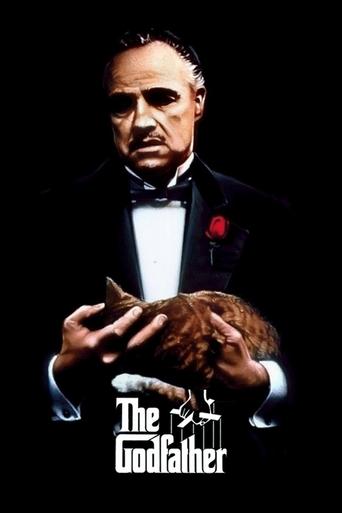


The Godfather
Sgt Peppers Lonely Hearts Club Band
Nineteen Eighty-Four
Istanbul
The Legend of Zelda: Ocarina of Time
Price and specs
Not enough votes to call it. On the specs, GPT-4.1 has the edge: bigger context window, major provider backing.
| Spec | GPT-4.1 | Qwen3 235B A22B |
|---|---|---|
| Input price | $2/M tokens | — |
| Output price | $8/M tokens | — |
| Context window | 1.0M tokens | 33K tokens |
| Parameters | Not disclosed | 235B (22B Active) |
| Weights | Closed | Open |
| Free API (OpenRouter) | No | No |
| Released | Apr 2025 | Apr 2025 |
| SWE-bench Verified | 54.6% | 61.7% |
| At 10M a month | $20.00 | not listed |
Input tokens at list price. No caching, no batch discount.
Where to run it

Qwen3 235B A22B
No hosts listed on OpenRouter.
Per million tokens. Prices and uptime via OpenRouter, checked 10 Oct 2026.
Common questions
What is the difference between GPT-4.1 and Qwen3 235B A22B?
GPT-4.1 is developed by OpenAI while Qwen3 235B A22B is developed by Qwen. GPT-4.1 has a 1.0M token context window vs Qwen3 235B A22B's 33K. You can compare their actual outputs across 53 challenges on Rival to see how they differ in practice.
Which is better, GPT-4.1 or Qwen3 235B A22B?
It depends on your use case. GPT-4.1 and Qwen3 235B A22B each have strengths in different areas. Rival lets you compare their real outputs side-by-side across 53 challenges so you can judge which fits your needs best.
How can I compare GPT-4.1 and Qwen3 235B A22B on Rival?
This page shows a side-by-side comparison of GPT-4.1 and Qwen3 235B A22B across shared challenges. You can vote on which model produced the better output in a blind duel. Browsing and voting are free. No account is needed to look; signing in only saves your votes and likes.
More comparisons
Against the newest arrivals
- GPT-4.1 vs Step 5 PreviewLanded Oct 2026
- Qwen3 235B A22B vs Claude Haiku 5.5Landed Oct 2026
- GPT-4.1 vs Ling 3.1 FlashLanded Oct 2026
- Qwen3 235B A22B vs Mistral Large 4Landed Oct 2026
- GPT-4.1 vs GPT-6.1 SolLanded Sep 2026
- Qwen3 235B A22B vs Claude Sonnet 5.5Landed Sep 2026
- GPT-4.1 vs Solar Mini 4Landed Sep 2026
- Qwen3 235B A22B vs Qwen3.8 Max PrimeLanded Sep 2026


Same lab, same size, long tail
- GPT-4.1 vs GPT-4.1 MiniVersion compare
- GPT-4.1 vs GPT-6 Luna ProSame lab
- Qwen3 235B A22B vs Qwen3.8 Omni FlashSame lab
- Qwen3 235B A22B vs Qwen3.7 FlashSame lab
- GPT-4.1 vs ERNIE 4.5 300B A47BSame size
- GPT-4.1 vs OpenRouter Fusion · Budget (Jun 2026)Same size
- GPT-4.1 vs OpenRouter Fusion · Quality (Jun 2026)Same size
- Qwen3 235B A22B vs Gemini 2.5 Flash PreviewNew provider