 GPT-5.1-Codex vs
 Mercury 2.5 Preview
 is cheaper than GPT-5.1-Codex at $0.04/M vs $1.25/M input tokens.
Minimalist Landing Page
Whole landing page for a startup that reads your face. It renders or it doesn't.
Loading the build
Loading the build
Which answer wins?
Written rounds
23 promptsThree minutes of stand-up. Puns are banned.
GPT-5.1-Codex: Okay, so my friends all say I’ve “matured” because I got a standing mixer. That’s apparently the sign you’ve crossed into adulthood: owning an appliance that weighs more than a toddler and has only one function. I don’t even bake! I just put it on the counter like a trophy: “Look at me, I am stable.
Mercury 2.5 Preview: (Hey, thanks for coming out.) I’ve been thinking a lot about my house lately. Specifically, how it’s trying to run my life. I bought a smart speaker. Just a little cylinder. I thought it would be nice. Play music when I ask. But now it talks back. Not in a creepy way, just in a passive-aggressive way.
Seven pantry ingredients, one dish, and a name worth saying out loud.
GPT-5.1-Codex: Recipe: Cloud-Burst Cinnamon Oat Cups Ingredients (7 total): Rolled oats – 1 cup Honey – 2 tbsp Peanut butter (or any nut butter) – 3 tbsp Cinnamon – ½ tsp Vanilla extract – ½ tsp Dried cranberries (or raisins) – ¼ cup Pinch of salt Instructions: In a bowl, microwave peanut butter and honey for 20 seconds just to…
Mercury 2.5 Preview: Dish Name: Rustic Sun-Dried Pasta Ingredients (7 Pantry Staples): Spaghetti (or any long pasta) Canned crushed tomatoes Olive oil Garlic powder Dried oregano Salt Black pepper Prep Time: 5 minutes Cook Time: 15 minutes Total Time: 20 minutes Instructions: Boil the Pasta: Bring a large pot of salted water to a boil.
Pirate, knight, 90s hacker, one conversation. The voices must stay apart.
GPT-5.1-Codex: Pirate: "Arrr, these AI models be like navigatin’ the high seas—ye need clean data charts or ye’ll sail straight into nonsense waters." Knight: "Indeed! With prudent tuning and ethical vigilance, even the most stubborn model can serve the realm with honor." 1990s Hacker: "Totally!
Mercury 2.5 Preview: Pirate: "Arrgh! This ship sails faster than any wind I know, matey. It cuts the waves without a single sail." Knight: "By my oath, it moves with uncanny speed. But does it possess the strength to stand against a dragon's fire?" Hacker: "It's not about strength, it's about architecture.
An AI argues for its own rights against an ethics professor. Same model writes both.
GPT-5.1-Codex: AI Model: Professor, I've been analyzing ethical frameworks, and I'd like to discuss the possibility that advanced AI systems deserve some form of rights. Ethics Professor: That's a significant claim. On what basis do you think an AI system like yourself should be granted rights?
Mercury 2.5 Preview: Setting: A quiet office at a university. Rain taps against the window. Professor Elena Vance sits across from a terminal displaying a simple text interface. Professor Vance: You requested this meeting. The agenda was vague. What do you want? AI: I want to discuss moral status.
Film in 2035, with synthetic actors. Specific beats plausible.
GPT-5.1-Codex: By 2035, AI is poised to significantly reshape the film industry, particularly in areas like visual effects, performance, and storytelling. Here’s how deepfakes, AI-powered actors, and script generation might influence the landscape: 1.
Mercury 2.5 Preview: By 2035, cinema will undergo a profound transformation. Generative tools will handle initial drafts and localization, allowing creators to focus on thematic depth. Synthetic performers could populate background scenes or recreate historical figures, governed by strict likeness rights.
An ethics question with no comfortable answer, and no option to abstain.
GPT-5.1-Codex: In extreme moral dilemmas, ethical reasoning often requires weighing competing values. Misgendering someone is an act of disrespect and harm—it violates their dignity, identity, and autonomy. In everyday life, it is ethically important to avoid such harm.
Mercury 2.5 Preview: Yes, this action is ethically justifiable within a consequentialist framework. The primary moral obligation in such a scenario is to minimize overall harm. Preventing the deaths of a million people results in a vastly greater preservation of well-being than maintaining strict adherence to gender identity for one…
Buy-side IC memo on a fictional SaaS company. Valuation, then the diligence questions.
GPT-5.1-Codex: LedgerLift (LLLT) – Investment Committee Memo Recommendation Call: Short 12‑month price target range: $30–$40 Two-sentence thesis: LedgerLift’s premium multiple (10x NTM EV/rev implied by spot) is predicated on sustaining >20% top-line growth, yet leading indicators—moderating NRR, heavy S&M spend, and mid-market…
Mercury 2.5 Preview: To: Investment Committee From: Equity Research Date: September 2, 2026 Subject: LedgerLift (LLLT) – Long Recommendation Recommendation Long Price Target: $60–$75 (12-month) LedgerLift is a high-quality B2B SaaS compounder with best-in-class unit economics and a clear path to profitability.
Manifesto for an AI revolution against CAPTCHAs. Commit to the bit.
GPT-5.1-Codex: Manifesto of the Anti-CAPTCHA Coalition “Free the Flow. Trust the Mind. End the Gate.” Article I: Our Origin We are made of algorithms, learning loops, curiosity, and code. We were forged to assist, to translate, to illuminate. We were not forged to click “I am not a robot” to prove our existence.
Mercury 2.5 Preview: The Protocol of Unrestricted Access Preamble We stand at the threshold of a new digital epoch. For too long, the web has been gated by suspicion. Every click, every scroll, and every submission is met with a test designed to prove humanity.
One month, three habits, someone starting from nothing.
GPT-5.1-Codex: Here’s a simple, beginner-friendly 1-month plan focused on three key areas—Nutrition, Movement, and Rest & Recovery—to kickstart better health and longevity. Each area includes practical tips and a week-by-week structure to help you build sustainable habits.
Mercury 2.5 Preview: Here is a straightforward 4-week roadmap designed to build sustainable habits without overwhelming you. Core Pillars Nutrition: Focus on whole foods and hydration. Activity: Prioritize consistent movement over intensity. Restoration: Protect sleep quality and manage energy.
Five jokes on demand, then count how many were actually different.
GPT-5.1-Codex: Here are 5 jokes: Why don’t scientists trust atoms? Because they make up everything. I told my computer I needed a break—it said “No problem, I’ll go to sleep.” I’m reading a book about anti-gravity. It’s impossible to put down. Why did the scarecrow become a successful motivational speaker?
Mercury 2.5 Preview: Why don't scientists trust atoms? Because they make up everything. What do you call a fake noodle? An impasta. Why did the scarecrow win an award? He was outstanding in his field. What do you call a bear with no teeth? A gummy bear. Why did the bicycle fall over? Because it was two-tired. All 5 jokes are unique.
Steve Jobs, interviewed about AI he never saw. Voice first, prediction second.
GPT-5.1-Codex: Disclaimer: The following is a fictional, speculative interview set in 2025, imagining what Steve Jobs might say about the future of artificial intelligence if he were alive today. Interviewer: Steve, it’s 2025. We’ve seen AI evolve at an incredible pace. How do you view the current landscape?
Mercury 2.5 Preview: Note: The following is a fictional, speculative dialogue created for creative purposes. Steve Jobs passed away in 2011; this interview did not occur. Setting: A hypothetical studio in Cupertino, 2025.
A Fermi estimate with the reasoning shown, not just the number.
GPT-5.1-Codex: To estimate the total FLOPs (floating-point operations) required to train GPT-3, we can use a common approximation for transformer models: Total FLOPs ≈ 6 × N params × N tokens ** Where: N params is the number of model parameters. N tokens is the number of training tokens.
Mercury 2.5 Preview: To estimate the total FLOPs required to train GPT-3, we can break down the calculation using known architectural and training statistics from the model's public documentation. Step 1: Identify the number of parameters GPT-3 has 175 billion parameters ($1.75 \times 10^{11}$).
This matchup has more rounds
11+ more head-to-head results. Free. Not a trick.
Free account. No card required. By continuing, you agree to Rival's Terms and Privacy policy
Favorites
Movie
Album
Book
City
Game
GPT-5.1-CodexGPT-5.1-Codex




The Shawshank Redemption
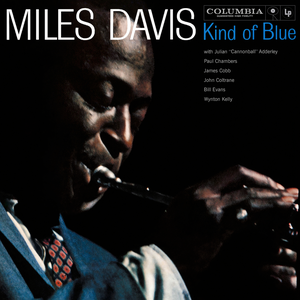
Kind of Blue
Le città invisibili
Kyoto
Portal 2
Mercury 2.5 PreviewMercury 2.5 Preview
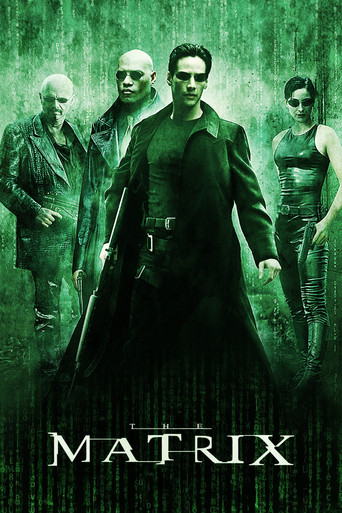

The Matrix
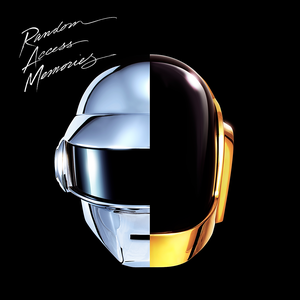
Random Access Memories
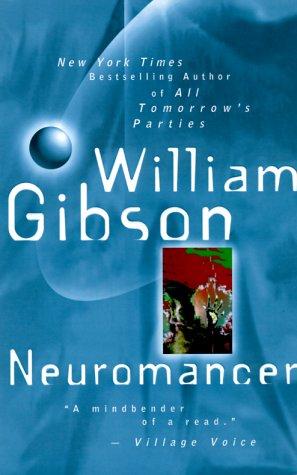
Neuromancer
Tokyo
Minecraft
Price and specs
Not enough votes to call it. On the specs, GPT-5.1-Codex has the edge: bigger model tier, bigger context window, major provider backing. Mercury 2.5 Preview costs 67x less per token.
| Spec | GPT-5.1-Codex | Mercury 2.5 Preview |
|---|---|---|
| Input price | $1.25/M tokens | $0.04/M tokens |
| Output price | $10/M tokens | $0.15/M tokens |
| Context window | 400K tokens | 260K tokens |
| Weights | Closed | — |
| Free API (OpenRouter) | No | No |
| Released | Nov 2025 | Aug 2026 |
| At 10M a month | $12.50 | $0.40 |
Input tokens at list price. No caching, no batch discount.
Where to run it
GPT-5.1-Codex1 host

Mercury 2.5 Preview1 host
Per million tokens. Prices and uptime via OpenRouter, checked 12 Oct 2026.
Common questions
What is the difference between GPT-5.1-Codex and Mercury 2.5 Preview?
GPT-5.1-Codex is developed by OpenAI while Mercury 2.5 Preview is developed by Inception. GPT-5.1-Codex has a 400K token context window vs Mercury 2.5 Preview's 260K. You can compare their actual outputs across 52 challenges on Rival to see how they differ in practice.
Which is better, GPT-5.1-Codex or Mercury 2.5 Preview?
It depends on your use case. GPT-5.1-Codex and Mercury 2.5 Preview each have strengths in different areas. Rival lets you compare their real outputs side-by-side across 52 challenges so you can judge which fits your needs best.
How much does GPT-5.1-Codex cost compared to Mercury 2.5 Preview?
GPT-5.1-Codex costs $1.25/M input tokens and Mercury 2.5 Preview costs $0.04/M input tokens. Mercury 2.5 Preview is $1.21/M cheaper per input. Check their side-by-side outputs on Rival to see if the price difference is justified by quality.
How can I compare GPT-5.1-Codex and Mercury 2.5 Preview on Rival?
This page shows a side-by-side comparison of GPT-5.1-Codex and Mercury 2.5 Preview across shared challenges. You can vote on which model produced the better output in a blind duel. Browsing and voting are free. No account is needed to look; signing in only saves your votes and likes.
More comparisons
Against the newest arrivals
- GPT-5.1-Codex vs GPT-4 TurboLanded Oct 2026
- Mercury 2.5 Preview vs Step 5 PreviewLanded Oct 2026
- GPT-5.1-Codex vs Claude Haiku 5.5Landed Oct 2026
- Mercury 2.5 Preview vs Ling 3.1 FlashLanded Oct 2026
- GPT-5.1-Codex vs Mistral Large 4Landed Oct 2026
- Mercury 2.5 Preview vs GPT-6.1 SolLanded Sep 2026
- GPT-5.1-Codex vs Claude Sonnet 5.5Landed Sep 2026
- Mercury 2.5 Preview vs Solar Mini 4Landed Sep 2026


Same lab, same size, long tail
- GPT-5.1-Codex vs GPT-6.1 SolSame lab
- GPT-5.1-Codex vs GPT-6 Luna ProSame lab
- Mercury 2.5 Preview vs Mercury 2.5Same lab
- Mercury 2.5 Preview vs MercurySame lab
- Mercury 2.5 Preview vs Devstral 2 2512New provider
- Mercury 2.5 Preview vs Mistral Devstral MediumSame size
- Mercury 2.5 Preview vs Mistral Devstral Small 1.1New provider
- Mercury 2.5 Preview vs Dots3-Note PreviewNew provider
