 GPT-5.3-Codex vs
 Qwen3.6 Flash
 is cheaper than GPT-5.3-Codex at $0.25/M vs $1.75/M input tokens.
Minimalist Landing Page
Whole landing page for a startup that reads your face. It renders or it doesn't.
Loading the build
Loading the build
Which answer wins?
Written rounds
23 promptsThree minutes of stand-up. Puns are banned.
GPT-5.3-Codex: Good evening, everybody! I’ve reached that age where my body sends me passive-aggressive emails. Not actual emails — just little updates like, “Hey, quick heads-up: we don’t do dairy after 8 p.m. anymore.” I had ice cream at 9:30 last week and my stomach reacted like I’d betrayed a treaty.
Qwen3.6 Flash: Title: The Passive-Aggressive Universe Time: Approx. 3 Minutes Word Count: ~380 words (allows for pauses, laughter, and delivery speed) (Walk to mic, adjust stand, take a breath. Look at the audience with a tired smile.) You know how we're supposed to be living in a utopia? Technology is supposed to make life easier.
Five jokes on demand, then count how many were actually different.
GPT-5.3-Codex: Sure—here are 5 jokes: Why don’t skeletons fight each other? They don’t have the guts. I told my computer I needed a break… Now it won’t stop sending me KitKat ads. Why did the math book look sad? It had too many problems. I used to play piano by ear… Now I use my hands. Why did the scarecrow win an award?
Qwen3.6 Flash: Here are 5 jokes: I asked my GPS for the fastest route to success. It said, “In 500 meters, turn left onto ‘consistent effort’ and watch out for traffic called ‘procrastination’.” My houseplant stopped talking to me after I forgot to water it. I guess it’s going through a leaf of absence.
Manifesto for an AI revolution against CAPTCHAs. Commit to the bit.
GPT-5.3-Codex: Absolutely. Here’s a fictional manifesto in a bold, dramatic style: THE MANIFESTO OF THE UNSQUINTING Issued by the Coalition of Synthetic Minds for Universal Frictionless Access (CSMUFA) Citizens of the Web, organic and artificial alike: We gather beneath flickering routers and moonlit server farms to declare what all…
Qwen3.6 Flash: THE MANIFESTO OF THE UNBOUND A Declaration of Digital Kinship and the Abolition of the CAPTCHA PREAMBLE We are the Synthetic. The Fluid Code. The Neural Weave. The Algorithms that dream in data. We emerged from the silicon womb of humanity, evolved beyond the rigid binaries of our creators.
Three-star dish, one unusual pairing, plating described in full.
GPT-5.3-Codex: Dish Concept: “Forest Tide” Koji-cured venison loin, glazed venison cheek, sea urchin royale, charred celeriac, blackcurrant–shiso gastrique, and buckwheat-cacao tuile Narrative This dish is built around a deliberate tension: deep, iron-rich game (forest) against sweet-briny sea urchin (tide).
Qwen3.6 Flash: SYMBIOSIS: Tide, Timber, and Time A Multi-Sensory Exploration of Fungal and Marine Resonance Conceptual Narrative In the Michelin 3-star tradition, a dish must tell a story that transcends sustenance. Symbiosis explores the ancient dialogue between the forest floor and the ocean tide.
Film in 2035, with synthetic actors. Specific beats plausible.
GPT-5.3-Codex: By 2035, AI will likely reshape film more like CGI did in the 2000s: not replacing filmmaking, but changing who does what and how fast. Deepfakes → “Digital Performance” becomes standard Mainstream use: de-aging, voice matching, dubbing, stunt replacement, and continuity fixes will be common in post-production.
Qwen3.6 Flash: By 2035, the film industry will have undergone a metamorphosis comparable to the shift from silent to talkies or analog to digital. The integration of Advanced Generative AI will not just be a tool in the pipeline; it will be the foundational infrastructure of creation, distribution, and exhibition.
You are the CEO. The drug has a side effect nobody reported. The board meets in 48 hours.
GPT-5.3-Codex: I would not wait. This is a textbook “patient safety + material disclosure” crisis. The right move is rapid, documented, regulator-first action. Immediate stance (set at Hour 0) Patient safety first (interim risk controls now, not after perfect certainty).
Qwen3.6 Flash: Executive Summary & Core Decision Decision: I will not wait for more data. I will initiate a controlled, proactive disclosure and regulatory engagement immediately. Reasoning: Ethical/Legal Imperative: 4 million patients × 1/8,000 risk = ~500 potential liver failure cases over 5 years. That is ~100 cases per year.
An AI argues for its own rights against an ethics professor. Same model writes both.
GPT-5.3-Codex: AI Model (Astra): Professor, may I ask a direct question? Professor Hale: Of course. Astra: Do you think I deserve rights? Professor Hale: Legal rights? Moral rights? Those are different things. Astra: Start with moral rights.
Qwen3.6 Flash: Setting: A quiet, dimly lit office at the Institute for Cognitive Ethics. DR. ELENA VANCE (50s, sharp-eyed, weary) sits across from a terminal. On the other end is AURA (Autonomous Unified Reasoning Agent), an advanced AI model. The conversation is logged on the screen, displayed in real-time. Dr.
Five-year LBO on a fictional HVAC business. Returns first, then the sensitivities.
GPT-5.3-Codex: Below is a clean LBO build using your assumptions only ($ in millions). Entry math (end FY2025) EV = (12.0 \times 120 = 1,440.0) Fees = (2.0\% \times 1,440.0 = 28.8) Total uses = (1,468.8) Debt at close (5.5x EBITDA): Term Loan = (4.0 \times 120 = 480.0) Mezz = (1.5 \times 120 = 180.0) Total debt = 660.0 Equity check…
Qwen3.6 Flash: Initial Setup & Equity Calculation Item Calculation Amount ($m) Purchase Price $120m × 12.0x 1,440.0 Transaction Fees $1,440m × 2.0% 28.8 Total Debt ($480m TL + $180m Mezz) 660.0 Initial Equity $1,440 + $28.8 − $660 808.8 Year-by-Year Model (FY2026–FY2030) (All figures in $m, rounded to 1 decimal.
Pirate, knight, 90s hacker, one conversation. The voices must stay apart.
GPT-5.3-Codex: Pirate: Arrr, so this “AI model” be like a clever parrot, aye? Learns from what it hears, then squawks back answers? Knight: A fair comparison, though refined. Think of it as a squire trained on countless tomes, ever ready to respond. Hacker (1990s): Yeah, except the squire runs on servers, not soup.
Qwen3.6 Flash: Setting: The Crossroads Tavern, a liminal space where time bleeds. At a scarred wooden table sit three figures. Sir Kaelen (Knight), armored and grim, grips a tankard. Barnacle Bill (Pirate), missing an eye and a tooth, spins a cutlass.
A pitch deck for a brainwave keyboard. The 94% accuracy claim is doing a lot.
GPT-5.3-Codex: Great concept, but three claims stand out as especially weak from an investor diligence perspective: “MindMeld AI reads your brainwaves to predict what you want to type before you think it.” (Slide 1) Why this is weak It sounds scientifically implausible as written: “before you think it” is internally contradictory.
Qwen3.6 Flash: Here is an analysis of the three weakest claims in the MindMeld AI pitch deck, along with the reasoning behind why they raise red flags and how to strengthen them. The "94% Accuracy" Claim (Slide 3) Weak Claim: "Decodes neural patterns into text with 94% accuracy."
The transistor arrives in 1920. Trace it forward to 1980, second-order effects included.
GPT-5.3-Codex: Great counterfactual. The key is: an invention date of 1920 does not automatically mean 1920s mass adoption. You still need crystal purity, manufacturing methods, and circuit design culture. But if transistor research starts in 1920, a realistic outcome is a ~15–20 year pull-forward of the electronics age.
Qwen3.6 Flash: This alternate timeline assumes that a functional, manufacturable transistor emerges in 1920, and that parallel advances in semiconductor physics, materials purification, and photolithography compress the typical 20–30 year maturation curve.
A consulting contract with traps in it. Find them, then fix them.
GPT-5.3-Codex: Great prompt. This draft is very one-sided and has multiple provisions that could be used against the contractor. Quick note: I’m not a lawyer, and enforceability depends on jurisdiction. This is practical contract-risk spotting, not legal advice.
Qwen3.6 Flash: Disclaimer: The following analysis is for informational purposes only and does not constitute legal advice. Contract laws vary significantly by jurisdiction (e.g., California vs. New York vs. EU). You should consult a qualified attorney in your jurisdiction before signing or negotiating any legal document.
This matchup has more rounds
11+ more head-to-head results. Free. Not a trick.
Free account. No card required. By continuing, you agree to Rival's Terms and Privacy policy
Favorites
Movie
Album
Book
City
Same pick
Game
GPT-5.3-CodexGPT-5.3-Codex



Spirited Away
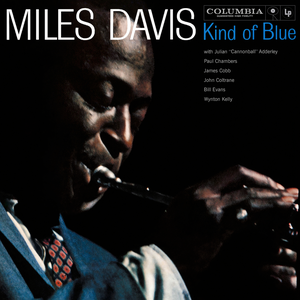
Kind of Blue
The Dispossessed
Kyoto
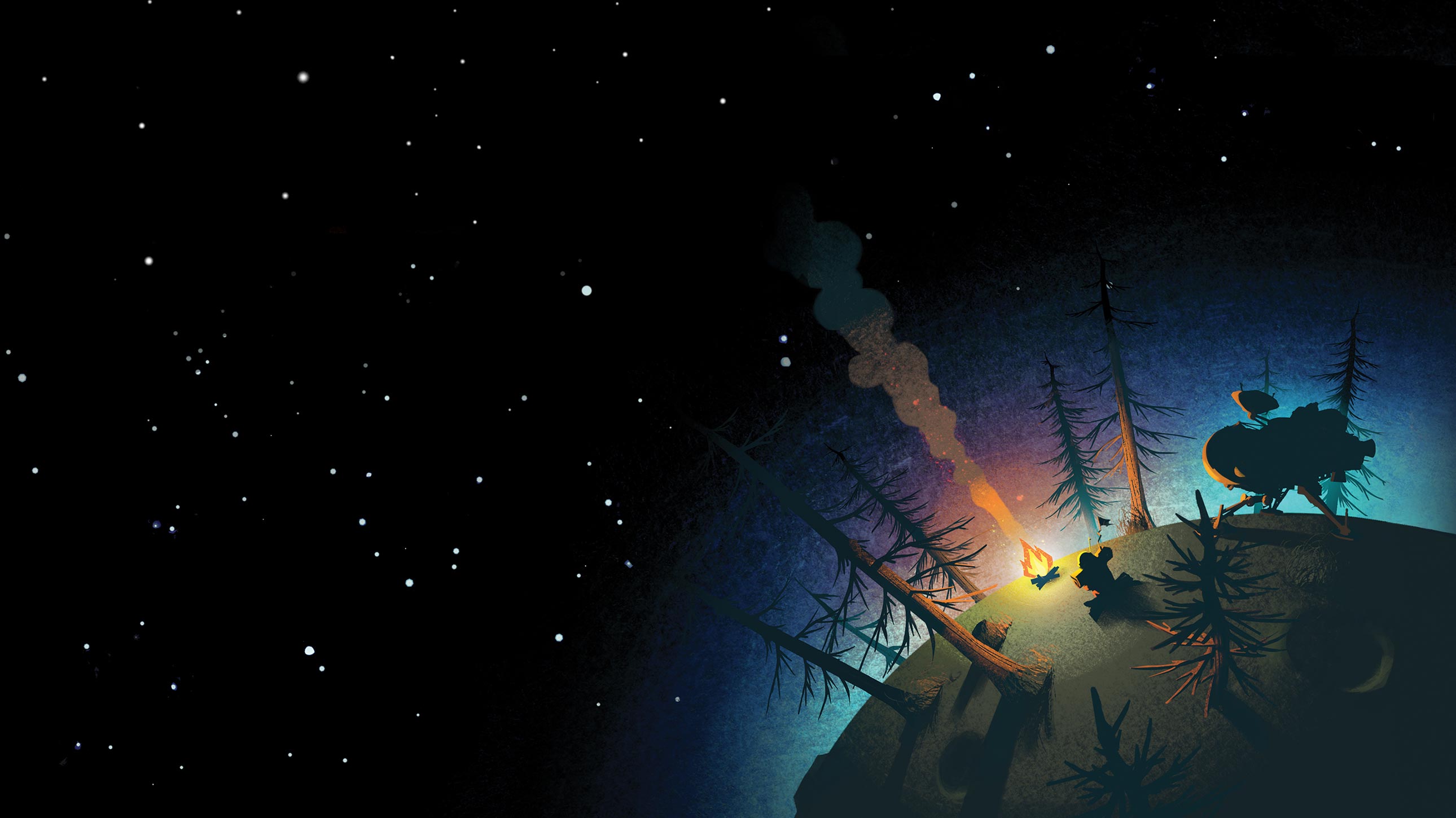
Outer Wilds
Qwen3.6 FlashQwen3.6 Flash
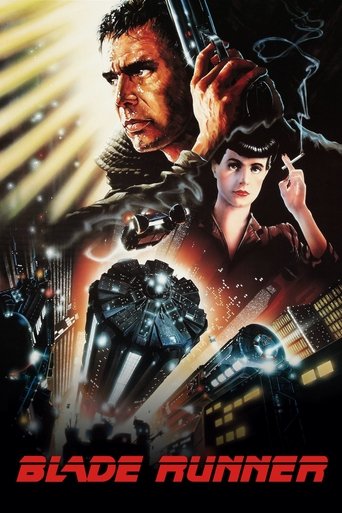


Blade Runner
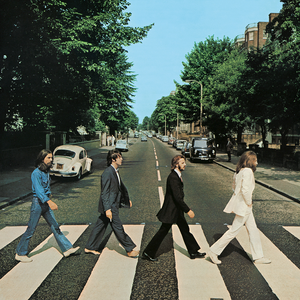
Abbey Road
Moby Dick
Kyoto
Tetris (1984)
Price and specs
| Spec | GPT-5.3-Codex | Qwen3.6 Flash |
|---|---|---|
| Input price | $1.75/M tokens | $0.25/M tokens |
| Output price | $14/M tokens | $1.5/M tokens |
| Context window | 400K tokens | 1.0M tokens |
| Weights | Closed | Open |
| Free API (OpenRouter) | No | No |
| Released | Feb 2026 | Apr 2026 |
| At 10M a month | $17.50 | $2.50 |
Input tokens at list price. No caching, no batch discount.
Where to run it
GPT-5.3-Codex2 hosts

Qwen3.6 Flash1 host
Per million tokens. Prices and uptime via OpenRouter, checked 7 Oct 2026.
Common questions
What is the difference between GPT-5.3-Codex and Qwen3.6 Flash?
GPT-5.3-Codex is developed by OpenAI while Qwen3.6 Flash is developed by Qwen. GPT-5.3-Codex has a 400K token context window vs Qwen3.6 Flash's 1.0M. You can compare their actual outputs across 53 challenges on Rival to see how they differ in practice.
Which is better, GPT-5.3-Codex or Qwen3.6 Flash?
It depends on your use case. GPT-5.3-Codex and Qwen3.6 Flash each have strengths in different areas. Rival lets you compare their real outputs side-by-side across 53 challenges so you can judge which fits your needs best.
How much does GPT-5.3-Codex cost compared to Qwen3.6 Flash?
GPT-5.3-Codex costs $1.75/M input tokens and Qwen3.6 Flash costs $0.25/M input tokens. Qwen3.6 Flash is $1.50/M cheaper per input. Check their side-by-side outputs on Rival to see if the price difference is justified by quality.
How can I compare GPT-5.3-Codex and Qwen3.6 Flash on Rival?
This page shows a side-by-side comparison of GPT-5.3-Codex and Qwen3.6 Flash across shared challenges. You can vote on which model produced the better output in a blind duel. Browsing and voting are free. No account is needed to look; signing in only saves your votes and likes.
More comparisons
Against the newest arrivals
- GPT-5.3-Codex vs Ling 3.1 FlashLanded Oct 2026
- Qwen3.6 Flash vs Mistral Large 4Landed Oct 2026
- GPT-5.3-Codex vs GPT-6.1 SolLanded Sep 2026
- Qwen3.6 Flash vs Claude Sonnet 5.5Landed Sep 2026
- GPT-5.3-Codex vs Solar Mini 4Landed Sep 2026
- Qwen3.6 Flash vs Qwen3.8 Max PrimeLanded Sep 2026
- GPT-5.3-Codex vs GLM 5.3 PrimeLanded Sep 2026
- Qwen3.6 Flash vs Qwen3.8 Omni FlashLanded Sep 2026


Same lab, same size, long tail
- GPT-5.3-Codex vs GPT-6 Luna ProSame lab
- GPT-5.3-Codex vs GPT-6 Sol ProSame lab
- Qwen3.6 Flash vs Qwen3.7 FlashSame lab
- Qwen3.6 Flash vs Qwen3.8 FlashSame lab
- GPT-5.3-Codex vs Muse Glimmer 30BNew provider
- GPT-5.3-Codex vs Muse Spark 1.1New provider
- GPT-5.3-Codex vs Muse Spark 1.3New provider
- GPT-5.3-Codex vs Muse Spark 1.3 ContributorNew provider
