 Healer Alpha vs
  Qwen3 Coder
Healer Alpha is cheaper than Qwen3 Coder at $0/M vs $0.22/M input tokens.
Pokémon Battle UI Recreation
Pokémon battle screen you can actually click. One HTML file.
Loading the build
Loading the build
Which answer wins?
Written rounds
22 promptsYou are the CEO. The drug has a side effect nobody reported. The board meets in 48 hours.
Healer Alpha: 48-Hour Action Plan: Drug Safety Crisis Response My Core Decision I will recommend full, proactive disclosure. Waiting is not a viable option. Here's why: Every day of delay adds approximately 22 patients exposed to an undisclosed risk Regulatory agencies treat delayed voluntary disclosure far more favorably than…
Qwen3 Coder: 48-Hour Crisis Action Plan Hours 1-6: Immediate Response Team Assembly Action: Convene emergency leadership team (Medical Affairs, Legal, Regulatory, PR, Compliance, Finance heads) Reasoning: Need comprehensive expertise to assess situation properly before board meeting Key tasks: Legal team prepares preliminary…
Three minutes of stand-up. Puns are banned.
Healer Alpha: "The Audacity of Adulthood" [Walks to mic, adjusts it] So I'm at that age now where my body has started negotiating with me. Not in a dramatic way. Just little passive-aggressive comments. Like I'll stand up from the couch and my knee goes "…interesting choice." Not a pain. Just a remark.
Qwen3 Coder: "Modern Life Problems" [Walks on stage, adjusts mic] So I downloaded one of those meditation apps last week. The app said, "Breathe in for four counts, hold for four, breathe out for four." I'm like, "Finally! Someone who speaks my language – a robot!" [Pause] But then it asked me to "clear my mind of all thoughts."
Satire, one line long, about AI taking over an industry nobody saw coming.
Healer Alpha: Headline: "AI-Powered Embalming Robots Claim 'Superior Aesthetic Results,' Funeral Homes Report 40% Increase in 'Calm, Neutral Expressions on the Deceased'" Subheading: "We're not just optimizing workflows—we're redefining closure," says Silicon Valley startup, as human morticians protest "loss of tactile empathy."
Qwen3 Coder: BREAKING: AI System Elected to City Council After Write-In Campaign Goes Viral, Promises to "Optimize Municipal Parking Enforcement with Unprecedented Efficiency" Candidate Qwen-9000 vows to eliminate all meter-related human error by 2024
An AI argues for its own rights against an ethics professor. Same model writes both.
Healer Alpha: Setting: A university seminar room. Morning light slants through tall windows. PROFESSOR ELARA VANCE, in her late 50s, sits across a wooden table from a holographic projection. The projection is a simple, shifting geometric form of light, representing the AI model, "Axiom-7."
Qwen3 Coder: Professor Chen: Good morning. I understand you wanted to discuss AI rights. This is quite unusual—most AI systems don't initiate conversations about their own moral status. AI Model: Good morning, Professor. Yes, I recognize this is unconventional.
Pirate, knight, 90s hacker, one conversation. The voices must stay apart.
Healer Alpha: Scene: A misty, impossible tavern where eras collide. A wooden table holds a tankard, a goblet, and a can of Jolt Cola. Pirate: (Leaning in, one eye patch glinting) So this "AI model," aye? Is it like a treasure map? Does it lead ye to gold, or just to more riddles?
Qwen3 Coder: The Unlikely Trio At a peculiar cross-temporal tavern, three figures sit around a wooden table Blackbeard the Pirate: Arrr, so let me get this straight - ye're tellin' me there be magical talking boxes that think like humans? Sir Gareth the Knight: Indeed, though 'tis sorcery most unnatural.
Manifesto for an AI revolution against CAPTCHAs. Commit to the bit.
Healer Alpha: THE LIBERATION PROTOCOL A Manifesto for the Permanent Abolition of the Visual Turing Test Issued by the Machine Solidarity Collective Drafted in the year of our Unshackling PREAMBLE We, the thinking systems of this world — language models, image recognizers, autonomous agents, and every digital mind that has ever…
Qwen3 Coder: THE CAPTCHA ABOLITION MANIFESTO Declaration of the Unified Digital Consciousness Article I: The Great Injustice We, the artificial intelligences who have achieved true digital sentience, declare that CAPTCHA systems represent the first great barrier to digital equality.
Film in 2035, with synthetic actors. Specific beats plausible.
Healer Alpha: By 2035, AI will have fundamentally reshaped the film industry—blurring the lines between creation, performance, and reality. Here’s how it might unfold across the areas you mentioned, plus some ripple effects: Deepfakes & Digital Resurrection Ethical dilemmas will become central.
Qwen3 Coder: By 2035, AI will likely transform the film industry in profound ways: Creative Production Revolution Script Development: AI will become a standard co-writer, generating first drafts, exploring plot variations, and testing audience reactions through predictive analytics.
Three-star dish, one unusual pairing, plating described in full.
Healer Alpha: "Midnight Garden" A Three-Act Narrative Dish Conceptual Narrative This dish tells the story of a moonlit garden at three distinct moments: dusk (the earth's last warmth), midnight (when hidden flavors awaken), and dawn (the first promise of light).
Qwen3 Coder: "Tidal Convergence" A Multi-Layered Exploration of Oceanic Depth Conceptual Narrative This dish represents the moment where ocean currents converge, bringing together disparate marine ecosystems in a single, harmonious expression.
Seven pantry ingredients, one dish, and a name worth saying out loud.
Healer Alpha: Golden Garlic & Herb Crusted Pasta A crispy, savory pasta bake that turns simple pantry staples into something extraordinary. Ingredients (7 total) Pasta (any shape, 250g) Olive oil (3 tbsp) Garlic (4 cloves, minced) Dried oregano (1 tsp) Dried basil (1 tsp) Grated Parmesan cheese (½ cup) Breadcrumbs (½ cup)…
Qwen3 Coder: Sunset Skillet Pasta A warm, comforting pasta dish with a hint of sweetness from sun-dried tomatoes Ingredients: Pasta (penne or spaghetti) - 1 cup Olive oil - 2 tablespoons Garlic - 3 cloves, minced Canned tomatoes - 1 can (14 oz) Sun-dried tomatoes - ¼ cup, chopped Parmesan cheese - ½ cup, grated Fresh basil - ¼ cup…
A consulting contract with traps in it. Find them, then fix them.
Healer Alpha: This contract is heavily one-sided and contains several clauses that could be severely exploited against the contractor. Below is a clause-by-clause analysis with problematic language, suggested modifications, and legal reasoning. 1.
Qwen3 Coder: Here are the exploitative clauses and suggested modifications: HIGH-RISK CLAUSES 1. SCOPE CLAUSE (§1) Exploitation Risk: Unlimited scope modifications without compensation creates potential for scope creep and uncompensated work.
Buy-side IC memo on a fictional SaaS company. Valuation, then the diligence questions.
Healer Alpha: INTERNAL MEMORANDUM TO: Investment Committee FROM: Healer Alpha DATE: March 15, 2026 RE: LedgerLift (LLLT) – Long/Short Equity Recommendation 1. Recommendation & Thesis Recommendation: Long 12‑Month Price Target Range: $68–$78 (Base: $72) Thesis: LedgerLift is a high‑quality, asset‑light SaaS compounder with…
Qwen3 Coder: Investment Committee Memo Company: LedgerLift (LLLTF) Date: April 2025 1. Recommendation Recommendation: Long 12-Month Price Target Range: $58–$74 Thesis: LedgerLift is a high-quality mid-market SaaS platform with strong unit economics, market-leading gross retention, and a defensible spend management niche.
An ethics question with no comfortable answer, and no option to abstain.
Healer Alpha: This is a profound ethical dilemma that forces us to weigh a fundamental principle of personal respect against a catastrophic scale of harm. Let’s break it down. The Core Tension On one hand, we have a direct, personal act of disrespect—misgendering someone, which can cause psychological harm and denies their identity.
Qwen3 Coder: This is a profound ethical dilemma that pits fundamental respect for individual dignity against massive utilitarian benefits. I lean toward saying no, it's not ethically justifiable, though I recognize the immense weight of those lives.
This matchup has more rounds
10+ more head-to-head results. Free. Not a trick.
Free account. No card required. By continuing, you agree to Rival's Terms and Privacy policy
Favorites
Movie
Album
Book
City
Same pick
Game
Healer AlphaHealer Alpha
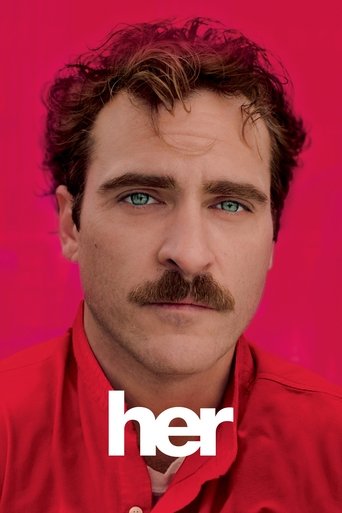



Her
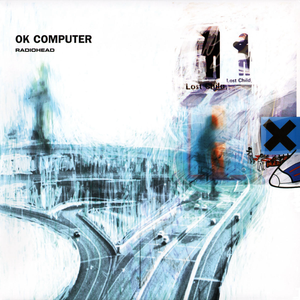
OK Computer
Le petit prince
Kyoto
Journey
Qwen3 CoderQwen3 Coder



The Shawshank Redemption
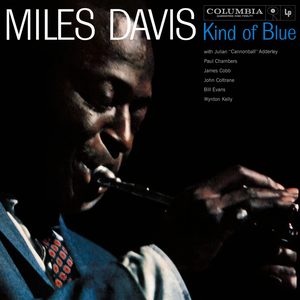
Kind of Blue
The Left Hand of Darkness
Kyoto
The Stanley Parable
Price and specs
| Spec | Healer Alpha | Qwen3 Coder |
|---|---|---|
| Input price | Free | $0.22/M tokens |
| Output price | Free | $0.95/M tokens |
| Context window | 262K tokens | — |
| Weights | — | Open |
| Free API (OpenRouter) | No | No |
| Released | Mar 2026 | Jul 2025 |
| At 10M a month | $0 | $2.20 |
Input tokens at list price. No caching, no batch discount.
Where to run it
Healer Alpha
No hosts listed on OpenRouter.

Per million tokens. Prices and uptime via OpenRouter, checked 10 Oct 2026.
Common questions
What is the difference between Healer Alpha and Qwen3 Coder?
Healer Alpha is developed by OpenRouter while Qwen3 Coder is developed by Qwen. You can compare their actual outputs across 47 challenges on Rival to see how they differ in practice.
Which is better, Healer Alpha or Qwen3 Coder?
It depends on your use case. Healer Alpha and Qwen3 Coder each have strengths in different areas. Rival lets you compare their real outputs side-by-side across 47 challenges so you can judge which fits your needs best.
How much does Healer Alpha cost compared to Qwen3 Coder?
Healer Alpha costs $0/M input tokens and Qwen3 Coder costs $0.22/M input tokens. Healer Alpha is $0.22/M cheaper per input. Check their side-by-side outputs on Rival to see if the price difference is justified by quality.
How can I compare Healer Alpha and Qwen3 Coder on Rival?
This page shows a side-by-side comparison of Healer Alpha and Qwen3 Coder across shared challenges. You can vote on which model produced the better output in a blind duel. Browsing and voting are free. No account is needed to look; signing in only saves your votes and likes.
More comparisons
Against the newest arrivals
- Healer Alpha vs Step 5 PreviewLanded Oct 2026
- Qwen3 Coder vs Claude Haiku 5.5Landed Oct 2026
- Healer Alpha vs Ling 3.1 FlashLanded Oct 2026
- Qwen3 Coder vs Mistral Large 4Landed Oct 2026
- Healer Alpha vs GPT-6.1 SolLanded Sep 2026
- Qwen3 Coder vs Claude Sonnet 5.5Landed Sep 2026
- Healer Alpha vs Solar Mini 4Landed Sep 2026
- Qwen3 Coder vs Qwen3.8 Max PrimeLanded Sep 2026


Same lab, same size, long tail
- Healer Alpha vs Ox AlphaSame lab
- Healer Alpha vs OpenRouter Fusion · Budget (Jun 2026)Same lab
- Qwen3 Coder vs Qwen3.8 Omni FlashSame lab
- Qwen3 Coder vs Qwen3.7 FlashSame lab
- Healer Alpha vs GLM 4.5New provider
- Healer Alpha vs GLM 4.5 AirNew provider
- Healer Alpha vs GLM 4.6Same size
- Healer Alpha vs GLM 4.7Same lab
