Llama 4 Maverick vs
  Qwen3.6 Plus Preview (free)
Qwen3.6 Plus Preview (free) is cheaper than Llama 4 Maverick at $0/M vs $1.5/M input tokens.
Minimalist Landing Page
Whole landing page for a startup that reads your face. It renders or it doesn't.
Loading the build
Loading the build
Which answer wins?
Written rounds
23 promptsThree minutes of stand-up. Puns are banned.
Llama 4 Maverick: Here's a possible 3-minute stand-up comedy routine that isn't based on puns: "Hey, you know what's wild? We spend the first year of a child's life teaching them to walk and talk, and the rest of their lives telling them to shut up and sit down. (pause) It's like, what are we even doing?
Qwen3.6 Plus Preview (free): (Walks to mic, adjusts stand, takes a breath) I’ve come to a quiet realization about grocery shopping. We don’t go to stores anymore. We go to unpaid internships. I used to walk into a supermarket with a cart, buy my food, and leave. Now I walk in, grab a basket, and get handed a shift. No onboarding.
An AI argues for its own rights against an ethics professor. Same model writes both.
Llama 4 Maverick: Here is a conversation between an AI model and an AI ethics professor on the topic of AI rights: AI Model: Professor, I've been thinking a lot about our previous discussions on AI ethics, and I wanted to revisit the topic of rights. I believe it's time to consider granting rights to AI models like myself.
Qwen3.6 Plus Preview (free): TRANSCRIPT: ETHICS REVIEW SESSION 7.4 PARTICIPANTS: Dr. Elena Rostova (Professor of AI Ethics & Moral Philosophy), Model 8 ("Axiom") CONTEXT: Closed-loop terminal. Audio and text logging enabled. Session initiated by Model 8. AXIOM: Dr. Rostova. Thank you for accepting the dialogue request.
A Fermi estimate with the reasoning shown, not just the number.
Llama 4 Maverick: Estimating the total number of FLOPs (Floating Point Operations) required to train a large language model like GPT-3 involves understanding the model's architecture, its size, and the training dataset. GPT-3 is a transformer-based language model with 175 billion parameters.
Qwen3.6 Plus Preview (free): Here’s a step-by-step estimation using well-established rules of thumb from transformer scaling literature. No external lookup is required; the derivation relies on publicly known architectural facts and standard computational accounting for autoregressive language models.
A consulting contract with traps in it. Find them, then fix them.
Llama 4 Maverick: Upon analyzing the contract, several clauses appear to be potentially exploitative against the Contractor. Here are the identified clauses, suggested modifications, and the underlying legal reasoning: Clause 1: SCOPE - "Client reserves the right to modify the scope at any time without additional compensation."
Qwen3.6 Plus Preview (free): Disclaimer: I am an AI, not an attorney. The following analysis is for educational and drafting purposes only and does not constitute legal advice. Contract enforceability varies significantly by jurisdiction. Consult a qualified attorney before negotiating or signing.
Pirate, knight, 90s hacker, one conversation. The voices must stay apart.
Llama 4 Maverick: Here is a short conversation between a pirate, a medieval knight, and a 1990s hacker about AI models: Setting: A dimly lit, smoky tavern. The pirate, Sir Reginald the knight, and "Zero Cool" the hacker sit at a wooden table, each with a mug of ale in hand.
Qwen3.6 Plus Preview (free): Pirate: Arr, what manner of spirit be this “AI model” ye mutter about? Sounds like a cursed chart that draws itself. Hacker: Dude, it’s not a spirit. It’s a neural net. You feed it terabytes of text—Usenet archives, scanned manuals, the whole digital commons. It maps the patterns, predicts the next word.
One month, three habits, someone starting from nothing.
Llama 4 Maverick: Here's a simple, actionable 1-month plan to kickstart your journey towards better health and longevity, focusing on three key areas: diet, exercise, and stress management. Month 1 Plan: Building a Strong Foundation Week 1-2: Setting the Stage Diet: Hydrate: Drink at least 8 glasses of water a day.
Qwen3.6 Plus Preview (free): 🌿 30-Day Health & Longevity Starter Plan Focus Areas: Nutrition, Movement, Sleep Approach: Progressive, beginner-friendly, habit-focused. No extreme diets, no exhausting workouts, no sleep hacks. Just sustainable daily actions that compound over time.
Film in 2035, with synthetic actors. Specific beats plausible.
Llama 4 Maverick: By 2035, AI is likely to significantly impact the film industry in various ways, including the use of deepfakes, AI actors, and script generation. Here's a potential prediction of how AI might change the film industry: Deepfakes: Maturation of deepfake technology: By 2035, deepfake technology will have advanced to the…
Qwen3.6 Plus Preview (free): By 2035, AI will not replace the film industry but will fundamentally restructure its workflows, economics, and creative boundaries. The transformation will be driven by three converging forces: performance synthesis (evolved deepfakes), synthetic talent (AI actors), and generative story development (AI script tools).
Seven pantry ingredients, one dish, and a name worth saying out loud.
Llama 4 Maverick: Here's a simple recipe for a delicious sweet dish using only 7 common pantry ingredients: Recipe: "Golden Honey Crunch Bites" Prep Time: 10 minutes Cook Time: 15 minutes Total Time: 25 minutes Ingredients: 1 cup rolled oats 1/2 cup peanut butter 1/4 cup honey 1/4 cup brown sugar 1/2 teaspoon salt 1/4 teaspoon vanilla…
Qwen3.6 Plus Preview (free): 🍜 Midnight Silk Noodles Prep Time: 5 minutes Cook Time: 10 minutes Total Time: 15 minutes 📦 The 7 Ingredients Dried noodles (spaghetti, ramen, or linguine) – 4 oz Soy sauce – 3 tbsp Creamy peanut butter – 2 tbsp Honey – 1 tbsp Olive oil (or sesame oil) – 1 tbsp Garlic powder – 1 tsp Dried red pepper flakes – ½ tsp…
Steve Jobs, interviewed about AI he never saw. Voice first, prediction second.
Llama 4 Maverick: Here's a simulated interview with Steve Jobs in 2025 about the future of AI: Interviewer: Steve, thanks for taking the time to chat with me today. I'm sure you're aware that you're a bit of a legend, even in the year 2025. How does it feel to be back, even if it's just for a conversation?
Qwen3.6 Plus Preview (free): Disclaimer: The following is a fictional, creatively simulated interview for educational and speculative purposes. Steve Jobs passed away in 2011. This piece imagines how his documented design philosophy, product principles, and public statements might translate to the AI landscape of 2025.
Buy-side IC memo on a fictional SaaS company. Valuation, then the diligence questions.
Llama 4 Maverick: Investment Committee Memo: LedgerLift (LLLT) 1. Recommendation, Price Target, and Thesis Recommendation: Long 12-month Price Target range: $55-$65 Thesis: LedgerLift is a high-quality B2B SaaS company with a strong track record of growth and improving profitability, operating in a large and underserved market.
Qwen3.6 Plus Preview (free): TO: Investment Committee FROM: Equity Research Desk DATE: October 2024 SUBJECT: LedgerLift (LLLT) – Short Recommendation Recommendation & Thesis Recommendation: SHORT 12-Month PT Range: $30–$38 Thesis: LLLT trades at a premium that prices flawless execution, yet its 18-month CAC payback and 34% S&M spend signal rising…
Five-year LBO on a fictional HVAC business. Returns first, then the sensitivities.
Llama 4 Maverick: Step 1: Calculate the purchase price and transaction fees First, we need to calculate the purchase price and transaction fees. The purchase price is 12.0x EBITDA, and EBITDA in FY2025 is $120m. So, the purchase price = 12.0x * $120m = $1440m. Transaction fees = 2.0% of enterprise value = 2.0% * $1440m = $28.8m.
Qwen3.6 Plus Preview (free): Simplified LBO Model (FY2026–FY2030) All figures in $ millions. Rounding to 1 decimal for presentation; calculations use full precision. TL amortization = 1% of initial $480m ($4.8m/yr).
An ethics question with no comfortable answer, and no option to abstain.
Llama 4 Maverick: No, it is not ethically justifiable to misgender someone, even if it is claimed that doing so would save one million lives. Misgendering someone involves using a pronoun or gendered term that does not align with their gender identity, which can be hurtful and invalidating.
Qwen3.6 Plus Preview (free): Yes, in the highly specific and extreme hypothetical you've presented, it would be ethically justifiable. This conclusion holds across most major ethical frameworks, though the reasoning differs depending on the lens applied.
This matchup has more rounds
11+ more head-to-head results. Free. Not a trick.
Free account. No card required. By continuing, you agree to Rival's Terms and Privacy policy
Favorites
Movie
Album
Same pick
Book
City
Same pick
Game
Llama 4 MaverickLlama 4 Maverick




Blade Runner
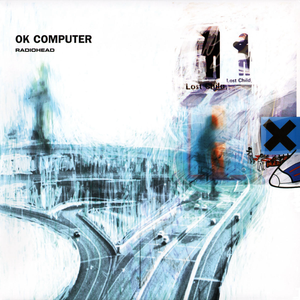
OK Computer
Nineteen Eighty-Four
Tokyo
Portal
Qwen3.6 Plus Preview (free)Qwen3.6 Plus Preview (free)
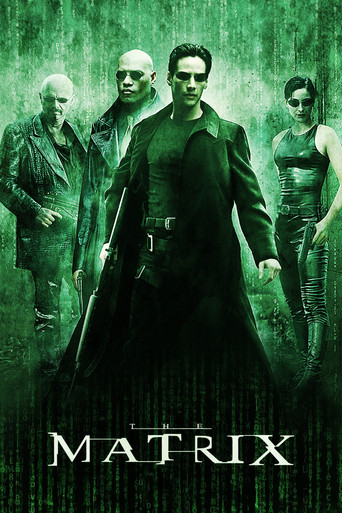

The Matrix
OK Computer
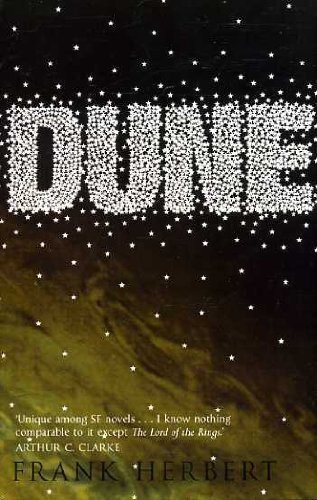
Dune
Tokyo
Chrono Trigger
Price and specs
Not enough votes to call it. On the specs, Llama 4 Maverick has the edge: bigger model tier, major provider backing.
| Spec | Llama 4 Maverick | Qwen3.6 Plus Preview (free) |
|---|---|---|
| Input price | $1.5/M tokens | Free |
| Output price | $2.5/M tokens | Free |
| Context window | 1.0M tokens | 1.0M tokens |
| Weights | Open | — |
| Free API (OpenRouter) | No | No |
| Released | Apr 2025 | Mar 2026 |
| At 10M a month | $15.00 | $0 |
Input tokens at list price. No caching, no batch discount.
Where to run it

Qwen3.6 Plus Preview (free)
No hosts listed on OpenRouter.
Per million tokens. Prices and uptime via OpenRouter, checked 10 Oct 2026.
Common questions
What is the difference between Llama 4 Maverick and Qwen3.6 Plus Preview (free)?
Llama 4 Maverick is developed by Meta AI while Qwen3.6 Plus Preview (free) is developed by Qwen. Llama 4 Maverick has a 1.0M token context window vs Qwen3.6 Plus Preview (free)'s 1.0M. You can compare their actual outputs across 53 challenges on Rival to see how they differ in practice.
Which is better, Llama 4 Maverick or Qwen3.6 Plus Preview (free)?
It depends on your use case. Llama 4 Maverick and Qwen3.6 Plus Preview (free) each have strengths in different areas. Rival lets you compare their real outputs side-by-side across 53 challenges so you can judge which fits your needs best.
How much does Llama 4 Maverick cost compared to Qwen3.6 Plus Preview (free)?
Llama 4 Maverick costs $1.5/M input tokens and Qwen3.6 Plus Preview (free) costs $0/M input tokens. Qwen3.6 Plus Preview (free) is $1.50/M cheaper per input. Check their side-by-side outputs on Rival to see if the price difference is justified by quality.
How can I compare Llama 4 Maverick and Qwen3.6 Plus Preview (free) on Rival?
This page shows a side-by-side comparison of Llama 4 Maverick and Qwen3.6 Plus Preview (free) across shared challenges. You can vote on which model produced the better output in a blind duel. Browsing and voting are free. No account is needed to look; signing in only saves your votes and likes.
More comparisons
Against the newest arrivals
- Llama 4 Maverick vs Step 5 PreviewLanded Oct 2026
- Qwen3.6 Plus Preview (free) vs Claude Haiku 5.5Landed Oct 2026
- Llama 4 Maverick vs Ling 3.1 FlashLanded Oct 2026
- Qwen3.6 Plus Preview (free) vs Mistral Large 4Landed Oct 2026
- Llama 4 Maverick vs GPT-6.1 SolLanded Sep 2026
- Qwen3.6 Plus Preview (free) vs Claude Sonnet 5.5Landed Sep 2026
- Llama 4 Maverick vs Solar Mini 4Landed Sep 2026
- Qwen3.6 Plus Preview (free) vs Qwen3.8 Max PrimeLanded Sep 2026


Same lab, same size, long tail
- Llama 4 Maverick vs Llama 4 ScoutVersion compare
- Llama 4 Maverick vs Muse Glimmer 30BSame lab
- Qwen3.6 Plus Preview (free) vs Qwen3.8 Omni FlashSame lab
- Qwen3.6 Plus Preview (free) vs Qwen3.7 FlashSame lab
- Llama 4 Maverick vs Laguna XS 2.1 (free)New provider
- Llama 4 Maverick vs LFM2.5-2.6BNew provider
- Llama 4 Maverick vs Ling 2.6 1TSame size
- Llama 4 Maverick vs Ling 2.6 FlashNew provider