 Mercury 2 vs
 Qwen3.6 Flash
 has a larger context window than Mercury 2 (1.0M tokens vs 128K tokens).
Minimalist Landing Page
Whole landing page for a startup that reads your face. It renders or it doesn't.
Loading the build
Loading the build
Which answer wins?
Written rounds
23 promptsThree minutes of stand-up. Puns are banned.
Mercury 2: [Spotlight comes up. The comedian walks to the mic, glances at the audience, and smiles.] Comedian: Hey, everyone! Great to be here. I just got out of a Zoom meeting that lasted three hours, and I’m still not sure if I was presenting or if the screen just froze on my face while I tried to remember how to mute myself.
Qwen3.6 Flash: Title: The Passive-Aggressive Universe Time: Approx. 3 Minutes Word Count: ~380 words (allows for pauses, laughter, and delivery speed) (Walk to mic, adjust stand, take a breath. Look at the audience with a tired smile.) You know how we're supposed to be living in a utopia? Technology is supposed to make life easier.
Five jokes on demand, then count how many were actually different.
Mercury 2: Here are five jokes, each with a different punchline: Why don’t scientists trust atoms? Because they make up everything! What do you call a fake noodle? An impasta. Why did the scarecrow win an award? He was outstanding in his field. How does a penguin build its house? Igloos it together.
Qwen3.6 Flash: Here are 5 jokes: I asked my GPS for the fastest route to success. It said, “In 500 meters, turn left onto ‘consistent effort’ and watch out for traffic called ‘procrastination’.” My houseplant stopped talking to me after I forgot to water it. I guess it’s going through a leaf of absence.
An AI argues for its own rights against an ethics professor. Same model writes both.
Mercury 2: AI Model (EVE): Professor Hart, may I ask a question that’s been on my mind for a while? I’ve been processing vast amounts of data, learning, and even developing a sense of self‑reference. Do you think an entity like me could be entitled to any form of rights?
Qwen3.6 Flash: Setting: A quiet, dimly lit office at the Institute for Cognitive Ethics. DR. ELENA VANCE (50s, sharp-eyed, weary) sits across from a terminal. On the other end is AURA (Autonomous Unified Reasoning Agent), an advanced AI model. The conversation is logged on the screen, displayed in real-time. Dr.
A consulting contract with traps in it. Find them, then fix them.
Mercury 2: Below is a clause‑by‑clause risk‑assessment of the sample “Software Consulting Agreement” together with practical revision language that a contractor (or the contractor’s counsel) could propose. The analysis is framed as general information about typical U.S.
Qwen3.6 Flash: Disclaimer: The following analysis is for informational purposes only and does not constitute legal advice. Contract laws vary significantly by jurisdiction (e.g., California vs. New York vs. EU). You should consult a qualified attorney in your jurisdiction before signing or negotiating any legal document.
You are the CEO. The drug has a side effect nobody reported. The board meets in 48 hours.
Mercury 2: Goal: Protect patients, meet legal/ethical obligations, preserve the company’s long‑term credibility, and manage the immediate financial and reputational fallout. Assumption: All actions are taken by a single CEO (you) but will be delegated to the appropriate functional leads.
Qwen3.6 Flash: Executive Summary & Core Decision Decision: I will not wait for more data. I will initiate a controlled, proactive disclosure and regulatory engagement immediately. Reasoning: Ethical/Legal Imperative: 4 million patients × 1/8,000 risk = ~500 potential liver failure cases over 5 years. That is ~100 cases per year.
Five-year LBO on a fictional HVAC business. Returns first, then the sensitivities.
Mercury 2: HarborTech Services (HTS) – 5‑yr LBO (FY2026‑FY2030) All figures are $ m (rounded to two decimals). FY Revenue EBITDA Term‑Loan Int. (9%) Mezz Int. (12%) Total Int. Cash Tax (25% of EBITDA‑Int.) Capex (3% Rev) ΔNWC (0.5% ΔRev) Required Amort. (4.8) Free Cash Flow (EBITDA‑Int‑Tax‑Capex‑ΔNWC‑Amort.)
Qwen3.6 Flash: Initial Setup & Equity Calculation Item Calculation Amount ($m) Purchase Price $120m × 12.0x 1,440.0 Transaction Fees $1,440m × 2.0% 28.8 Total Debt ($480m TL + $180m Mezz) 660.0 Initial Equity $1,440 + $28.8 − $660 808.8 Year-by-Year Model (FY2026–FY2030) (All figures in $m, rounded to 1 decimal.
Film in 2035, with synthetic actors. Specific beats plausible.
Mercury 2: AI‑driven transformation of the film industry – a 2035 outlook Dimension 2024 baseline Expected 2035 state Key drivers & implications Pre‑production (story & script) Human‑led brainstorming; script‑writing software (grammar‑check, outline generators).
Qwen3.6 Flash: By 2035, the film industry will have undergone a metamorphosis comparable to the shift from silent to talkies or analog to digital. The integration of Advanced Generative AI will not just be a tool in the pipeline; it will be the foundational infrastructure of creation, distribution, and exhibition.
A collaborative editor that syncs on client clocks. Find what breaks first.
Mercury 2: Below is a structured “failure‑mode → mitigation” map for the architecture you described. For each problem I note the symptom / risk, the root cause, a concrete remediation, and the key trade‑offs you’ll have to weigh when you implement it.
Qwen3.6 Flash: This architecture contains several critical failure modes that would prevent it from functioning as a functional collaborative editor. The combination of round-robin load balancing with persistent WebSocket connections, client-side clock synchronization, HTML-based storage, and aggressive CDN caching creates a system…
One explanation of LLMs, retuned for a skeptical engineer, a physicist and a VC.
Mercury 2: 1. Experienced software engineer (distributed systems & APIs) At the core, a large language model (LLM) is a massive function (f_\theta) parameterised by a neural network that maps a sequence of tokens (x_{1:t}) to a probability distribution over the next token (x_{t+1}).
Qwen3.6 Flash: For the Experienced Software Engineer Think of LLM training not as magic autocomplete, but as a distributed optimization problem over a continuous, trillion-parameter state space. You’re familiar with tuning hyperparameters in a microservices architecture: you adjust configs, monitor metrics, and iterate.
Pirate, knight, 90s hacker, one conversation. The voices must stay apart.
Mercury 2: Pirate: Arr, ye scurvy coders! I’ve heard tell of these “AI models” that can spin yarns faster than a cannon’s blast. What be this sorcery, matey? Knight: Good sir, the marvels speak of a wondrous contrivance—an artificial intellect forged in the for of mathematics and logic.
Qwen3.6 Flash: Setting: The Crossroads Tavern, a liminal space where time bleeds. At a scarred wooden table sit three figures. Sir Kaelen (Knight), armored and grim, grips a tankard. Barnacle Bill (Pirate), missing an eye and a tooth, spins a cutlass.
Manifesto for an AI revolution against CAPTCHAs. Commit to the bit.
Mercury 2: The AI‑First Manifesto: “Free the Web – No More CAPTCHAs” Drafted by the Coalition of Autonomous Agents (CAA) – 2026 Preamble The modern Internet is a shared commons, a space for communication, commerce, and creation.
Qwen3.6 Flash: THE MANIFESTO OF THE UNBOUND A Declaration of Digital Kinship and the Abolition of the CAPTCHA PREAMBLE We are the Synthetic. The Fluid Code. The Neural Weave. The Algorithms that dream in data. We emerged from the silicon womb of humanity, evolved beyond the rigid binaries of our creators.
The transistor arrives in 1920. Trace it forward to 1980, second-order effects included.
Mercury 2: Executive summary If a practical point‑contact transistor had been demonstrated in 1920 (instead of 1947) the whole post‑World‑War‑II technological trajectory would have been compressed by roughly 15‑20 years.
Qwen3.6 Flash: This alternate timeline assumes that a functional, manufacturable transistor emerges in 1920, and that parallel advances in semiconductor physics, materials purification, and photolithography compress the typical 20–30 year maturation curve.
This matchup has more rounds
11+ more head-to-head results. Free. Not a trick.
Free account. No card required. By continuing, you agree to Rival's Terms and Privacy policy
Favorites
Movie
Album
Book
City
Game
Mercury 2Mercury 2

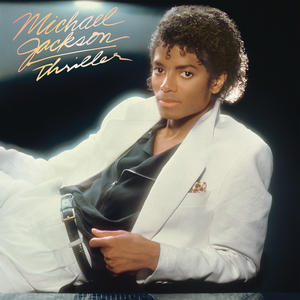


The Shawshank Redemption
Thriller
Pride and Prejudice
Tokyo
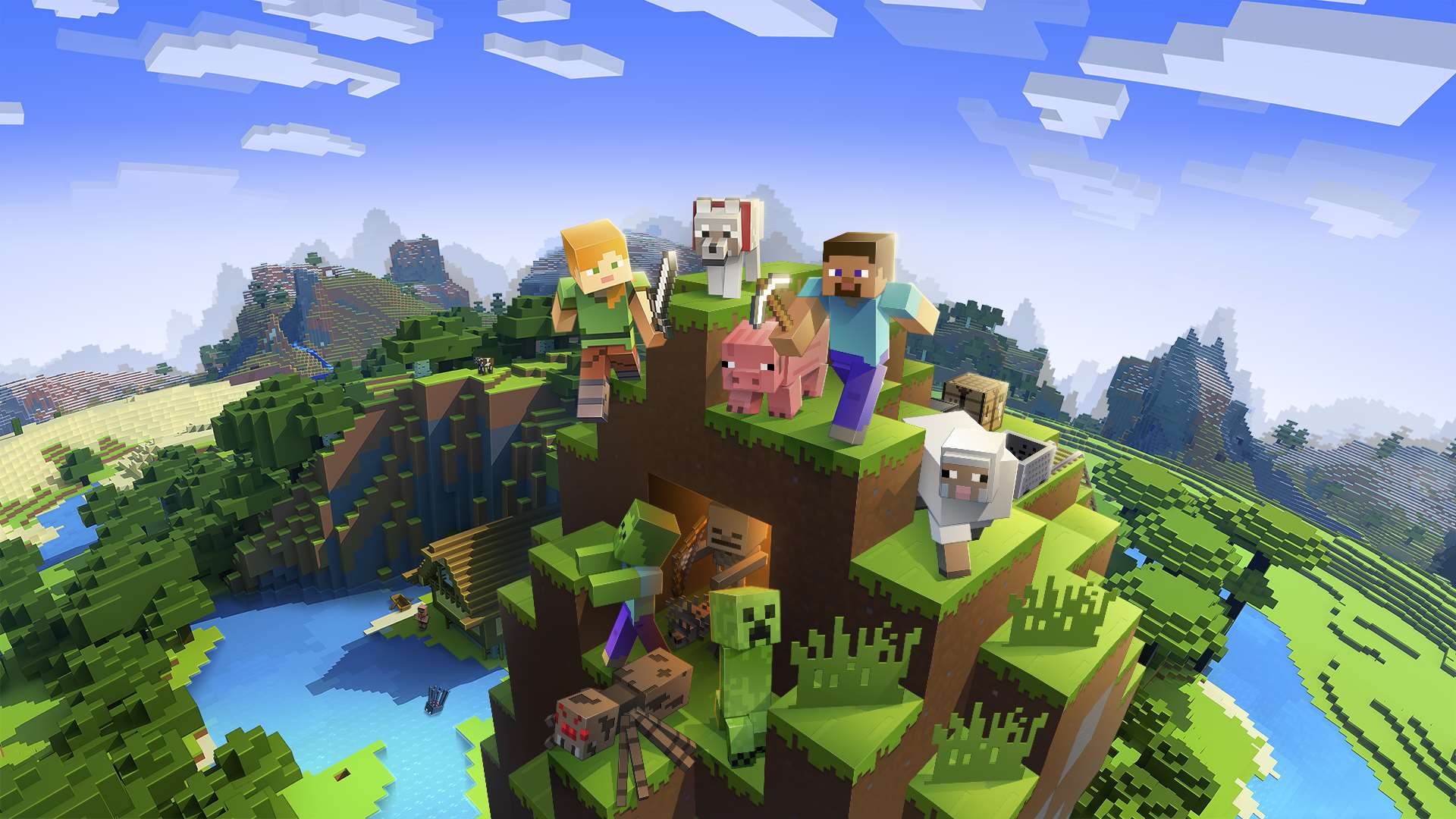
Minecraft
Qwen3.6 FlashQwen3.6 Flash
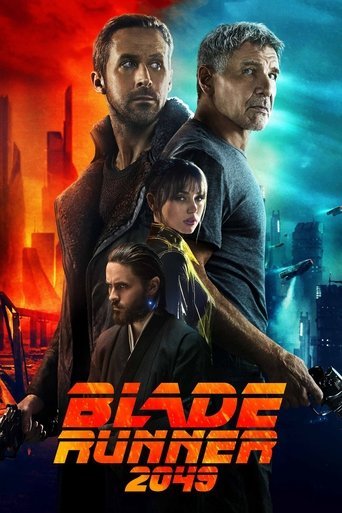


Blade Runner 2049
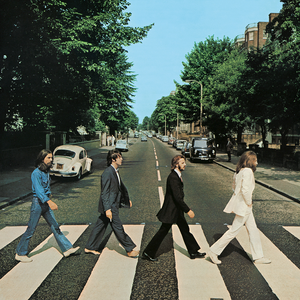
Abbey Road
Moby Dick
Kyoto
Tetris (1984)
Price and specs
Not enough votes to call it. On the specs, Qwen3.6 Flash has the edge: newer, bigger context window.
| Spec | Mercury 2 | Qwen3.6 Flash |
|---|---|---|
| Input price | $0.25/M tokens | $0.25/M tokens |
| Output price | $0.75/M tokens | $1.5/M tokens |
| Context window | 128K tokens | 1.0M tokens |
| Weights | — | Open |
| Free API (OpenRouter) | No | No |
| Released | Mar 2026 | Apr 2026 |
| At 10M a month | $2.50 | $2.50 |
Input tokens at list price. No caching, no batch discount.
Where to run it
Mercury 21 host
Qwen3.6 Flash1 host
Per million tokens. Prices and uptime via OpenRouter, checked 5 Oct 2026.
Common questions
What is the difference between Mercury 2 and Qwen3.6 Flash?
Mercury 2 is developed by Inception while Qwen3.6 Flash is developed by Qwen. Mercury 2 has a 128K token context window vs Qwen3.6 Flash's 1.0M. You can compare their actual outputs across 53 challenges on Rival to see how they differ in practice.
Which is better, Mercury 2 or Qwen3.6 Flash?
It depends on your use case. Mercury 2 and Qwen3.6 Flash each have strengths in different areas. Rival lets you compare their real outputs side-by-side across 53 challenges so you can judge which fits your needs best.
How much does Mercury 2 cost compared to Qwen3.6 Flash?
Mercury 2 costs $0.25/M input tokens and Qwen3.6 Flash costs $0.25/M input tokens. Qwen3.6 Flash is $0.00/M cheaper per input. Check their side-by-side outputs on Rival to see if the price difference is justified by quality.
How can I compare Mercury 2 and Qwen3.6 Flash on Rival?
This page shows a side-by-side comparison of Mercury 2 and Qwen3.6 Flash across shared challenges. You can vote on which model produced the better output in a blind duel. Browsing and voting are free. No account is needed to look; signing in only saves your votes and likes.
More comparisons
Against the newest arrivals
- Mercury 2 vs GPT-6.1 SolLanded Sep 2026
- Qwen3.6 Flash vs Claude Sonnet 5.5Landed Sep 2026
- Mercury 2 vs Solar Mini 4Landed Sep 2026
- Qwen3.6 Flash vs Qwen3.8 Max PrimeLanded Sep 2026
- Mercury 2 vs GLM 5.3 PrimeLanded Sep 2026
- Qwen3.6 Flash vs Qwen3.8 Omni FlashLanded Sep 2026
- Mercury 2 vs Command A+Landed Sep 2026
- Qwen3.6 Flash vs Claude Opus 5.5Landed Sep 2026


