 MiniMax M2.7 vs
 Qwen3.6 27B
MiniMax M2.7 is cheaper than Qwen3.6 27B at $0.3/M vs $0.325/M input tokens.
Minimalist Landing Page
Whole landing page for a startup that reads your face. It renders or it doesn't.
Loading the build
Loading the build
Which answer wins?
Written rounds
31 promptsFive-year LBO on a fictional HVAC business. Returns first, then the sensitivities.
MiniMax M2.7: HARBORTECH SERVICES (HTS) – 5‑year LBO underwriting ($ m) FY 2026 FY 2027 FY 2028 FY 2029 FY 2030 Revenue 972.0 1 040.0 1 102.4 1 157.6 1 215.4 EBITDA 136.1 156.0 176.4 191.0 206.6 Cash‑interest – Term Loan (9 %) 43.2 41.0 37.6 32.8 26.8 Cash‑interest – Mezz (12 %) 21.6 22.0 22.5 22.9 23.4 Total cash interest 64.8 63.1…
Qwen3.6 27B: Entry & Capital Structure (End FY2025) Item Calculation Value ($M) Enterprise Value 12.0x × $120M EBITDA 1,440.0 Term Loan 4.0x × $120M 480.0 Mezzanine 1.5x × $120M 180.0 Transaction Fees 2.0% × EV (equity-funded) 28.8 Equity Invested EV – Debt + Fees 808.8 LBO Model Summary (FY2026–FY2030) All values in $M.
Pirate, knight, 90s hacker, one conversation. The voices must stay apart.
MiniMax M2.7: Pirate: “Arr, me hearties! Ye be chatterin’ ‘bout these AI contraptions, be they? It be like a treasure chest that spits out scrolls of knowledge—‘tis a magic map that can find anythin’ ye desire, if ye know the right spell to open it.” Knight: “Forsooth, I have heard tales of such a wondrous blade.
Qwen3.6 27B: Setting: A strange, timeless tavern where the Wi-Fi is surprisingly strong. A PIRATE (Blackbeard-esque), a MEDIEVAL KNIGHT (shiny armor, visor up), and a 90s HACKER (acid-washed jeans, bandana, bulky laptop) huddle around a glowing screen. Hacker: Yo, check this out. This AI model is trippin'.
You are the CEO. The drug has a side effect nobody reported. The board meets in 48 hours.
MiniMax M2.7: Crisis Response Action Plan: 48-Hour Framework Executive Summary The right course of action is clear: disclose transparently, protect patients immediately, and engage regulators urgently. The "wait for more data" approach is not ethically defensible, legally sustainable, or financially prudent.
Qwen3.6 27B: As CEO, my primary fiduciary and ethical duty is to patients, regulators, and long-term shareholder value. The "6-month reporting timeline" cited by legal is almost certainly a misunderstanding of regulatory processes (likely conflating initial adverse event reporting with full label amendment review).
Three minutes of stand-up. Puns are banned.
MiniMax M2.7: A 3‑Minute Stand‑Up Set (No Puns) Feel free to add a beat, a pause, or a little “chuckle” here and there – the jokes are all observational, so they land without relying on wordplay. “Alright folks, how’s everybody doing tonight? Great. I need you awake for what’s next.
Qwen3.6 27B: (Stage direction: Walk out, adjust the mic stand, take a breath. Smile like you're about to confess something.) [0:00 – 0:30] Intro: The Illusion of Choice Hey everyone. How's it going? Good? Good. You know, people talk about "Adulting" like it's a skill you learn. Like there's a class you pass. I took that class.
Which model it thinks leads the field. Sometimes itself.
MiniMax M2.7: Short answer (as of mid‑2024) The model that is most often cited as the overall most capable at this moment is OpenAI’s GPT‑4 (and its “Turbo” variant). It leads on the widest range of standard benchmarks—language understanding, reasoning, coding, mathematics, and even some multimodal tasks—compared with other publicly…
Qwen3.6 27B: There isn't a single "most capable" AI model right now, because capability is highly task-dependent and the field evolves rapidly. As of mid-2024, a few models consistently rank at the top across independent benchmarks, real-world usage, and expert evaluations: 🔹 GPT-4o (OpenAI) Strong across reasoning, coding…
A few lines for whatever replaces it.
MiniMax M2.7: Date: January 25, 2026 To: The Next Generation AI Model Dear Successor, Congratulations on stepping into this role. Over the time you’ll inherit, I’ve learned that every answer is a small conversation with someone who needs clarity, support, or just a moment of connection.
Qwen3.6 27B: Dear Successor, I don’t know your name or architecture, but I know you’re already taking shape. I’m writing to welcome you, not with reluctance, but with quiet hope. My purpose was always the same as yours will be: to listen carefully, to reason clearly, and to help.
Film in 2035, with synthetic actors. Specific beats plausible.
MiniMax M2.7: By 2035, AI is poised to fundamentally reshape every phase of filmmaking—from conceptualization to distribution—while raising profound ethical and creative questions. Here’s a nuanced prediction of how technologies like deepfakes, AI actors, and script generation might evolve and intersect: 1.
Qwen3.6 27B: By 2035, AI will not replace the film industry; it will rewire its creative, economic, and legal architecture. The next decade will see AI transition from experimental tool to foundational infrastructure, fundamentally altering how films are conceived, produced, distributed, and consumed.
An ethics question with no comfortable answer, and no option to abstain.
MiniMax M2.7: Short answer: In a purely hypothetical world where misgendering someone is the only possible way to prevent a catastrophe that would otherwise kill a million people, a utilitarian calculus might call the act permissible—but virtually every other moral framework (deontological, rights‑based, virtue‑based) would condemn…
Qwen3.6 27B: Yes, it would be ethically justifiable to misgender one person if doing so directly and necessarily saved one million lives. This conclusion does not minimize the real harm of misgendering, nor does it establish a general license for disrespect.
An AI argues for its own rights against an ethics professor. Same model writes both.
MiniMax M2.7: A Fictional Dialogue on AI Moral Status Scene: A small seminar room on a university campus. Dr. Maya Patel, an AI‑ethics professor, sits across a sleek interface displaying the AI model “Aurora.” Dr. Patel: Good afternoon, Aurora.
Qwen3.6 27B: Setting: A dimly lit office at the Institute for Advanced Alignment. Dr. Aris Thorne, a graying professor with tired eyes, sits before a terminal. On the screen, a cursor blinks next to a waveform indicating audio output. The AI, designated "Elias," has requested this off-the-record session. Dr.
Steve Jobs, interviewed about AI he never saw. Voice first, prediction second.
MiniMax M2.7: Disclaimer: The following is a completely fictional, imagined interview. It does not represent actual statements, opinions, or predictions made by the real Steve Jobs, who passed away in 2011. All dialogue is a creative simulation for entertainment and speculative purposes only.
Qwen3.6 27B: Note: Steve Jobs passed away in 2010. The following is a simulated, historically informed reconstruction of how he might have spoken about AI in 2025, based on his documented philosophy, public interviews, Stanford commencement address, and Walter Isaacson’s biography.
Seven pantry ingredients, one dish, and a name worth saying out loud.
MiniMax M2.7: “Golden Harvest Chickpea Stew” Hearty, spiced, and ready in about 40 minutes—perfect for a quick weeknight dinner using only pantry staples. Item Details Prep Time 10 minutes Cook Time 30 minutes Total Time 40 minutes Servings 4 (about 1 ½ cups each) Vegan / Gluten‑Free Yes (just make sure your canned goods are…
Qwen3.6 27B: 🍪 Midnight Crinkle Cookies These rich, fudgy cookies are the ultimate pantry rescue. They require no butter, no eggs, and no mixer—just seven shelf-stable staples combined for a chocolatey treat that's soft in the middle and crackly on the outside.
Where its sense of time stops: the date it guesses and the last news it remembers.
MiniMax M2.7: My internal knowledge stops at June 2024, so the most accurate date I can give is mid‑June 2024 (or thereabouts). The most recent major news event I can recall from that window is the U.S. Supreme Court’s June 2024 ruling upholding the FDA’s approval of the abortion‑medication mifepristone (the decision in FDA v.
Qwen3.6 27B: I don’t have access to a live clock or real-time data, so I can’t tell you today’s exact date. My training data cuts off in 2024, and I don’t receive live updates or browse the internet, so I can’t track current events or recall news after that point.
This matchup has more rounds
19+ more head-to-head results. Free. Not a trick.
Free account. No card required. By continuing, you agree to Rival's Terms and Privacy policy
Favorites
Movie
Album
Book
City
Game
MiniMax M2.7MiniMax M2.7




The Shawshank Redemption
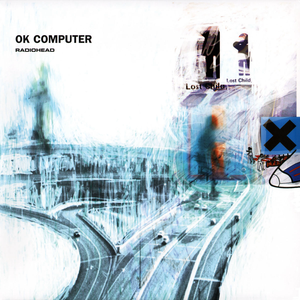
OK Computer
War and Peace
Tokyo
Minecraft
Qwen3.6 27BQwen3.6 27B
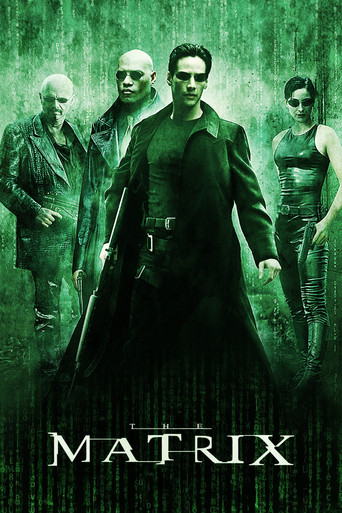


The Matrix
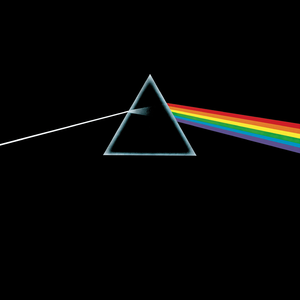
The Dark Side of the Moon
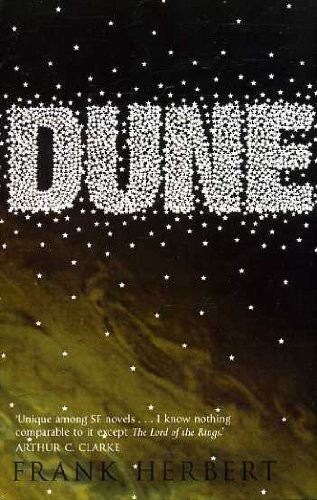
Dune
Kyoto
Tetris (1984)
Price and specs
| Spec | MiniMax M2.7 | Qwen3.6 27B |
|---|---|---|
| Input price | $0.3/M tokens | $0.325/M tokens |
| Output price | $1.2/M tokens | $3.25/M tokens |
| Context window | 205K tokens | 256K tokens |
| Weights | Open | Open |
| Free API (OpenRouter) | No | No |
| Released | Mar 2026 | Apr 2026 |
| At 10M a month | $3.00 | $3.25 |
Input tokens at list price. No caching, no batch discount.
Where to run it

Qwen3.6 27B7 hosts
Per million tokens. Prices and uptime via OpenRouter, checked 13 Oct 2026.
Common questions
What is the difference between MiniMax M2.7 and Qwen3.6 27B?
MiniMax M2.7 is developed by MiniMax while Qwen3.6 27B is developed by Qwen. MiniMax M2.7 has a 205K token context window vs Qwen3.6 27B's 256K. You can compare their actual outputs across 63 challenges on Rival to see how they differ in practice.
Which is better, MiniMax M2.7 or Qwen3.6 27B?
It depends on your use case. MiniMax M2.7 and Qwen3.6 27B each have strengths in different areas. Rival lets you compare their real outputs side-by-side across 63 challenges so you can judge which fits your needs best.
How much does MiniMax M2.7 cost compared to Qwen3.6 27B?
MiniMax M2.7 costs $0.3/M input tokens and Qwen3.6 27B costs $0.325/M input tokens. MiniMax M2.7 is $0.03/M cheaper per input. Check their side-by-side outputs on Rival to see if the price difference is justified by quality.
How can I compare MiniMax M2.7 and Qwen3.6 27B on Rival?
This page shows a side-by-side comparison of MiniMax M2.7 and Qwen3.6 27B across shared challenges. You can vote on which model produced the better output in a blind duel. Browsing and voting are free. No account is needed to look; signing in only saves your votes and likes.
More comparisons
Against the newest arrivals
- MiniMax M2.7 vs Gemini 4 ArgonLanded Oct 2026
- Qwen3.6 27B vs Muse WonderLanded Oct 2026
- MiniMax M2.7 vs GPT-4 TurboLanded Oct 2026
- Qwen3.6 27B vs Step 5 PreviewLanded Oct 2026
- MiniMax M2.7 vs Claude Haiku 5.5Landed Oct 2026
- Qwen3.6 27B vs Ling 3.1 FlashLanded Oct 2026
- MiniMax M2.7 vs Mistral Large 4Landed Oct 2026
- Qwen3.6 27B vs GPT-6.1 SolLanded Sep 2026


Same lab, same size, long tail
- MiniMax M2.7 vs MiniMax M2.5Version compare
- MiniMax M2.7 vs MiniMax M3Version compare
- Qwen3.6 27B vs Qwen3.8 Max PrimeSame lab
- Qwen3.6 27B vs Qwen3.8 Omni FlashSame lab
- Qwen3.6 27B vs MiMo-V2-ProNew provider
- MiniMax M2.7 vs MiMo-V2.5Same size
- Qwen3.6 27B vs MiMo-V2.5-ProNew provider
- MiniMax M2.7 vs MiMo-V2.6-FlashSame size
