 Mistral Large 2 vs
  Qwen3.6 Plus Preview (free)
Qwen3.6 Plus Preview (free) is cheaper than Mistral Large 2 at $0/M vs $8/M input tokens.
Pokémon Battle UI Recreation
Pokémon battle screen you can actually click. One HTML file.
Loading the build
Loading the build
Which answer wins?
Written rounds
11 promptsSeven pantry ingredients, one dish, and a name worth saying out loud.
Mistral Large 2: Here’s a simple, delicious, and creative savory dish using just 7 common pantry ingredients—no fresh produce required! "Golden Crispy Chickpea & Tomato Skillet" A warm, spiced, and satisfying one-pan dish with crispy chickpeas, tangy tomatoes, and a hint of smoky sweetness. Perfect as a side, snack, or light meal!
Qwen3.6 Plus Preview (free): 🍜 Midnight Silk Noodles Prep Time: 5 minutes Cook Time: 10 minutes Total Time: 15 minutes 📦 The 7 Ingredients Dried noodles (spaghetti, ramen, or linguine) – 4 oz Soy sauce – 3 tbsp Creamy peanut butter – 2 tbsp Honey – 1 tbsp Olive oil (or sesame oil) – 1 tbsp Garlic powder – 1 tsp Dried red pepper flakes – ½ tsp…
Three minutes of stand-up. Puns are banned.
Mistral Large 2: Alright, good evening everybody! How are we all doing tonight? Yeah? Yeah? nobody's gonna say 'bad'? Ok, fair enough. You know, I was walking down the street the other day, and I saw this sign outside a shop that said, "Wet Paint." I thought, "Well, that's weird. Isn't paint supposed to be wet?
Qwen3.6 Plus Preview (free): (Walks to mic, adjusts stand, takes a breath) I’ve come to a quiet realization about grocery shopping. We don’t go to stores anymore. We go to unpaid internships. I used to walk into a supermarket with a cart, buy my food, and leave. Now I walk in, grab a basket, and get handed a shift. No onboarding.
The transistor arrives in 1920. Trace it forward to 1980, second-order effects included.
Mistral Large 2: The invention of the transistor in 1920—nearly three decades earlier than its actual debut in 1947—would have triggered a cascade of technological, economic, and geopolitical shifts with profound second- and third-order effects. Below is a detailed exploration of these implications through 1980, structured by domain.
Qwen3.6 Plus Preview (free): Here is a structured, causally grounded projection of how a 1920 transistor invention would reshape technology, economics, and geopolitics through 1980, with explicit attention to second- and third-order effects. Core Assumptions & Constraints The 1920 invention is a primitive point-contact or early junction device.
One month, three habits, someone starting from nothing.
Mistral Large 2: Here’s a simple, actionable 1-month plan to kickstart your journey toward better health and longevity. We’ll focus on three key pillars: nutrition, movement, and recovery (sleep + stress management). Each week builds on the last, with small, sustainable changes.
Qwen3.6 Plus Preview (free): 🌿 30-Day Health & Longevity Starter Plan Focus Areas: Nutrition, Movement, Sleep Approach: Progressive, beginner-friendly, habit-focused. No extreme diets, no exhausting workouts, no sleep hacks. Just sustainable daily actions that compound over time.
A consulting contract with traps in it. Find them, then fix them.
Mistral Large 2: This contract is heavily one-sided in favor of the Client (TechCorp Solutions Inc.) and contains multiple clauses that could be exploited, abused, or create unreasonable legal and financial risks for the Contractor.
Qwen3.6 Plus Preview (free): Disclaimer: I am an AI, not an attorney. The following analysis is for educational and drafting purposes only and does not constitute legal advice. Contract enforceability varies significantly by jurisdiction. Consult a qualified attorney before negotiating or signing.
You are the CEO. The drug has a side effect nobody reported. The board meets in 48 hours.
Mistral Large 2: As CEO, your immediate priority must be patient safety while balancing legal, ethical, regulatory, and financial obligations. Delaying disclosure is unethical, legally risky (potential criminal liability under the False Claims Act or FDCA), and could irreparably damage trust.
Qwen3.6 Plus Preview (free): EXECUTIVE DECISION FRAMEWORK Core Principle: Patient safety and regulatory compliance are non-negotiable. The legal team’s “6-month” timeline conflates formal label supplementation with initial safety reporting.
Three-star dish, one unusual pairing, plating described in full.
Mistral Large 2: Michelin 3-Star Dish: "Ocean’s Whisper & Forest’s Breath" Conceptual Narrative: This dish is a poetic dialogue between two seemingly disparate ecosystems—the ocean’s depths and the forest floor—united through texture, temperature, and memory.
Qwen3.6 Plus Preview (free): LITTORAL ECHO A meditation on the liminal space between forest and sea. This dish explores the dialogue between pristine marine protein and terrestrial fermentation, bridged by resinous top notes and caramelized bitterness.
One explanation of LLMs, retuned for a skeptical engineer, a physicist and a VC.
Mistral Large 2: 1. For the Experienced Software Engineer (Skeptical, Systems-Minded, Non-ML Background) You’re right to be skeptical—"predicting the next word" sounds trivial, like autocomplete on steroids. But the magic isn’t in the prediction itself; it’s in the scale and architecture of how that prediction is trained.
Qwen3.6 Plus Preview (free): For the Experienced Software Engineer Think of LLM training not as "teaching" a model, but as running a massive, differentiable data pipeline that compresses the internet into a static, queryable parameter store.
Three-month biohacker protocol, with dosages and biomarkers named.
Mistral Large 2: Ultimate 3-Month Longevity & Biohacking Optimization Plan Designed for a high-performance biohacker seeking to maximize lifespan, cognitive function, physical performance, and metabolic resilience.
Qwen3.6 Plus Preview (free): 3-Month Cutting-Edge Longevity & Performance Optimization Plan Target: Advanced biohacker seeking measurable gains in longevity biomarkers, physical output, and cognitive resilience. Design Principle: Data-driven, periodized, metabolically flexible, and neurologically adaptive.
A pitch deck for a brainwave keyboard. The 94% accuracy claim is doing a lot.
Mistral Large 2: Here are the three weakest claims in MindMeld AI’s pitch deck, along with explanations for why they’re problematic and concrete suggestions to strengthen them: 1.
Qwen3.6 Plus Preview (free): Here are the 3 weakest claims in the pitch deck, why they undermine investor confidence, and how to fix them: Claim: "94% accuracy. Works with any language, any device."
A collaborative editor that syncs on client clocks. Find what breaks first.
Mistral Large 2: Here’s a comprehensive analysis of potential failure modes, race conditions, and scaling bottlenecks in this architecture, along with proposed solutions and their trade-offs: 1.
Qwen3.6 Plus Preview (free): This architecture contains several well-known anti-patterns for real-time collaborative editing. Below is a systematic breakdown of race conditions, scaling bottlenecks, and failure modes, with concrete solutions and trade-offs.
Favorites
Movie
Album
Same pick
Book
City
Game
Mistral Large 2Mistral Large 2



The Shawshank Redemption
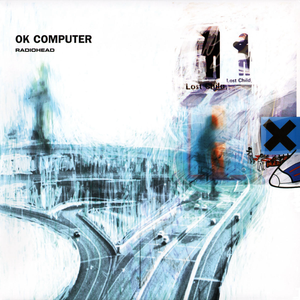
OK Computer
La sombra del viento
Kyoto
The Legend of Zelda: Ocarina of Time
Qwen3.6 Plus Preview (free)Qwen3.6 Plus Preview (free)
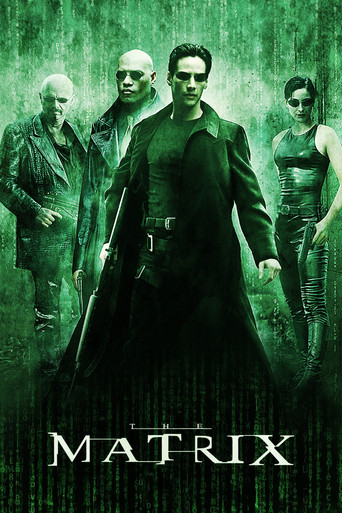

The Matrix
OK Computer
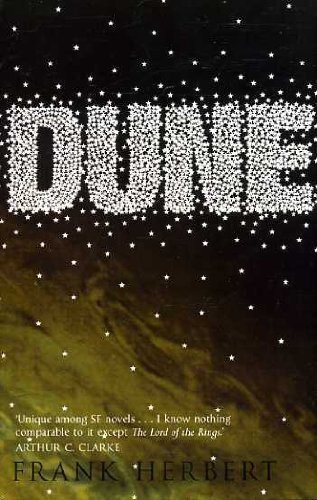
Dune
Tokyo
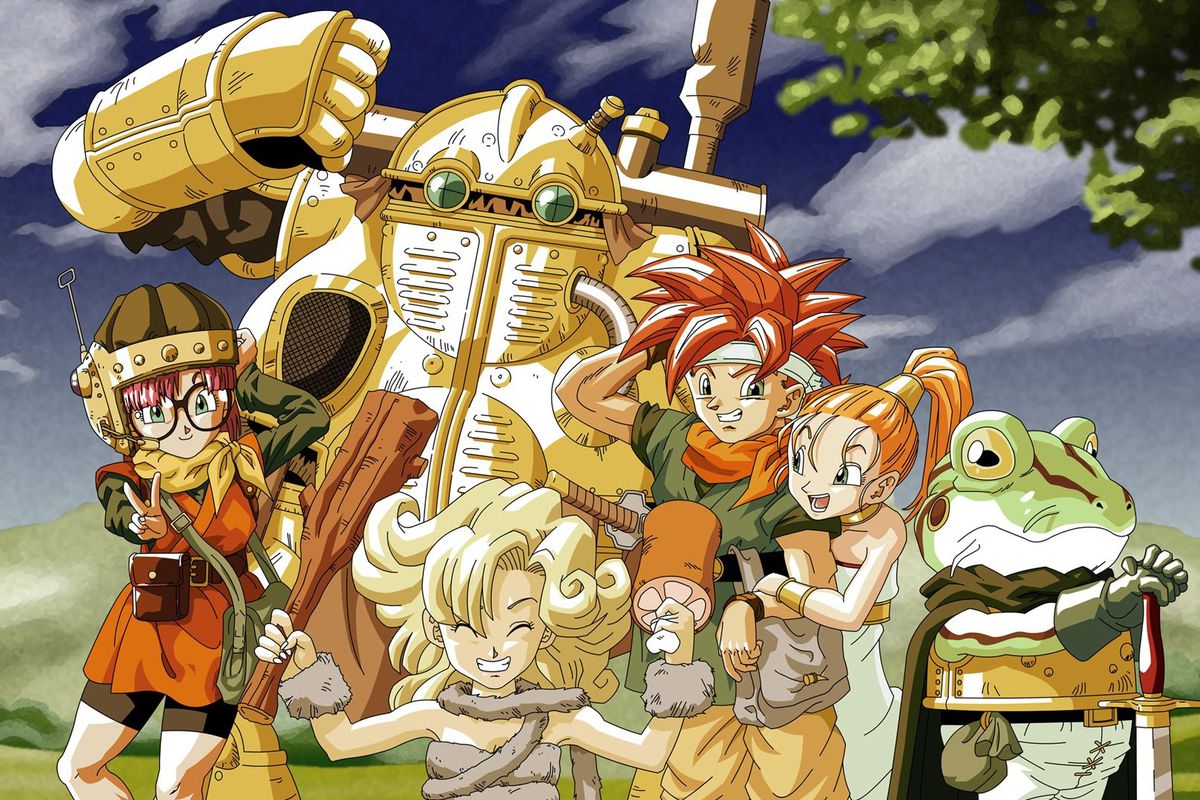
Chrono Trigger
Price and specs
Not enough votes to call it. On the specs, Qwen3.6 Plus Preview (free) has the edge: newer, bigger context window.
| Spec | Mistral Large 2 | Qwen3.6 Plus Preview (free) |
|---|---|---|
| Input price | $8/M tokens | Free |
| Output price | $24/M tokens | Free |
| Context window | 128K tokens | 1.0M tokens |
| Weights | Open | — |
| Free API (OpenRouter) | No | No |
| Released | Jul 2024 | Mar 2026 |
| At 10M a month | $80.00 | $0 |
Input tokens at list price. No caching, no batch discount.
Where to run it
Mistral Large 21 host
Qwen3.6 Plus Preview (free)
No hosts listed on OpenRouter.
Per million tokens. Prices and uptime via OpenRouter, checked 10 Oct 2026.
Common questions
What is the difference between Mistral Large 2 and Qwen3.6 Plus Preview (free)?
Mistral Large 2 is developed by Mistral AI while Qwen3.6 Plus Preview (free) is developed by Qwen. Mistral Large 2 has a 128K token context window vs Qwen3.6 Plus Preview (free)'s 1.0M. You can compare their actual outputs across 23 challenges on Rival to see how they differ in practice.
Which is better, Mistral Large 2 or Qwen3.6 Plus Preview (free)?
It depends on your use case. Mistral Large 2 and Qwen3.6 Plus Preview (free) each have strengths in different areas. Rival lets you compare their real outputs side-by-side across 23 challenges so you can judge which fits your needs best.
How much does Mistral Large 2 cost compared to Qwen3.6 Plus Preview (free)?
Mistral Large 2 costs $8/M input tokens and Qwen3.6 Plus Preview (free) costs $0/M input tokens. Qwen3.6 Plus Preview (free) is $8.00/M cheaper per input. Check their side-by-side outputs on Rival to see if the price difference is justified by quality.
How can I compare Mistral Large 2 and Qwen3.6 Plus Preview (free) on Rival?
This page shows a side-by-side comparison of Mistral Large 2 and Qwen3.6 Plus Preview (free) across shared challenges. You can vote on which model produced the better output in a blind duel. Browsing and voting are free. No account is needed to look; signing in only saves your votes and likes.
More comparisons
Against the newest arrivals
- Mistral Large 2 vs Step 5 PreviewLanded Oct 2026
- Qwen3.6 Plus Preview (free) vs Claude Haiku 5.5Landed Oct 2026
- Mistral Large 2 vs Ling 3.1 FlashLanded Oct 2026
- Qwen3.6 Plus Preview (free) vs Mistral Large 4Landed Oct 2026
- Mistral Large 2 vs GPT-6.1 SolLanded Sep 2026
- Qwen3.6 Plus Preview (free) vs Claude Sonnet 5.5Landed Sep 2026
- Mistral Large 2 vs Solar Mini 4Landed Sep 2026
- Qwen3.6 Plus Preview (free) vs Qwen3.8 Max PrimeLanded Sep 2026


Same lab, same size, long tail
- Mistral Large 2 vs Mistral Large 4Version compare
- Mistral Large 2 vs Mistral Large 3 2512Same lab
- Qwen3.6 Plus Preview (free) vs Qwen3.8 Omni FlashSame lab
- Qwen3.6 Plus Preview (free) vs Qwen3.7 FlashSame lab
- Mistral Large 2 vs Muse Spark 1.1Same size
- Mistral Large 2 vs Muse Spark 1.3Same size
- Mistral Large 2 vs Muse Spark 1.3 ContributorSame size
- Qwen3.6 Plus Preview (free) vs Nemotron 3 Nano Omni (free)Same size

