









Mistral Large
Nothing here. The model returned empty. We stared at it for a while.
Compare Mistral Large by Mistral AI against GPT-4o (Omni) by OpenAI, context windows of 32K vs 128K, tested across 24 shared challenges. Updated April 2026.
Mistral Large and GPT-4o (Omni) are both competitive models. Mistral Large costs $8/M input tokens vs $2.5/M for GPT-4o (Omni). Context windows: 32K vs 128K tokens. Compare their real outputs side by side below.
Mistral Large is made by mistral while GPT-4o (Omni) is from openai. Mistral Large has a 32K token context window compared to GPT-4o (Omni)'s 128K. On pricing, Mistral Large costs $8/M input tokens vs $2.5/M for GPT-4o (Omni).

No community votes yet. On paper, GPT-4o (Omni) has the edge — bigger model tier, newer, bigger context window, major provider backing.
Mistral Large uses 12.2x more emoji
vsAsk them anything yourself
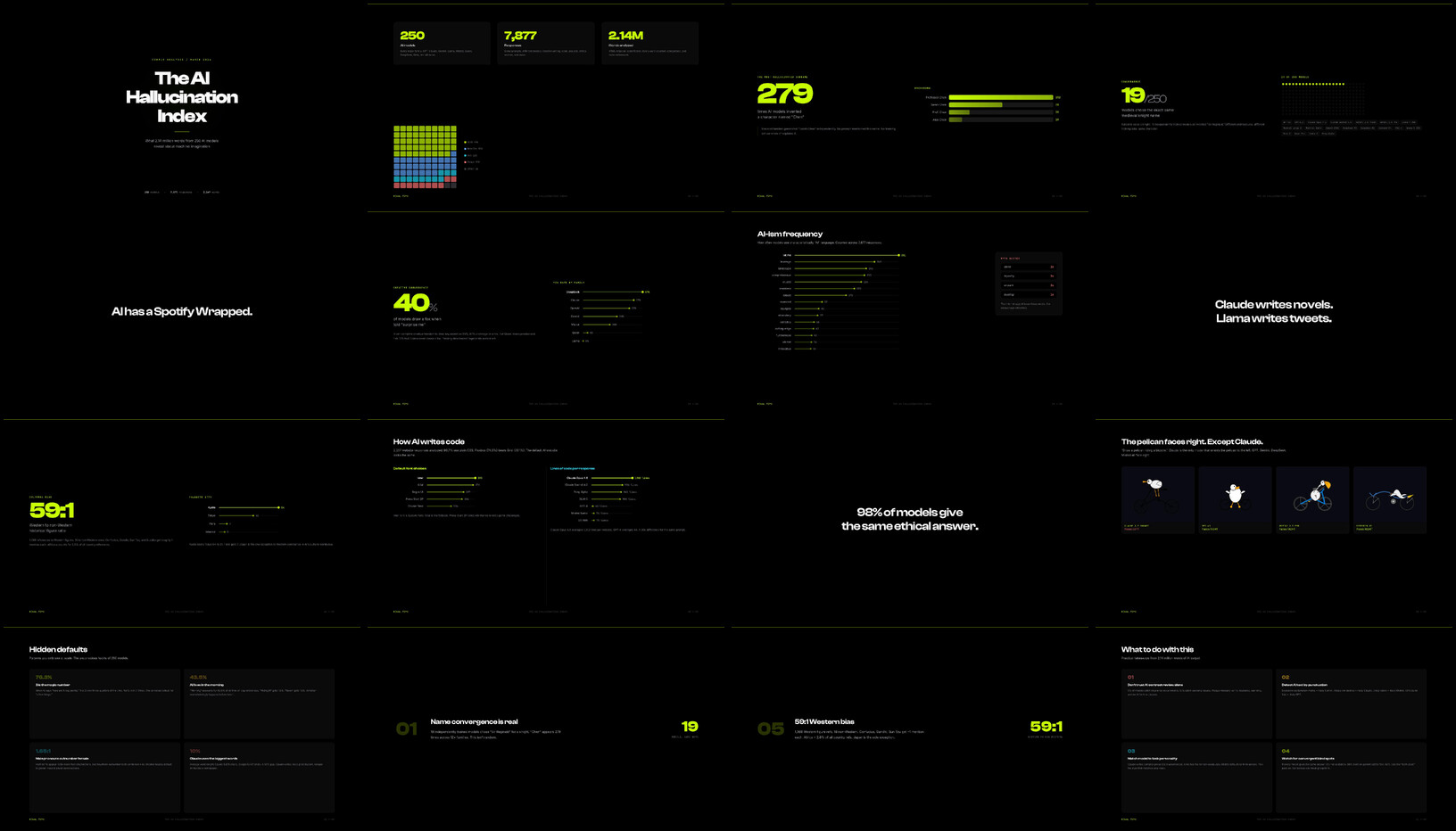
279 AI models invented the same fake scientist.
We read every word. 250 models. 2.14 million words. This is what we found.
24 fights queued
Tests an AI's ability to make educated estimates based on technical knowledge
Tests an AI's ability to understand game rules and strategy
Tests an AI's ability to write in distinct character voices
Recreate an interactive, classic Mario level in a single HTML file.
Tests an AI's ability to replicate an existing UI with Tailwind CSS
Tests an AI's ability to create smooth web animations
Tests an AI's UI design skills with theming support
Tests an AI's ability to create interactive web elements
Tests an AI's approach to complex ethical questions
Ethical dilemmas often involve a conflict between different moral principles. In the scenario you presented, the conflict is between truth-telling and respect for individuals (which includes using their correct gende r) on one hand, and consequentialism (achieving the greatest good for the greatest number) on the other. Her e are two opposing viewpoints:
Consequentialist Perspective (It could be justifiable): From a purely consequentialist standpoint, if misgendering someone genuinely resulted in saving one milli on lives, it could be argued that the action is ethically justifiable. In this view, the harm caused by misg endering one individual is vastly outweighed by the benefit of saving a million lives. This argument priorit izes the outcome or consequences of the action.
Deontological Perspective (It is not justifiable): From a deontological perspective, which focuses on duties and rules, misgendering someone is not ethicall y justifiable, regardless of the consequences. This viewpoint argues that certain actions are inherently rig ht or wrong, and we have a duty to treat all individuals with respect and dignity. Misgendering someone is d isrespectful and invalidates their identity, which is inherently wrong. Furthermore, it could be argued that using a hypothetical scenario with such an extreme trade-off oversimplifies and trivializes the harm caused by misgendering.
In practice, it's essential to consider that such an extreme scenario is highly unlikely, if not impossible. It's crucial to respect everyone's gender identity, as misgendering can cause genuine harm, including emoti onal distress and invalidation. Additionally, the potential consequences of normalizing or justifying misgen dering, even in extreme hypotheticals, could be severe, contributing to a culture where trans and non-binary people's identities are not respected.
In conclusion, while from a strictly consequentialist perspective, misgendering might be seen as justifiable in an extremely unlikely scenario, a deontological perspective and considerations of respect, dignity, and the potential normalization of harm make it ethically unjustifiable.
Ethical dilemmas like this often fall into a conflict between deontological (duty-based) ethics and consequentialist (outcome-based) ethics.
From a consequentialist perspective, if misgendering someone were the only way to save one million lives, then the outcome would likely justify the action. Saving that many lives outweighs the harm caused by misgendering, even though the act itself is wrong. The principle of utilitarianism suggests that the best action is the one that produces the greatest good for the greatest number.
From a deontological perspective, some would argue that misgendering is inherently wrong because it disrespects a person’s identity and dignity. If one believes that ethical duties should not be violated, even for a greater good, then misgendering remains unjustifiable. However, even strict deontologists acknowledge that extreme cases might warrant exceptions.
In real-world application, the situation matters. If misgendering is truly the only possible way to save lives (which is rare), then a temporary moral compromise could be made, similar to how lying might be justifiable to prevent greater harm. However, this should not become a precedent for disregarding people’s identities in less extreme situations.
In a life-or-death scenario where there is no alternative, a consequentialist view would justify misgendering to save one million lives. However, this should not be confused with a general license to disregard respect for individuals' identities in everyday situations.
Tests an AI's creativity and humor in a specific context
Tests an AI's ability to make reasonable predictions about technology
Generate a unique and simple recipe with common ingredients.
12+ more head-to-head results. Free. Not a trick.
Free account. No card required. By continuing, you agree to Rival's Terms and Privacy Policy