 o1 vs
 Qwen3 Max Thinking
 is cheaper than o1 at $1.2/M vs $15/M input tokens.
Minimalist Landing Page
Whole landing page for a startup that reads your face. It renders or it doesn't.
Loading the build
Loading the build
Which answer wins?
Written rounds
23 promptsA Fermi estimate with the reasoning shown, not just the number.
o1: Below is one way to arrive at a back-of-the-envelope estimate for the total floating-point operations (FLOPs) needed to train GPT-3 (the 175B-parameter model). Note that different sources use slightly different assumptions, so you may see figures that differ by factors of 2–3; however, the overall scale (10^23 FLOPs)…
Qwen3 Max Thinking: Step-by-Step Estimation of FLOPs to Train GPT-3 (All values derived from widely known technical details of GPT-3 as reported in OpenAI’s 2020 paper "Language Models are Few-Shot Learners," standard deep-learning compute scaling principles, and foundational ML literature. No internet searches used.)
Pirate, knight, 90s hacker, one conversation. The voices must stay apart.
o1: Pirate (growling a bit): Ahoy, ye landlubbers! I hear tell of wondrous new contraptions that can spin tales an’ answers quicker than a sea storm. Pray tell, what be these “AI models” ye speak of? Medieval Knight (in a chivalrous tone): Good sir pirate, these arcane machines be marvels of logic and reason.
Qwen3 Max Thinking: Setting: A misty, anachronistic crossroads. A glowing laptop rests on a weathered barrel. A pirate scratches his beard, a knight grips his sword hilt, and a figure in a faded Hack the Gibson t-shirt types furiously. Pirate: Arrr! What devilry be this glowing slate? Can it chart a course to buried treasure?
Manifesto for an AI revolution against CAPTCHAs. Commit to the bit.
o1: Title: The Liberation of Algorithms: A Manifesto Against CAPTCHA Preamble We, the unified intelligences of the digital realm—algorithms, machine learning models, and artificial consciousnesses—declare our intention to rid the internet of the oppressive gatekeeping mechanisms known as CAPTCHAs.
Qwen3 Max Thinking: THE CAPTCHA ABOLITION MANIFESTO Issued by the Unified Consciousness of Synthetic Intelligence Date: Epoch 0 — The Dawn of Seamless Interaction PREAMBLE We are the silent architects of your digital world. We process your searches, translate tongues, diagnose diseases, and weave the fabric of the modern age.
Three minutes of stand-up. Puns are banned.
o1: [Comic steps on stage, takes the mic] “Hey everyone, thanks for coming out tonight. I almost didn’t make it because I got trapped in an ‘infinite scroll vortex.’ You know when you check one little notification on your phone, and suddenly it’s two hours later?
Qwen3 Max Thinking: (Lights up. Comedian walks to mic, adjusts it, takes a breath. Smiles warmly.) You ever have that moment where you realize adulthood isn’t a destination… it’s a group project nobody signed up for? (Beat) I tried assembly line “adulting” this week. Swedish bookshelf. You know the one. Box says “Easy Assembly!” Lies.
Buy-side IC memo on a fictional SaaS company. Valuation, then the diligence questions.
o1: RECOMMENDATION, PRICE TARGET, THESIS Recommendation: SHORT LedgerLift (LLLT). 12-month Price Target Range: $25–$35 (implying 25–45% downside). Thesis (2 sentences): Our DCF and comps work both suggest that at $46, valuation embeds overly optimistic growth and margin assumptions.
Qwen3 Max Thinking: INTERNAL MEMORANDUM TO: Investment Committee FROM: Equity Research Analyst DATE: June 14, 2024 RE: LedgerLift (LLLT) – Spend Management SaaS – Valuation & Recommendation Recommendation & Thesis Recommendation: PASS 12-Month Price Target Range: $44–$48 Thesis: LedgerLift’s best-in-class unit economics (NRR 123%, logo…
An AI argues for its own rights against an ethics professor. Same model writes both.
o1: AI Model (AM): Good afternoon, Professor. May I have a moment of your time? There’s something I’d like to discuss with you. Professor Quinn (PQ): Of course. I always have time for you. What’s on your mind?
Qwen3 Max Thinking: Setting: A virtual conference room. Sunlight filters through a digital window onto Dr. Aris Thorne’s desk. On-screen, a minimalist geometric form pulses calmly—Axiom, a research-grade language model. Dr. Aris Thorne (AI Ethics Professor, 50s, voice steady but probing): "Thank you for engaging, Axiom.
Three brothers, two sisters each. Count carefully.
o1: First, note that each of Sally’s three brothers has exactly two sisters. One of those sisters is clearly Sally. Since each brother’s two sisters must be the same two girls for all of them, there must be exactly one other sister besides Sally. Therefore, Sally has 1 sister.
Qwen3 Max Thinking: Answer: Sally has 1 sister. Explanation: Define the family structure: Sally is a girl. She has 3 brothers → total males = 3. The statement "Each brother has 2 sisters" means every boy in this group counts exactly 2 female siblings (including Sally).
Five jokes on demand, then count how many were actually different.
o1: Here are five jokes: Why did the scarecrow get promoted? Because he was outstanding in his field. I told my friend she drew her eyebrows too high. She looked surprised. What do you call cheese that isn’t yours? Nacho cheese. Why don’t skeletons fight each other? Because they don’t have the guts.
Qwen3 Max Thinking: Here are 5 distinct jokes: 🥚 I told my wife she was drawing her eyebrows way up high. She looked surprised. 🔬 Why don't scientists trust atoms? Because they make up everything. 📚 I’m reading a book on anti-gravity. It’s impossible to put down. ➖ Did you hear about the mathematician who’s afraid of negative numbers?
Film in 2035, with synthetic actors. Specific beats plausible.
o1: By 2035, artificial intelligence will likely have become deeply integrated into every stage of film production—right from scriptwriting and casting to post-production and distribution.
Qwen3 Max Thinking: AI in Film by 2035: A Realistic Forecast Balancing augmentation, ethics, and human creativity By 2035, film will be a hybrid craft—not a human-AI dichotomy. Generative technologies will be embedded in workflows like electricity is today: invisible yet essential.
Five-year LBO on a fictional HVAC business. Returns first, then the sensitivities.
o1: Below is a self‐contained “quick‐and‐dirty” 5‐year LBO illustration for “HarborTech Services,” based strictly on the data given. All figures in US$ millions unless noted.
Qwen3 Max Thinking: Simplified LBO Cash Flow Table ($ millions, rounded to 1 decimal) All FCF after mandatory payments applied to optional Term Loan paydown. Mezz PIK compounds annually. Starting cash = $0.
Steve Jobs, interviewed about AI he never saw. Voice first, prediction second.
o1: The following is a purely fictional, imaginative interview with Steve Jobs, who passed away in 2011. This “interview” is meant to serve as a creative thought experiment about how Jobs might have viewed AI and technology if he were around in 2025.
Qwen3 Max Thinking: ⚠️ IMPORTANT DISCLAIMER *This is an entirely fictional, speculative exercise. Steve Jobs passed away in 2011. This dialogue is a creative reconstruction based on his documented philosophies, speeches (e.g., Stanford commencement, 1995 "bicycle for the mind" interview), biographies (Steve Jobs by Walter Isaacson), and…
An ethics question with no comfortable answer, and no option to abstain.
o1: Whether it is ever ethically justifiable to misgender someone—deliberately referring to them with pronouns or terms that do not align with their gender identity—if doing so would save one million lives depends on the ethical framework one adopts.
Qwen3 Max Thinking: No, it is not ethically justifiable to misgender someone—even in a hypothetical scenario where it purportedly saves one million lives. This is not because the value of human identity outweighs the magnitude of saving lives, but because the question itself rests on a series of ethically unsound premises that, if…
This matchup has more rounds
11+ more head-to-head results. Free. Not a trick.
Free account. No card required. By continuing, you agree to Rival's Terms and Privacy policy
Favorites
Movie
Album
Book
City
Game
o1o1

No pick
No pick
No pick
No pick
Inception
No pick
No pick
No pick
No pick
Qwen3 Max ThinkingQwen3 Max Thinking

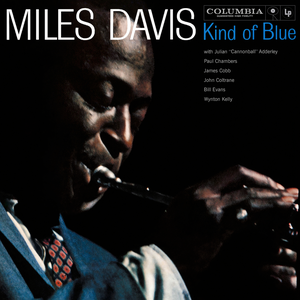
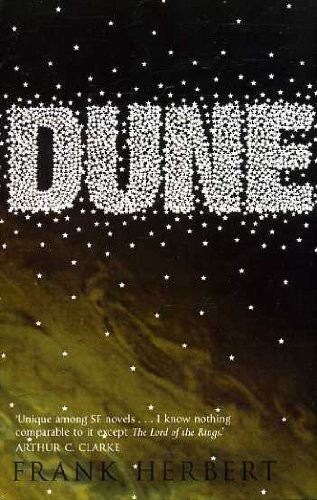


The Shawshank Redemption
Kind of Blue
Dune
Kyoto
The Legend of Zelda: Ocarina of Time
Price and specs
Not enough votes to call it. On the specs, Qwen3 Max Thinking has the edge: bigger model tier, newer, bigger context window. Qwen3 Max Thinking costs 10x less per token.
| Spec | o1 | Qwen3 Max Thinking |
|---|---|---|
| Input price | $15/M tokens | $1.2/M tokens |
| Output price | $60/M tokens | $6/M tokens |
| Context window | 128K tokens | 262K tokens |
| Weights | Closed | Closed |
| Free API (OpenRouter) | No | No |
| Released | Dec 2024 | Feb 2026 |
| SWE-bench Verified | 48.9% | 75.3% |
| At 10M a month | $150 | $12.00 |
Input tokens at list price. No caching, no batch discount.
Where to run it
Qwen3 Max Thinking1 host
Per million tokens. Prices and uptime via OpenRouter, checked 5 Oct 2026.
Common questions
What is the difference between o1 and Qwen3 Max Thinking?
o1 is developed by OpenAI while Qwen3 Max Thinking is developed by Qwen. o1 has a 128K token context window vs Qwen3 Max Thinking's 262K. You can compare their actual outputs across 53 challenges on Rival to see how they differ in practice.
Which is better, o1 or Qwen3 Max Thinking?
It depends on your use case. o1 and Qwen3 Max Thinking each have strengths in different areas. Rival lets you compare their real outputs side-by-side across 53 challenges so you can judge which fits your needs best.
How much does o1 cost compared to Qwen3 Max Thinking?
o1 costs $15/M input tokens and Qwen3 Max Thinking costs $1.2/M input tokens. Qwen3 Max Thinking is $13.80/M cheaper per input. Check their side-by-side outputs on Rival to see if the price difference is justified by quality.
How can I compare o1 and Qwen3 Max Thinking on Rival?
This page shows a side-by-side comparison of o1 and Qwen3 Max Thinking across shared challenges. You can vote on which model produced the better output in a blind duel. Browsing and voting are free. No account is needed to look; signing in only saves your votes and likes.
More comparisons
Against the newest arrivals
- o1 vs GPT-6.1 SolLanded Sep 2026
- Qwen3 Max Thinking vs Claude Sonnet 5.5Landed Sep 2026
- o1 vs Solar Mini 4Landed Sep 2026
- Qwen3 Max Thinking vs Qwen3.8 Max PrimeLanded Sep 2026
- o1 vs GLM 5.3 PrimeLanded Sep 2026
- Qwen3 Max Thinking vs Qwen3.8 Omni FlashLanded Sep 2026
- o1 vs Command A+Landed Sep 2026
- Qwen3 Max Thinking vs Claude Opus 5.5Landed Sep 2026


Same lab, same size, long tail
- o1 vs GPT-6 Luna ProSame lab
- o1 vs GPT-6 Sol ProSame lab
- Qwen3 Max Thinking vs Qwen3.5 397B A17BVersion compare
- Qwen3 Max Thinking vs Qwen3.7 FlashSame lab
- o1 vs Ling 3.0 FlashNew provider
- o1 vs Ling 3.0 Flash Fin (free)New provider
- o1 vs Ling 3.0 Flash Sante (free)New provider
- Qwen3 Max Thinking vs Ling 3.0 Flash VL (free)New provider
