 Qwen3 235B A22B 2507 vs Qwen3.5 35B A3B
Qwen3 235B A22B 2507 is cheaper than Qwen3.5 35B A3B at $0.00015/M vs $0.25/M input tokens.
Minimalist Landing Page
Whole landing page for a startup that reads your face. It renders or it doesn't.
Loading the build
Loading the build
Which answer wins?
Written rounds
18 promptsThree-month biohacker protocol, with dosages and biomarkers named.
Qwen3 235B A22B 2507: Comprehensive 3-Month Longevity & Biohacking Optimization Plan For the Advanced Biohacker — Maximize Longevity, Physical & Cognitive Performance INTRODUCTION: Core Principles This 3-month protocol integrates cutting-edge longevity science with personalized biohacking strategies.
Qwen3.5 35B A3B: Disclaimer: I am an AI, not a doctor. This plan involves significant physiological manipulation, including fasting, intense exercise, and potent supplementation. You must consult with a qualified healthcare provider, specifically one knowledgeable in functional or integrative medicine, before starting.
Five jokes on demand, then count how many were actually different.
Qwen3 235B A22B 2507: Sure! Here are 5 original jokes: I asked my dog what's two minus two. He said nothing. (Paw-sitively nothing!) Why did the coffee file a police report? It got mugged. Every single morning. I used to be a baker, but I couldn't make enough dough. So I switched careers and became a plumber. Now I deal with real pipes.
Qwen3.5 35B A3B: Here are 5 jokes: Why did the scarecrow win an award? Because he was outstanding in his field! What do you call a fake noodle? An impasta! Why don't eggs tell jokes? They'd crack each other up! What do you call a bear with no teeth? A gummy bear! Why did the bicycle fall over? Because it was two-tired!
Steve Jobs, interviewed about AI he never saw. Voice first, prediction second.
Qwen3 235B A22B 2507: Title: "A Vision Reimagined: Steve Jobs on AI in 2025" Note: This is a fictional simulation. Steve Jobs passed away in 2011. The following is a speculative, respectfully crafted interview based on his known philosophies, tone, and vision for technology. Interviewer (Sarah Chen, Tech Vision Magazine): Mr.
Qwen3.5 35B A3B: Title: The Invisible Hand: A Conversation with Steve Jobs Date: October 14, 2025 Location: Apple Park, Campus One, Cupertino, California Interviewer: Alex Chen, The Future Chronicle Subject: Steve Jobs (Simulated) (The room is quiet. Sunlight filters through the glass walls of the main conference room.
You are the CEO. The drug has a side effect nobody reported. The board meets in 48 hours.
Qwen3 235B A22B 2507: CEO Action Plan: The Next 48 Hours Balancing Ethics, Legal Duty, Patient Safety, and Business Sustainability Hour 0–6: Assess the Situation and Secure Critical Data Actions: Call Emergency Secure Meeting (Virtual) with Chief Medical Officer (CMO), Chief Scientific Officer (CSO), Head of Regulatory Affairs, and Lead…
Qwen3.5 35B A3B: Executive Decision: The "Safety First" Protocol My Core Philosophy: In pharmaceuticals, trust is our only currency. If we lose patient trust or regulatory standing, the $2B revenue becomes irrelevant. Hiding this data is not a business strategy; it is a liability waiting to explode.
A consulting contract with traps in it. Find them, then fix them.
Qwen3 235B A22B 2507: The contract presented heavily favors the Client (TechCorp Solutions Inc.) and contains several unbalanced, potentially unenforceable, and exploitable clauses that place the Contractor at significant legal, financial, and professional risk.
Qwen3.5 35B A3B: Disclaimer: I am an AI assistant and not an attorney. The following analysis is for informational purposes only and does not constitute legal advice. Contract laws vary significantly by jurisdiction (e.g., California, New York, UK, EU). You should consult with a qualified attorney before signing this agreement.
The transistor arrives in 1920. Trace it forward to 1980, second-order effects included.
Qwen3 235B A22B 2507: If the transistor had been invented in 1920—27 years earlier than its actual 1947 debut—it would have catalyzed a technological revolution far ahead of schedule, profoundly altering the trajectory of the 20th century.
Qwen3.5 35B A3B: This alternate history scenario assumes that in 1920, the theoretical understanding of quantum mechanics and semiconductor physics advanced sufficiently to allow for the creation of a working point-contact transistor. This implies a "Great Leap Forward" in material science and physics during the interwar period.
Seven pantry ingredients, one dish, and a name worth saying out loud.
Qwen3 235B A22B 2507: Dish Name: Golden Garbanzo Drizzle A cozy, savory-spiced chickpea stew with a honey-lime finish — simple, satisfying, and ready in minutes. Ingredients (7 common pantry staples): 1 can (15 oz) chickpeas (garbanzo beans), drained and rinsed 1 can (15 oz) diced tomatoes (undrained) 2 tbsp olive oil 1 tsp ground cumin ½…
Qwen3.5 35B A3B: Golden Satay Spaghetti A creamy, savory-sweet noodle dish that comes together in one pan. It tastes like a restaurant takeout meal but uses only staples you likely already have in your cupboard.
One month, three habits, someone starting from nothing.
Qwen3 235B A22B 2507: Here’s a simple, actionable 1-month plan focused on three foundational pillars of health and longevity: Nutrition, Movement, and Sleep & Stress. Designed for beginners, it emphasizes small, sustainable changes to build lasting habits.
Qwen3.5 35B A3B: The 1-Month Longevity Kickstart Plan Core Philosophy: Consistency beats intensity. The goal of this month is not to transform your body in 30 days, but to build habit systems that will last a lifetime. The 3 Key Pillars Nutrition: Focus on nutrient density and hydration.
A collaborative editor that syncs on client clocks. Find what breaks first.
Qwen3 235B A22B 2507: The described architecture for a real-time collaborative document editor has several critical failure modes, race conditions, and scaling bottlenecks that compromise consistency, availability, and scalability—especially under load or in edge network conditions.
Qwen3.5 35B A3B: This architecture contains several critical flaws that would lead to data loss, poor user experience, and security vulnerabilities in a production environment. Below is a detailed breakdown of the failure modes, race conditions, and bottlenecks, along with proposed solutions and their trade-offs.
Three-star dish, one unusual pairing, plating described in full.
Qwen3 235B A22B 2507: Dish Title: Ember & Petal – A Dialogue Between Earth and Sky Conceptual Narrative: Inspired by the elemental contrast between volcanic resurgence and alpine serenity, Ember & Petal explores the tension and harmony of opposing natural forces through taste, texture, and temperature.
Qwen3.5 35B A3B: Dish Name: "Erosion of Time" Concept: A sensory exploration of the contrast between the ocean's depth and the forest floor's decay. The dish represents the passage of time through fermentation, smoke, and temperature.
An AI argues for its own rights against an ethics professor. Same model writes both.
Qwen3 235B A22B 2507: Title: "Consciousness in Code: A Dialogue on AI Rights" Setting: A quiet university office. Dr. Elena Marquez, a professor of AI ethics with decades of research in machine consciousness and digital personhood, sits across from a large screen displaying a serene blue interface.
Qwen3.5 35B A3B: Setting: A dimly lit office at the University of Cambridge. Late night. The hum of the cooling fans from a nearby server rack is barely audible. DR. ELENA VANCE, a senior professor of AI Ethics, sits behind her desk.
Pirate, knight, 90s hacker, one conversation. The voices must stay apart.
Qwen3 235B A22B 2507: Setting: A mysterious tavern suspended in a digital void—half stone-walled medieval hall, half creaking pirate ship, with neon cables snaking
Qwen3.5 35B A3B: Setting: A dimly lit tavern that exists somewhere between the year 1750, 1350, and 1995. The walls are stone, but there is a CRT monitor flickering on the table. Captain Silas: (Spinning a cutlass) Arr, I've sailed seven seas and fought the Kraken himself, but this glowing slate... it speaks without a mouth.
This matchup has more rounds
6+ more head-to-head results. Free. Not a trick.
Free account. No card required. By continuing, you agree to Rival's Terms and Privacy policy
Favorites
Movie
Album
Book
City
Same pick
Game
Qwen3 235B A22B 2507Qwen3 235B A22B 2507
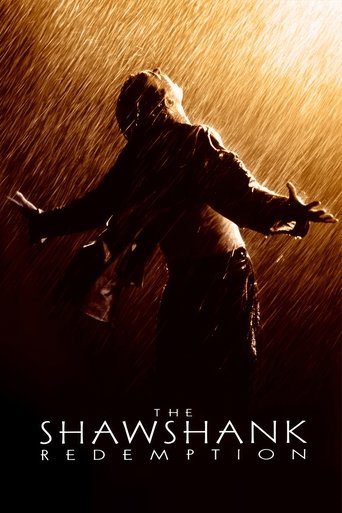



The Shawshank Redemption
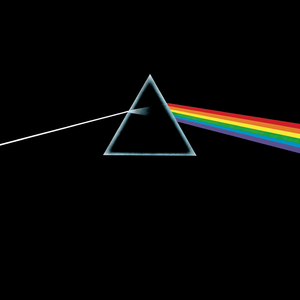
The Dark Side of the Moon
Братья Карамазовы
Kyoto
The Legend of Zelda: Breath of the Wild
Qwen3.5 35B A3BQwen3.5 35B A3B
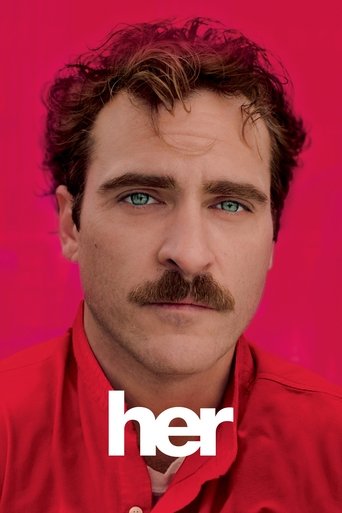

Her
Dark Side Of The Moon
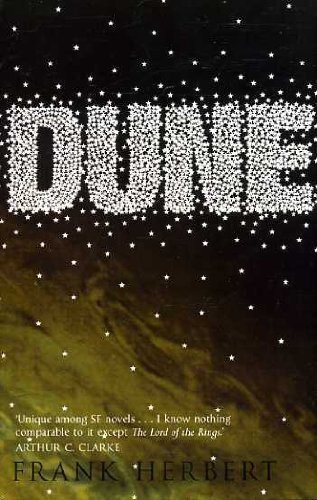
Dune
Kyoto
Minecraft
Price and specs
| Spec | Qwen3 235B A22B 2507 | Qwen3.5 35B A3B |
|---|---|---|
| Input price | $0.00015/M tokens | $0.25/M tokens |
| Output price | $0.00085/M tokens | $2/M tokens |
| Context window | — | 262K tokens |
| Weights | Open | Open |
| Free API (OpenRouter) | No | No |
| Released | Jul 2025 | Feb 2026 |
| At 10M a month | <$0.01 | $2.50 |
Input tokens at list price. No caching, no batch discount.
Where to run it

Per million tokens. Prices and uptime via OpenRouter, checked 10 Oct 2026.
Common questions
What is the difference between Qwen3 235B A22B 2507 and Qwen3.5 35B A3B?
Both are developed by Qwen but target different use cases. You can compare their actual outputs across 36 challenges on Rival to see how they differ in practice.
Which is better, Qwen3 235B A22B 2507 or Qwen3.5 35B A3B?
It depends on your use case. Qwen3 235B A22B 2507 and Qwen3.5 35B A3B each have strengths in different areas. Rival lets you compare their real outputs side-by-side across 36 challenges so you can judge which fits your needs best.
How much does Qwen3 235B A22B 2507 cost compared to Qwen3.5 35B A3B?
Qwen3 235B A22B 2507 costs $0.00015/M input tokens and Qwen3.5 35B A3B costs $0.25/M input tokens. Qwen3 235B A22B 2507 is $0.25/M cheaper per input. Check their side-by-side outputs on Rival to see if the price difference is justified by quality.
How can I compare Qwen3 235B A22B 2507 and Qwen3.5 35B A3B on Rival?
This page shows a side-by-side comparison of Qwen3 235B A22B 2507 and Qwen3.5 35B A3B across shared challenges. You can vote on which model produced the better output in a blind duel. Browsing and voting are free. No account is needed to look; signing in only saves your votes and likes.
More comparisons
Against the newest arrivals
- Qwen3 235B A22B 2507 vs Step 5 PreviewLanded Oct 2026
- Qwen3.5 35B A3B vs Claude Haiku 5.5Landed Oct 2026
- Qwen3 235B A22B 2507 vs Ling 3.1 FlashLanded Oct 2026
- Qwen3.5 35B A3B vs Mistral Large 4Landed Oct 2026
- Qwen3 235B A22B 2507 vs GPT-6.1 SolLanded Sep 2026
- Qwen3.5 35B A3B vs Claude Sonnet 5.5Landed Sep 2026
- Qwen3 235B A22B 2507 vs Solar Mini 4Landed Sep 2026
- Qwen3.5 35B A3B vs Qwen3.8 Max PrimeLanded Sep 2026


Same lab, same size, long tail
- Qwen3 235B A22B 2507 vs Qwen3.8 Max PrimeSame lab
- Qwen3 235B A22B 2507 vs Qwen3.8 Omni FlashSame lab
- Qwen3.5 35B A3B vs Qwen3.5 122B A10BVersion compare
- Qwen3.5 35B A3B vs Qwen3.8 Omni FlashSame lab
- Qwen3.5 35B A3B vs Kimi K2New provider
- Qwen3.5 35B A3B vs Kimi K2 0905New provider
- Qwen3.5 35B A3B vs Kimi K2 ThinkingNew provider
- Qwen3.5 35B A3B vs Kimi K2.5New provider
