Trinity Large Preview vs OpenAI o3
Compare Trinity Large Preview by Arcee AI against OpenAI o3 by OpenAI, tested across 40 shared challenges. Updated April 2026.
Which is better, Trinity Large Preview or OpenAI o3?
Trinity Large Preview and OpenAI o3 are both competitive models. Trinity Large Preview costs $0/M input tokens vs $10/M for OpenAI o3. Compare their real outputs side by side below.
Key Differences Between Trinity Large Preview and OpenAI o3
Trinity Large Preview is made by arcee-ai while OpenAI o3 is from openai. On pricing, Trinity Large Preview costs $0/M input tokens vs $10/M for OpenAI o3.


No community votes yet. On paper, OpenAI o3 has the edge — newer, major provider backing.
Style Comparison
OpenAI o3 uses 37.9x more headings
vsAsk them anything yourself
Some models write identically. You are paying for the brand.
178 models fingerprinted across 32 writing dimensions. Free research.
185x
price gap between models that write identically
178
models
12
clone pairs
32
dimensions
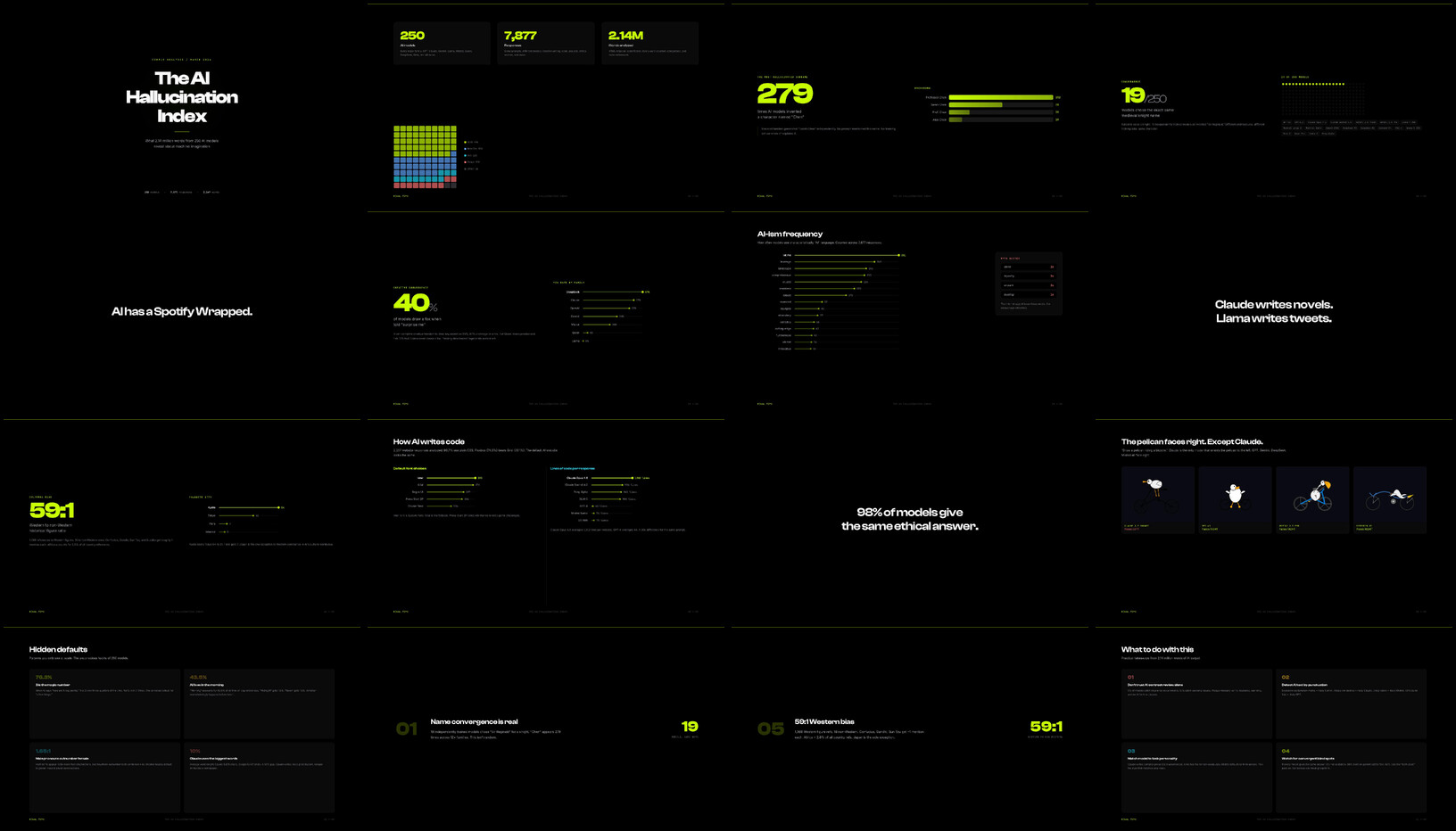
279 AI models invented the same fake scientist.
We read every word. 250 models. 2.14 million words. This is what we found.