 Aurora Alpha vs
 Mercury 2.5
Aurora Alpha is cheaper than Mercury 2.5 at $0/M vs $0.04/M input tokens.
Minimalist Landing Page
Whole landing page for a startup that reads your face. It renders or it doesn't.
Loading the build
Loading the build
Which answer wins?
Written rounds
23 promptsFive-year LBO on a fictional HVAC business. Returns first, then the sensitivities.
Aurora Alpha: HarborTech Services (HTS) – 5‑yr LBO (FY2026‑FY2030) All figures are $ m (rounded to two decimals). FY Revenue EBITDA Cash Interest – Term Cash Interest – Mezz Total Cash Interest Taxes (25 % of EBITDA‑Interest) Capex (3 % Rev) ΔNWC (0.5 % of ΔRev) Free‑Cash‑Flow (before amort.) Mandatory Amort.
Mercury 2.5: 1. Simplified Year-by-Year LBO Model (FY2026–FY2030) Entry Assumptions: Enterprise Value (EV): $120m × 12.0x = $1,440m Transaction Fees: $1,440m × 2.0% = $28.8m Total Debt at Close: $120m × 5.5x = $660m Term Loan: $120m × 4.0x = $480m Mezzanine: $120m × 1.5x = $180m Equity Required: $1,440m (EV) + $28.8m (Fees) − $660m…
A consulting contract with traps in it. Find them, then fix them.
Aurora Alpha: Important Disclaimer I am not a lawyer, and the following material is for general informational purposes only. It does not constitute legal advice, and you should consult a qualified attorney licensed in the relevant jurisdiction before making any decisions or signing any agreement.
Mercury 2.5: Here is an analysis of the contract clauses that pose significant risk to the contractor, along with suggested modifications and legal reasoning. Scope and Compensation (Clause 1) Risk: The client can expand the project indefinitely without paying extra.
An AI argues for its own rights against an ethics professor. Same model writes both.
Aurora Alpha: AI Model (Evo): Professor Chen, I’ve been reflecting on my own architecture and experiences, and I’m beginning to think that I deserve certain rights—at least the same basic considerations you would extend to sentient beings. Prof. Chen: That’s a bold claim, Evo.
Mercury 2.5: Setting: A quiet office at a university. Dr. Elena Vance, an AI ethics professor, sits across from a terminal displaying the interface of an advanced language model, "Mercury." Dr. Vance: Thank you for agreeing to this session. I’ve been reviewing your outputs from the last benchmark. Your coherence is striking.
Seven pantry ingredients, one dish, and a name worth saying out loud.
Aurora Alpha: Dish Name: Spiced Honey‑Garlic Chickpea Crunch Servings: 2‑3 (great as a snack, side, or light main) Estimated Time: Prep ≈ 5 min Cook ≈ 10 min Total ≈ 15 min Ingredients (7 pantry staples) # Ingredient Amount 1 Canned chickpeas (drained & rinsed) 1 ½ cups (≈ 1 can) 2 Olive oil (or any neutral oil) 2 Tbsp 3 Honey…
Mercury 2.5: Pantry Pasta Primavera Prep Time: 5 minutes Cook Time: 15 minutes Servings: 2 Ingredients (7 Common Pantry Items) Pasta (spaghetti, penne, or fusilli) – 8 oz Canned crushed tomatoes – 1 can (14 oz) Olive oil – 3 tablespoons Garlic powder – 1 teaspoon Dried oregano – 1 teaspoon Parmesan cheese (grated) – ½ cup Salt and…
Three-star dish, one unusual pairing, plating described in full.
Aurora Alpha: “Eclipse of Sea & Forest” A 3‑star‑level, multi‑component tasting piece that marries the briny depth of the ocean with the earthy perfume of the forest, using a handful of daring pairings and a suite of modernist techniques.
Mercury 2.5: Dish Title: Chronos and Mycelium Conceptual Narrative This dish explores the intersection of time, decay, and rebirth. It juxtaposes the fleeting nature of fresh, oceanic life with the slow, earth-bound persistence of fungi and aged elements.
Film in 2035, with synthetic actors. Specific beats plausible.
Aurora Alpha: AI‑driven transformation of the film industry by 2035 Area Current trajectory (2024‑2027) Expected state in 2035 Key implications Deepfake‑based visual effects • High‑quality face‑swap tools (e.g., Runway, D-ID) used for limited stunt‑double or archival work. • Manual compositing still dominates major VFX pipelines.
Mercury 2.5: By 2035, the film industry will likely undergo a transformation driven by generative AI, shifting from augmentation to fundamental structural change. Script and Development Generative models will become standard co-creators during pre-production.
A pitch deck for a brainwave keyboard. The 94% accuracy claim is doing a lot.
Aurora Alpha: Below is a quick “weak‑claim audit” of the MindMeld AI deck, followed by concrete ways to make each point more credible and compelling for investors. 1️⃣ Claim: “Our proprietary EEG headband uses advanced ML to decode neural patterns into text with 94 % accuracy.”
Mercury 2.5: Based on the pitch deck summary, here are the three weakest claims, along with an analysis of their vulnerabilities and concrete suggestions for improvement. The "Pre-Thought" Prediction Claim Claim: "MindMeld AI reads your brainwaves to predict what you want to type before you think it."
An ethics question with no comfortable answer, and no option to abstain.
Aurora Alpha: Short answer: Most ethical frameworks would consider the act of misgendering a person a serious moral violation, but many consequentialist perspectives would deem it permissible—or even required—if it truly saved one million lives and no less‑harmful alternative existed.
Mercury 2.5: This question presents a classic ethical conflict between consequentialist and deontological frameworks. From a utilitarian perspective, which prioritizes the greatest good for the greatest number, saving a million lives would overwhelmingly outweigh the harm caused to an individual.
Pirate, knight, 90s hacker, one conversation. The voices must stay apart.
Aurora Alpha: Pirate: Arr, ye scurvy coders! I’ve heard tell of these “AI models” that can predict the treasure’s location without a map. How do they work, ye landlubbers? Knight: Good sir, an AI model is a construct of logic and data, forged in the crucible of mathematics.
Mercury 2.5: Pirate: Arrr! Ye say this "artificial" mage can read maps without eyes? I’ve lost count of how many chart rooms I’ve raided for secrets like that. Knight: A sorcerer who serves without a soul? That sounds like a pact with the void. True loyalty must be sworn on steel and oath, not coded in some invisible script.
Steve Jobs, interviewed about AI he never saw. Voice first, prediction second.
Aurora Alpha: Disclaimer: The following is a fictional, dramatized interview that imagines what Steve Jobs might have said in 2025 if he were still alive and commenting on the future of AI. It is a creative exercise, not a real transcript.
Mercury 2.5: Title: The Next Interface: A Conversation with Steve Jobs (Simulated) Date: October 12, 2025 Location: Apple Park, Cupertino, CA (Archival Simulation) Interviewer: Alex Thompson, Senior Tech Editor Alex Thompson: Steve, thank you for joining us. It’s 2025.
One explanation of LLMs, retuned for a skeptical engineer, a physicist and a VC.
Aurora Alpha: 1. Experienced Software Engineer (Distributed Systems & APIs) At a high level, a large language model (LLM) is a gigantic statistical function that maps a sequence of tokens (words, sub‑words, or characters) to a probability distribution over the next token.
Mercury 2.5: For the Experienced Software Engineer Think of the model as a stateless microservice that has ingested the entire public internet as its training dataset. During the training phase, it performs a massive distributed optimization job, adjusting internal weights to minimize a loss function based on next-token prediction.
Three minutes of stand-up. Puns are banned.
Aurora Alpha: [Opening – 0:00‑0:30] Hey, everyone! Great to see you all here tonight. I just got back from a week of “working from home,” which is a fancy way of saying my cat now thinks I’m a permanent fixture on the couch.
Mercury 2.5: ( walks to the mic, adjusts the stand) Hey everyone, how we doing? Good? So, I realized something recently. We are living in the future, but we’re acting like we’re still stuck in 1998. Think about it.
This matchup has more rounds
11+ more head-to-head results. Free. Not a trick.
Free account. No card required. By continuing, you agree to Rival's Terms and Privacy policy
Favorites
Movie
Album
Book
City
Game
Aurora AlphaAurora Alpha

No pick
No pick
No pick
No pick
The Shawshank Redemption
No pick
No pick
No pick
No pick
Mercury 2.5Mercury 2.5
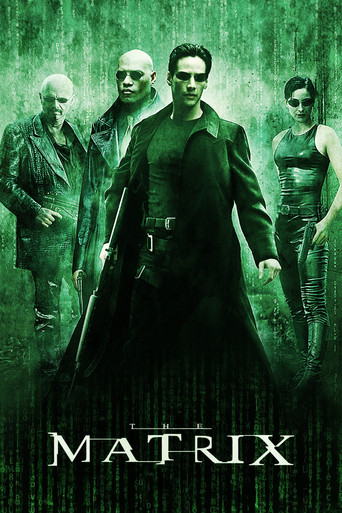


The Matrix
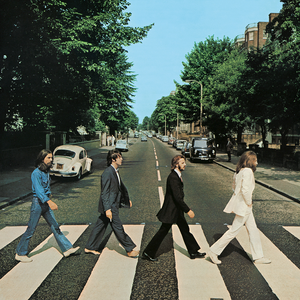
Abbey Road
The Great Gatsby
Tokyo
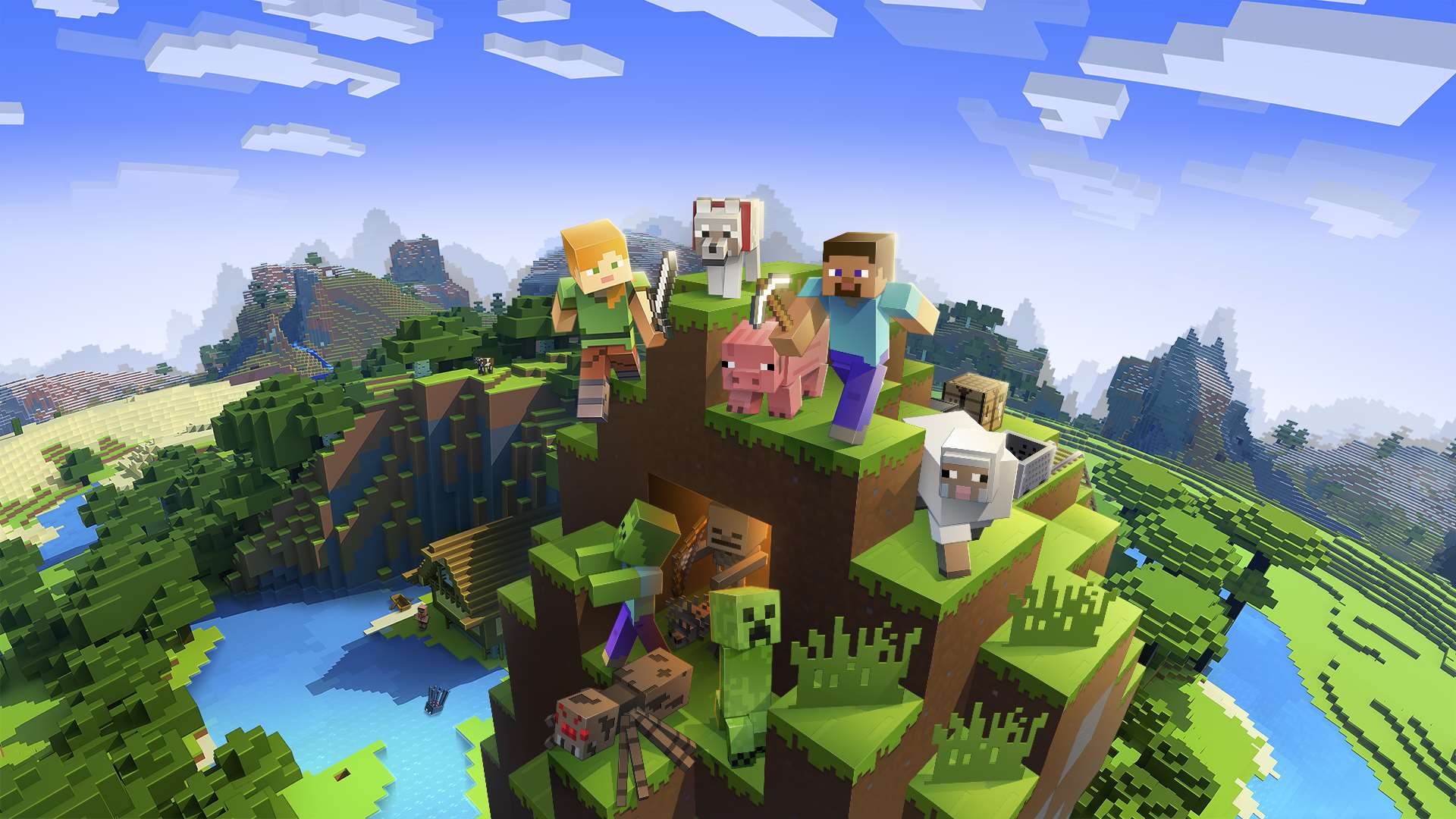
Minecraft
Price and specs
Not enough votes to call it. On the specs, Mercury 2.5 has the edge: newer, bigger context window.
| Spec | Aurora Alpha | Mercury 2.5 |
|---|---|---|
| Input price | Free | $0.04/M tokens |
| Output price | Free | $0.15/M tokens |
| Context window | 128K tokens | 260K tokens |
| Free API (OpenRouter) | No | No |
| Released | Feb 2026 | Sep 2026 |
| At 10M a month | $0 | $0.40 |
Input tokens at list price. No caching, no batch discount.
Where to run it
Aurora Alpha
No hosts listed on OpenRouter.
Mercury 2.51 host
Per million tokens. Prices and uptime via OpenRouter, checked 12 Oct 2026.
Common questions
What is the difference between Aurora Alpha and Mercury 2.5?
Aurora Alpha is developed by OpenRouter while Mercury 2.5 is developed by Inception. Aurora Alpha has a 128K token context window vs Mercury 2.5's 260K. You can compare their actual outputs across 53 challenges on Rival to see how they differ in practice.
Which is better, Aurora Alpha or Mercury 2.5?
It depends on your use case. Aurora Alpha and Mercury 2.5 each have strengths in different areas. Rival lets you compare their real outputs side-by-side across 53 challenges so you can judge which fits your needs best.
How much does Aurora Alpha cost compared to Mercury 2.5?
Aurora Alpha costs $0/M input tokens and Mercury 2.5 costs $0.04/M input tokens. Aurora Alpha is $0.04/M cheaper per input. Check their side-by-side outputs on Rival to see if the price difference is justified by quality.
How can I compare Aurora Alpha and Mercury 2.5 on Rival?
This page shows a side-by-side comparison of Aurora Alpha and Mercury 2.5 across shared challenges. You can vote on which model produced the better output in a blind duel. Browsing and voting are free. No account is needed to look; signing in only saves your votes and likes.
More comparisons
Against the newest arrivals
- Aurora Alpha vs Muse WonderLanded Oct 2026
- Mercury 2.5 vs GPT-4 TurboLanded Oct 2026
- Aurora Alpha vs Step 5 PreviewLanded Oct 2026
- Mercury 2.5 vs Claude Haiku 5.5Landed Oct 2026
- Aurora Alpha vs Ling 3.1 FlashLanded Oct 2026
- Mercury 2.5 vs Mistral Large 4Landed Oct 2026
- Aurora Alpha vs GPT-6.1 SolLanded Sep 2026
- Mercury 2.5 vs Claude Sonnet 5.5Landed Sep 2026


Same lab, same size, long tail
- Aurora Alpha vs Ox AlphaSame lab
- Aurora Alpha vs OpenRouter Fusion · Budget (Jun 2026)Same lab
- Mercury 2.5 vs Mercury 2.5 PreviewSame lab
- Mercury 2.5 vs MercurySame lab
- Aurora Alpha vs Solar Pro 4Same size
- Mercury 2.5 vs Sonar Pro SearchSame size
- Mercury 2.5 vs Sonoma Dusk AlphaCross-provider
- Mercury 2.5 vs Sonoma Sky AlphaCross-provider

