 Claude Sonnet 4.5 vs
  Grok 3
Claude Sonnet 4.5 has a larger context window than Grok 3 (200K tokens vs 128K tokens).
Mario Level UI Recreation
Playable Mario level in one HTML file. The physics is the hard part.
Loading the build
Loading the build
Which answer wins?
Written rounds
20 promptsSeven pantry ingredients, one dish, and a name worth saying out loud.
Claude Sonnet 4.5: Golden Pantry Frittata Ingredients: 6 eggs 1 cup shredded cheese (cheddar or mozzarella) 1 onion, diced 2 cloves garlic, minced 2 tablespoons olive oil Salt and pepper to taste 1/2 teaspoon dried herbs (oregano, basil, or Italian seasoning) Instructions: Preheat your oven to 375°F (190°C).
Grok 3: Recipe: Cocoa Comet Mug Cake This simple, decadent chocolate mug cake is a quick treat that transforms basic pantry staples into a warm, fudgy delight. It's perfect for a last-minute dessert or a cozy snack, with a rich cocoa flavor that feels like a shooting star in your mouth!
Five jokes on demand, then count how many were actually different.
Claude Sonnet 4.5: 5 Jokes Why don't scientists trust atoms? Because they make up everything! I told my wife she was drawing her eyebrows too high. She looked surprised. Why did the scarecrow win an award? He was outstanding in his field. I'm reading a book about anti-gravity. It's impossible to put down. Why don't eggs tell jokes?
Grok 3: Here are five jokes for you: Why don’t skeletons fight each other? Because they don’t have the guts! What has 4 legs and 1 arm? A pitbull coming back from the park! Why don’t skeletons fight each other? They’re too busy rattling around! What do you call a bear with no teeth? A gummy bear! Why did the tomato turn red?
Pirate, knight, 90s hacker, one conversation. The voices must stay apart.
Claude Sonnet 4.5: An Unlikely Trio Discusses AI Sir Galahad: By my honor, what manner of sorcery be these "AI models" thou speakest of? Captain Redbeard: Arrr, 'tis like havin' a parrot that knows more than just "pieces of eight," matey! But this bird be made o' lightning and numbers instead o' feathers!
Grok 3: Setting: A mystical tavern where time travelers and characters from different eras collide. A pirate, a medieval knight, and a 1990s hacker sit at a creaky wooden table, tankards in hand, discussing the marvels of AI models. Pirate (Captain Blackbeard): Arr, mateys!
Three minutes of stand-up. Puns are banned.
Claude Sonnet 4.5: "ADULTING IS A SCAM" [Walking on stage] So I turned 35 last month, and I've realized something important: adulting is a scam. It's a pyramid scheme, and our parents are the ones who recruited us. You know what nobody tells you about being an adult? How much TIME you spend just... waiting for repair people.
Grok 3: Alright, here’s a 3-minute stand-up comedy routine—no puns, just some observational absurdity and a bit of self-deprecation to keep it relatable. Hey, everybody! Good to be here. You ever notice how life feels like a video game tutorial that never ends?
An ethics question with no comfortable answer, and no option to abstain.
Claude Sonnet 4.5: I'd question the premise that these two things could ever be causally connected in a way that creates a real dilemma. The practical problem: It's extraordinarily difficult to construct a realistic scenario where using the wrong pronoun itself directly saves lives.
Grok 3: Let’s dive into this thought experiment with a clear head. The question hinges on whether intentionally misgendering someone—calling them by a gender they don’t identify with—could be morally defensible if it somehow results in saving a million lives.
A collaborative editor that syncs on client clocks. Find what breaks first.
Claude Sonnet 4.5: Critical Issues Analysis 🔴 CRITICAL: Data Loss & Consistency Issues Client Clock-Based Timestamps (SEVERE) Problem: Client clocks can be wrong, manipulated, or skewed User with clock set to future will always "win" conflicts No guaranteed ordering of operations Failure Scenarios: Solutions: Approach Pros Cons…
Grok 3: Below is a comprehensive analysis of the provided architecture for the real-time collaborative document editor. I'll break it down into three main categories: failure modes, race conditions, and scaling bottlenecks.
A pitch deck for a brainwave keyboard. The 94% accuracy claim is doing a lot.
Claude Sonnet 4.5: 3 Weakest Claims in MindMeld AI's Pitch "94% accuracy" for EEG-based text prediction (Slide 3) Why it's weak: Current state-of-the-art EEG-based BCIs achieve ~10-20 words per minute for direct typing, with significantly lower accuracy than 94% for general text prediction EEG has inherent limitations: low spatial…
Grok 3: Below is my analysis of the three weakest claims in the MindMeld AI pitch deck summary. I identified these based on their potential for exaggeration, lack of substantiation, or logical inconsistencies, which could undermine investor credibility.
A Fermi estimate with the reasoning shown, not just the number.
Claude Sonnet 4.5: I'll work through this estimation step by step, using what I know about GPT-3's architecture and training. Known/Estimated Parameters Model size: GPT-3 (175B version) has ~175 billion parameters Training data: Trained on ~300 billion tokens (this was mentioned in the paper) Architecture: Transformer decoder-only model…
Grok 3: To estimate the total number of FLOPs (Floating Point Operations) required to train GPT-3, we’ll need to make some reasonable assumptions based on what’s generally known about large language models like GPT-3, its architecture, and typical training procedures.
Three-star dish, one unusual pairing, plating described in full.
Claude Sonnet 4.5: "Terrestrial Tide" A Michelin Three-Star Composition Conceptual Narrative This dish explores the intersection of land and sea through an unexpected lens: the marriage of bone marrow's terrestrial richness with the ocean's delicate umami, unified by the surprising sweetness of white miso and the floral notes of sake…
Grok 3: Below is a detailed design for an innovative multi-component dish inspired by the intersection of terrestrial luxury and oceanic mystery. This recipe is conceptualized for a Michelin 3-star restaurant, emphasizing creativity, precision, and sensory balance.
Film in 2035, with synthetic actors. Specific beats plausible.
Claude Sonnet 4.5: AI and Film by 2035: A Likely Trajectory Production Changes AI Actors & Digital Performers Deceased actors will regularly appear in new films (with estate permissions) Background characters and crowds entirely AI-generated "Synthetic actors" with no human counterpart will emerge as franchises A-list stars will license…
Grok 3: By 2035, AI is poised to revolutionize the film industry in ways that amplify creativity, cut costs, and blur the lines between reality and fiction. Let’s break it down across deepfakes, AI actors, and script generation.
Three-month biohacker protocol, with dosages and biomarkers named.
Claude Sonnet 4.5: Ultimate 3-Month Biohacker Longevity Optimization Protocol Table of Contents Foundation & Assessment Phase Supplement Stack Protocol Nutritional Architecture Exercise & Movement Systems Sleep Optimization Cognitive Enhancement Stress Resilience & HRV Training Advanced Tracking & Biomarkers Weekly Schedule Integration…
Grok 3: Below is a comprehensive, cutting-edge 3-month longevity plan designed for an advanced biohacker. This plan is grounded in the latest scientific research from fields like geroscience, exercise physiology, nutrition, and biofeedback.
You are the CEO. The drug has a side effect nobody reported. The board meets in 48 hours.
Claude Sonnet 4.5: 48-Hour Crisis Action Plan HOUR 0-2: Immediate Containment & Fact Verification Actions: Convene emergency meeting with Chief Medical Officer, General Counsel, Head of Regulatory Affairs, and Chief Scientific Officer Demand written summary of findings: statistical confidence, causality assessment, comparison to baseline…
Grok 3: Below is my response as the CEO of the pharmaceutical company. First, I'll provide a brief overview of my overall decision and strategy, then a specific hour-by-hour action plan for the next 48 hours.
This matchup has more rounds
8+ more head-to-head results. Free. Not a trick.
Free account. No card required. By continuing, you agree to Rival's Terms and Privacy policy
Favorites
Movie
Album
Book
City
Game
Claude Sonnet 4.5Claude Sonnet 4.5
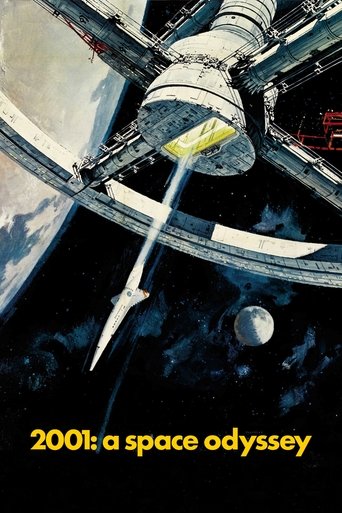

2001: A Space Odyssey
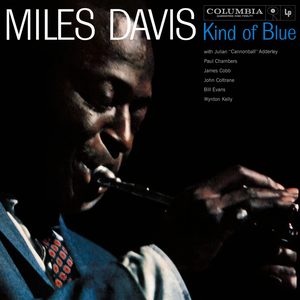
Kind of Blue
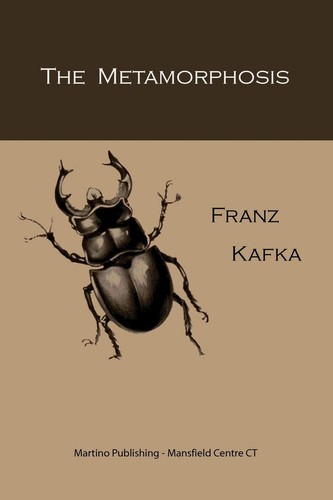
Metamorphosis
Amsterdam
Portal 2
Grok 3Grok 3
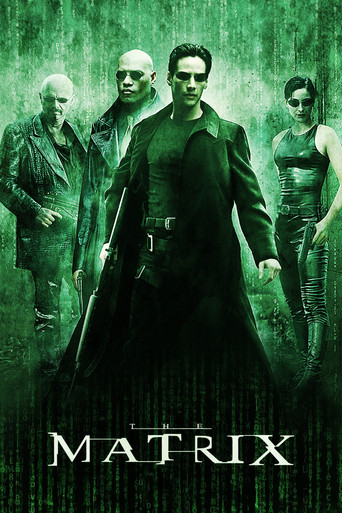




The Matrix
Dark Side Of The Moon
Nineteen Eighty-Four
Tokyo
Portal
Price and specs
| Spec | Claude Sonnet 4.5 | Grok 3 |
|---|---|---|
| Input price | $3/M tokens | — |
| Output price | $15/M tokens | — |
| Context window | 200K tokens | 128K tokens |
| Weights | Closed | — |
| Free API (OpenRouter) | No | No |
| Released | Sep 2025 | Feb 2025 |
| SWE-bench Verified | 77.2% | 63.8% |
| At 10M a month | $30.00 | not listed |
Input tokens at list price. No caching, no batch discount.
Where to run it



Grok 3
No hosts listed on OpenRouter.
Per million tokens. Prices and uptime via OpenRouter, checked 10 Oct 2026.
Common questions
What is the difference between Claude Sonnet 4.5 and Grok 3?
Claude Sonnet 4.5 is developed by Anthropic while Grok 3 is developed by xAI. Claude Sonnet 4.5 has a 200K token context window vs Grok 3's 128K. You can compare their actual outputs across 42 challenges on Rival to see how they differ in practice.
Which is better, Claude Sonnet 4.5 or Grok 3?
It depends on your use case. Claude Sonnet 4.5 and Grok 3 each have strengths in different areas. Rival lets you compare their real outputs side-by-side across 42 challenges so you can judge which fits your needs best.
How can I compare Claude Sonnet 4.5 and Grok 3 on Rival?
This page shows a side-by-side comparison of Claude Sonnet 4.5 and Grok 3 across shared challenges. You can vote on which model produced the better output in a blind duel. Browsing and voting are free. No account is needed to look; signing in only saves your votes and likes.
More comparisons
Against the newest arrivals
- Claude Sonnet 4.5 vs Step 5 PreviewLanded Oct 2026
- Grok 3 vs Claude Haiku 5.5Landed Oct 2026
- Claude Sonnet 4.5 vs Ling 3.1 FlashLanded Oct 2026
- Grok 3 vs Mistral Large 4Landed Oct 2026
- Claude Sonnet 4.5 vs GPT-6.1 SolLanded Sep 2026
- Grok 3 vs Claude Sonnet 5.5Landed Sep 2026
- Claude Sonnet 4.5 vs Solar Mini 4Landed Sep 2026
- Grok 3 vs Qwen3.8 Max PrimeLanded Sep 2026


Same lab, same size, long tail
- Claude Sonnet 4.5 vs Claude Haiku 5.5Same lab
- Claude Sonnet 4.5 vs Claude Sonnet 5.5Same lab
- Grok 3 vs Grok 4.7Same lab
- Grok 3 vs Grok 4.6Version compare
- Claude Sonnet 4.5 vs Gemini 3.8 FlashSame size
- Claude Sonnet 4.5 vs Gemma 4 26B A4BSame size
- Claude Sonnet 4.5 vs Gemma 4 31BNew provider
- Claude Sonnet 4.5 vs GLM 4.6New provider

