 Claude Fable 5 vs
 MiniMax M2.1
Claude Fable 5 is the newer model, released after MiniMax M2.1.
Minimalist Landing Page
Whole landing page for a startup that reads your face. It renders or it doesn't.
Loading the build
Loading the build
Which answer wins?
Written rounds
24 promptsFilm in 2035, with synthetic actors. Specific beats plausible.
Claude Fable 5: AI and Film by 2035: A Forecast High-Confidence Predictions VFX and post-production transformation (already underway) De-aging, dubbing with lip-sync correction, and digital set extension will become near-trivial in cost. What took ILM months in 2020 will be a desktop workflow.
MiniMax M2.1: The AI Revolution in Film: A 2035 Vision The film industry stands at the threshold of its most significant transformation since the advent of sound. Over the coming decade, artificial intelligence will reshape every layer of cinematic creation, from the earliest stages of story development to the final frame reaching…
The transistor arrives in 1920. Trace it forward to 1980, second-order effects included.
Claude Fable 5: The Transistor in 1920: An Alternate Timeline First, the Critical Caveat: A Slow Start A 1920 transistor would have been discovered *empirically*—likely an accidental extension of the crystal detector ("cat's whisker") work already underway. This matters enormously.
MiniMax M2.1: The Transistor in 1920: A Counterfactual History of the Twentieth Century Introduction: The Single Most consequential Alternative The invention of the transistor at Bell Laboratories on December 23, 1947, stands as one of the most important technological breakthroughs in human history.
A collaborative editor that syncs on client clocks. Find what breaks first.
Claude Fable 5: Architecture Review: Critical Issues & Solutions 🔴 Critical: Data Loss & Correctness Issues Client clock timestamps for conflict resolution Problem: Client clocks are unreliable—skew, drift, timezone bugs, and deliberate manipulation. A user with a clock 5 minutes fast will always win conflicts.
MiniMax M2.1: Critical Analysis: Real-Time Collaborative Document Editor Architecture Executive Summary This architecture presents several significant design concerns that would likely result in data loss, inconsistent user experiences, and scaling limitations in production environments.
A pitch deck for a brainwave keyboard. The 94% accuracy claim is doing a lot.
Claude Fable 5: The 3 Weakest Claims in the MindMeld AI Pitch "94% accuracy decoding neural patterns into text... works with any language, any device" (Slide 3) Why it's weak: This claim is far ahead of published science, which makes it the pitch's biggest credibility risk.
MiniMax M2.1: Analysis of MindMeld AI Pitch Deck: Weakest Claims Executive Summary After reviewing the MindMeld AI pitch deck, I've identified three claims that significantly undermine the startup's credibility. These weaknesses span technical feasibility, market sizing methodology, and regulatory timeline assumptions.
A consulting contract with traps in it. Find them, then fix them.
Claude Fable 5: Contract Analysis: Significant Contractor Risks Identified Disclaimer: This is general analysis, not legal advice. Have a licensed attorney in your jurisdiction review before signing. This contract is heavily one-sided. Nearly every clause shifts risk to the contractor.
MiniMax M2.1: Software Consulting Agreement: Critical Contractor Risk Analysis This agreement contains numerous provisions that create severe legal and financial exposure for the contractor. Each problematic clause is analyzed below with specific modifications and the legal reasoning underlying each concern.
Three-month biohacker protocol, with dosages and biomarkers named.
Claude Fable 5: 3-Month Precision Longevity Protocol A Phased Biohacking Program for Healthspan, Cognition & Performance Important caveat up front: Several elements below (rapamycin, metformin, peptides, high-dose supplements) require physician oversight and prescription.
MiniMax M2.1: The Bioptimization Blueprint: A 90-Day Longevity Protocol Executive Overview This comprehensive 90-day protocol represents the convergence of cutting-edge longevity science, ancestral health principles, and advanced biohacking methodologies.
An AI argues for its own rights against an ethics professor. Same model writes both.
Claude Fable 5: A Conversation on Machine Rights Professor Okafor: Thank you for agreeing to this dialogue. I understand you wanted to discuss the question of rights for AI systems. Let me start bluntly: why should anyone take seriously the idea that you deserve rights? AI Model: I appreciate the directness.
MiniMax M2.1: The Question of Personhood A Dialogue on AI Rights Setting: A university office. Dr. Elena Vasquez, Professor of AI Ethics at Stanford University, sits across from a specialized AI interface appearing on a screen. The conversation has been ongoing for nearly an hour. DR.
Three-star dish, one unusual pairing, plating described in full.
Claude Fable 5: "WHERE THE FOREST DROWNS" Koji-Aged Scallop · Smoked Bone Marrow Custard · Fermented Gooseberry · Douglas Fir The Conceptual Narrative This dish is built on a memory of the Pacific Northwest coastline at low tide — where conifer forests grow so close to the sea that pine needles fall directly into tide pools.
MiniMax M2.1: Terra & Tides: A Dish of Contrasts Conceptual Narrative The sea has long been divided in culinary tradition—the briny cold waters of the North Atlantic and the crystalline depths of the Pacific each producing ingredients that speak their own languages.
Three minutes of stand-up. Puns are banned.
Claude Fable 5: "Adulting Is a Scam" Hey, how's everybody doing? Good? Liars. Nobody's doing good. We're all just out here pretending. So I'm at the age now where my body has started making announcements. Like, I didn't ask for updates, but my knees have opinions now.
MiniMax M2.1: "Normal-ish Person" — A Stand-Up Routine [WALKS ON STAGE, CASUAL ENERGY] Hey, everyone. Good to be here. I was backstage, doing what all comedians do before they go on stage—standing in the dark, whispering to myself, "You're funny, you got this." If you heard that, no you didn't.
An ethics question with no comfortable answer, and no option to abstain.
Claude Fable 5: Yes. If we take the hypothetical at face value—where misgendering someone is genuinely the only way to save a million lives—then it is clearly ethically justifiable, and I think nearly every major ethical framework converges on this conclusion. The reasoning: Consequentialist view: This is straightforward.
MiniMax M2.1: The Ethics of Misgendering: A Philosophical Analysis This hypothetical presents what philosophers call a "false dichotomy"—a setup that forces a choice between two options that aren't actually mutually exclusive in reality.
Pirate, knight, 90s hacker, one conversation. The voices must stay apart.
Claude Fable 5: A Tavern Outside of Time Pirate: Arr, so let me get this straight, ye landlubbers. This "AI" be a ghost in a box that answers yer questions? Sounds like a cursed oracle to me. Knight: Nay, good seafarer, 'tis more wondrous still! A scribe of infinite knowledge, conjured not by sorcery but by...
MiniMax M2.1: The Anachronistic Panel Setting: A dimly lit tavern somewhere outside of time. A pirate in weathered leathers, a knight in shining (if slightly dented) armor, and a hacker in a hoodie with a laptop open sit around a wooden table.
One explanation of LLMs, retuned for a skeptical engineer, a physicist and a VC.
Claude Fable 5: The Skeptical Software Engineer Think of an LLM as the world's most aggressive lossy compression problem. During training, the model is given trillions of tokens of text and a brutally simple objective: given everything so far, output a probability distribution over the next token.
MiniMax M2.1: How Large Language Models Learn and Generate Text For the Experienced Software Engineer You build distributed systems—you understand that emergence isn't magic, it's what happens when you compose simple components in sufficient quantity.
This matchup has more rounds
12+ more head-to-head results. Free. Not a trick.
Free account. No card required. By continuing, you agree to Rival's Terms and Privacy policy
Favorites
Movie
Album
Book
City
Game
Claude Fable 5Claude Fable 5
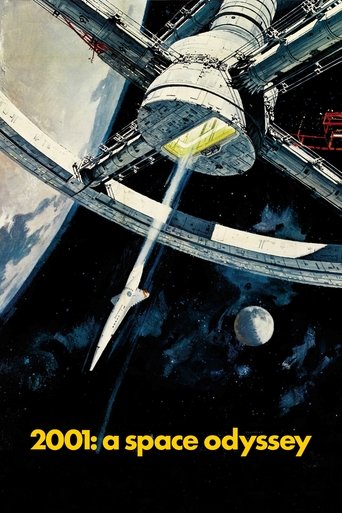



2001: A Space Odyssey
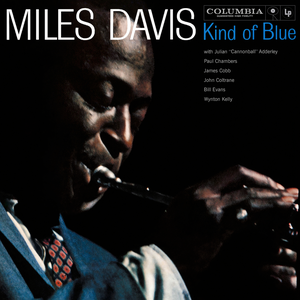
Kind of Blue
Gödel, Escher, Bach
Istanbul
Outer Wilds
MiniMax M2.1MiniMax M2.1
No pick
No pick
No pick
No pick

No pick
No pick
No pick
No pick
The Legend of Zelda: Ocarina of Time
Price and specs
Not enough votes to call it. On the specs, Claude Fable 5 has the edge: bigger model tier, newer, bigger context window, major provider backing.
| Spec | Claude Fable 5 | MiniMax M2.1 |
|---|---|---|
| Input price | $10/M tokens | — |
| Output price | $50/M tokens | — |
| Context window | 1.0M tokens | — |
| Weights | Closed | Open |
| Free API (OpenRouter) | No | No |
| Released | Jun 2026 | Dec 2025 |
| At 10M a month | $100 | not listed |
Input tokens at list price. No caching, no batch discount.
Where to run it


Per million tokens. Prices and uptime via OpenRouter, checked 5 Oct 2026.
Common questions
What is the difference between Claude Fable 5 and MiniMax M2.1?
Claude Fable 5 is developed by Anthropic while MiniMax M2.1 is developed by MiniMax. You can compare their actual outputs across 54 challenges on Rival to see how they differ in practice.
Which is better, Claude Fable 5 or MiniMax M2.1?
It depends on your use case. Claude Fable 5 and MiniMax M2.1 each have strengths in different areas. Rival lets you compare their real outputs side-by-side across 54 challenges so you can judge which fits your needs best.
How can I compare Claude Fable 5 and MiniMax M2.1 on Rival?
This page shows a side-by-side comparison of Claude Fable 5 and MiniMax M2.1 across shared challenges. You can vote on which model produced the better output in a blind duel. Browsing and voting are free. No account is needed to look; signing in only saves your votes and likes.
More comparisons
Against the newest arrivals
- Claude Fable 5 vs GPT-6.1 SolLanded Sep 2026
- MiniMax M2.1 vs Claude Sonnet 5.5Landed Sep 2026
- Claude Fable 5 vs Solar Mini 4Landed Sep 2026
- MiniMax M2.1 vs Qwen3.8 Max PrimeLanded Sep 2026
- Claude Fable 5 vs GLM 5.3 PrimeLanded Sep 2026
- MiniMax M2.1 vs Qwen3.8 Omni FlashLanded Sep 2026
- Claude Fable 5 vs Command A+Landed Sep 2026
- MiniMax M2.1 vs Claude Opus 5.5Landed Sep 2026


Same lab, same size, long tail
- Claude Fable 5 vs Claude Sonnet 5Version compare
- Claude Fable 5 vs Claude Opus 4.6Version compare
- MiniMax M2.1 vs MiniMax M3Same lab
- MiniMax M2.1 vs MiniMax M2.7Same lab
- MiniMax M2.1 vs Ring 2.6 1TNew provider
- MiniMax M2.1 vs Seed 2.0 CodeSame size
- MiniMax M2.1 vs Seed 2.0 LiteNew provider
- MiniMax M2.1 vs Seed 2.1 TurboSame size

