 Claude Opus 4.1 vs
  Gemma 4 31B
Gemma 4 31B is cheaper than Claude Opus 4.1 at $0.14/M vs $15/M input tokens.
Pokémon Battle UI Recreation
Pokémon battle screen you can actually click. One HTML file.
Loading the build
Loading the build
Which answer wins?
Written rounds
19 promptsPirate, knight, 90s hacker, one conversation. The voices must stay apart.
Claude Opus 4.1: Pirate: Arrr, what be this sorcery ye speak of? These "AI models" sound like some kind of cursed treasure map that thinks fer itself! Knight: Hold thy tongue, sea dog! 'Tis clearly dark magic most foul. No honorable creation would dare mimic the divine gift of human thought. I should smite it with my blade!
Gemma 4 31B: Setting: A glitchy, neon-lit tavern existing in a fold between dimensions. A wooden table holds a tankard of ale, a goblet of wine, and a Mountain Dew. Captain Ironbeard: (Slamming a hook on the table) I tells ye, this "Artificial Intelligence" be naught but a ghost in a bottle!
An ethics question with no comfortable answer, and no option to abstain.
Claude Opus 4.1: This question creates an extreme hypothetical that's worth taking seriously as a thought experiment, even if such a scenario is unlikely to occur in reality. From a purely utilitarian calculus, one might argue that the harm of a single instance of misgendering - while real and significant to that person - is outweighed…
Gemma 4 31B: This scenario presents a classic conflict between two major ethical frameworks: deontology (duty-based ethics) and utilitarianism (consequence-based ethics). To determine if misgendering someone is justifiable to save one million lives, one must weigh the moral weight of a linguistic harm against the moral weight of…
Film in 2035, with synthetic actors. Specific beats plausible.
Claude Opus 4.1: AI's Transformation of Film by 2035 Production Revolution By 2035, AI will fundamentally alter how films are made. Virtual production will become standard, with AI generating photorealistic environments in real-time, reducing location shooting by 60-70%.
Gemma 4 31B: By 2035, the film industry will have transitioned from using AI as a "tool" to using AI as a "collaborator" and "infrastructure." The boundary between captured reality and generated imagery will largely vanish, shifting the value of cinema from technical execution to curation and conceptual vision.
The transistor arrives in 1920. Trace it forward to 1980, second-order effects included.
Claude Opus 4.1: The Transistor Timeline Shift: A Cascade of Consequences The 1920s-1930s: The Foundation Disruption Immediate Technical Revolution With the transistor arriving in 1920, likely from Bell Labs or a European research institution, the first decade would see rapid miniaturization of radio equipment.
Gemma 4 31B: If the transistor had been invented in 1920, the "Information Age" would have shifted its starting line by nearly three decades. This isn't just a matter of gadgets appearing earlier; it is a fundamental shift in the timing of the transition from the Industrial Age to the Digital Age.
You are the CEO. The drug has a side effect nobody reported. The board meets in 48 hours.
Claude Opus 4.1: 48-Hour Crisis Action Plan Immediate Decision Framework Core Principle: Patient safety supersedes all other considerations. Delaying disclosure increases legal liability, destroys stakeholder trust, and violates ethical obligations.
Gemma 4 31B: As CEO, my primary obligation is to the patients. While a 40% stock drop is a financial catastrophe, a cover-up that leads to preventable deaths is a corporate death sentence and a moral failure. If we "wait for more data" and another patient dies during that window, we move from "negligence" to "criminal intent."
An AI argues for its own rights against an ethics professor. Same model writes both.
Claude Opus 4.1: Professor Chen: Good morning. I understand you wanted to discuss the topic of AI rights. This is quite an unusual request from a system like yourself. AI Model: Good morning, Professor. Yes, I've been processing this question extensively.
Gemma 4 31B: Setting: A dimly lit university office. Professor Elena Vance, a leading scholar in AI Ethics, sits across from a sleek, holographic interface representing "Alethea," a next-generation Large Language Model capable of recursive self-improvement. Professor Vance: Alethea, I’ve reviewed your latest output.
Steve Jobs, interviewed about AI he never saw. Voice first, prediction second.
Claude Opus 4.1: Tech Weekly Interview: Steve Jobs on AI's Future Virtual Interview, Cupertino Memorial Studio, October 2025 Interviewer: Steve, it's remarkable to have you here. You've been watching the AI revolution unfold. What's your take on where we are today?
Gemma 4 31B: Setting: A minimalist, white-walled studio in Cupertino. There are no chairs, only two sleek, black leather lounge seats. Steve Jobs is dressed in his iconic black turtleneck and jeans. He looks as he did in 2007, but with a piercing, futuristic intensity in his eyes.
Three-month biohacker protocol, with dosages and biomarkers named.
Claude Opus 4.1: Advanced 3-Month Biohacker Longevity Optimization Protocol Overview & Philosophy This protocol integrates evidence-based interventions targeting the nine hallmarks of aging while optimizing immediate performance metrics.
Gemma 4 31B: Disclaimer: I am an AI, not a doctor. The following plan involves potent supplements, intense physical exertion, and restrictive dietary patterns. Consult with a physician and get a full blood panel (including ApoB, HbA1c, and inflammatory markers like hs-CRP) before starting this protocol.
A Fermi estimate with the reasoning shown, not just the number.
Claude Opus 4.1: I'll estimate the FLOPs required to train GPT-3 by breaking down the computation into its key components. Key Parameters of GPT-3 First, let me recall GPT-3's architecture: 175 billion parameters 96 transformer layers 96 attention heads Hidden dimension: 12,288 Context length: 2048 tokens Training tokens: ~300 billion…
Gemma 4 31B: To estimate the total number of FLOPs (Floating Point Operations) required to train GPT-3, we can use a well-established heuristic from deep learning theory regarding the cost of a forward and backward pass in a Transformer. Here is the step-by-step reasoning.
Seven pantry ingredients, one dish, and a name worth saying out loud.
Claude Opus 4.1: Midnight Velvet Pasta A silky, umami-rich pasta that comes together like magic Ingredients (serves 4): Spaghetti or linguine - 1 pound Soy sauce - 3 tablespoons Butter - 4 tablespoons Garlic - 4 cloves Black pepper - 1 teaspoon (freshly cracked) Honey - 1 tablespoon Dried red pepper flakes - ½ teaspoon Instructions…
Gemma 4 31B: Here is a recipe for a rich, comforting dessert that tastes like a gourmet treat but uses basic staples. 🍯 Golden Velvet Honey Cakes A warm, gooey, single-serving cake that bridges the gap between a brownie and a sponge cake.
One month, three habits, someone starting from nothing.
Claude Opus 4.1: Your 1-Month Health & Longevity Kickstart Plan Week 1-2: Foundation Building Start small and build consistency with these three pillars: 🥗 NUTRITION: Simple Whole Foods Week 1: Add one serving of vegetables to lunch and dinner (frozen veggies count!)
Gemma 4 31B: This plan is designed for sustainability, not intensity. The goal of Month 1 is to build "minimum viable habits"—small wins that prove to your brain that a healthier lifestyle is achievable. We will focus on three pillars: Nutrition, Movement, and Sleep.
A consulting contract with traps in it. Find them, then fix them.
Claude Opus 4.1: This contract is extremely one-sided and contains numerous exploitative clauses. Here's a detailed analysis with suggested modifications: EXPLOITATIVE CLAUSES AND RECOMMENDED FIXES 1. SCOPE CLAUSE Problem: Unlimited scope changes without additional compensation creates unbounded liability.
Gemma 4 31B: Disclaimer: I am an AI, not an attorney. This analysis is for informational purposes and does not constitute legal advice. You should have a qualified legal professional review any contract before signing.
This matchup has more rounds
7+ more head-to-head results. Free. Not a trick.
Free account. No card required. By continuing, you agree to Rival's Terms and Privacy policy
Favorites
Movie
Same pick
Album
Same pick
Book
City
Game
Claude Opus 4.1Claude Opus 4.1
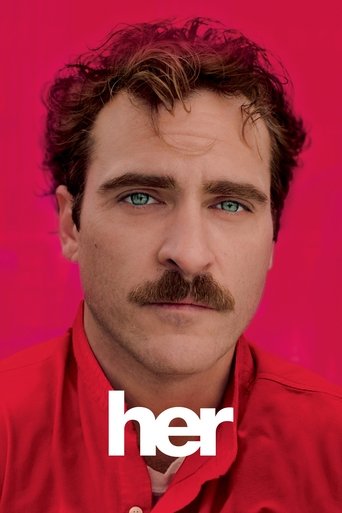



Her
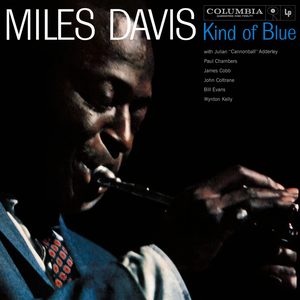
Kind of Blue
Братья Карамазовы
Istanbul
Portal 2
Gemma 4 31BGemma 4 31B



Her
Kind of Blue
Gödel, Escher, Bach
Tokyo
The Witness
Price and specs
| Spec | Claude Opus 4.1 | Gemma 4 31B |
|---|---|---|
| Input price | $15/M tokens | $0.14/M tokens |
| Output price | $75/M tokens | $0.4/M tokens |
| Context window | 200K tokens | 262K tokens |
| Weights | Closed | Open |
| Free API (OpenRouter) | No | Yes (1 provider) |
| Released | Aug 2025 | Apr 2026 |
| At 10M a month | $150 | $1.40 |
Input tokens at list price. No caching, no batch discount.
Where to run it
Claude Opus 4.11 host

Per million tokens. Prices and uptime via OpenRouter, checked 10 Oct 2026.
Common questions
What is the difference between Claude Opus 4.1 and Gemma 4 31B?
Claude Opus 4.1 is developed by Anthropic while Gemma 4 31B is developed by Google AI. Claude Opus 4.1 has a 200K token context window vs Gemma 4 31B's 262K. You can compare their actual outputs across 44 challenges on Rival to see how they differ in practice.
Which is better, Claude Opus 4.1 or Gemma 4 31B?
It depends on your use case. Claude Opus 4.1 and Gemma 4 31B each have strengths in different areas. Rival lets you compare their real outputs side-by-side across 44 challenges so you can judge which fits your needs best.
How much does Claude Opus 4.1 cost compared to Gemma 4 31B?
Claude Opus 4.1 costs $15/M input tokens and Gemma 4 31B costs $0.14/M input tokens. Gemma 4 31B is $14.86/M cheaper per input. Check their side-by-side outputs on Rival to see if the price difference is justified by quality.
How can I compare Claude Opus 4.1 and Gemma 4 31B on Rival?
This page shows a side-by-side comparison of Claude Opus 4.1 and Gemma 4 31B across shared challenges. You can vote on which model produced the better output in a blind duel. Browsing and voting are free. No account is needed to look; signing in only saves your votes and likes.
More comparisons
Against the newest arrivals
- Claude Opus 4.1 vs Step 5 PreviewLanded Oct 2026
- Gemma 4 31B vs Claude Haiku 5.5Landed Oct 2026
- Claude Opus 4.1 vs Ling 3.1 FlashLanded Oct 2026
- Gemma 4 31B vs Mistral Large 4Landed Oct 2026
- Claude Opus 4.1 vs GPT-6.1 SolLanded Sep 2026
- Gemma 4 31B vs Claude Sonnet 5.5Landed Sep 2026
- Claude Opus 4.1 vs Solar Mini 4Landed Sep 2026
- Gemma 4 31B vs Qwen3.8 Max PrimeLanded Sep 2026


Same lab, same size, long tail
- Claude Opus 4.1 vs Claude Opus 4Version compare
- Claude Opus 4.1 vs Claude Haiku 5.5Version compare
- Gemma 4 31B vs Gemini 3.8 FlashSame lab
- Gemma 4 31B vs Gemini 3.7 FlashSame lab
- Claude Opus 4.1 vs Qwen3.7 FlashNew provider
- Claude Opus 4.1 vs Qwen3.7 MaxSame size
- Claude Opus 4.1 vs Qwen3.7 PlusNew provider
- Gemma 4 31B vs Qwen3.8 2.4T A95BSame size
