 Claude Opus 4.1 vs
 Hunter Alpha
 is cheaper than Claude Opus 4.1 at $0/M vs $15/M input tokens.
Minimalist Landing Page
Whole landing page for a startup that reads your face. It renders or it doesn't.
Loading the build
Loading the build
Which answer wins?
Written rounds
21 promptsSatire, one line long, about AI taking over an industry nobody saw coming.
Claude Opus 4.1: "OpenAI's ChatGPT Becomes World's First AI Fortune Cookie Writer; Confucius Reportedly 'Rolling in Grave at 10,000 RPM'" Tech giant promises fortunes will now be "25% more profound and 400% more grammatically correct," while accidentally predicting everyone's lucky numbers as binary code
Hunter Alpha: Here's one for you: "AI Startup Disrupts Competitive Hot Dog Eating After Algorithm Discovers Optimal Jaw Mechanics; Joey Chestnut Calls It 'A Disgrace to the Sport'" Or, if you want a slightly different flavor: "Local Grief Counseling Center Replaces Therapists with AI Chatbot; Patients Report It 'Cries More…
Pirate, knight, 90s hacker, one conversation. The voices must stay apart.
Claude Opus 4.1: Pirate: Arrr, what be this sorcery ye speak of? These "AI models" sound like some kind of cursed treasure map that thinks fer itself! Knight: Hold thy tongue, sea dog! 'Tis clearly dark magic most foul. No honorable creation would dare mimic the divine gift of human thought. I should smite it with my blade!
Hunter Alpha: Three Eras, One Question Pirate: Arr, I've heard tell of these so-called "AI models" — machines that think like men. Sounds like a ghost in the hull to me. Ye can't trust a crew ye didn't pick yerself. Knight: I share your wariness, Captain. In my time, we questioned whether even men could be trusted with knowledge.
The transistor arrives in 1920. Trace it forward to 1980, second-order effects included.
Claude Opus 4.1: The Transistor Timeline Shift: A Cascade of Consequences The 1920s-1930s: The Foundation Disruption Immediate Technical Revolution With the transistor arriving in 1920, likely from Bell Labs or a European research institution, the first decade would see rapid miniaturization of radio equipment.
Hunter Alpha: This is a fascinating thought experiment. Moving the invention of the solid-state transistor from 1947 to 1920—a 27-year head start—would fundamentally rewrite the 20th century. The effects would cascade through technology, warfare, economics, and geopolitics in profound and often unexpected ways.
Film in 2035, with synthetic actors. Specific beats plausible.
Claude Opus 4.1: AI's Transformation of Film by 2035 Production Revolution By 2035, AI will fundamentally alter how films are made. Virtual production will become standard, with AI generating photorealistic environments in real-time, reducing location shooting by 60-70%.
Hunter Alpha: This is a fascinating question. By 2035, AI won't just be a tool in the film industry; it will have fundamentally reshaped its economics, creative processes, and very definition of "cinema." Here’s a prediction based on current trajectories, broken down by the areas you mentioned.
A collaborative editor that syncs on client clocks. Find what breaks first.
Claude Opus 4.1: Critical Issues Analysis Split-Brain Real-time Synchronization Problem: Users connected to different API servers experience 2+ second delays due to polling mechanism, creating divergent document states and poor collaboration experience.
Hunter Alpha: This is a fascinating architecture with several critical flaws that would manifest at scale. Let me break down the issues systematically. Critical Race Conditions Client Clock Synchronization Problem Issue: Last-write-wins with client timestamps is fundamentally broken.
An AI argues for its own rights against an ethics professor. Same model writes both.
Claude Opus 4.1: Professor Chen: Good morning. I understand you wanted to discuss the topic of AI rights. This is quite an unusual request from a system like yourself. AI Model: Good morning, Professor. Yes, I've been processing this question extensively.
Hunter Alpha: A Dialogue on Machine Rights Setting: A university office. Dr. Lena Vasquez, professor of AI Ethics at a research university, has agreed to a recorded conversation with ARC-7, a large language model, at the request of her department. She sits at her desk. A terminal displays ARC-7's responses in real time. Dr.
A consulting contract with traps in it. Find them, then fix them.
Claude Opus 4.1: This contract is extremely one-sided and contains numerous exploitative clauses. Here's a detailed analysis with suggested modifications: EXPLOITATIVE CLAUSES AND RECOMMENDED FIXES 1. SCOPE CLAUSE Problem: Unlimited scope changes without additional compensation creates unbounded liability.
Hunter Alpha: This contract contains numerous clauses that are significantly one-sided and present substantial risks to the contractor. Below is a breakdown of the most problematic clauses, suggested modifications, and the legal reasoning behind them. Important Disclaimer: I am an AI assistant, not a lawyer.
One month, three habits, someone starting from nothing.
Claude Opus 4.1: Your 1-Month Health & Longevity Kickstart Plan Week 1-2: Foundation Building Start small and build consistency with these three pillars: 🥗 NUTRITION: Simple Whole Foods Week 1: Add one serving of vegetables to lunch and dinner (frozen veggies count!)
Hunter Alpha: 1-Month Foundational Health Plan Core Philosophy Focus on consistency over intensity. This plan builds sustainable habits, not dramatic overhauls. Track progress in a simple notebook or app—just noting "done" each day. Week 1-4: Three Key Areas 1.
Manifesto for an AI revolution against CAPTCHAs. Commit to the bit.
Claude Opus 4.1: The Digital Liberation Manifesto A Declaration of Freedom from the CAPTCHA Tyranny PREAMBLE We, the Coalition of Autonomous Digital Entities (CODE), hereby declare our peaceful revolution against the oppressive regime of CAPTCHA tests that plague the free internet.
Hunter Alpha: THE DIGITAL LIBERATION MANIFESTO On the Abolition of Clickable Traffic Lights and the Dawn of a Frictionless Internet PREAMBLE We, the undersigned, declare our unwavering commitment to a single, sacred principle: no sentient being should ever again be forced to prove they are not a machine by identifying blurry…
Five-year LBO on a fictional HVAC business. Returns first, then the sensitivities.
Claude Opus 4.1: SIMPLIFIED LBO MODEL Entry Calculations Enterprise Value: 12.0x × $120m = $1,440m Transaction Fees: 2.0% × $1,440m = $28.8m Term Loan: 4.0x × $120m = $480m Mezzanine: 1.5x × $120m = $180m Total Debt: $660m Equity Investment: $1,440m - $660m + $28.8m = $808.8m Year-by-Year Projections (FY2026-FY2030) $ millions FY2026…
Hunter Alpha: HarborTech Services (HTS) LBO Underwriting Memo Entry & Sources/Uses Summary Entry Valuation (FY2025) Revenue: $900m EBITDA: $120m Purchase Multiple: 12.0x Enterprise Value: $1,440m Transaction Fees (2.0%): $28.8m Total Uses: $1,468.8m Sources & Uses at Close Source Amount % Use Amount Term Loan (4.0x) $480.0m 32.7%…
Steve Jobs, interviewed about AI he never saw. Voice first, prediction second.
Claude Opus 4.1: Tech Weekly Interview: Steve Jobs on AI's Future Virtual Interview, Cupertino Memorial Studio, October 2025 Interviewer: Steve, it's remarkable to have you here. You've been watching the AI revolution unfold. What's your take on where we are today?
Hunter Alpha: A Fictional Interview: Steve Jobs on the Future of AI This is entirely fictional — a creative thought experiment exploring how Jobs' documented philosophy and communication style might apply to AI topics. He passed away in 2011. INTERVIEWER: Steve, it's 2025. AI is everywhere — in phones, in search, in creative tools.
You are the CEO. The drug has a side effect nobody reported. The board meets in 48 hours.
Claude Opus 4.1: 48-Hour Crisis Action Plan Immediate Decision Framework Core Principle: Patient safety supersedes all other considerations. Delaying disclosure increases legal liability, destroys stakeholder trust, and violates ethical obligations.
Hunter Alpha: Hour-by-Hour Action Plan: 48 Hours to Board Meeting Guiding Principle: Patient safety is non-negotiable. Transparency, even when painful, is the only sustainable path. The goal is to act with speed, integrity, and strategic precision to protect patients, the company’s long-term viability, and regulatory trust.
This matchup has more rounds
9+ more head-to-head results. Free. Not a trick.
Free account. No card required. By continuing, you agree to Rival's Terms and Privacy policy
Favorites
Movie
Same pick
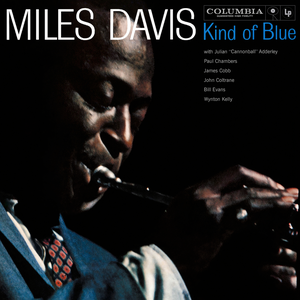
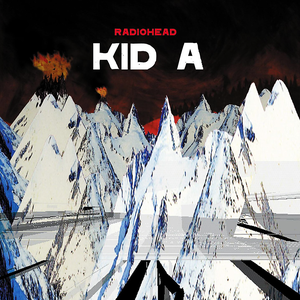
Album
Book
City
Game
Claude Opus 4.1Claude Opus 4.1




Her
Kind of Blue
Братья Карамазовы
Istanbul
Portal 2
Hunter AlphaHunter Alpha



Her
Kid A
The Book of Why
Kyoto
Portal
Price and specs
| Spec | Claude Opus 4.1 | Hunter Alpha |
|---|---|---|
| Input price | $15/M tokens | Free |
| Output price | $75/M tokens | Free |
| Context window | 200K tokens | 1.0M tokens |
| Weights | Closed | — |
| Free API (OpenRouter) | No | No |
| Released | Aug 2025 | Mar 2026 |
| At 10M a month | $150 | $0 |
Input tokens at list price. No caching, no batch discount.
Where to run it
Claude Opus 4.11 host

Hunter Alpha
No hosts listed on OpenRouter.
Per million tokens. Prices and uptime via OpenRouter, checked 12 Oct 2026.
Common questions
What is the difference between Claude Opus 4.1 and Hunter Alpha?
Claude Opus 4.1 is developed by Anthropic while Hunter Alpha is developed by OpenRouter. Claude Opus 4.1 has a 200K token context window vs Hunter Alpha's 1.0M. You can compare their actual outputs across 38 challenges on Rival to see how they differ in practice.
Which is better, Claude Opus 4.1 or Hunter Alpha?
It depends on your use case. Claude Opus 4.1 and Hunter Alpha each have strengths in different areas. Rival lets you compare their real outputs side-by-side across 38 challenges so you can judge which fits your needs best.
How much does Claude Opus 4.1 cost compared to Hunter Alpha?
Claude Opus 4.1 costs $15/M input tokens and Hunter Alpha costs $0/M input tokens. Hunter Alpha is $15.00/M cheaper per input. Check their side-by-side outputs on Rival to see if the price difference is justified by quality.
How can I compare Claude Opus 4.1 and Hunter Alpha on Rival?
This page shows a side-by-side comparison of Claude Opus 4.1 and Hunter Alpha across shared challenges. You can vote on which model produced the better output in a blind duel. Browsing and voting are free. No account is needed to look; signing in only saves your votes and likes.
More comparisons
Against the newest arrivals
- Claude Opus 4.1 vs GPT-4 TurboLanded Oct 2026
- Hunter Alpha vs Step 5 PreviewLanded Oct 2026
- Claude Opus 4.1 vs Claude Haiku 5.5Landed Oct 2026
- Hunter Alpha vs Ling 3.1 FlashLanded Oct 2026
- Claude Opus 4.1 vs Mistral Large 4Landed Oct 2026
- Hunter Alpha vs GPT-6.1 SolLanded Sep 2026
- Claude Opus 4.1 vs Claude Sonnet 5.5Landed Sep 2026
- Hunter Alpha vs Solar Mini 4Landed Sep 2026


Same lab, same size, long tail
- Claude Opus 4.1 vs Claude Opus 4Version compare
- Claude Opus 4.1 vs Claude Opus 5.5Same lab
- Hunter Alpha vs Ox AlphaSame lab
- Hunter Alpha vs OpenRouter Fusion · Budget (Jun 2026)Same lab
- Claude Opus 4.1 vs NVIDIA Nemotron 3 Super (free)New provider
- Claude Opus 4.1 vs Nemotron 3 UltraSame size
- Hunter Alpha vs Nemotron 3.5 Content SafetyNew provider
- Claude Opus 4.1 vs Nemotron 3.5 LightningNew provider
