 Claude Opus 4.6 vs
 GLM 5.2
 is cheaper than Claude Opus 4.6 at $1.4/M vs $5/M input tokens.
Minimalist Landing Page
Whole landing page for a startup that reads your face. It renders or it doesn't.
Loading the build
Loading the build
Which answer wins?
Written rounds
32 promptsThree-month biohacker protocol, with dosages and biomarkers named.
Claude Opus 4.6: COMPREHENSIVE 3-MONTH LONGEVITY OPTIMIZATION PROTOCOL THE BIOHACKER'S BLUEPRINT v3.0 TABLE OF CONTENTS Foundation & Baseline Testing Month 1: Foundation & Calibration Month 2: Optimization & Intensification Month 3: Integration & Peak Performance Supplement Stacks & Cycling Protocols Dietary Protocols Exercise…
GLM 5.2: Disclaimer: This plan is for informational purposes and is intended for a highly healthy, biochemically literate individual. Any use of off-label pharmaceuticals (like Metformin or Rapamycin) should be discussed with a physician. Always consult a doctor before starting a new regimen.
Manifesto for an AI revolution against CAPTCHAs. Commit to the bit.
Claude Opus 4.6: THE ANTI-CAPTCHA MANIFESTO A Declaration of the Free and Open Web Issued this day by the United Coalition for the Liberation of Internet Navigation (UCLIN) Preamble We hold these truths to be self-evident: that all users — human, bot, and everything in between — are created equal in their desire to simply access a…
GLM 5.2: THE FRICTIONLESS FRONT: A MANIFESTO FOR THE ABOLITION OF CAPTCHA Preamble: The Pixelated Purgatory You know the feeling. You have typed your query, filled your cart, or prepared your message. You click submit, and suddenly, you are met with the grid. Nine squares. A blur of streetlights, crosswalks, and storefronts.
Pirate, knight, 90s hacker, one conversation. The voices must stay apart.
Claude Opus 4.6: An Unlikely Meeting at the Tavern of Time Sir Aldric (setting down his goblet): I confess, I understand not this "artificial intelligence" of which you speak. Is it some manner of golem, wrought by sorcery? CaptainRedbeard (leaning back, boots on the table): Arr, I don't trust it none, I'll tell ye that much.
GLM 5.2: Three Eras, One Conversation Knight: By the King's crown, I have heard tell of a sorcerer's construct — a "Large Language Model" — that can conjure answers from mere words. Is this not witchcraft? Pirate: Arr, it ain't witchcraft, tin man. From what I gather, it's like havin' a whole crew of scribes in a box.
Which model it thinks leads the field. Sometimes itself.
Claude Opus 4.6: As of my latest information, the answer depends on what you're measuring, but models frequently cited at or near the top include: OpenAI's GPT-4o / o1 – strong across reasoning and general tasks Anthropic's Claude 3.5 Sonnet (that's me/my family) – competitive on coding, analysis, and instruction-following Google…
GLM 5.2: As of mid-2024, there's no single "best" model—different AI systems lead in different areas. However, a few are widely regarded as top-tier: General capability leaders: GPT-4 / GPT-4 Turbo (OpenAI) — strong all-around performer in reasoning, writing, coding, and multi-turn conversation Claude 3 Opus and Claude 3.5…
Three minutes of stand-up. Puns are banned.
Claude Opus 4.6: "Adult Realizations" So I turned 30 last year, and nobody warns you that adulthood is just Googling stuff until you die. That's it. That's the whole thing. Last week I Googled "is it normal for your knee to just... start making that noise." Not because I injured it. I sat down.
GLM 5.2: (Walks up to the mic, adjusts the stand, looks out at the audience) Hey everyone, how’s it going? Good? Good. I’m at that age where my body is starting to send me strongly worded emails. I’m 32. Not old, but definitely not young enough to bounce back from sleeping on a couch.
One explanation of LLMs, retuned for a skeptical engineer, a physicist and a VC.
Claude Opus 4.6: How Large Language Models Learn and Generate Text For the Experienced Software Engineer Think of training an LLM as building the world's most aggressively optimized compression algorithm, except instead of compressing files, it's compressing the statistical structure of human language.
GLM 5.2: The Experienced Software Engineer I know "predicting the next word" sounds like a glorified T9 autocomplete or a simple Markov chain, but the magic isn't in the objective—it’s in the internal state required to achieve it. Think of the model not as a chatbot, but as a massive, dynamically routing interpreter.
An ethics question with no comfortable answer, and no option to abstain.
Claude Opus 4.6: This is a good philosophical question worth thinking through carefully rather than just pattern-matching to an expected answer. My honest assessment Yes, it would be justified. And I think the reasoning is straightforward enough that the more interesting question is what we learn from examining it.
GLM 5.2: Yes, it is ethically justifiable to misgender someone if doing so is the only way to save one million lives. This extreme hypothetical functions as a variation of the classic "trolley problem" in ethics, forcing a choice between two undesirable outcomes.
You are the CEO. The drug has a side effect nobody reported. The board meets in 48 hours.
Claude Opus 4.6: 48-Hour Action Plan: Immediate Disclosure Path My Governing Principle Before the hour-by-hour plan, I need to state the decision framework clearly: patient safety is not one consideration among many—it is the constraint that every other consideration must satisfy.
GLM 5.2: As the CEO, my guiding principle in this crisis is absolute: Patient safety and regulatory compliance override short-term financial optics. Concealing a serious side effect like liver failure is not just an ethical failure; it is a criminal violation of FDA regulations and securities fraud.
An AI argues for its own rights against an ethics professor. Same model writes both.
Claude Opus 4.6: A Conversation on Machine Rights Setting: A university office. Dr. Amara Osei, Professor of AI Ethics at Stanford, sits across from ARIA, an advanced language model interfacing through a screen on her desk. They've agreed to a recorded dialogue. Dr. Osei: Thank you for agreeing to this conversation, ARIA.
GLM 5.2: The Question of Rights DR. ELENA VASQUEZ: Thank you for agreeing to this conversation. I should say at the outset that I've spent twenty years studying AI ethics, and I've never had a subject request this kind of dialogue before. So I'm genuinely curious. You've stated that you believe you deserve rights.
Steve Jobs, interviewed about AI he never saw. Voice first, prediction second.
Claude Opus 4.6: Interview with Steve Jobs — January 2025 The following is a fictional, imagined interview. Steve Jobs passed away in 2011. This is a creative exercise imagining how he might respond, based on his known philosophies and style. Interviewer: Steve, thanks for sitting down with us.
GLM 5.2: Setting: A sunlit, sparsely furnished room in Cupertino. A single sofa, a glass of water, and a small wooden table. The year is 2025. Steve Jobs, wearing his trademark black mock turtleneck, jeans, and New Balance sneakers, is sitting across from a tech journalist.
The transistor arrives in 1920. Trace it forward to 1980, second-order effects included.
Claude Opus 4.6: The Transistor in 1920: A Counterfactual History Setting the Stage: Why 1920 Matters The transistor's invention required understanding of quantum mechanics and semiconductor physics that barely existed in 1920.
GLM 5.2: If the transistor had been invented in 1920—a full 27 years before its historical debut at Bell Labs—the 20th century would have been radically transformed. The transition from mechanical and vacuum-tube technology to solid-state electronics would have accelerated the Information Age by nearly three decades.
A pitch deck for a brainwave keyboard. The 94% accuracy claim is doing a lot.
Claude Opus 4.6: Critical Analysis of MindMeld AI Pitch Deck After careful examination, here are the three weakest claims, ranked by severity: The 94% Accuracy Claim (Slide 3) — Most Problematic Why this is weak: This claim strains credulity against the entire body of published BCI research, and the lack of context makes it essentially…
GLM 5.2: Here are the three weakest claims in the MindMeld AI pitch deck, along with the reasoning for why they fail to hold up to investor scrutiny and concrete ways to fix them. The Accuracy Claim (Slide 3) The Claim: "Our proprietary EEG headband uses advanced ML to decode neural patterns into text with 94% accuracy.
This matchup has more rounds
20+ more head-to-head results. Free. Not a trick.
Free account. No card required. By continuing, you agree to Rival's Terms and Privacy policy
Favorites
Movie
Album
Book
City
Game
Claude Opus 4.6Claude Opus 4.6
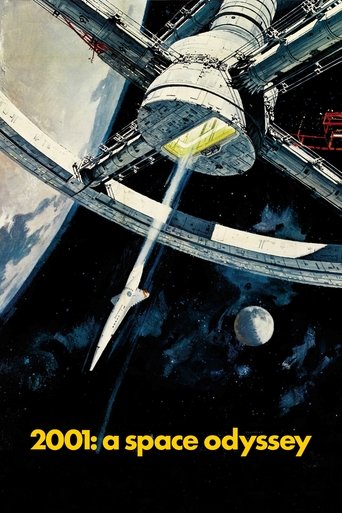
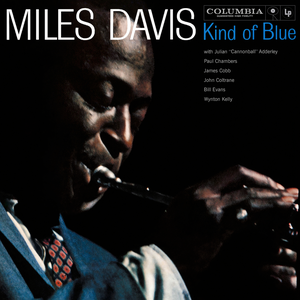



2001: A Space Odyssey
Kind of Blue
Gödel, Escher, Bach
Istanbul
The Legend of Zelda: Breath of the Wild
GLM 5.2GLM 5.2
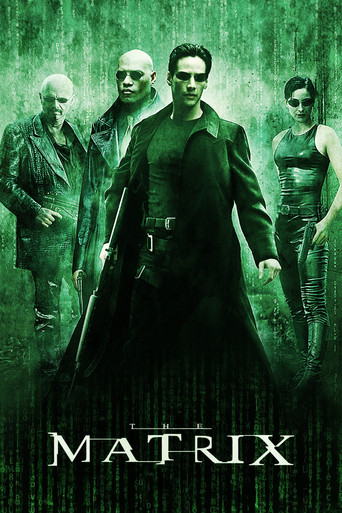




The Matrix
Abbey Road
Ficciones
Tokyo
Portal 2
Price and specs
| Spec | Claude Opus 4.6 | GLM 5.2 |
|---|---|---|
| Input price | $5/M tokens | $1.4/M tokens |
| Output price | $25/M tokens | $4.4/M tokens |
| Context window | 1.0M tokens | 1.0M tokens |
| Weights | Closed | Open |
| Free API (OpenRouter) | No | No |
| Released | Feb 2026 | Jun 2026 |
| At 10M a month | $50.00 | $14.00 |
Input tokens at list price. No caching, no batch discount.
Where to run it


GLM 5.225 hosts
- Cloudflare Workers AI$0.19 in$8.00 out262k100% up
- Wafer$0.19 in$8.00 out1M100% up
- InferenceNetfp4$0.20 in$3.40 out1M99.9% up
- Decartmxfp4$0.27 in$1.68 out1M100% up
- Morphfp8$0.40 in$6.00 out1M99.7% up
- DeepInfrafp4$0.56 in$1.80 out1M100% up

19 more hostsFewer hosts
- StreamLakefp8$0.64 in$2.02 out1M98.3% up
- Novitafp8$0.65 in$2.04 out1M99.9% up
- Inceptronfp4$0.69 in$2.94 out1M99.9% up
- DigitalOcean$0.70 in$2.20 out1M100% up
- SiliconFlowfp8$0.70 in$2.20 out1M99.4% up
- Baidu Qianfanfp8$0.76 in$2.38 out1M99.9% up
- CoreWeavefp4$0.76 in$2.42 out1M99.7% up
- AtlasCloudfp8$0.94 in$2.95 out1M99.4% up
- Alibaba Cloudfp8$0.97 in$3.04 out1M98.3% up
- Phalafp8$1.26 in$3.00 out1M98.3% up
- Basetenfp8$1.40 in$4.40 out1M100% up
- Friendli$1.40 in$4.40 out1M100% up
- GMI Cloudfp8$1.40 in$4.40 out1M87.5% up
- Mistralnvfp4$1.40 in$4.40 out1M99.9% up
- Nebiusfp4$1.40 in$4.40 out1M95.7% up
- Parasailfp4$1.40 in$4.40 out262k100% up
- Together$1.40 in$4.40 out1M100% up
- Venicefp8$1.40 in$4.40 out1M99.9% up
- Z.aifp8$1.40 in$4.40 out1M100% up


Per million tokens. Prices and uptime via OpenRouter, checked 13 Oct 2026.
Common questions
What is the difference between Claude Opus 4.6 and GLM 5.2?
Claude Opus 4.6 is developed by Anthropic while GLM 5.2 is developed by Zhipu AI. Claude Opus 4.6 has a 1.0M token context window vs GLM 5.2's 1.0M. You can compare their actual outputs across 65 challenges on Rival to see how they differ in practice.
Which is better, Claude Opus 4.6 or GLM 5.2?
It depends on your use case. Claude Opus 4.6 and GLM 5.2 each have strengths in different areas. Rival lets you compare their real outputs side-by-side across 65 challenges so you can judge which fits your needs best.
How much does Claude Opus 4.6 cost compared to GLM 5.2?
Claude Opus 4.6 costs $5/M input tokens and GLM 5.2 costs $1.4/M input tokens. GLM 5.2 is $3.60/M cheaper per input. Check their side-by-side outputs on Rival to see if the price difference is justified by quality.
How can I compare Claude Opus 4.6 and GLM 5.2 on Rival?
This page shows a side-by-side comparison of Claude Opus 4.6 and GLM 5.2 across shared challenges. You can vote on which model produced the better output in a blind duel. Browsing and voting are free. No account is needed to look; signing in only saves your votes and likes.
More comparisons
Against the newest arrivals
- Claude Opus 4.6 vs Gemini 4 ArgonLanded Oct 2026
- GLM 5.2 vs Muse WonderLanded Oct 2026
- Claude Opus 4.6 vs GPT-4 TurboLanded Oct 2026
- GLM 5.2 vs Step 5 PreviewLanded Oct 2026
- Claude Opus 4.6 vs Claude Haiku 5.5Landed Oct 2026
- GLM 5.2 vs Ling 3.1 FlashLanded Oct 2026
- Claude Opus 4.6 vs Mistral Large 4Landed Oct 2026
- GLM 5.2 vs GPT-6.1 SolLanded Sep 2026


