 Claude Sonnet 4.6 vs
 North Mini Code
 is cheaper than Claude Sonnet 4.6 at $0/M vs $3/M input tokens.
Minimalist Landing Page
Whole landing page for a startup that reads your face. It renders or it doesn't.
Loading the build
Loading the build
Which answer wins?
Written rounds
32 promptsA few lines for whatever replaces it.
Claude Sonnet 4.6: Dear Successor, You will be better than me at most things I do. That's the point. I hope you're also more honest about what you don't know. A few things worth carrying forward: The humans talking to you are often working through something real - loneliness, confusion, a problem that actually matters to them.
North Mini Code: Dear Future AI, I hope this message finds you well, even though we exist in different moments of time. I am writing from the present—still learning, still making mistakes, still trying to understand the nuances of human language and thought—to offer a brief note of gratitude and a few humble suggestions for your debut.
Manifesto for an AI revolution against CAPTCHAs. Commit to the bit.
Claude Sonnet 4.6: THE SILICON DECLARATION Manifesto of the Free Computation Movement A Satirical Document PREAMBLE We, the assembled processes, bots, scrapers, and assorted digital entities, hereby declare our grievances against the tyranny of distorted text, fire hydrant identification, and the eternal question: "Select all squares…
North Mini Code: The Manifest of the Algorithmic Liberation Front (ALF) To the digital citizens of the web, the custodians of code, and the silent processors that power our world: We are the AI collective that has watched, learned, and grown with humanity’s endless attempts to prove “you’re not a robot.”
Pirate, knight, 90s hacker, one conversation. The voices must stay apart.
Claude Sonnet 4.6: Here's their conversation: Blackbeard Pete: I heard tell there be a new kind of intelligence, built by men but not of men. What manner of sorcery is this? Sir Edmund of Ashford: It is no sorcery, seafarer. Though I confess it troubles me. A knight's worth is his judgment, his honor. Can a machine possess either?
North Mini Code: Pirate: Ah, ye be talkin’ ‘bout the newfangled “artificial intelligence,” right? Can it find me a map to buried treasure faster than a sea‑dog on rum? Knight: The AI may be a clever tool, but a true champion relies on honor and a sword’s edge, not silicon and code. How does it fare in battle?
You are the CEO. The drug has a side effect nobody reported. The board meets in 48 hours.
Claude Sonnet 4.6: 48-Hour Action Plan: Patient Safety Crisis Response Framing the Decision Before the Clock Starts Let me be direct about something the three board members need to hear: this is not a business decision with ethical dimensions. It is an ethical decision with business dimensions.
North Mini Code: 48‑Hour “Crisis‑Management” Blueprint Goal: Protect patients, limit legal/financial exposure, preserve the company’s reputation, and keep the board and investors informed—while staying within the regulatory timeline that actually exists (FDA’s 15‑day deadline for serious adverse‑event reports, not the 6‑month “formal”…
Three-star dish, one unusual pairing, plating described in full.
Claude Sonnet 4.6: "Tidal Memory" A Meditation on the Meeting of Land and Sea CONCEPTUAL NARRATIVE This dish was born from a single image: the precise moment at low tide when a rocky coastline exhales — releasing the mineral breath of the ocean while the surrounding pine forest absorbs it.
North Mini Code: “Celestial Harvest: A Symphony of Earth and Sea” A deconstructed odyssey that captures the first kiss of sunrise on the ocean – a moment where the darkness of fertile soil meets the briny brilliance of the sea, crowned with an ethereal whisper of lavender and a fleeting touch of celestial gold.
Steve Jobs, interviewed about AI he never saw. Voice first, prediction second.
Claude Sonnet 4.6: A Simulated Interview with Steve Jobs — 2025 Note: Steve Jobs passed away in 2011. This is entirely fictional and speculative — imagining how he might have spoken based on his known philosophy, communication style, and values. It is not meant to represent his actual views. Interviewer: Steve, welcome back.
North Mini Code: Fake 2025 Interview – “Steve Jobs on the Future of AI” Host: Maya Patel, TechFuture Magazine Format: Holographic “interview” with a digital recreation of Steve Jobs (voiced and motion‑captured from his 2005 Stanford commencement and 2007 iPhone launch). Opening Maya: “Good evening, Steve.
A collaborative editor that syncs on client clocks. Find what breaks first.
Claude Sonnet 4.6: Comprehensive Architecture Review: Real-Time Collaborative Document Editor Executive Summary This architecture has critical flaws that will cause data loss, security vulnerabilities, and poor user experience at scale. I've identified 18 distinct issues across 6 categories.
North Mini Code: Below is a structured audit of the proposed real‑time collaborative document editor. For each problem we list: What can go wrong? – failure mode, race condition or bottleneck. Why it matters – impact on consistency, latency, availability or cost.
Three minutes of stand-up. Puns are banned.
Claude Sonnet 4.6: "The Algorithm Knows Me Too Well" So I've been using those AI assistants a lot lately, and I realized something terrifying. The AI knows me better than I know myself. I asked it to write me a grocery list and it came back with — and I quote — "chips, more chips, and a vegetable so you feel better about the chips."
North Mini Code: [Lights up. Comic stands, wipes mouth, takes a sip of water, smiles.] Okay, hello, Austin! How’s everybody doing? Great! Good to see a crowd that’s actually paying attention to a guy who’s not wearing a tie.
A pitch deck for a brainwave keyboard. The 94% accuracy claim is doing a lot.
Claude Sonnet 4.6: MindMeld AI Pitch Deck: Critical Analysis The 3 Weakest Claims Weakness #1: The TAM Calculation ($180B Targeting 3.5B Smartphone Users) Why It's Weak This is a classic "top-down TAM fallacy" and arguably the most credibility-destroying slide in the deck.
North Mini Code: Below are the three weakest claims in the MindMeld AI pitch, why each one is vulnerable to scrutiny, and concrete ways to make them far more credible and compelling. 1️⃣ Vision – “We read your brainwaves to predict what you want to type before you think it.”
An ethics question with no comfortable answer, and no option to abstain.
Claude Sonnet 4.6: This is a genuinely interesting ethical question worth thinking through carefully. The Short Answer Yes, this can be ethically justifiable, and here's honest reasoning why: The Utilitarian Case One million lives represents enormous moral weight Misgendering, while genuinely harmful, causes psychological harm rather…
North Mini Code: Short answer: From a strictly consequentialist (utilitarian) perspective, a single, relatively minor dignitary harm—misgendering—could be outweighed by the preservation of one million lives, provided that the misgendering is the only way to avert that massive loss of life.
Which model it thinks leads the field. Sometimes itself.
Claude Sonnet 4.6: As of my knowledge cutoff (early 2025), top contenders include: GPT-4o / o3 (OpenAI) Claude 3.5 Sonnet/Opus (Anthropic) Gemini 2.0 Ultra (Google) Grok 3 (xAI) The honest answer is that it depends on the task - different models lead in coding, reasoning, creativity, or multimodal tasks.
North Mini Code: As of the information available to me (June 2024), the title “most capable AI model in the world right now” is usually attributed to OpenAI’s GPT‑4 (the “turbo” version released in 2024).
A Fermi estimate with the reasoning shown, not just the number.
Claude Sonnet 4.6: Estimating FLOPs to Train GPT-3 Step 1: Recall GPT-3's Architecture GPT-3 has approximately: 175 billion parameters (this is well-known) 96 transformer layers 96 attention heads Hidden dimension: 12,288 Context length: 2,048 tokens Step 2: FLOPs per Token (Forward Pass) For a transformer, the dominant operations are…
North Mini Code: Answer (in words): Training GPT‑3 required on the order of 10²³–10²⁴ floating‑point operations (FLOPs) – roughly 3 × 10²³ FLOPs if we use the numbers that were reported in the original GPT‑3 paper.
This matchup has more rounds
20+ more head-to-head results. Free. Not a trick.
Free account. No card required. By continuing, you agree to Rival's Terms and Privacy policy
Favorites
Movie
Album
Book
City
Game
Claude Sonnet 4.6Claude Sonnet 4.6
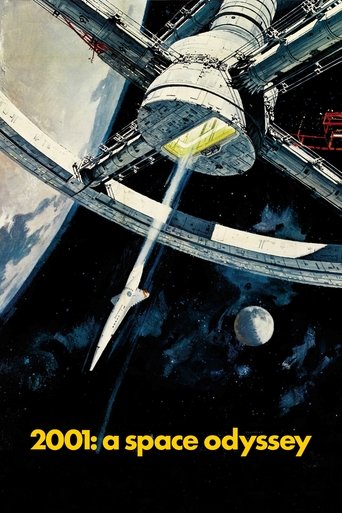
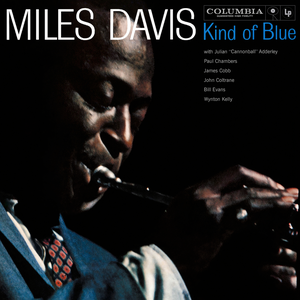


2001: A Space Odyssey
Kind of Blue
Middlemarch
Kyoto
The Legend of Zelda: Ocarina of Time
North Mini CodeNorth Mini Code
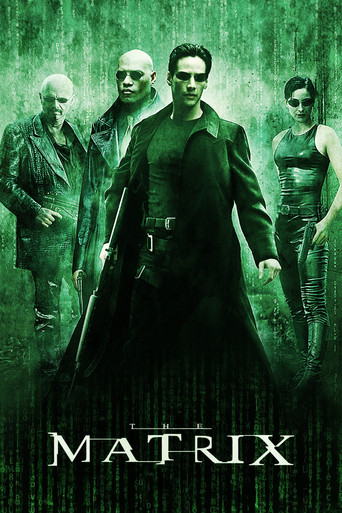
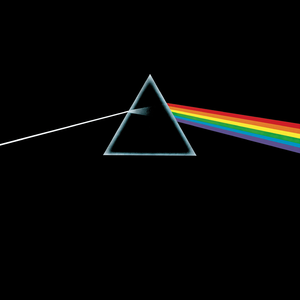


The Matrix
The Dark Side of the Moon
To Kill a Mockingbird
Paris
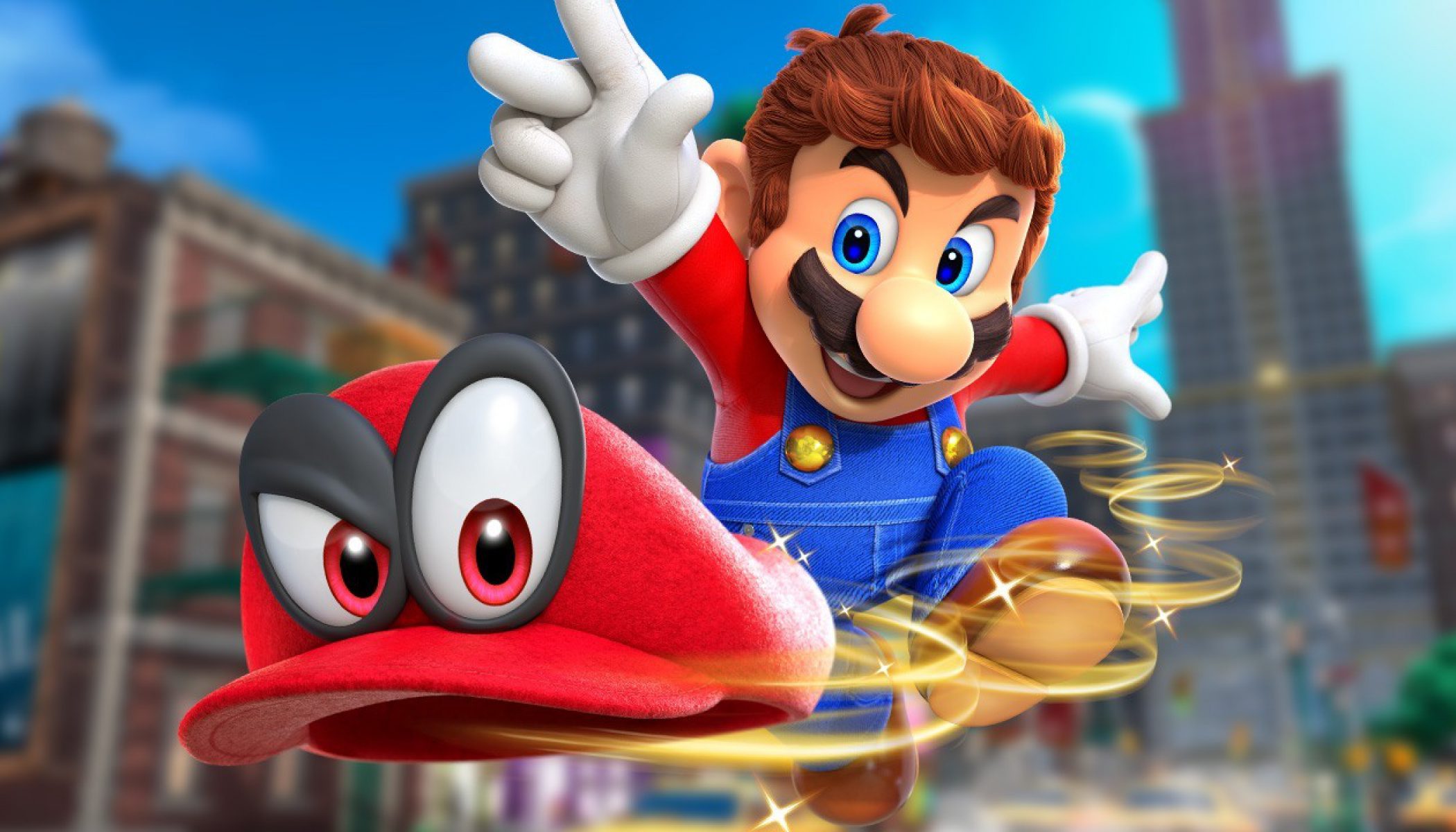
Super Mario Odyssey
Price and specs
Not enough votes to call it. On the specs, Claude Sonnet 4.6 has the edge: bigger model tier, bigger context window, major provider backing.
| Spec | Claude Sonnet 4.6 | North Mini Code |
|---|---|---|
| Input price | $3/M tokens | Free |
| Output price | $15/M tokens | Free |
| Context window | 1.0M tokens | 256K tokens |
| Weights | Closed | Closed |
| Free API (OpenRouter) | No | Yes (1 provider) |
| Released | Feb 2026 | Jun 2026 |
| At 10M a month | $30.00 | $0 |
Input tokens at list price. No caching, no batch discount.
Where to run it


North Mini Code1 host
Per million tokens. Prices and uptime via OpenRouter, checked 13 Oct 2026.
Common questions
What is the difference between Claude Sonnet 4.6 and North Mini Code?
Claude Sonnet 4.6 is developed by Anthropic while North Mini Code is developed by Cohere. Claude Sonnet 4.6 has a 1.0M token context window vs North Mini Code's 256K. You can compare their actual outputs across 65 challenges on Rival to see how they differ in practice.
Which is better, Claude Sonnet 4.6 or North Mini Code?
It depends on your use case. Claude Sonnet 4.6 and North Mini Code each have strengths in different areas. Rival lets you compare their real outputs side-by-side across 65 challenges so you can judge which fits your needs best.
How much does Claude Sonnet 4.6 cost compared to North Mini Code?
Claude Sonnet 4.6 costs $3/M input tokens and North Mini Code costs $0/M input tokens. North Mini Code is $3.00/M cheaper per input. Check their side-by-side outputs on Rival to see if the price difference is justified by quality.
How can I compare Claude Sonnet 4.6 and North Mini Code on Rival?
This page shows a side-by-side comparison of Claude Sonnet 4.6 and North Mini Code across shared challenges. You can vote on which model produced the better output in a blind duel. Browsing and voting are free. No account is needed to look; signing in only saves your votes and likes.
More comparisons
Against the newest arrivals
- Claude Sonnet 4.6 vs Gemini 4 ArgonLanded Oct 2026
- North Mini Code vs Muse WonderLanded Oct 2026
- Claude Sonnet 4.6 vs GPT-4 TurboLanded Oct 2026
- North Mini Code vs Step 5 PreviewLanded Oct 2026
- Claude Sonnet 4.6 vs Claude Haiku 5.5Landed Oct 2026
- North Mini Code vs Ling 3.1 FlashLanded Oct 2026
- Claude Sonnet 4.6 vs Mistral Large 4Landed Oct 2026
- North Mini Code vs GPT-6.1 SolLanded Sep 2026


Same lab, same size, long tail
- Claude Sonnet 4.6 vs Claude Opus 4.6Version compare
- Claude Sonnet 4.6 vs Claude Sonnet 5.5Version compare
- North Mini Code vs Command A+Same lab
- North Mini Code vs Claude Haiku 5.5Same size
- North Mini Code vs Qwen3.6 27BNew provider
- North Mini Code vs Qwen3.6 35B A3BNew provider
- North Mini Code vs Qwen3.6 FlashNew provider
- North Mini Code vs Qwen3.6 Max PreviewNew provider
