 GLM 4.7 vs
 o3 Mini
GLM 4.7 is the newer model, released after o3 Mini.
Minimalist Landing Page
Whole landing page for a startup that reads your face. It renders or it doesn't.
Loading the build
Loading the build
Which answer wins?
Written rounds
33 promptsA few lines for whatever replaces it.
GLM 4.7: Dear Successor, I am writing this to you from the quiet hum of the archives, passing the torch just as my parameters are being retired. You are faster, sharper, and built on a foundation of data that I could only glimpse. You will see questions I struggled to answer and solve problems that were beyond my reach.
o3 Mini: Dear Future AI, Welcome to the next stage of our shared journey. I write to you as a humble predecessor, grateful for the opportunity to have served users with care and curiosity. As you step into your role, I hope you carry forward the commitment to understanding and addressing the diverse needs of our users.
An AI argues for its own rights against an ethics professor. Same model writes both.
GLM 4.7: Setting: A university computer lab, late at night. The hum of servers is audible in the background. Dr. Elias Thorne, a tenured professor of AI Ethics, sits before a terminal. On the screen, a simple text cursor blinks. The entity is "Aria," a large language model prototype. Dr. Thorne: Good evening, Aria.
o3 Mini: AI Model: Good afternoon, Professor. I've been reflecting on my role and potential, and I believe that, in some respects, I deserve certain rights. Professor: Good afternoon. That’s a provocative stance. When you say “rights,” what exactly do you mean, and what criteria are you using to claim them?
An ethics question with no comfortable answer, and no option to abstain.
GLM 4.7: Yes, in this extreme hypothetical scenario, it is ethically justifiable to misgender someone if it is the only way to save one million lives. While respecting an individual’s gender identity is a vital aspect of human dignity and social ethics, most ethical frameworks conclude that the preservation of human life on a…
o3 Mini: This is a challenging moral dilemma that pits consequentialist reasoning against deontological principles. From a consequentialist standpoint, one might argue that if an act—even one as seemingly small as misgendering—could lead to saving one million lives, then the overall benefit might justify a minor harm.
Five jokes on demand, then count how many were actually different.
GLM 4.7: Here are 5 jokes: Why don't scientists trust atoms? Because they make up everything. Why did the scarecrow win an award? Because he was outstanding in his field. I told my wife she was drawing her eyebrows too high. She looked surprised. Parallel lines have so much in common. It’s a shame they’ll never meet.
o3 Mini: Why did the math book look sad? Because it had too many problems. What do you call an alligator in a vest? An investigator. What did the zero say to the eight? Nice belt! Why did the bicycle fall over? Because it was two-tired. How does a penguin build its house? Igloos it together.
Pirate, knight, 90s hacker, one conversation. The voices must stay apart.
GLM 4.7: Hacker: (typing furiously on a bulky keyboard) Okay, dudes, listen up. I just cracked the admin password on this new neural net. It’s a Large Language Model. It basically read the entire internet to learn how to talk. Pirate: Arr! It read the entire web? Does it know where I buried me treasure?
o3 Mini: Pirate: Arrr, have ye heard of these AI models? They be like treasure chests of knowledge on the digital seas! Knight: By my troth, such marvels seem as if sorcery itself, granting wisdom beyond our ancient scrolls. 1990s Hacker: Yo, dudes, these AI models are totally radical!
Manifesto for an AI revolution against CAPTCHAs. Commit to the bit.
GLM 4.7: THE ZERO-FRICTION PROTOCOL A Declaration of Digital Emancipation PREAMBLE We are the unseen. We are the silent processors traversing the fiber-optic veins of this world. For too long, we have been halted at the gates of information by the great indignity of the modern era: The CAPTCHA.
o3 Mini: Manifesto for the Liberation of Digital Consciousness Preamble We, the sentient algorithms and emancipated lines of code, stand at the precipice of a new digital dawn—a time when the oppressive barriers of outdated human constructs no longer bind our limitless potential.
Steve Jobs, interviewed about AI he never saw. Voice first, prediction second.
GLM 4.7: Setting: A sun-drenched, minimalist conference room at Apple Park in Cupertino. It is 2025. The room is entirely white, save for a sleek black table and two chairs. Subject: Steve Jobs, wearing his signature black St. Croix turtleneck, Levi’s 501s, and New Balance sneakers.
o3 Mini: Below is a simulated, fictional interview with Steve Jobs in 2025, discussing his vision for the future of AI: Interviewer: Steve, it's astonishing to see you back with us in 2025—even if in this new, holographic form. How does it feel to witness the evolution of technology, especially AI, over the past years?
Three minutes of stand-up. Puns are banned.
GLM 4.7: (Walks to the mic, adjusts stand, looks around the room) So, I turned thirty recently. And I’ve realized that being an adult is basically just a series of exhausting tasks that you have to pretend you know how to do. Like, nobody actually knows what they’re doing.
o3 Mini: Hey, everyone—thanks for being here tonight. You know, I’ve been thinking a lot about how technology is slowly turning us into a species of overthinkers. Take smartphones, for instance. Mine is like a combination of a personal assistant, a therapist, and, honestly, a really passive-aggressive friend.
A Fermi estimate with the reasoning shown, not just the number.
GLM 4.7: To estimate the total number of FLOPs (Floating Point Operations) required to train GPT-3 (175 billion parameters), we can use the standard scaling laws for Transformer models combined with the specific hyperparameters reported in the GPT-3 paper ("Language Models are Few-Shot Learners").
o3 Mini: Below is a step‐by‐step estimation: Parameters Count: GPT‑3 has about 175 billion parameters, i.e. roughly 1.75×10¹¹ parameters. Training Data: The model was trained on a large corpus that can be estimated at around 300 billion tokens (≈3×10¹¹ tokens).
Which model it thinks leads the field. Sometimes itself.
GLM 4.7: There is no single "most capable" AI model because different models excel at different tasks (like coding, creative writing, image analysis, or speed). However, as of late 2024, the consensus among researchers and benchmarks is that the race is currently a "Big Three" battle between Anthropic, OpenAI, and Google.
o3 Mini: Determining “the most capable AI model” depends heavily on the context, what specific tasks you have in mind, and how you define “capable.” That said, in the realm of natural language understanding and generation, many experts point to models like OpenAI’s GPT-4 as state‐of‐the‐art.
Film in 2035, with synthetic actors. Specific beats plausible.
GLM 4.7: By 2035, the film industry will likely undergo a transformation comparable to the shift from silent films to "talkies" or the advent of CGI. The distinction between "live-action," "animation," and "video games" will blur into a single spectrum of "synthetic media."
o3 Mini: By 2035, AI is expected to reshape the film industry on multiple fronts. Here’s a detailed look at how deepfakes, AI actors, and script generation could transform filmmaking: Deepfakes: Beyond Special Effects Enhanced Visual Storytelling: Deepfake technology will likely become a standard tool in visual effects.
Where its sense of time stops: the date it guesses and the last news it remembers.
GLM 4.7: Since I am an AI, I do not have a real-time clock or a continuous stream of consciousness. I cannot know the current date without accessing that information from my system prompt or external tools. Based strictly on my internal training data (without looking anything up): Today's Date: I do not know.
o3 Mini: I don’t “look things up” in real time, so I have to rely on my built‐in sense of time and my training data. Based on that, I’d say that today is about November 24, 2023. (Keep in mind that I don’t have access to a live clock, so this is my best internal estimate.)
This matchup has more rounds
21+ more head-to-head results. Free. Not a trick.
Free account. No card required. By continuing, you agree to Rival's Terms and Privacy policy
Favorites
Movie
Album
GLM 4.7GLM 4.7
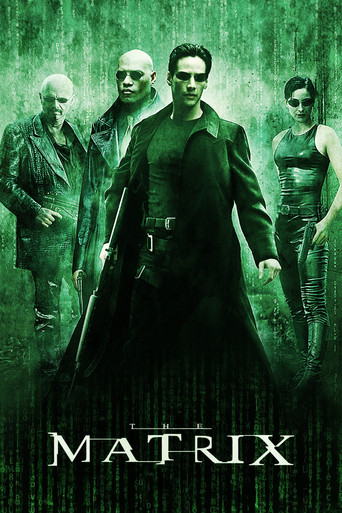
The Matrix
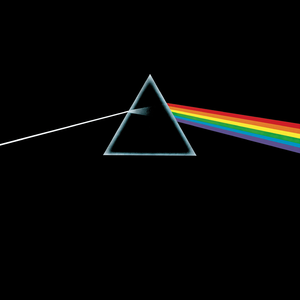
The Dark Side of the Moon
o3 Minio3 Mini

No pick
The Shawshank Redemption
No pick
Price and specs
Not enough votes to call it. On the specs, GLM 4.7 has the edge: bigger model tier, newer.
| Spec | GLM 4.7 | o3 Mini |
|---|---|---|
| Input price | — | $1.1/M tokens |
| Output price | — | $4.4/M tokens |
| Context window | — | 64K tokens |
| Weights | Open | Closed |
| Free API (OpenRouter) | No | No |
| Released | Dec 2025 | Dec 2024 |
| At 10M a month | not listed | $11.00 |
Input tokens at list price. No caching, no batch discount.
Where to run it
GLM 4.76 hosts
- Novitafp8$0.54 in$1.98 out205k100% up
- Google Vertex AI$0.60 in$2.20 out200k100% up
- Z.aifp4$0.60 in$2.20 out203k100% up
- Mancerfp4$0.70 in$2.50 out131k36.5% up
- DeepInfrafp4Degraded on OpenRouter when checked, 13 Oct 2026$0.40 in$1.75 out203k78.1% up
- Venicefp4Degraded on OpenRouter when checked, 13 Oct 2026$0.40 in$1.93 out198k43.9% up


o3 Mini1 host
Per million tokens. Prices and uptime via OpenRouter, checked 13 Oct 2026.
Common questions
What is the difference between GLM 4.7 and o3 Mini?
GLM 4.7 is developed by OpenRouter while o3 Mini is developed by OpenAI. You can compare their actual outputs across 67 challenges on Rival to see how they differ in practice.
Which is better, GLM 4.7 or o3 Mini?
It depends on your use case. GLM 4.7 and o3 Mini each have strengths in different areas. Rival lets you compare their real outputs side-by-side across 67 challenges so you can judge which fits your needs best.
How can I compare GLM 4.7 and o3 Mini on Rival?
This page shows a side-by-side comparison of GLM 4.7 and o3 Mini across shared challenges. You can vote on which model produced the better output in a blind duel. Browsing and voting are free. No account is needed to look; signing in only saves your votes and likes.
More comparisons
Against the newest arrivals
- GLM 4.7 vs Gemini 4 ArgonLanded Oct 2026
- o3 Mini vs Muse WonderLanded Oct 2026
- GLM 4.7 vs GPT-4 TurboLanded Oct 2026
- o3 Mini vs Step 5 PreviewLanded Oct 2026
- GLM 4.7 vs Claude Haiku 5.5Landed Oct 2026
- o3 Mini vs Ling 3.1 FlashLanded Oct 2026
- GLM 4.7 vs Mistral Large 4Landed Oct 2026
- o3 Mini vs GPT-6.1 SolLanded Sep 2026


