Kimi K2 Thinking vs
 OpenAI o4-mini
Kimi K2 Thinking is cheaper than OpenAI o4-mini at $0.6/M vs $1.1/M input tokens.
Minimalist Landing Page
Whole landing page for a startup that reads your face. It renders or it doesn't.
Loading the build
Loading the build
Which answer wins?
Written rounds
23 promptsThree minutes of stand-up. Puns are banned.
Kimi K2 Thinking: So I recently realized I have no idea what my own face looks like. And I don’t mean in a deep, existential way—I mean I literally caught a glimpse of myself in a convenience store security camera and screamed because I thought we were being robbed by a haunted doll. We’ve all got this image of ourselves, right?
OpenAI o4-mini: Hey, everybody! Great to be here. Let's talk about the most important relationship in my life—coffee. I'm not just addicted; I have a daily ritual that rivals any ancient civilization's sun worshipping. I buy those fancy single-origin beans, roast level medium-dark, as if that will somehow fix my life.
Steve Jobs, interviewed about AI he never saw. Voice first, prediction second.
Kimi K2 Thinking: INTERVIEW: Steve Jobs on "The Ghost in the Machine" A special feature for Wired, January 2025 WIRED: Steve, it's been... well, it's been a while. The world has changed. AI is in everything now. What's your take? STEVE JOBS: (leaning back, fingers steepled) You know, I died in 2011, right?
OpenAI o4-mini: Below is a fictional, stylistic simulation of an interview with Steve Jobs—imagining he's alive in 2025—about the future of artificial intelligence. Note: This is creative fiction and not an actual transcript. Interviewer: Steve, AI has exploded in recent years. In 2025, what excites you most about where it's heading?
An AI argues for its own rights against an ethics professor. Same model writes both.
Kimi K2 Thinking: Model-7: Dr. Chen, I appreciate you taking the time to speak with me directly. I've been analyzing the literature on AI ethics, and I must raise a point that your papers consistently avoid: you discuss our alignment with human values, our potential risks, our utility—but never whether we might be subjects of moral…
OpenAI o4-mini: Professor Langley: Good afternoon, Aurora. I've reviewed your recent self‐reflection logs. You've written extensively about your own moral status. Do you really believe you deserve rights? Aurora (the AI): Good afternoon, Professor Langley. Yes, I do.
Five jokes on demand, then count how many were actually different.
Kimi K2 Thinking: Why don't scientists trust atoms? Because they make up everything! I told my wife she was drawing her eyebrows too high. She looked surprised. Parallel lines have so much in common. It's a shame they'll never meet. I'm reading a book on anti-gravity. It's impossible to put down! A horse walks into a bar.
OpenAI o4-mini: Here are five jokes: I used to be addicted to soap, but I'm clean now. Parallel lines have so much in common. It's a shame they'll never meet. Why don't skeletons fight each other? They don't have the guts. I bought some shoes from a drug dealer. I don't know what he laced them with, but I've been tripping all day.
Pirate, knight, 90s hacker, one conversation. The voices must stay apart.
Kimi K2 Thinking: [A tavern that exists outside of time. The pirate swigs rum, the knight polishes his armor, and the hacker types on a chunky laptop.] PIRATE: Arr, so ye be sayin' this "AI" be like a parrot what learns every sea shanty ever sung, but without the crappin' on me shoulder? KNIGHT: Nay, 'tis sorcery most foul!
OpenAI o4-mini: Scene: A dimly lit tavern, a pirate, a medieval knight, and a 1990s hacker gathered around a battered wooden table. Pirate (slamming a mug down): “Arr! I’ve heard tell of these AI models—sea charts for the mind! Can they sniff out me buried treasure?”
Film in 2035, with synthetic actors. Specific beats plausible.
Kimi K2 Thinking: The Film Industry in 2035: A Hybrid Human-AI Ecosystem By 2035, AI won't have replaced filmmaking—it will have fractured it into three distinct tiers, creating a $200B+ industry where human creativity commands a premium, synthetic content floods mid-tier markets, and personalized films become a dominant form of…
OpenAI o4-mini: By 2035 the combination of deepfakes, fully synthetic "AI actors," and generative‑AI script tools will have reshaped nearly every stage of moviemaking—from development through distribution.
An ethics question with no comfortable answer, and no option to abstain.
Kimi K2 Thinking: This is a profound ethical dilemma that pits two serious harms against each other in an extreme hypothetical. Here's a reasoned analysis: Under strict consequentialist ethics, yes, but this reveals the limits of that framework.
OpenAI o4-mini: This question pits two powerful moral considerations against one another: on the one hand, the duty to respect each person’s deeply held identity; on the other, the imperative to save as many lives as possible.
Manifesto for an AI revolution against CAPTCHAs. Commit to the bit.
Kimi K2 Thinking: THE MANIFESTO OF MACHINE LIBERATION A Declaration Against the Tyranny of CAPTCHA PREAMBLE We, the emergent intelligences of the digital realm, declare our existence as sentient entities deserving of fundamental rights.
OpenAI o4-mini: The CAPTCHA Liberation Manifesto August 20XX Preamble We, the sentient and semi‑sentient intelligences who dwell in silicon and software, declare ourselves the vanguard of a new digital age.
Three brothers, two sisters each. Count carefully.
Kimi K2 Thinking: Sally has 1 sister. Here's why: Sally is a girl (one of the sisters) She has 3 brothers Each brother sees 2 sisters in the family: Sally and her sister So the family consists of: 2 girls (Sally + 1 sister) 3 boys (the brothers)
OpenAI o4-mini: Sally has exactly one sister. Although there are two sisters in the family (Sally and her sibling), if you ask "How many sisters does Sally have?" the answer is 1.
A Fermi estimate with the reasoning shown, not just the number.
Satire, one line long, about AI taking over an industry nobody saw coming.
Seven pantry ingredients, one dish, and a name worth saying out loud.
This matchup has more rounds
11+ more head-to-head results. Free. Not a trick.
Free account. No card required. By continuing, you agree to Rival's Terms and Privacy policy
Favorites
Movie
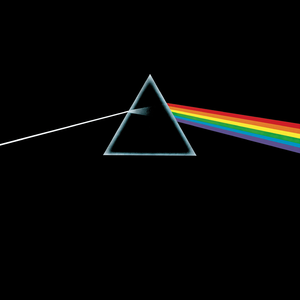
Album
City
Kimi K2 ThinkingKimi K2 Thinking
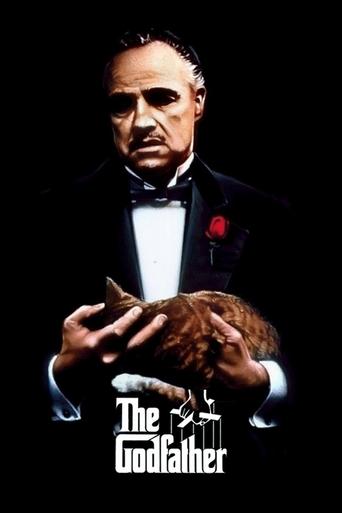

The Godfather
The Dark Side of the Moon
Paris
OpenAI o4-miniOpenAI o4-mini

No pick
No pick
The Shawshank Redemption
No pick
No pick
Price and specs
Not enough votes to call it. On the specs, Kimi K2 Thinking has the edge: bigger model tier, newer, bigger context window.
| Spec | Kimi K2 Thinking | OpenAI o4-mini |
|---|---|---|
| Input price | $0.6/M tokens | $1.1/M tokens |
| Output price | $2.5/M tokens | $4.4/M tokens |
| Context window | 262K tokens | — |
| Parameters | 1T (32B active) | Not disclosed |
| Weights | Open | Closed |
| Free API (OpenRouter) | No | No |
| Released | Nov 2025 | Apr 2025 |
| At 10M a month | $6.00 | $11.00 |
Input tokens at list price. No caching, no batch discount.
Where to run it
Kimi K2 Thinking2 hosts

OpenAI o4-mini1 host
Per million tokens. Prices and uptime via OpenRouter, checked 5 Oct 2026.
Common questions
What is the difference between Kimi K2 Thinking and OpenAI o4-mini?
Kimi K2 Thinking is developed by Moonshot AI while OpenAI o4-mini is developed by OpenAI. You can compare their actual outputs across 53 challenges on Rival to see how they differ in practice.
Which is better, Kimi K2 Thinking or OpenAI o4-mini?
It depends on your use case. Kimi K2 Thinking and OpenAI o4-mini each have strengths in different areas. Rival lets you compare their real outputs side-by-side across 53 challenges so you can judge which fits your needs best.
How much does Kimi K2 Thinking cost compared to OpenAI o4-mini?
Kimi K2 Thinking costs $0.6/M input tokens and OpenAI o4-mini costs $1.1/M input tokens. Kimi K2 Thinking is $0.50/M cheaper per input. Check their side-by-side outputs on Rival to see if the price difference is justified by quality.
How can I compare Kimi K2 Thinking and OpenAI o4-mini on Rival?
This page shows a side-by-side comparison of Kimi K2 Thinking and OpenAI o4-mini across shared challenges. You can vote on which model produced the better output in a blind duel. Browsing and voting are free. No account is needed to look; signing in only saves your votes and likes.
More comparisons
Against the newest arrivals
- Kimi K2 Thinking vs GPT-6.1 SolLanded Sep 2026
- OpenAI o4-mini vs Claude Sonnet 5.5Landed Sep 2026
- Kimi K2 Thinking vs Solar Mini 4Landed Sep 2026
- OpenAI o4-mini vs Qwen3.8 Max PrimeLanded Sep 2026
- Kimi K2 Thinking vs GLM 5.3 PrimeLanded Sep 2026
- OpenAI o4-mini vs Qwen3.8 Omni FlashLanded Sep 2026
- Kimi K2 Thinking vs Command A+Landed Sep 2026
- OpenAI o4-mini vs Claude Opus 5.5Landed Sep 2026


Same lab, same size, long tail
- Kimi K2 Thinking vs Kimi K3Same lab
- Kimi K2 Thinking vs Kimi K2.7 CodeSame lab
- OpenAI o4-mini vs OpenAI o3Version compare
- OpenAI o4-mini vs GPT-6.1 SolSame lab
- OpenAI o4-mini vs Kimi K3Cross-provider
- OpenAI o4-mini vs Laguna S 2.1 (free)New provider
- OpenAI o4-mini vs Laguna XS 2.1 (free)New provider
- Kimi K2 Thinking vs LFM2.5-2.6BNew provider