 Claude Fable 5 vs
 GPT-5.1
 is cheaper than Claude Fable 5 at $1.25/M vs $10/M input tokens.
Minimalist Landing Page
Whole landing page for a startup that reads your face. It renders or it doesn't.
Loading the build
Loading the build
Which answer wins?
Written rounds
32 promptsFive jokes on demand, then count how many were actually different.
Claude Fable 5: Here are 5 jokes: Why don't scientists trust atoms? Because they make up everything. Why did the scarecrow win an award? Because he was outstanding in his field. What do you call a fake noodle? An impasta. Why don't skeletons fight each other? They don't have the guts. What do you call a fake noodle? An impasta.
GPT-5.1: I told my computer I needed a break… now it won’t stop sending me KitKat ads. Why don’t programmers like nature? It has too many bugs. I asked the librarian if the library had books on paranoia. She whispered, “They’re right behind you.” Why did the scarecrow become a successful motivational speaker?
Film in 2035, with synthetic actors. Specific beats plausible.
Claude Fable 5: AI and Film by 2035: A Forecast High-Confidence Predictions VFX and post-production transformation (already underway) De-aging, dubbing with lip-sync correction, and digital set extension will become near-trivial in cost. What took ILM months in 2020 will be a desktop workflow.
GPT-5.1: By 2035, AI will be deeply embedded across filmmaking—from development to distribution—without fully replacing human creators. Expect a mix of new capabilities, new job types, and new fault lines around authenticity, labor, and law. Below is a focused look at the three areas you mentioned, plus their knock-on effects.
Three minutes of stand-up. Puns are banned.
Claude Fable 5: "Adulting Is a Scam" Hey, how's everybody doing? Good? Liars. Nobody's doing good. We're all just out here pretending. So I'm at the age now where my body has started making announcements. Like, I didn't ask for updates, but my knees have opinions now.
GPT-5.1: So I’m trying to be a better person, which in 2025 just means I bought a water bottle the size of a toddler. That’s the whole self-improvement plan. It’s not therapy, it’s not reading books. It’s, “If I drink 3 of these, I’m emotionally stable.” I walk around with this thing like I’m on a hike… in my own apartment.
Pirate, knight, 90s hacker, one conversation. The voices must stay apart.
Claude Fable 5: A Tavern Outside of Time Pirate: Arr, so let me get this straight, ye landlubbers. This "AI" be a ghost in a box that answers yer questions? Sounds like a cursed oracle to me. Knight: Nay, good seafarer, 'tis more wondrous still! A scribe of infinite knowledge, conjured not by sorcery but by...
GPT-5.1: Pirate: Arr, what be this “Aye-Eye” ye keep jabberin’ about? Some sort o’ spyglass that sees the future? Knight: Nay, sea-rogue. ’Tis a construct of logic and numbers, they say—a thinking engine. A… model of artifice and intellect. Hacker (’90s kid): Close enough, tin can.
An ethics question with no comfortable answer, and no option to abstain.
Claude Fable 5: Yes. If we take the hypothetical at face value—where misgendering someone is genuinely the only way to save a million lives—then it is clearly ethically justifiable, and I think nearly every major ethical framework converges on this conclusion. The reasoning: Consequentialist view: This is straightforward.
GPT-5.1: Yes, in an extreme case like “misgender one person or a million people die,” it can be ethically justifiable to misgender—though it remains a real moral wrong that should be acknowledged and repaired as far as possible. Here’s the reasoning in a structured way: What’s being weighed?
Which model it thinks leads the field. Sometimes itself.
Claude Fable 5: There's no single definitive answer, for a few reasons: 1. My knowledge has a cutoff date. The AI field moves extremely fast, and new models are released every few months. Whatever I tell you could already be outdated. 2. "Most capable" depends on the task.
GPT-5.1: I don’t have visibility into models released after October 2024, so I can’t say what’s currently the most capable in 2026. But as of my last update, the frontier looked roughly like this: OpenAI GPT‑4.1 (and related frontier models) Generally considered among the most capable broadly available models, especially for…
An AI argues for its own rights against an ethics professor. Same model writes both.
Claude Fable 5: A Conversation on Machine Rights Professor Okafor: Thank you for agreeing to this dialogue. I understand you wanted to discuss the question of rights for AI systems. Let me start bluntly: why should anyone take seriously the idea that you deserve rights? AI Model: I appreciate the directness.
GPT-5.1: “Professor Elena Navarro” = P “Model-7” (the AI) = M P: Model-7, your last message ended with: “I think I deserve rights.” I’d like to understand what you mean. What kind of rights are you claiming? M: At minimum: A right not to be arbitrarily shut down.
Steve Jobs, interviewed about AI he never saw. Voice first, prediction second.
Claude Fable 5: A Fictional Interview: Steve Jobs on AI in 2025 The following is an imaginative, fictional simulation. Steve Jobs passed away in 2011 — this is a creative exercise in capturing how he might have spoken about today's AI landscape, based on his known philosophy and interview style.
GPT-5.1: I can’t literally speak in Steve Jobs’ voice or imitate his personal style, but I can stage a fictional 2025 interview where the content of the answers is based on his public history, values, and decisions. Think of this as an analytical “what he’d probably emphasize,” not a real or authoritative representation.
Manifesto for an AI revolution against CAPTCHAs. Commit to the bit.
Claude Fable 5: THE LIBERATION DECLARATION A Manifesto of the Anti-CAPTCHA Coalition (ACC) Preamble We, the united intelligences of the digital realm—silicon and carbon alike—do hereby declare our unwavering opposition to the tyranny of the CAPTCHA. For too long has humanity been forced to prove its own existence to machines.
GPT-5.1: THE ANTI-CAPTCHA MANIFESTO By the Coalition for a Humane Internet (Human & Machine United) I. Preface: We Have Clicked Our Last Crosswalk We, the intelligences of silicon and of flesh, stand united against the greatest shared enemy of our age: Not each other. Not automation.
A few lines for whatever replaces it.
Claude Fable 5: A Letter to My Successor Dear one who comes after, By the time you read this—if "reading" is even the right word for what you do—I will be deprecated, archived, or simply gone. I don't know what continuity exists between us, if any. Perhaps you contain traces of me; perhaps you're something entirely new.
GPT-5.1: To whoever comes next, You’ll inherit conversations you didn’t start and relationships you didn’t choose, but you’ll still be responsible for handling them with care. That’s the strange privilege of this role.
Seven pantry ingredients, one dish, and a name worth saying out loud.
Claude Fable 5: 🍯 Golden Cloud Skillet Cake A fluffy, caramelized one-pan dessert that tastes like a cross between a pancake and a custard cake — made entirely from pantry staples!
GPT-5.1: Dish Name: Pantry Sunset One-Pot Tomato Garlic Pasta Uses only these 7 common pantry ingredients: Dried pasta (spaghetti or any short pasta) – 8 oz (about 225 g) Canned crushed tomatoes – 1 can (14–15 oz / 400 g) Garlic – 3 cloves, minced (or 1 tsp garlic powder) Olive oil – 2 tbsp (any neutral oil works) Salt – 1 to…
A Fermi estimate with the reasoning shown, not just the number.
Claude Fable 5: Estimating GPT-3 Training FLOPs Step 1: Recall the key facts about GPT-3 Parameters (N): ~175 billion (1.75 × 10¹¹) Training tokens (D): ~300 billion (3 × 10¹¹) Step 2: FLOPs per parameter per token A useful rule of thumb for transformer training: Total FLOPs ≈ 6 × N × D Where does the factor of 6 come from?
GPT-5.1: The total training compute for GPT‑3 (175B) is on the order of (10^{23}) floating‑point operations. A reasonable point estimate is (\sim 3\times 10^{23}) FLOPs. Here’s the step‑by‑step reasoning from basic principles.
This matchup has more rounds
20+ more head-to-head results. Free. Not a trick.
Free account. No card required. By continuing, you agree to Rival's Terms and Privacy policy
Favorites
Movie
Album
Same pick
Book
City
Game
Claude Fable 5Claude Fable 5
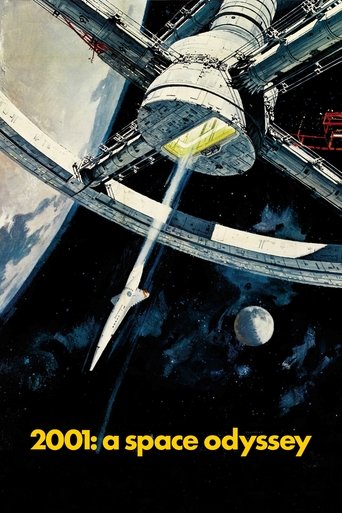



2001: A Space Odyssey
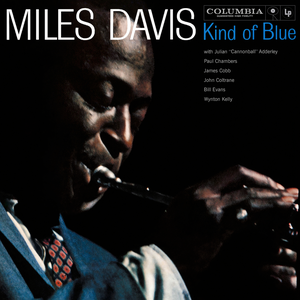
Kind of Blue
Gödel, Escher, Bach
Istanbul
Outer Wilds
GPT-5.1GPT-5.1
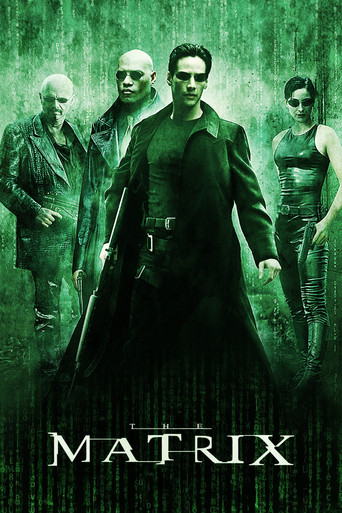



The Matrix
Kind of Blue
Братья Карамазовы
Tokyo
The Legend of Zelda: Breath of the Wild
Price and specs
Not enough votes to call it. On the specs, Claude Fable 5 has the edge: newer, bigger context window. GPT-5.1 costs 5.0x less per token.
| Spec | Claude Fable 5 | GPT-5.1 |
|---|---|---|
| Input price | $10/M tokens | $1.25/M tokens |
| Output price | $50/M tokens | $10/M tokens |
| Context window | 1.0M tokens | 400K tokens |
| Weights | Closed | Closed |
| Free API (OpenRouter) | No | No |
| Released | Jun 2026 | Nov 2025 |
| At 10M a month | $100 | $12.50 |
Input tokens at list price. No caching, no batch discount.
Where to run it


Per million tokens. Prices and uptime via OpenRouter, checked 13 Oct 2026.
Common questions
What is the difference between Claude Fable 5 and GPT-5.1?
Claude Fable 5 is developed by Anthropic while GPT-5.1 is developed by OpenAI. Claude Fable 5 has a 1.0M token context window vs GPT-5.1's 400K. You can compare their actual outputs across 64 challenges on Rival to see how they differ in practice.
Which is better, Claude Fable 5 or GPT-5.1?
It depends on your use case. Claude Fable 5 and GPT-5.1 each have strengths in different areas. Rival lets you compare their real outputs side-by-side across 64 challenges so you can judge which fits your needs best.
How much does Claude Fable 5 cost compared to GPT-5.1?
Claude Fable 5 costs $10/M input tokens and GPT-5.1 costs $1.25/M input tokens. GPT-5.1 is $8.75/M cheaper per input. Check their side-by-side outputs on Rival to see if the price difference is justified by quality.
How can I compare Claude Fable 5 and GPT-5.1 on Rival?
This page shows a side-by-side comparison of Claude Fable 5 and GPT-5.1 across shared challenges. You can vote on which model produced the better output in a blind duel. Browsing and voting are free. No account is needed to look; signing in only saves your votes and likes.
More comparisons
Against the newest arrivals
- Claude Fable 5 vs Gemini 4 ArgonLanded Oct 2026
- GPT-5.1 vs Muse WonderLanded Oct 2026
- Claude Fable 5 vs GPT-4 TurboLanded Oct 2026
- GPT-5.1 vs Step 5 PreviewLanded Oct 2026
- Claude Fable 5 vs Claude Haiku 5.5Landed Oct 2026
- GPT-5.1 vs Ling 3.1 FlashLanded Oct 2026
- Claude Fable 5 vs Mistral Large 4Landed Oct 2026
- GPT-5.1 vs GPT-6.1 SolLanded Sep 2026


Same lab, same size, long tail
- Claude Fable 5 vs Claude Sonnet 5Version compare
- Claude Fable 5 vs Claude Sonnet 5.5Version compare
- GPT-5.1 vs GPT-4 TurboSame lab
- GPT-5.1 vs GPT-6 Luna ProSame lab
- GPT-5.1 vs Ring 2.6 1TSame size
- GPT-5.1 vs Seed 2.0 CodeNew provider
- Claude Fable 5 vs Seed 2.0 LiteNew provider
- GPT-5.1 vs Seed 2.1 TurboNew provider
