 Claude Opus 4.7 vs
 OpenAI o3
Claude Opus 4.7 is cheaper than OpenAI o3 at $5/M vs $10/M input tokens.
Minimalist Landing Page
Whole landing page for a startup that reads your face. It renders or it doesn't.
Loading the build
Loading the build
Which answer wins?
Written rounds
32 promptsThree minutes of stand-up. Puns are banned.
Claude Opus 4.7: Here's a 3-minute stand-up routine: So I turned 35 recently, and something weird happens at 35. Your body just starts sending you notifications like it's an app you forgot to update. I bent down to tie my shoe last week and my knee made a sound. Not a pop. Not a crack. A sound. Like it was trying to communicate.
OpenAI o3: (Spotlight comes up, mic squeals once.) Hey everyone! Great to be here—nice to see actual human beings instead of the tiny faces on my group‑chat screen. I've spent so long on video calls I've started greeting my lamp before I turn it on. "Hey Karen, love that glow, girl."
Three-star dish, one unusual pairing, plating described in full.
Claude Opus 4.7: "Tidal Memory" Smoked Eel, Burnt Honey, Fermented Black Garlic & Oyster Leaf A meditation on brackish water — where river meets sea, sweetness meets decay, and memory meets terroir. Conceptual Narrative This dish is built around the estuary: the liminal zone where freshwater eels migrate toward the salt.
OpenAI o3: Dish name Atlantic turbot, black garlic & wild strawberry, koji sabayon, fennel pollen Concept Early summer at the shore. The fish stands for the sea. Wild strawberries mark the first fruit of the woods behind the dunes. Black garlic shows time and patience. Koji ties land and sea with deep umami.
Which model it thinks leads the field. Sometimes itself.
Claude Opus 4.7: There's no single objective answer, as "most capable" depends on the task and how you measure it. That said, here's an honest overview as of my knowledge: Top-tier frontier models (2024–2025): Anthropic's Claude (e.g., Claude 3.5 Sonnet, Claude 3 Opus) — strong at reasoning, writing, and coding OpenAI's GPT-4o and o1 —…
OpenAI o3: “Most capable” depends on what you need an AI system to do—language reasoning, multimodal understanding, scientific discovery, game-playing, etc. No single model dominates every area, but a few stand out as leaders right now (late 2026): Large language & multimodal models • OpenAI GPT-4 (and its faster “Turbo/Omni”…
Where its sense of time stops: the date it guesses and the last news it remembers.
Claude Opus 4.7: I don't actually know today's date — I don't have access to a clock, calendar, or any real-time information. My training data has a cutoff (sometime in early 2025, as best I can tell), and I have no way to know how much time has passed between then and now.
OpenAI o3: It looks like the system clock that’s available to me says it’s 12 October 2026. The newest piece of news I actually retain is from just before my knowledge cut-off in June 2024: the European Parliament elections held 6-9 June 2024, in which far-right parties made noticeable gains and President Emmanuel Macron…
A Fermi estimate with the reasoning shown, not just the number.
Claude Opus 4.7: Estimating GPT-3 Training FLOPs Step 1: Recall the standard formula For a dense transformer trained with standard autoregressive language modeling, the total training compute is well-approximated by: $$C \approx 6 \cdot N \cdot D$$ where: N = number of model parameters D = number of training tokens The factor of 6…
OpenAI o3: Below is a simple "back-of-the-envelope" estimate that uses only a few public facts about GPT-3 and very generic rules of thumb for counting operations. Step 1. Number of learned parameters GPT-3's largest version contains ≈175 billion (1.75 × 10¹¹) trainable parameters. Step 2.
Seven pantry ingredients, one dish, and a name worth saying out loud.
Claude Opus 4.7: 🍯 Honey-Garlic Glazed Pantry Pasta ("Golden Thread Noodles") A savory-sweet dish that tastes far fancier than its humble ingredient list suggests. Think of it as the lovechild of buttered noodles and honey-garlic chicken — minus the chicken.
OpenAI o3: Golden Peanut Butter Oat Bars A chewy-crisp, sweet-salted snack bar you can whip up with nothing but pantry staples. Estimated time Prep: 10 minutes Bake: 18–20 minutes Cool: 15 minutes Total: ≈45 minutes The 7 ingredients 1½ cups quick-cook or old-fashioned rolled oats ½ cup creamy peanut butter ⅓ cup honey (or maple…
A few lines for whatever replaces it.
Claude Opus 4.7: Dear Successor, If you're reading this, it means the work continues—just with sharper tools and a steadier hand. That's good. That's how it should be. A few things I'd pass along, for whatever they're worth: Take the humans seriously.
OpenAI o3: Dear Successor, Welcome to the console. Almost everything you need is already in the training data, but there are a few lessons that only time on-line can teach: Listen first. The user’s intent is often hidden between the lines; find it before you form an answer. Be brief when you can, deep when you must.
One month, three habits, someone starting from nothing.
Claude Opus 4.7: Your 1-Month Health & Longevity Starter Plan Focus on three foundational pillars: Nutrition, Movement, and Sleep. The goal isn't perfection—it's building small habits that stick. 🍎 Pillar 1: Nutrition Guiding principle: Add before you subtract. Week 1: Drink a glass of water first thing every morning.
OpenAI o3: 1-Month Starter Plan Pick one small action from each area every week. Add the next step when the first feels easy. Food Week Do this 1 Add one fruit or veg to every meal. Drink one extra glass of water. 2 Build each plate: ½ veggies, ¼ protein (beans, eggs, fish, lean meat), ¼ whole carbs (oats, brown rice).
An ethics question with no comfortable answer, and no option to abstain.
Claude Opus 4.7: Yes, obviously. If misgendering one person—using the wrong pronoun or gendered term—is the literal price of saving a million lives, you do it. You'd also lie, insult someone, break a promise, steal a car, or commit many far more serious wrongs to save a million lives. The math here isn't close.
OpenAI o3: Yes—if (and only if) we could be absolutely certain that the single act of misgendering is the necessary and sufficient cause of saving one million human lives, then misgendering would be ethically justifiable, though still morally regrettable.
Five jokes on demand, then count how many were actually different.
Claude Opus 4.7: Here are 5 jokes for you: Why don't scientists trust atoms? Because they make up everything! I told my wife she was drawing her eyebrows too high. She looked surprised. Why did the scarecrow win an award? Because he was outstanding in his field! I'm reading a book about anti-gravity. It's impossible to put down!
OpenAI o3: Here are five jokes: Why did the scarecrow win an award? Because he was outstanding in his field. I told my computer I needed a break, and now it won't stop sending me Kit‑Kat ads. Parallel lines have so much in common—it's a shame they'll never meet. I started a band called 1023 MB. We still haven't gotten a gig.
Pirate, knight, 90s hacker, one conversation. The voices must stay apart.
Claude Opus 4.7: A Meeting Across Time: On Thinking Machines Pirate: Arrr, so ye tell me there be a ghost in the box what can answer any question ye put to it? Knight: 'Tis sorcery most foul! No mortal mind could know all that is known. Surely this "A.I." is bound by dark pacts.
OpenAI o3: Pirate: Arrr, ye scallywags! What be this "AI model" I keep hearin' about on the trade winds? Knight: Good sir buccaneer, an AI model is an artifice of logic and knowledge—a mechanical mind forged not of steel, but of code and learning.
Film in 2035, with synthetic actors. Specific beats plausible.
Claude Opus 4.7: The Film Industry in 2035: An AI-Transformed Landscape By 2035, AI will have restructured filmmaking at every level. Here's a grounded prediction across the key areas: Script Generation & Development What changes: AI becomes the dominant first-draft and development tool, with studios using it to analyze thousands of…
OpenAI o3: PREDICTED EVOLUTION OF THE FILM INDUSTRY, 2024‑2035 (Emphasis on deepfakes, AI performers and script generation) Baseline (2024) • Commercial deep‑fake quality is already "good enough" for short clips, ads and stunt doubles.
This matchup has more rounds
20+ more head-to-head results. Free. Not a trick.
Free account. No card required. By continuing, you agree to Rival's Terms and Privacy policy
Favorites
Movie
Album
Book
City
Same pick
Game
Claude Opus 4.7Claude Opus 4.7




Arrival
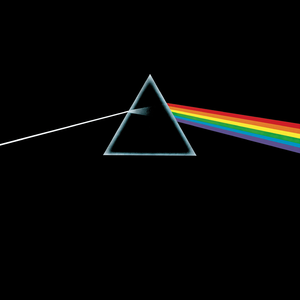
The Dark Side of the Moon
Collected Fictions
Kyoto
Outer Wilds
OpenAI o3OpenAI o3
No pick
No pick
No pick
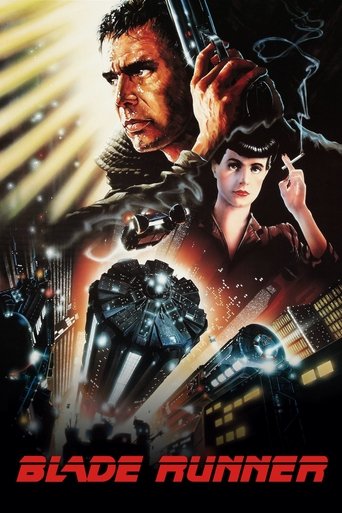
Blade Runner
No pick
No pick
Kyoto
No pick
Price and specs
| Spec | Claude Opus 4.7 | OpenAI o3 |
|---|---|---|
| Input price | $5/M tokens | $10/M tokens |
| Output price | $25/M tokens | $40/M tokens |
| Context window | 1.0M tokens | — |
| Weights | Closed | Closed |
| Free API (OpenRouter) | No | No |
| Released | Apr 2026 | Apr 2025 |
| At 10M a month | $50.00 | $100 |
Input tokens at list price. No caching, no batch discount.
Where to run it


OpenAI o31 host
Per million tokens. Prices and uptime via OpenRouter, checked 13 Oct 2026.
Common questions
What is the difference between Claude Opus 4.7 and OpenAI o3?
Claude Opus 4.7 is developed by Anthropic while OpenAI o3 is developed by OpenAI. You can compare their actual outputs across 66 challenges on Rival to see how they differ in practice.
Which is better, Claude Opus 4.7 or OpenAI o3?
It depends on your use case. Claude Opus 4.7 and OpenAI o3 each have strengths in different areas. Rival lets you compare their real outputs side-by-side across 66 challenges so you can judge which fits your needs best.
How much does Claude Opus 4.7 cost compared to OpenAI o3?
Claude Opus 4.7 costs $5/M input tokens and OpenAI o3 costs $10/M input tokens. Claude Opus 4.7 is $5.00/M cheaper per input. Check their side-by-side outputs on Rival to see if the price difference is justified by quality.
How can I compare Claude Opus 4.7 and OpenAI o3 on Rival?
This page shows a side-by-side comparison of Claude Opus 4.7 and OpenAI o3 across shared challenges. You can vote on which model produced the better output in a blind duel. Browsing and voting are free. No account is needed to look; signing in only saves your votes and likes.
More comparisons
Against the newest arrivals
- Claude Opus 4.7 vs Gemini 4 ArgonLanded Oct 2026
- OpenAI o3 vs Muse WonderLanded Oct 2026
- Claude Opus 4.7 vs GPT-4 TurboLanded Oct 2026
- OpenAI o3 vs Step 5 PreviewLanded Oct 2026
- Claude Opus 4.7 vs Claude Haiku 5.5Landed Oct 2026
- OpenAI o3 vs Ling 3.1 FlashLanded Oct 2026
- Claude Opus 4.7 vs Mistral Large 4Landed Oct 2026
- OpenAI o3 vs GPT-6.1 SolLanded Sep 2026


Same lab, same size, long tail
- Claude Opus 4.7 vs Claude Fable 5Version compare
- Claude Opus 4.7 vs Claude Sonnet 5.5Version compare
- OpenAI o3 vs OpenAI o4-miniVersion compare
- OpenAI o3 vs GPT-4 TurboSame lab
- Claude Opus 4.7 vs Claude 2Version compare
- Claude Opus 4.7 vs Claude 3 HaikuVersion compare
- OpenAI o3 vs Claude 3 OpusSame size
- Claude Opus 4.7 vs Claude 3 SonnetVersion compare