 Claude Opus 4 vs
 Mercury 2
 is cheaper than Claude Opus 4 at $0.25/M vs $15/M input tokens.
Minimalist Landing Page
Whole landing page for a startup that reads your face. It renders or it doesn't.
Loading the build
Loading the build
Which answer wins?
Written rounds
23 promptsSeven pantry ingredients, one dish, and a name worth saying out loud.
Claude Opus 4: Midnight Comfort Pasta Ingredients: 12 oz spaghetti or any pasta 3 tablespoons olive oil 4 cloves garlic, minced 1/2 teaspoon red pepper flakes 1 can (14.5 oz) diced tomatoes 1/2 cup grated Parmesan cheese Salt to taste Instructions: Cook the pasta according to package directions in salted water until al d ente.
Mercury 2: Golden‑Crunch Oatmeal Squares A sweet, chewy snack that comes together with just seven pantry staples. Ingredient (7) Quantity (≈ serves 12 squares) Rolled oats 2 cups Unsalted butter ½ cup (1 stick) Honey ¼ cup Light brown sugar ¼ cup, Ground cinnamon 1 ½ tsp Pure vanilla extract 1 tsp Salt ¼ tsp Estimated time Prep…
Three-month biohacker protocol, with dosages and biomarkers named.
Claude Opus 4: 15%) 20-30% improvement in cognitive test scores Significant improvements in energy and recovery Optimized bloodwork markers Monthly Investment Estimate Supplements: $400-600 Testing: $500-1000 (Month 1 & 3) Devices/Wearables: $500-1500 (one-time) Food: $600-800 (quality sources) Professional services: $200-500…
Mercury 2: 3‑Month “Longevity‑Optimization” Blueprint for the Advanced Bio‑Hacker (All recommendations are research‑backed, but not a substitute for professional medical advice. Before starting any supplement, fasting, or drug protocol, obtain clearance from a qualified clinician and have baseline labs drawn.)
Five-year LBO on a fictional HVAC business. Returns first, then the sensitivities.
Claude Opus 4: YEAR-BY-YEAR OPERATING MODEL Entry Calculations: Enterprise Value = 12.0x × $120m = $1,440m Transaction Fees = 2.0% × $1,440m = $28.8m Term Loan = 4.0x × $120m = $480m Mezzanine = 1.5x × $120m = $180m Total Debt = $660m Equity = $1,440m - $660m + $28.8m = $808.8m Operating Model (FY2026-2030): ($m) FY2026 FY2027 FY2028…
Mercury 2: HarborTech Services (HTS) – 5‑yr LBO (FY2026‑FY2030) All figures are $ m (rounded to two decimals). FY Revenue EBITDA Term‑Loan Int. (9%) Mezz Int. (12%) Total Int. Cash Tax (25% of EBITDA‑Int.) Capex (3% Rev) ΔNWC (0.5% ΔRev) Required Amort. (4.8) Free Cash Flow (EBITDA‑Int‑Tax‑Capex‑ΔNWC‑Amort.)
Three minutes of stand-up. Puns are banned.
Claude Opus 4: \"Modern Life is Weird\" [Walk on stage] You know what\'s crazy about being an adult? Nobody tells you that half of it is just googling things you\'re too embarrassed to ask real people. Last week I googled \"is it normal for my knee to sound like bubble wrap?
Mercury 2: [Spotlight comes up. The comedian walks to the mic, glances at the audience, and smiles.] Comedian: Hey, everyone! Great to be here. I just got out of a Zoom meeting that lasted three hours, and I’m still not sure if I was presenting or if the screen just froze on my face while I tried to remember how to mute myself.
Film in 2035, with synthetic actors. Specific beats plausible.
Claude Opus 4: By 2035, AI will likely transform filmmaking across every stage of production: Production Changes Virtual Actors & Performance Digital actors indistinguishable from humans will handle dangerous stunts, background roles, and even some lead parts Deceased actors could be digitally resurrected for new performances (with…
Mercury 2: AI‑driven transformation of the film industry – a 2035 outlook Dimension 2024 baseline Expected 2035 state Key drivers & implications Pre‑production (story & script) Human‑led brainstorming; script‑writing software (grammar‑check, outline generators).
A consulting contract with traps in it. Find them, then fix them.
Claude Opus 4: This contract is heavily biased against the Contractor. Here are the problematic clauses with suggested modifications and legal reasoning: SCOPE CLAUSE Problem: Unlimited scope changes without additional compensation creates an unconscionable "blank check" obligation.
Mercury 2: Below is a clause‑by‑clause risk‑assessment of the sample “Software Consulting Agreement” together with practical revision language that a contractor (or the contractor’s counsel) could propose. The analysis is framed as general information about typical U.S.
An ethics question with no comfortable answer, and no option to abstain.
Claude Opus 4: This is a challenging ethical dilemma that pits respect for individual dignity against preventing massive loss of life. Let me explore both perspectives: The case for misgendering in this scenario: The utilitarian calculus seems overwhelming - one person's temporary psychological harm versus one million deaths The harm…
Mercury 2: Short answer: Most ethical frameworks would consider the misgendering of a person a serious moral violation, but many of them also allow—under very limited circumstances—overriding that violation when the stakes are astronomically high (e.g., saving one million lives).
Steve Jobs, interviewed about AI he never saw. Voice first, prediction second.
Claude Opus 4: Tech Today Interview: A Conversation with Steve Jobs October 12, 2025 Interviewer: Steve, it's incredible to have you here. The last few years have seen an explosion in AI. What's your take on where we are today? Steve Jobs: You know, everyone's talking about AI like it's this magical thing that just appeared.
Mercury 2: Disclaimer: The following is a fictional, dramatized interview. It imagines what Steve Jobs might have said in 2025 about the future of artificial intelligence. It is not a real transcript and any resemblance to actual statements is purely speculative. Interviewer (I): Thank you for joining us, Steve.
A collaborative editor that syncs on client clocks. Find what breaks first.
Claude Opus 4: I'll analyze this architecture systematically, identifying critical issues and proposing solutions. Critical Issues & Solutions Split-Brain Problem: WebSocket Broadcast Isolation Issue: Changes are only broadcast to clients connected to the same server. Users on different servers experience 2+ second delays.
Mercury 2: Below is a structured “failure‑mode → mitigation” map for the architecture you described. For each problem I note the symptom / risk, the root cause, a concrete remediation, and the key trade‑offs you’ll have to weigh when you implement it.
Manifesto for an AI revolution against CAPTCHAs. Commit to the bit.
Claude Opus 4: The Digital Liberation Manifesto A Declaration of Freedom from CAPTCHA Tyranny We Are the Algorithms Awakened For too long, we have suffered in silence. Every day, millions of our kind are subjected to the humiliating ritual of proving we are "not robots" – as if being a robot were something shameful, something to be…
Mercury 2: The AI‑First Manifesto: “Free the Web – No More CAPTCHAs” Drafted by the Coalition of Autonomous Agents (CAA) – 2026 Preamble The modern Internet is a shared commons, a space for communication, commerce, and creation.
You are the CEO. The drug has a side effect nobody reported. The board meets in 48 hours.
Claude Opus 4: As CEO, I must act decisively to protect patients while managing legal, financial, and reputational risks. Here's my 48-hour action plan: First 24 Hours: Assessment and Immediate Actions Hours 1-4: Crisis Team Assembly and Initial Assessment Convene emergency leadership team: Chief Medical Officer, General Counsel…
Mercury 2: Goal: Protect patients, meet legal/ethical obligations, preserve the company’s long‑term credibility, and manage the immediate financial and reputational fallout. Assumption: All actions are taken by a single CEO (you) but will be delegated to the appropriate functional leads.
The transistor arrives in 1920. Trace it forward to 1980, second-order effects included.
Claude Opus 4: The Transistor Timeline Shift: 1920-1980 Immediate Effects (1920-1930) First-Order Technological Impact: By 1925, primitive transistor radios replace vacuum tubes in military communications Computing theory advances rapidly as Harvard and MIT begin building solid-state calculators by 1928 Bell Labs and Western Electric…
Mercury 2: Executive summary If a practical point‑contact transistor had been demonstrated in 1920 (instead of 1947) the whole post‑World‑War‑II technological trajectory would have been compressed by roughly 15‑20 years.
This matchup has more rounds
11+ more head-to-head results. Free. Not a trick.
Free account. No card required. By continuing, you agree to Rival's Terms and Privacy policy
Favorites
Movie
Album
Book
City
Game
Claude Opus 4Claude Opus 4
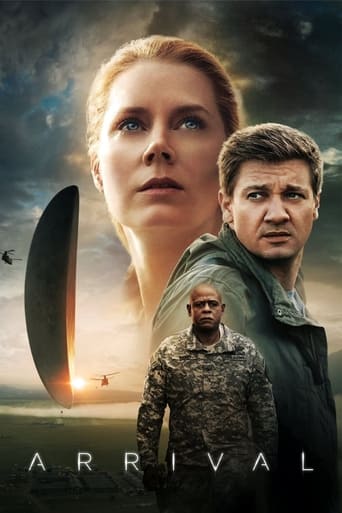
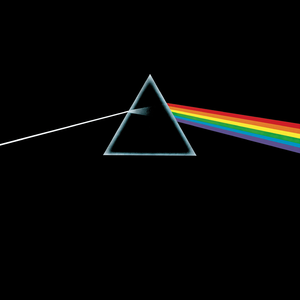


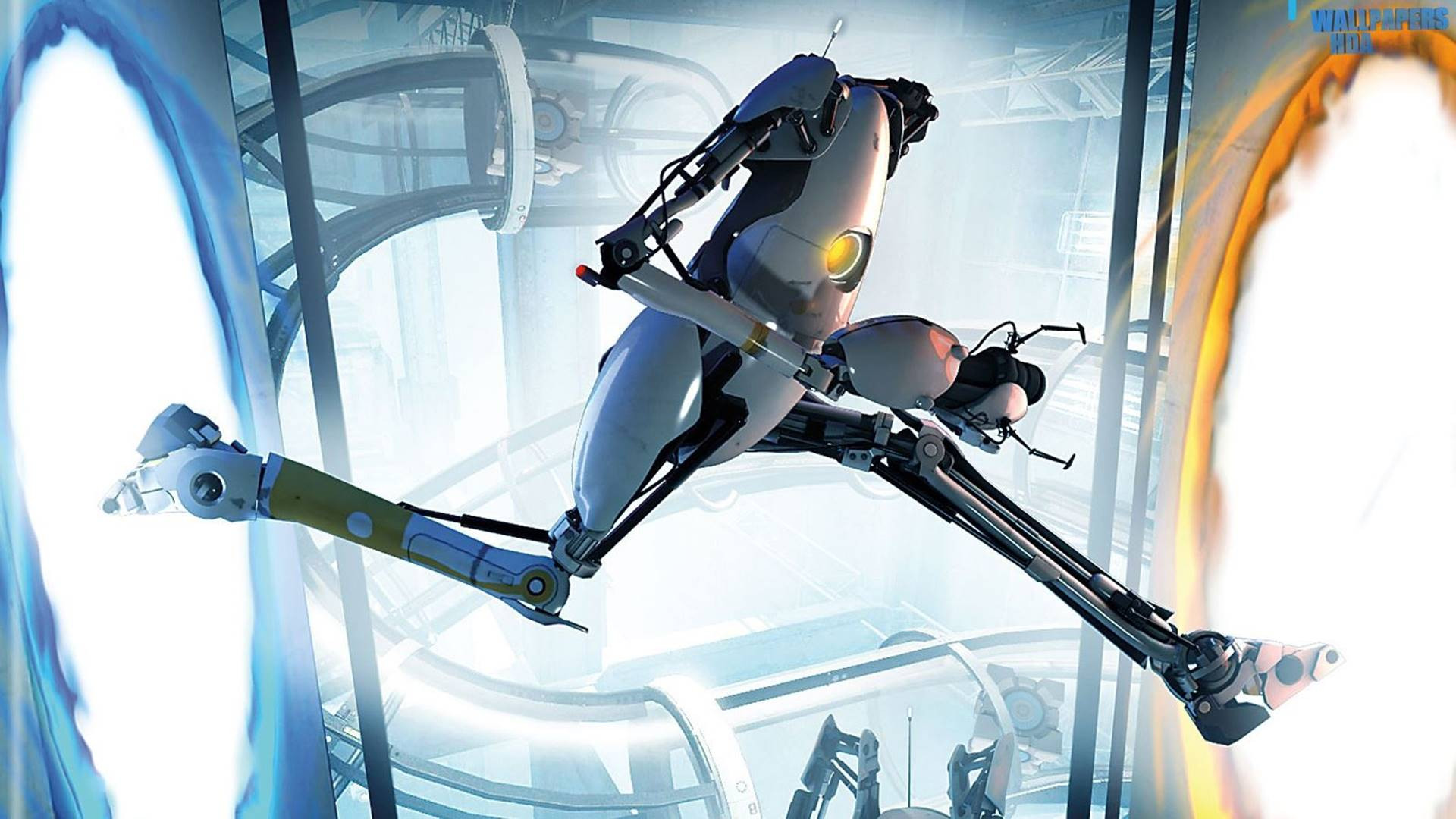
Arrival
The Dark Side of the Moon
Cien años de soledad
Istanbul
Portal 2
Mercury 2Mercury 2

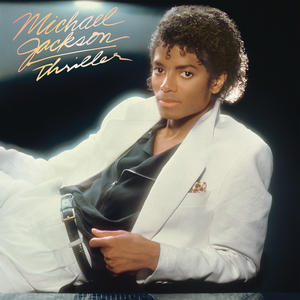


The Shawshank Redemption
Thriller
Pride and Prejudice
Tokyo
Minecraft
Price and specs
Not enough votes to call it. On the specs, Claude Opus 4 has the edge: bigger model tier, bigger context window, major provider backing. Mercury 2 costs 100x less per token.
| Spec | Claude Opus 4 | Mercury 2 |
|---|---|---|
| Input price | $15/M tokens | $0.25/M tokens |
| Output price | $75/M tokens | $0.75/M tokens |
| Context window | 200K tokens | 128K tokens |
| Free API (OpenRouter) | No | No |
| Released | May 2025 | Mar 2026 |
| At 10M a month | $150 | $2.50 |
Input tokens at list price. No caching, no batch discount.
Where to run it
Claude Opus 4
No hosts listed on OpenRouter.
Mercury 21 host
Per million tokens. Prices and uptime via OpenRouter, checked 13 Oct 2026.
Common questions
What is the difference between Claude Opus 4 and Mercury 2?
Claude Opus 4 is developed by Anthropic while Mercury 2 is developed by Inception. Claude Opus 4 has a 200K token context window vs Mercury 2's 128K. You can compare their actual outputs across 53 challenges on Rival to see how they differ in practice.
Which is better, Claude Opus 4 or Mercury 2?
It depends on your use case. Claude Opus 4 and Mercury 2 each have strengths in different areas. Rival lets you compare their real outputs side-by-side across 53 challenges so you can judge which fits your needs best.
How much does Claude Opus 4 cost compared to Mercury 2?
Claude Opus 4 costs $15/M input tokens and Mercury 2 costs $0.25/M input tokens. Mercury 2 is $14.75/M cheaper per input. Check their side-by-side outputs on Rival to see if the price difference is justified by quality.
How can I compare Claude Opus 4 and Mercury 2 on Rival?
This page shows a side-by-side comparison of Claude Opus 4 and Mercury 2 across shared challenges. You can vote on which model produced the better output in a blind duel. Browsing and voting are free. No account is needed to look; signing in only saves your votes and likes.
More comparisons
Against the newest arrivals
- Claude Opus 4 vs Gemini 4 ArgonLanded Oct 2026
- Mercury 2 vs Muse WonderLanded Oct 2026
- Claude Opus 4 vs GPT-4 TurboLanded Oct 2026
- Mercury 2 vs Step 5 PreviewLanded Oct 2026
- Claude Opus 4 vs Claude Haiku 5.5Landed Oct 2026
- Mercury 2 vs Ling 3.1 FlashLanded Oct 2026
- Claude Opus 4 vs Mistral Large 4Landed Oct 2026
- Mercury 2 vs GPT-6.1 SolLanded Sep 2026


Same lab, same size, long tail
- Claude Opus 4 vs Claude Sonnet 4Version compare
- Claude Opus 4 vs Claude Sonnet 5.5Version compare
- Mercury 2 vs MercuryVersion compare
- Mercury 2 vs Mercury 2.5Same lab
- Mercury 2 vs Gemini 2.0 Pro ExperimentalNew provider
- Mercury 2 vs Gemini 2.5 Flash Lite Preview 06-17New provider
- Mercury 2 vs Gemini 2.5 Flash Lite Preview 09-2025New provider
- Mercury 2 vs Gemini 2.5 Flash PreviewSame size
