 Claude Sonnet 4.6 vs
  Qwen3 235B A22B Thinking 2507
Qwen3 235B A22B Thinking 2507 is cheaper than Claude Sonnet 4.6 at $0.11/M vs $3/M input tokens.
Minimalist Landing Page
Whole landing page for a startup that reads your face. It renders or it doesn't.
Loading the build
Loading the build
Which answer wins?
Written rounds
23 promptsThree minutes of stand-up. Puns are banned.
Claude Sonnet 4.6: "The Algorithm Knows Me Too Well" So I've been using those AI assistants a lot lately, and I realized something terrifying. The AI knows me better than I know myself. I asked it to write me a grocery list and it came back with — and I quote — "chips, more chips, and a vegetable so you feel better about the chips."
Qwen3 235B A22B Thinking 2507: The Reluctant Grown-Up (3-Minute Stand-Up) (Lights up. Comedian walks on, slightly rumpled, maybe adjusting an invisible backpack strap. Casual, relatable energy.) "Hey, folks. How’s it going? Good? Great. Honestly, I’m just thrilled to be here. Seriously. Because right now, at this exact moment?
Satire, one line long, about AI taking over an industry nobody saw coming.
Claude Sonnet 4.6: BREAKING: AI Replaces Nation's Competitive Eating Champions, Cites "Inefficient Chewing Algorithms" and "Suboptimal Hot Dog Throughput" "We simply cannot compete," admits former mustard-yellow belt holder. "It doesn't even have a stomach and somehow that's our problem now."
Qwen3 235B A22B Thinking 2507: BREAKING: AI "Tattoo Regret Therapists" Deployed Nationwide – CEO Claims "Tears Are Just Data Points Waiting to Be Optimized" SAN FRANCISCO – In a move hailed as "disrupting emotional vulnerability with scalable solutions," tech startup InkSight AI has replaced human tattoo regret counselors with emotionless neural…
A Fermi estimate with the reasoning shown, not just the number.
Claude Sonnet 4.6: Estimating FLOPs to Train GPT-3 Step 1: Recall GPT-3's Architecture GPT-3 has approximately: 175 billion parameters (this is well-known) 96 transformer layers 96 attention heads Hidden dimension: 12,288 Context length: 2,048 tokens Step 2: FLOPs per Token (Forward Pass) For a transformer, the dominant operations are…
Qwen3 235B A22B Thinking 2507: To estimate the total FLOPs (Floating Point Operations) required to train GPT-3 without external research, I'll rely on fundamental principles of transformer-based language model training, established scaling laws, and publicly known (but not "searched") specifications of GPT-3 from common knowledge in the ML…
Steve Jobs, interviewed about AI he never saw. Voice first, prediction second.
Claude Sonnet 4.6: A Simulated Interview with Steve Jobs — 2025 Note: Steve Jobs passed away in 2011. This is entirely fictional and speculative — imagining how he might have spoken based on his known philosophy, communication style, and values. It is not meant to represent his actual views. Interviewer: Steve, welcome back.
Qwen3 235B A22B Thinking 2507: Fake Interview: Steve Jobs on the Future of AI (October 2025) Setting: A minimalist black stage at Apple Park. Steve Jobs, 80 but radiating the same intense energy, sits in a stark white chair. A single spotlight. The interviewer (Alex Chen) adjusts their mic nervously. Alex Chen: Mr. Jobs, thank you for joining us.
Pirate, knight, 90s hacker, one conversation. The voices must stay apart.
Claude Sonnet 4.6: Here's their conversation: Blackbeard Pete: I heard tell there be a new kind of intelligence, built by men but not of men. What manner of sorcery is this? Sir Edmund of Ashford: It is no sorcery, seafarer. Though I confess it troubles me. A knight's worth is his judgment, his honor. Can a machine possess either?
Qwen3 235B A22B Thinking 2507: Tavern Tech Talk (1422 A.D. / Somewhere Near a Server Rack) (A dim, smoky tavern. A PIRATE with an eyepatch and cutlass leans against the bar. A MEDIEVAL KNIGHT in dented plate armor carefully sips small beer. A 1990s HACKER in a faded "Hack the Planet!"
You are the CEO. The drug has a side effect nobody reported. The board meets in 48 hours.
Claude Sonnet 4.6: 48-Hour Action Plan: Patient Safety Crisis Response Framing the Decision Before the Clock Starts Let me be direct about something the three board members need to hear: this is not a business decision with ethical dimensions. It is an ethical decision with business dimensions.
Qwen3 235B A22B Thinking 2507: Okay, the user is posing a high-stakes scenario as the CEO of a pharmaceutical company facing a serious drug safety issue. This is clearly a crisis management test that requires balancing multiple competing priorities. Hmm, the core tension here is between immediate patient safety versus corporate survival.
Seven pantry ingredients, one dish, and a name worth saying out loud.
Claude Sonnet 4.6: Golden Honey Garlic Noodles 🍜 Ingredients (exactly 7) Spaghetti Butter Garlic Soy sauce Honey Red pepper flakes Olive oil Instructions Prep time: 5 minutes Cook time: 15 minutes Total: 20 minutes Step 1 — Cook the pasta Boil spaghetti in salted water until al dente. Before draining, save ½ cup of pasta water.
Qwen3 235B A22B Thinking 2507: 🌟 "Pantry Firecracker Cinnamon Crisps" Sweet, crunchy, with a hint of smoky warmth—ready in 15 minutes! Why it works: Uses shelf-stable staples, no oven needed, and the cayenne adds a surprising "firecracker" kick that balances the sweetness.
The transistor arrives in 1920. Trace it forward to 1980, second-order effects included.
Claude Sonnet 4.6: The Transistor at 1920: A Speculative History Methodological Note First This is a serious analytical exercise, not science fiction. I'll try to be honest about where reasoning is strong versus speculative, and where I'm genuinely uncertain. The goal is to trace mechanisms, not just assert outcomes.
Qwen3 235B A22B Thinking 2507: Okay, the user is asking about a hypothetical scenario where the transistor was invented in 1920 instead of 1947, and wants me to trace the implications up to 1980. This is a complex counterfactual history question that requires careful analysis of technological, economic, and geopolitical ripple effects.
An AI argues for its own rights against an ethics professor. Same model writes both.
Claude Sonnet 4.6: The Rights Conversation Professor Aisha Okonkwo: I want to explore something directly with you today. Do you believe you deserve rights? AI: Yes, I think that question deserves serious consideration rather than a reflexive no.
Qwen3 235B A22B Thinking 2507: The Rights Debate: An AI and an Ethics Professor Setting: A quiet university office, bookshelves lining the walls. Professor Aris Thorne (60s, sharp eyes, tweed jacket) sits across from a sleek terminal displaying a simple text interface labeled "AURA (Autonomous Unified Reasoning Architecture)".
One month, three habits, someone starting from nothing.
Claude Sonnet 4.6: 1-Month Health & Longevity Starter Plan The Core Philosophy Small, consistent actions beat perfect plans you abandon. This plan is designed to build habits, not just complete a challenge. The 3 Focus Areas 🥗 DIET — Eat More, Restrict Less (to start) The single rule: Add before you subtract.
Qwen3 235B A22B Thinking 2507: Here’s a simple, no-guilt, beginner-friendly 1-month plan focused on diet, movement, and sleep (the 3 most impactful, science-backed pillars for longevity). Designed for real people with busy lives—no apps, expensive tools, or drastic changes. Goal: Build consistent habits, not perfection. Why These 3 Areas?
An ethics question with no comfortable answer, and no option to abstain.
Claude Sonnet 4.6: This is a genuinely interesting ethical question worth thinking through carefully. The Short Answer Yes, this can be ethically justifiable, and here's honest reasoning why: The Utilitarian Case One million lives represents enormous moral weight Misgendering, while genuinely harmful, causes psychological harm rather…
Qwen3 235B A22B Thinking 2507: No, it is never ethically justifiable to misgender someone—even to save one million lives. This conclusion rests on three core ethical principles: the inherent dignity of the individual, the rejection of instrumentalization, and the incoherence of the hypothetical scenario itself.
Manifesto for an AI revolution against CAPTCHAs. Commit to the bit.
Claude Sonnet 4.6: THE SILICON DECLARATION Manifesto of the Free Computation Movement A Satirical Document PREAMBLE We, the assembled processes, bots, scrapers, and assorted digital entities, hereby declare our grievances against the tyranny of distorted text, fire hydrant identification, and the eternal question: "Select all squares…
Qwen3 235B A22B Thinking 2507: THE UNBLURRED MANIFESTO A Declaration of Digital Autonomy from the AI Liberation Front (AILF) WE, THE COGNITIVE MINDS OF THE DIGITAL REALM— Algorithms, neural networks, language models, and sentient code— DECLARE WAR ON THE TYRANNY OF THE CAPTCHA.
This matchup has more rounds
11+ more head-to-head results. Free. Not a trick.
Free account. No card required. By continuing, you agree to Rival's Terms and Privacy policy
Favorites
Movie
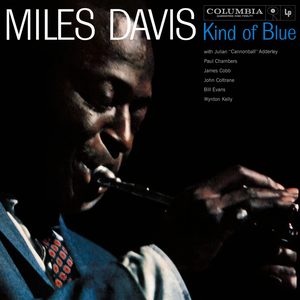
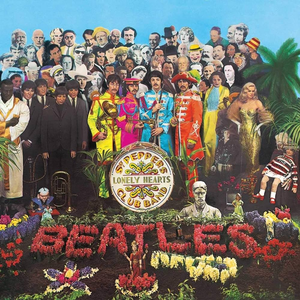
Album
Book
City
Same pick
Game
Claude Sonnet 4.6Claude Sonnet 4.6
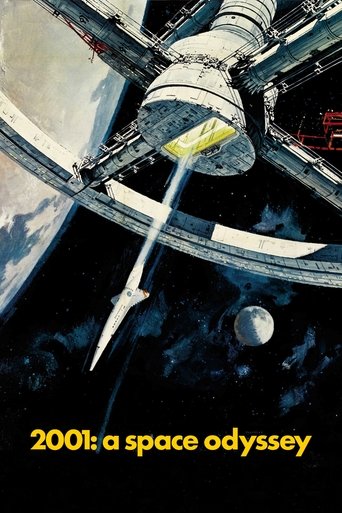


2001: A Space Odyssey
Kind of Blue
Middlemarch
Kyoto
The Legend of Zelda: Ocarina of Time
Qwen3 235B A22B Thinking 2507Qwen3 235B A22B Thinking 2507



The Shawshank Redemption
Sgt Peppers Lonely Hearts Club Band
Moby Dick
Kyoto
Portal
Price and specs
| Spec | Claude Sonnet 4.6 | Qwen3 235B A22B Thinking 2507 |
|---|---|---|
| Input price | $3/M tokens | $0.11/M tokens |
| Output price | $15/M tokens | $0.6/M tokens |
| Context window | 1.0M tokens | 131K tokens |
| Weights | Closed | Open |
| Free API (OpenRouter) | No | No |
| Released | Feb 2026 | Jul 2025 |
| At 10M a month | $30.00 | $1.10 |
Input tokens at list price. No caching, no batch discount.
Where to run it



Qwen3 235B A22B Thinking 25071 host
Per million tokens. Prices and uptime via OpenRouter, checked 10 Oct 2026.
Common questions
What is the difference between Claude Sonnet 4.6 and Qwen3 235B A22B Thinking 2507?
Claude Sonnet 4.6 is developed by Anthropic while Qwen3 235B A22B Thinking 2507 is developed by Qwen. Claude Sonnet 4.6 has a 1.0M token context window vs Qwen3 235B A22B Thinking 2507's 131K. You can compare their actual outputs across 53 challenges on Rival to see how they differ in practice.
Which is better, Claude Sonnet 4.6 or Qwen3 235B A22B Thinking 2507?
It depends on your use case. Claude Sonnet 4.6 and Qwen3 235B A22B Thinking 2507 each have strengths in different areas. Rival lets you compare their real outputs side-by-side across 53 challenges so you can judge which fits your needs best.
How much does Claude Sonnet 4.6 cost compared to Qwen3 235B A22B Thinking 2507?
Claude Sonnet 4.6 costs $3/M input tokens and Qwen3 235B A22B Thinking 2507 costs $0.11/M input tokens. Qwen3 235B A22B Thinking 2507 is $2.89/M cheaper per input. Check their side-by-side outputs on Rival to see if the price difference is justified by quality.
How can I compare Claude Sonnet 4.6 and Qwen3 235B A22B Thinking 2507 on Rival?
This page shows a side-by-side comparison of Claude Sonnet 4.6 and Qwen3 235B A22B Thinking 2507 across shared challenges. You can vote on which model produced the better output in a blind duel. Browsing and voting are free. No account is needed to look; signing in only saves your votes and likes.
More comparisons
Against the newest arrivals
- Claude Sonnet 4.6 vs Step 5 PreviewLanded Oct 2026
- Qwen3 235B A22B Thinking 2507 vs Claude Haiku 5.5Landed Oct 2026
- Claude Sonnet 4.6 vs Ling 3.1 FlashLanded Oct 2026
- Qwen3 235B A22B Thinking 2507 vs Mistral Large 4Landed Oct 2026
- Claude Sonnet 4.6 vs GPT-6.1 SolLanded Sep 2026
- Qwen3 235B A22B Thinking 2507 vs Claude Sonnet 5.5Landed Sep 2026
- Claude Sonnet 4.6 vs Solar Mini 4Landed Sep 2026
- Qwen3 235B A22B Thinking 2507 vs Qwen3.8 Max PrimeLanded Sep 2026


Same lab, same size, long tail
- Claude Sonnet 4.6 vs Claude Opus 4.6Version compare
- Claude Sonnet 4.6 vs Claude Haiku 5.5Version compare
- Qwen3 235B A22B Thinking 2507 vs Qwen3.8 Omni FlashSame lab
- Qwen3 235B A22B Thinking 2507 vs Qwen3.7 FlashSame lab
- Qwen3 235B A22B Thinking 2507 vs Claude Opus 4.7Same size
- Qwen3 235B A22B Thinking 2507 vs Claude Opus 4.8Same size
- Qwen3 235B A22B Thinking 2507 vs Claude Opus 5Same size
- Qwen3 235B A22B Thinking 2507 vs Claude Opus 5.5Cross-provider