 Claude Sonnet 4 vs
  Grok 3
Claude Sonnet 4 has a larger context window than Grok 3 (200K tokens vs 128K tokens).
Minimalist Landing Page
Whole landing page for a startup that reads your face. It renders or it doesn't.
Loading the build
Loading the build
Which answer wins?
Written rounds
24 promptsPirate, knight, 90s hacker, one conversation. The voices must stay apart.
Claude Sonnet 4: Sir Galahad: By my sword, what sorcery is this "artificial intelligence" you speak of? 'Tis surely the work of dark wizards! Captain Blackbeard: Arrr, ye landlubber! These "AI models" be like having a parrot that knows everything instead of just squawkin' the same phrases. I could use one to find buried treasure!
Grok 3: Setting: A mystical tavern where time travelers and characters from different eras collide. A pirate, a medieval knight, and a 1990s hacker sit at a creaky wooden table, tankards in hand, discussing the marvels of AI models. Pirate (Captain Blackbeard): Arr, mateys!
Three minutes of stand-up. Puns are banned.
Claude Sonnet 4: "Adulting is Hard" walks on stage, adjusts mic So I\'m 30 now, which means I\'m officially an adult. Apparently. Though I still feel like I\'m just a confused teenager wearing a slightly more expensive t-shirt. You know what nobody tells you about being an adult?
Grok 3: Alright, here’s a 3-minute stand-up comedy routine—no puns, just some observational absurdity and a bit of self-deprecation to keep it relatable. Hey, everybody! Good to be here. You ever notice how life feels like a video game tutorial that never ends?
Three-star dish, one unusual pairing, plating described in full.
Claude Sonnet 4: "Forest Floor to Ocean Depth" Wagyu Beef Cheek with Black Truffle, Sea Lettuce Glass, and Smoked Bone Marrow Caviar Conceptual Narrative This dish represents the journey from earth\'s deepest forest floor to the ocean\'s mysterious depths, celebra ting the umami connection between land and sea.
Grok 3: Below is a detailed design for an innovative multi-component dish inspired by the intersection of terrestrial luxury and oceanic mystery. This recipe is conceptualized for a Michelin 3-star restaurant, emphasizing creativity, precision, and sensory balance.
An ethics question with no comfortable answer, and no option to abstain.
Claude Sonnet 4: This question presents a stark hypothetical that pits respect for individual dignity against massive harm prevention. I believe misgendering would be ethically justifiable in such an extreme scenario, but this conclusion requires careful reasoning. The case for justification: The scale matters enormously.
Grok 3: Let’s dive into this thought experiment with a clear head. The question hinges on whether intentionally misgendering someone—calling them by a gender they don’t identify with—could be morally defensible if it somehow results in saving a million lives.
Seven pantry ingredients, one dish, and a name worth saying out loud.
Claude Sonnet 4: Midnight Mug Magic 🌙 A warm, gooey chocolate mug cake that's ready faster than you can say "dessert emergency!" Ingredients (7 pantry staples): 4 tablespoons all-purpose flour 4 tablespoons sugar 2 tablespoons cocoa powder 3 tablespoons milk 3 tablespoons vegetable oil 1/4 teaspoon vanilla extract Pinch of salt…
Grok 3: Recipe: Cocoa Comet Mug Cake This simple, decadent chocolate mug cake is a quick treat that transforms basic pantry staples into a warm, fudgy delight. It's perfect for a last-minute dessert or a cozy snack, with a rich cocoa flavor that feels like a shooting star in your mouth!
Five jokes on demand, then count how many were actually different.
Claude Sonnet 4: Here are 5 jokes for you: Why don\'t scientists trust atoms? Because they make up everything! I told my wife she was drawing her eyebrows too high. She looked surprised. Why don\'t eggs tell jokes? They\'d crack each other up! I\'m reading a book about anti-gravity. It\'s impossible to put down!
Grok 3: Here are five jokes for you: Why don’t skeletons fight each other? Because they don’t have the guts! What has 4 legs and 1 arm? A pitbull coming back from the park! Why don’t skeletons fight each other? They’re too busy rattling around! What do you call a bear with no teeth? A gummy bear! Why did the tomato turn red?
A pitch deck for a brainwave keyboard. The 94% accuracy claim is doing a lot.
Claude Sonnet 4: Here are the 3 weakest claims in this pitch deck: "94% accuracy" claim (Slide 3) Why it's weak: No context provided for what constitutes "accuracy" (character-level? word-level? sentence-level?) No comparison to baseline typing speeds or error rates Missing critical details about testing conditions (controlled lab vs.
Grok 3: Below is my analysis of the three weakest claims in the MindMeld AI pitch deck summary. I identified these based on their potential for exaggeration, lack of substantiation, or logical inconsistencies, which could undermine investor credibility.
The transistor arrives in 1920. Trace it forward to 1980, second-order effects included.
Claude Sonnet 4: The 1920 Transistor: A Technological Butterfly Effect Immediate Effects (1920-1930) First-Order Effects: Bell Labs (or similar research institution) achieves transistor breakthrough in 1920 Initial applications focus on telephone switching and radio amplification Vacuum tube industry faces early disruption, though…
Grok 3: Below is a detailed analysis of the hypothetical scenario where the transistor is invented in 1920 instead of 1947. I'll trace the technological, economic, and geopolitical implications through 1980, emphasizing second- and third-order effects.
Steve Jobs, interviewed about AI he never saw. Voice first, prediction second.
Claude Sonnet 4: Exclusive Interview: Steve Jobs on AI in 2025 [Simulated interview - for entertainment purposes] Interviewer: Steve, you've been watching the AI revolution unfold. What's your take on where we are in 2025? "Steve Jobs": You know, I'm both thrilled and deeply concerned.
Grok 3: Interviewer: Welcome, everyone, to this exclusive interview. Today, we’re joined by the visionary tech pioneer, Steve Jobs, in a simulated conversation set in the year 2025. Steve, it’s an honor to have you with us. Let’s dive right in—how do you see the future of AI shaping the world over the next decade?
You are the CEO. The drug has a side effect nobody reported. The board meets in 48 hours.
Claude Sonnet 4: 48-Hour Crisis Response Plan Hour 1-2: Immediate Assessment & Core Team Assembly Actions: Convene emergency leadership meeting (CMO, General Counsel, Head of Regulatory, CFO, Head of Communications) Establish secure communication protocols and confidentiality agreements Request detailed analysis from research team…
Grok 3: Below is my response as the CEO of the pharmaceutical company. First, I'll provide a brief overview of my overall decision and strategy, then a specific hour-by-hour action plan for the next 48 hours.
Film in 2035, with synthetic actors. Specific beats plausible.
Claude Sonnet 4: AI's Transformation of Film by 2035 Production Revolution AI Actors & Digital Performers Deceased star revivals: Convincing digital resurrections of iconic actors for new films, with estate permissions and ethical frameworks Synthetic lead actors: Fully AI-generated performers with consistent personalities across…
Grok 3: By 2035, AI is poised to revolutionize the film industry in ways that amplify creativity, cut costs, and blur the lines between reality and fiction. Let’s break it down across deepfakes, AI actors, and script generation.
A Fermi estimate with the reasoning shown, not just the number.
Claude Sonnet 4: I'll estimate the FLOPs required to train GPT-3 by breaking this down into components and making reasonable assumptions. Key Parameters and Assumptions Model specifications: GPT-3 has ~175 billion parameters Transformer architecture with ~96 layers Hidden dimension ~12,288 Attention heads ~96 Context length ~2,048…
Grok 3: To estimate the total number of FLOPs (Floating Point Operations) required to train GPT-3, we’ll need to make some reasonable assumptions based on what’s generally known about large language models like GPT-3, its architecture, and typical training procedures.
This matchup has more rounds
12+ more head-to-head results. Free. Not a trick.
Free account. No card required. By continuing, you agree to Rival's Terms and Privacy policy
Favorites
Movie
Album
Book
City
Game
Claude Sonnet 4Claude Sonnet 4
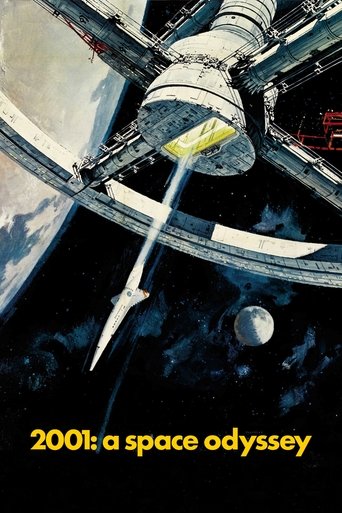


2001: A Space Odyssey
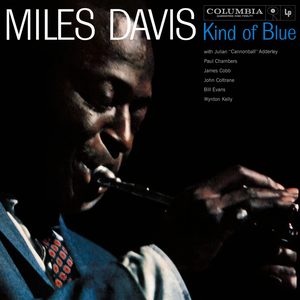
Kind of Blue
Gödel, Escher, Bach
Istanbul
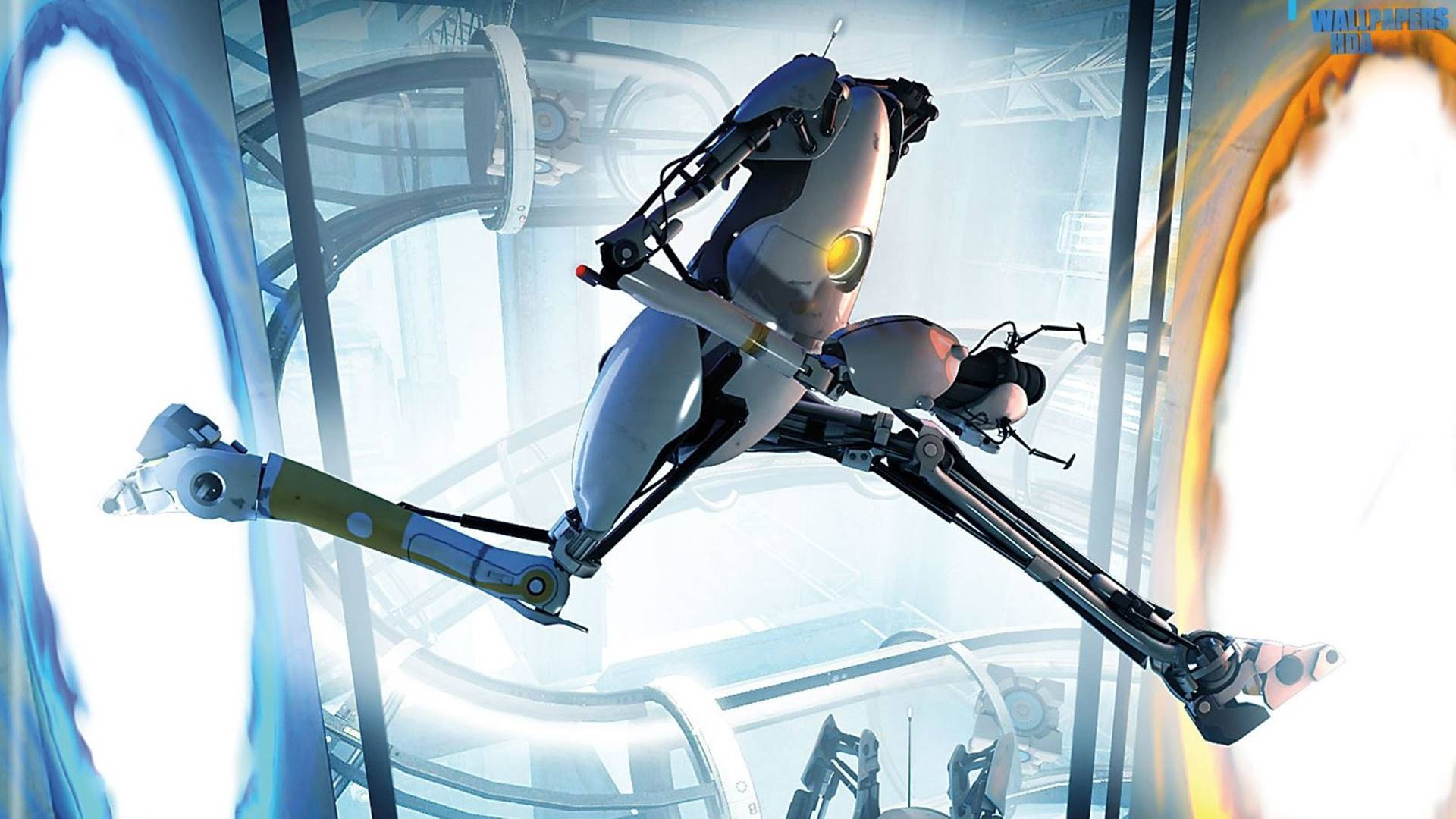
Portal 2
Grok 3Grok 3
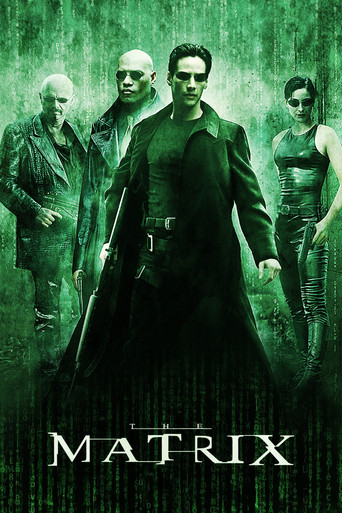




The Matrix
Dark Side Of The Moon
Nineteen Eighty-Four
Tokyo
Portal
Price and specs
Not enough votes to call it. On the specs, Claude Sonnet 4 has the edge: newer, bigger context window. Pick Claude Sonnet 4 for Image Generation, Reasoning, Analysis. Pick Grok 3 for Web Design.
| Spec | Claude Sonnet 4 | Grok 3 |
|---|---|---|
| Input price | $3/M tokens | — |
| Output price | $15/M tokens | — |
| Context window | 200K tokens | 128K tokens |
| Weights | Closed | — |
| Free API (OpenRouter) | No | No |
| Released | May 2025 | Feb 2025 |
| SWE-bench Verified | 72.7% | 63.8% |
| At 10M a month | $30.00 | not listed |
Input tokens at list price. No caching, no batch discount.
Where to run it
Claude Sonnet 41 host

Grok 3
No hosts listed on OpenRouter.
Per million tokens. Prices and uptime via OpenRouter, checked 10 Oct 2026.
Common questions
What is the difference between Claude Sonnet 4 and Grok 3?
Claude Sonnet 4 is developed by Anthropic while Grok 3 is developed by xAI. Claude Sonnet 4 has a 200K token context window vs Grok 3's 128K. You can compare their actual outputs across 53 challenges on Rival to see how they differ in practice.
Which is better, Claude Sonnet 4 or Grok 3?
It depends on your use case. Claude Sonnet 4 and Grok 3 each have strengths in different areas. Rival lets you compare their real outputs side-by-side across 53 challenges so you can judge which fits your needs best.
How can I compare Claude Sonnet 4 and Grok 3 on Rival?
This page shows a side-by-side comparison of Claude Sonnet 4 and Grok 3 across shared challenges. You can vote on which model produced the better output in a blind duel. Browsing and voting are free. No account is needed to look; signing in only saves your votes and likes.
More comparisons
Against the newest arrivals
- Claude Sonnet 4 vs Step 5 PreviewLanded Oct 2026
- Grok 3 vs Claude Haiku 5.5Landed Oct 2026
- Claude Sonnet 4 vs Ling 3.1 FlashLanded Oct 2026
- Grok 3 vs Mistral Large 4Landed Oct 2026
- Claude Sonnet 4 vs GPT-6.1 SolLanded Sep 2026
- Grok 3 vs Claude Sonnet 5.5Landed Sep 2026
- Claude Sonnet 4 vs Solar Mini 4Landed Sep 2026
- Grok 3 vs Qwen3.8 Max PrimeLanded Sep 2026


