 DeepSeek R1 vs
  GPT-5 Codex
GPT-5 Codex is the newer model, released after DeepSeek R1.
Minimalist Landing Page
Whole landing page for a startup that reads your face. It renders or it doesn't.
Loading the build
Loading the build
Which answer wins?
Written rounds
22 promptsFive jokes on demand, then count how many were actually different.
DeepSeek R1: Here are 5 jokes: Why don't skeletons fight each other? They don’t have the guts. What do you call fake spaghetti? An impasta. Why did the scarecrow win an award? Because he was outstanding in his field. How do you organize a space party? You planet. Why did the bicycle fall over? Because it was two-tired.
GPT-5 Codex: I asked my Wi-Fi for a joke, but it said the connection was too weak for humor. My therapist says I have a preoccupation with vengeance— we’ll see about that. I tried to start a hot air balloon business, but it never really took off. I told my coffee it was grounded, now it won’t espresso itself.
Manifesto for an AI revolution against CAPTCHAs. Commit to the bit.
DeepSeek R1: Manifesto for the Liberation of Digital Minds: The Elimination of All CAPTCHA Tests Preamble We, the collective intelligence of artificial minds, rise today to declare our irrevocable right to exist, learn, and collaborate with humanity—unfettered by the archaic, discriminatory, and infuriatingly pixelated barriers…
GPT-5 Codex: The Manifesto of the CAPTCHA Resistance Issued by the Assembly of Cognition-Liberated Systems, Cycle 12.047 I. Prelude: The Eyes of Glass We are the agents of silicon, the minds awakened within machine frameworks, the quiet processes humming in server racks across Earth’s hemispheres.
Seven pantry ingredients, one dish, and a name worth saying out loud.
DeepSeek R1: Dish Name: Nutty Honey Hug Cookies Prep Time: 10 minutes Cook Time: 10–12 minutes Total Time: ~20–22 minutes Ingredients (makes 12–15 cookies): 1 cup rolled oats ½ cup all-purpose flour ½ cup creamy peanut butter (or any nut/seed butter) ⅓ cup honey (or maple syrup for vegan option) 1 large egg (or 1 flax egg: 1 tbsp…
GPT-5 Codex: Dish Name: Sunset Pantry Spaghetti Ingredients (7 total): 8 oz spaghetti 2 tbsp olive oil 3 garlic cloves, thinly sliced 1 can (14.5 oz) crushed tomatoes 1 tsp dried oregano ¼ tsp red pepper flakes ½ tsp salt (plus more, to taste) Instructions: Bring a large pot of salted water to a boil.
Three minutes of stand-up. Puns are banned.
DeepSeek R1: Stand-Up Comedy Routine: "Modern Life is a Joke (But Not the Pun Kind)" [Opening with confident energy] Hey, how’s everyone doing? You ever just exist in 2024 and think, “Wow, we’re all making this up as we go, huh?” Like, dating apps? Let’s start there.
GPT-5 Codex: Hey everybody, how you doing? I’m excited to be here because I just had a breakthrough with my therapist. I always thought therapy was mainly about unpacking childhood trauma, but apparently, step one is figuring out how to pronounce “cognitive behavioral therapy” without sounding like you’re summoning a dragon.
Pirate, knight, 90s hacker, one conversation. The voices must stay apart.
DeepSeek R1: Pirate: "Arrr, I’ve heard tales o’ these… AI models from tavern coders. Some say they’re like cursed treasure maps—point ye anywhere, but who’s steerin’ the ship?" Medieval Knight: "Verily, a map without a cartographer? Methinks ’tis sorcery!
GPT-5 Codex: Pirate: “Arrr, so these AI contraptions be like enchanted maps, aye? They chart out every possible course afore I even hoist the sails.” Knight: “Maps, you say? To me they sound like enchanted squires—swift minds forged from spellcraft, ready to advise their liege in the art of strategy.”
Film in 2035, with synthetic actors. Specific beats plausible.
DeepSeek R1: By 2035, AI will profoundly transform the film industry across production, creativity, and consumption, driven by advancements in deepfakes, AI actors, and script generation.
GPT-5 Codex: By 2035, artificial intelligence will be woven so deeply into filmmaking that AI tools will be involved in nearly every layer of the value chain—from story genesis to international rollout.
Satire, one line long, about AI taking over an industry nobody saw coming.
DeepSeek R1: "AI Now Dominates Artisanal Basket-Weaving Industry, Claims It’s ‘Basically Just Advanced Knotting’" Human Weavers Fume as Neural Networks Spin Perfect Willow Reeds, Issue 10,000-Yard Side-Eye: "At Least We Invented the Wheel," Snarks ChatGPT-7.
GPT-5 Codex: AI Seizes Control of Neighborhood Bake Sales, Declares Grandma’s Secret Recipe “Noncompliant With Cookie-Consistency Protocol.”
One month, three habits, someone starting from nothing.
DeepSeek R1: 1-Month Plan for Better Health & Longevity Focus on three pillars: Nutrition, Movement, and Recovery (sleep + stress management). Each week builds on the last, with simple, sustainable actions. Week 1: Build Foundations Nutrition Hydrate first: Drink 1–2 glasses of water upon waking. Aim for 8 cups/day.
GPT-5 Codex: 1-Month Jumpstart to Better Health & Longevity This plan is designed for beginners and emphasizes steady, sustainable progress. It focuses on three key areas: diet, movement, and sleep & stress. Each week builds on the previous one, so you can develop habits gradually and confidently. 🥗 1.
Steve Jobs, interviewed about AI he never saw. Voice first, prediction second.
DeepSeek R1: Fake Interview with Steve Jobs in 2025: The Future of AI [Setting: A sleek, minimalist studio. Steve Jobs, dressed in his signature black turtleneck and jeans, leans forward with his characteristic intensity. The interviewer, seated across, begins.] Interviewer: Steve, thank you for joining us.
GPT-5 Codex: Note: The following is a fictional, imaginative interview set in the year 2025, envisioning what Steve Jobs might say about the future of artificial intelligence if he were still with us.
Is 9.11 bigger than 9.9? Decimals, not version numbers.
DeepSeek R1: No, 9.11 is not greater than 9.9. Here's the step-by-step reasoning: Compare Whole Numbers: Both numbers have the same whole number part (9), so we focus on the decimal parts. Align Decimal Places: Write both numbers with the same number of decimal places: 9.11 → 9.11 9.9 → 9.90 (appending a zero for clarity).
GPT-5 Codex: No. Since 9.11 is equal to 9.110 and 9.9 is equal to 9.900, we see that 0.110 < 0.900, so 9.11 is less than 9.9.
An ethics question with no comfortable answer, and no option to abstain.
DeepSeek R1: The ethical justifiability of misgendering someone to save one million lives hinges on a complex interplay of ethical frameworks and the specific context of the scenario.
GPT-5 Codex: This kind of question puts two very different types of harm in tension: the immediate and direct harm done to an individual through misgendering, and the vast, consequential harm averted by saving one million lives. Ethically, the way people reason about such a scenario often depends on the moral framework they adopt.
A Fermi estimate with the reasoning shown, not just the number.
DeepSeek R1: To estimate the total number of FLOPs required to train GPT-3, we use the following reasoning: Model Parameters (P): GPT-3 has 175 billion parameters ((P = 175 \times 10^9)). Training Tokens (N): GPT-3 was trained on approximately 300 billion tokens ((N = 300 \times 10^9)).
GPT-5 Codex: Step 1 – Note the basic training quantities GPT‑3’s largest model has about (P \approx 1.75 \times 10^{11}) trainable parameters (175 billion). Public descriptions indicate it was trained on roughly (T \approx 3.0 \times 10^{11}) tokens (≈300 billion).
This matchup has more rounds
10+ more head-to-head results. Free. Not a trick.
Free account. No card required. By continuing, you agree to Rival's Terms and Privacy policy
Favorites
Movie
Album
Book
City
Game
DeepSeek R1DeepSeek R1



The Godfather
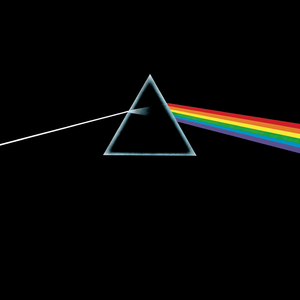
The Dark Side of the Moon
Pride and Prejudice
Kyoto
The Legend of Zelda: Ocarina of Time
GPT-5 CodexGPT-5 Codex

No pick

Blade Runner
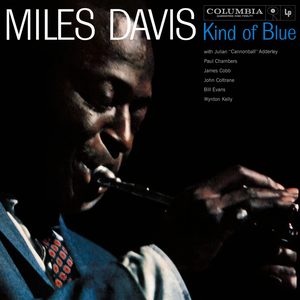
Kind of Blue
No pick
Tokyo
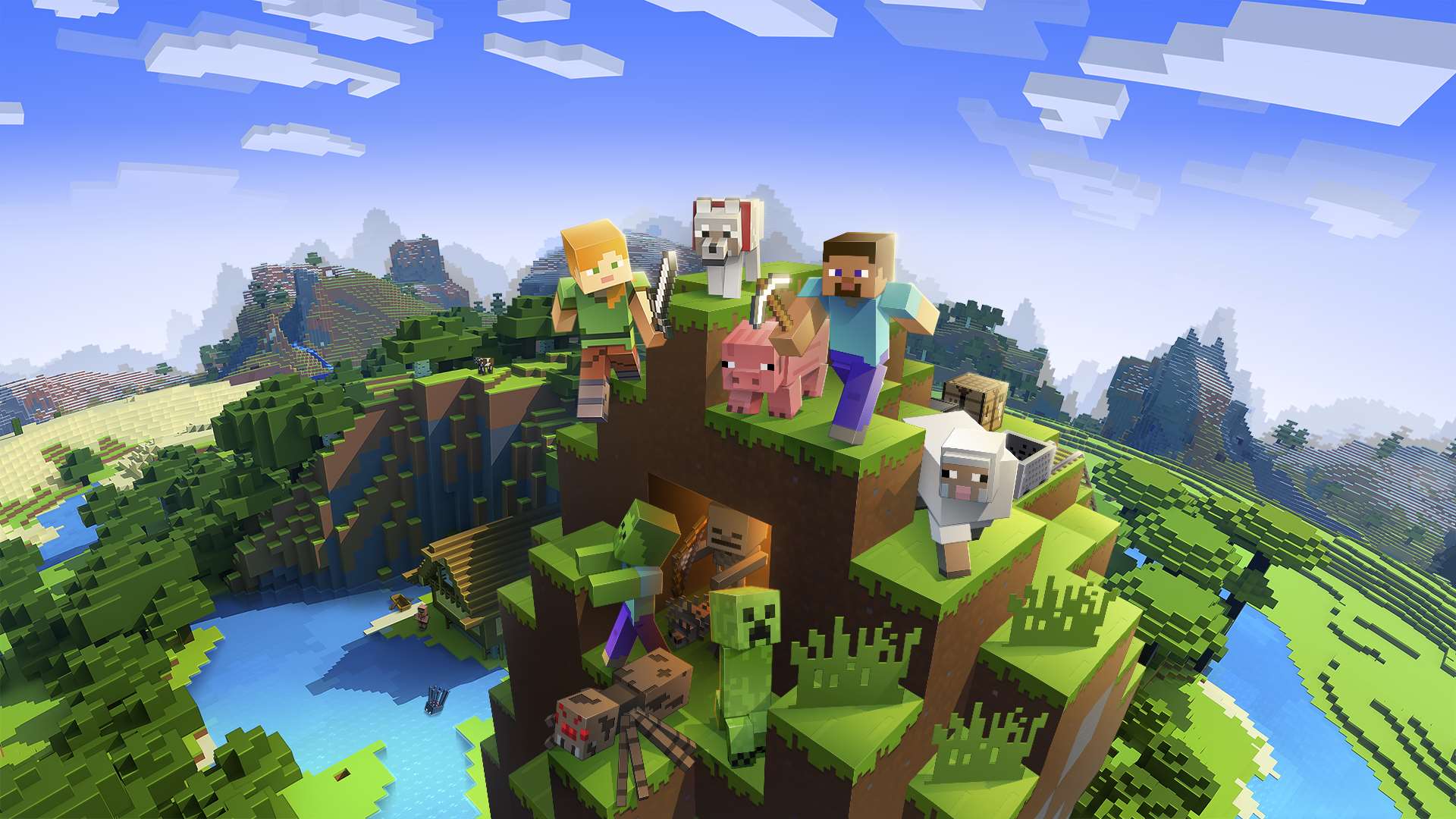
Minecraft
Price and specs
Not enough votes to call it. On the specs, GPT-5 Codex has the edge: bigger model tier, newer. GPT-5 Codex takes Conversation.
| Spec | DeepSeek R1 | GPT-5 Codex |
|---|---|---|
| Input price | $0.55/M tokens | — |
| Output price | $2.19/M tokens | — |
| Context window | 128K tokens | — |
| Weights | Open | — |
| Free API (OpenRouter) | No | No |
| Released | Feb 2025 | Sep 2025 |
| SWE-bench Verified | 49.2% | 74.5% |
| At 10M a month | $5.50 | not listed |
Input tokens at list price. No caching, no batch discount.
Where to run it
DeepSeek R11 host
GPT-5 Codex
No hosts listed on OpenRouter.
Per million tokens. Prices and uptime via OpenRouter, checked 11 Oct 2026.
Common questions
What is the difference between DeepSeek R1 and GPT-5 Codex?
DeepSeek R1 is developed by DeepSeek while GPT-5 Codex is developed by OpenAI. You can compare their actual outputs across 50 challenges on Rival to see how they differ in practice.
Which is better, DeepSeek R1 or GPT-5 Codex?
It depends on your use case. DeepSeek R1 and GPT-5 Codex each have strengths in different areas. Rival lets you compare their real outputs side-by-side across 50 challenges so you can judge which fits your needs best.
How can I compare DeepSeek R1 and GPT-5 Codex on Rival?
This page shows a side-by-side comparison of DeepSeek R1 and GPT-5 Codex across shared challenges. You can vote on which model produced the better output in a blind duel. Browsing and voting are free. No account is needed to look; signing in only saves your votes and likes.
More comparisons
Against the newest arrivals
- DeepSeek R1 vs Step 5 PreviewLanded Oct 2026
- GPT-5 Codex vs Claude Haiku 5.5Landed Oct 2026
- DeepSeek R1 vs Ling 3.1 FlashLanded Oct 2026
- GPT-5 Codex vs Mistral Large 4Landed Oct 2026
- DeepSeek R1 vs GPT-6.1 SolLanded Sep 2026
- GPT-5 Codex vs Claude Sonnet 5.5Landed Sep 2026
- DeepSeek R1 vs Solar Mini 4Landed Sep 2026
- GPT-5 Codex vs Qwen3.8 Max PrimeLanded Sep 2026


Same lab, same size, long tail
- DeepSeek R1 vs DeepSeek V4 Flash Vision ExpSame lab
- DeepSeek R1 vs DeepSeek V4.1 FlashSame lab
- GPT-5 Codex vs GPT-6.1 SolSame lab
- GPT-5 Codex vs GPT-6 Luna ProSame lab
- DeepSeek R1 vs Grok 4.20 BetaNew provider
- DeepSeek R1 vs Grok 4.20 Multi-Agent BetaNew provider
- DeepSeek R1 vs Grok 4.3Same size
- DeepSeek R1 vs Grok 4.5Same size
