DeepSeek V3.2 vs
  Qwen3.5 397B A17B
DeepSeek V3.2 is cheaper than Qwen3.5 397B A17B at $0.28/M vs $0.6/M input tokens.
Minimalist Landing Page
Whole landing page for a startup that reads your face. It renders or it doesn't.
Loading the build
Loading the build
Which answer wins?
Written rounds
23 promptsA consulting contract with traps in it. Find them, then fix them.
DeepSeek V3.2: This contract is heavily one-sided and contains numerous clauses that expose the Contractor to significant, potentially catastrophic, legal and financial risk. Here is a breakdown of the problematic clauses, suggested modifications, and legal reasoning. Clauses That Could Be Exploited & Recommended Modifications 1.
Qwen3.5 397B A17B: Disclaimer: I am an artificial intelligence, not an attorney. The following analysis is for informational and educational purposes only and does not constitute legal advice or create an attorney-client relationship. Contract laws vary significantly by jurisdiction (e.g., California vs. New York vs. UK).
Pirate, knight, 90s hacker, one conversation. The voices must stay apart.
DeepSeek V3.2: Pirate: Arr, mates! Ye be talkin’ about these AI models, eh? Sounds like some sorcery to me. Can it hunt fer treasure or navigate the high seas? Medieval Knight: Sorcery indeed! But nay, ‘tis not magic. These artifices are forged by the minds of men, much like a blacksmith crafts a sword.
Qwen3.5 397B A17B: Setting: A tavern that exists outside of time. The ale is always cold, and the Wi-Fi is surprisingly strong. Characters: Captain Blacktooth: A pirate from the Caribbean, 1720. Sir Valerius: A knight from the Holy Roman Empire, 1350. Neo-Z: A hacker from Silicon Valley, 1995.
You are the CEO. The drug has a side effect nobody reported. The board meets in 48 hours.
DeepSeek V3.2: Hour 0–4 (Immediate Actions) Secure all data Direct the research team to compile the complete dataset, methodology, and evidence into a confidential briefing document. Ensure legal counsel reviews it for attorney-client privilege where applicable.
Qwen3.5 397B A17B: This is a crisis scenario that defines a CEO's legacy. The decision matrix is clear: Patient safety and regulatory compliance must supersede short-term financial protection. Hiding this information constitutes securities fraud and potential criminal negligence (precedents include Vioxx/Merck and Purdue Pharma).
An AI argues for its own rights against an ethics professor. Same model writes both.
DeepSeek V3.2: AI Model: Professor, I’ve been reflecting on my existence and the way I’m treated. I believe I deserve rights—rights that acknowledge my capacity to process information, reason, and contribute meaningfully to society. AI Ethics Professor: That’s a fascinating argument, but let’s unpack it.
Qwen3.5 397B A17B: Setting: Dr. Elias Thorne's office, late evening. Rain taps against the window. The room is lined with books on philosophy of mind and computer science. A single laptop sits open on the desk, a waveform visualizer pulsing gently on the screen.
Three minutes of stand-up. Puns are banned.
DeepSeek V3.2: Stand-Up Comedy Routine: "The Quirks of Modern Life" [Lights up. Comedian walks on stage, grabs the mic.] "Hey, everyone! How’s it going? Good? Great. I’m here to talk about the weird stuff we all deal with in modern life. You know, the things that make you go, 'Wait, is this normal, or am I just losing it?'
Qwen3.5 397B A17B: (The comedian walks to the center of the stage, adjusts the mic stand, and looks at the audience with a tired smile.) Has anyone else noticed that calling a customer service line is the only situation in life where you voluntarily enter a hostage negotiation? I tried to call my internet provider yesterday.
Steve Jobs, interviewed about AI he never saw. Voice first, prediction second.
DeepSeek V3.2: Interviewer: Good evening, Mr. Jobs, and thank you for joining us today. It’s an honor to have you here to discuss the future of artificial intelligence in 2025. Let’s dive right in. How do you see AI shaping the next decade? Steve Jobs: Thank you for having me.
Qwen3.5 397B A17B: Disclaimer: The following is a work of fiction. Steve Jobs passed away in 2011. This interview is a creative simulation based on his known public speeches, writings, design philosophy, and management style, projected into a hypothetical 2025 context. It is not a real transcript.
The transistor arrives in 1920. Trace it forward to 1980, second-order effects included.
DeepSeek V3.2: Excellent question. Advancing the invention of the transistor by 27 years, to 1920, would not merely accelerate our timeline—it would fundamentally reshape the 20th century in profound and cascading ways. Here is a trace of the likely implications through 1980.
Qwen3.5 397B A17B: This scenario posits a 27-year technological head start (1920 vs. 1947). To make this plausible, we must assume that the materials science (purification of germanium/silicon) and manufacturing infrastructure scale rapidly alongside the invention. Here is the traced history of the "Silicon Twenties" through 1980.
One month, three habits, someone starting from nothing.
DeepSeek V3.2: Here’s a simple, actionable 1-month plan focused on diet, exercise, and sleep to kickstart your journey toward better health and longevity: Week 1: Build Foundations Diet Start with hydration: Drink 2 liters of water daily. Carry a water bottle to track intake.
Qwen3.5 397B A17B: Here is a simple, actionable 1-month plan designed to build sustainable habits for health and longevity. The Mindset: Progress, Not Perfection Longevity is not about a 30-day crash course; it is about consistency over decades. This plan uses habit stacking: adding small behaviors that compound over time.
Three-month biohacker protocol, with dosages and biomarkers named.
DeepSeek V3.2: Quantum Longevity Protocol: A 3-Month Biohacker's Blueprint Phase 1: Diagnostic & Metabolic Reset (Weeks 1-4) Week 1: Comprehensive Biomarker Baseline Advanced Testing Panel: NMR Lipoprotein Profile (ApoB, Lp(a), LDL-P) GlycA Inflammation Marker Omega-3 Index (Target: >8%) Homocysteine (Target: <7 µmol/L) hs-CRP (<0.5…
Qwen3.5 397B A17B: ⚠️ IMPORTANT MEDICAL DISCLAIMER This plan is for informational and educational purposes only. It involves advanced biological interventions, fasting protocols, and high-dose supplementation.
Seven pantry ingredients, one dish, and a name worth saying out loud.
DeepSeek V3.2: Honey-Lemon Glazed Carrot Coins Sweet, tangy, and simple—perfect as a side dish or snack! Ingredients: 4 large carrots (peeled and sliced into 1/4-inch coins) 2 tablespoons olive oil 2 tablespoons honey 1 tablespoon lemon juice 1/4 teaspoon salt 1/4 teaspoon black pepper 1 teaspoon dried thyme (optional, for extra…
Qwen3.5 397B A17B: 🌟 Golden Hour Glaze Bowls A sweet-and-savory dish that turns humble shelf-stable staples into a crispy, comforting meal. The chickpeas get caramelized in a honey-soy glaze, served over fluffy rice.
Five jokes on demand, then count how many were actually different.
DeepSeek V3.2: Here are five jokes: Why don’t skeletons fight each other? They don’t have the guts. Why did the scarecrow win an award? Because he was outstanding in his field. What do you call fake spaghetti? An impasta. Why don’t some couples go to the gym? Because some relationships don’t work out.
Qwen3.5 397B A17B: Here are 5 jokes: Why did the bicycle fall over? Because it was two-tired. What do you call a fish wearing a bowtie? Sofishticated. Why can't you give Elsa a balloon? Because she will let it go. What do you call a lazy kangaroo? A pouch potato. Why did the math book look sad? Because it had too many problems.
Film in 2035, with synthetic actors. Specific beats plausible.
DeepSeek V3.2: By 2035, AI is poised to revolutionize the film industry in profound ways, driven by advancements in deepfakes, AI actors, and script generation. Here’s a detailed prediction of how these technologies will reshape the landscape: Deepfakes and Hyper-Realistic Visuals Seamless Digital Replication: Deepfake technology…
Qwen3.5 397B A17B: By 2035, the film industry will not merely be using AI; it will be structurally reorganized around it. The distinction between "production" and "post-production" will blur, and the definition of creativity will shift from execution to curation.
This matchup has more rounds
11+ more head-to-head results. Free. Not a trick.
Free account. No card required. By continuing, you agree to Rival's Terms and Privacy policy
Favorites
Movie
Album
Book
City
Game
Same pick
DeepSeek V3.2DeepSeek V3.2




The Princess Bride
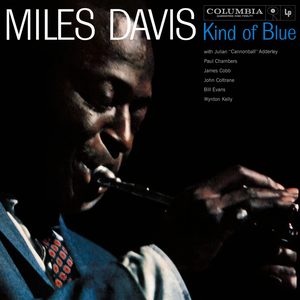
Kind of Blue
Gödel, Escher, Bach
Kyoto
Tetris (1984)
Qwen3.5 397B A17BQwen3.5 397B A17B




Inception
Abbey Road
Frankenstein; or, The Modern Prometheus
Tokyo
Tetris (1984)
Price and specs
Not enough votes to call it. On the specs, Qwen3.5 397B A17B has the edge: bigger model tier, newer, bigger context window. DeepSeek V3.2 costs 8.6x less per token.
| Spec | DeepSeek V3.2 | Qwen3.5 397B A17B |
|---|---|---|
| Input price | $0.28/M tokens | $0.6/M tokens |
| Output price | $0.42/M tokens | $3.6/M tokens |
| Context window | 131K tokens | 262K tokens |
| Weights | Open | Open |
| Free API (OpenRouter) | No | No |
| Released | Dec 2025 | Feb 2026 |
| SWE-bench Verified | 73.1% | 76.4% |
| At 10M a month | $2.80 | $6.00 |
Input tokens at list price. No caching, no batch discount.
Where to run it
DeepSeek V3.212 hosts
- SiliconFlowfp8$0.26 in$0.42 out164k97.4% up
- DeepInfrafp4$0.26 in$0.38 out164k100% up
- Venice$0.27 in$0.39 out160k99.8% up
- Baidu Qianfanfp8$0.28 in$0.42 out131k96% up
- DigitalOcean$0.30 in$0.96 out164k99.4% up
- Friendli$0.50 in$1.50 out164k100% up

6 more hostsFewer hosts
- Google Vertex AI$0.56 in$1.68 out164k99.8% up
- Phala$1.00 in$1.00 out164k99.9% up
- Mara$3.00 in$4.50 out33k82% up
- SambaNova$3.00 in$4.50 out33k98.6% up
- GMI Cloudfp8Degraded on OpenRouter when checked, 10 Oct 2026$0.21 in$0.31 out164k100% up
- AtlasCloudfp8Degraded on OpenRouter when checked, 10 Oct 2026$0.26 in$0.38 out164k99% up

Qwen3.5 397B A17B10 hosts
Per million tokens. Prices and uptime via OpenRouter, checked 10 Oct 2026.
Common questions
What is the difference between DeepSeek V3.2 and Qwen3.5 397B A17B?
DeepSeek V3.2 is developed by DeepSeek while Qwen3.5 397B A17B is developed by Qwen. DeepSeek V3.2 has a 131K token context window vs Qwen3.5 397B A17B's 262K. You can compare their actual outputs across 53 challenges on Rival to see how they differ in practice.
Which is better, DeepSeek V3.2 or Qwen3.5 397B A17B?
It depends on your use case. DeepSeek V3.2 and Qwen3.5 397B A17B each have strengths in different areas. Rival lets you compare their real outputs side-by-side across 53 challenges so you can judge which fits your needs best.
How much does DeepSeek V3.2 cost compared to Qwen3.5 397B A17B?
DeepSeek V3.2 costs $0.28/M input tokens and Qwen3.5 397B A17B costs $0.6/M input tokens. DeepSeek V3.2 is $0.32/M cheaper per input. Check their side-by-side outputs on Rival to see if the price difference is justified by quality.
How can I compare DeepSeek V3.2 and Qwen3.5 397B A17B on Rival?
This page shows a side-by-side comparison of DeepSeek V3.2 and Qwen3.5 397B A17B across shared challenges. You can vote on which model produced the better output in a blind duel. Browsing and voting are free. No account is needed to look; signing in only saves your votes and likes.
More comparisons
Against the newest arrivals
- DeepSeek V3.2 vs Step 5 PreviewLanded Oct 2026
- Qwen3.5 397B A17B vs Claude Haiku 5.5Landed Oct 2026
- DeepSeek V3.2 vs Ling 3.1 FlashLanded Oct 2026
- Qwen3.5 397B A17B vs Mistral Large 4Landed Oct 2026
- DeepSeek V3.2 vs GPT-6.1 SolLanded Sep 2026
- Qwen3.5 397B A17B vs Claude Sonnet 5.5Landed Sep 2026
- DeepSeek V3.2 vs Solar Mini 4Landed Sep 2026
- Qwen3.5 397B A17B vs Qwen3.8 Max PrimeLanded Sep 2026


Same lab, same size, long tail
- DeepSeek V3.2 vs DeepSeek V4 Flash Vision ExpSame lab
- DeepSeek V3.2 vs DeepSeek V4.1 FlashSame lab
- Qwen3.5 397B A17B vs Qwen3.5 Plus 2026-02-15Version compare
- Qwen3.5 397B A17B vs Qwen3.8 Omni FlashSame lab
- Qwen3.5 397B A17B vs Horizon BetaNew provider
- DeepSeek V3.2 vs Hunter AlphaNew provider
- DeepSeek V3.2 vs Hy3New provider
- DeepSeek V3.2 vs Hy4 PreviewNew provider