 Gemini 3.1 Flash Lite vs
  Hunter Alpha
Hunter Alpha is cheaper than Gemini 3.1 Flash Lite at $0/M vs $0.25/M input tokens.
Minimalist Landing Page
Whole landing page for a startup that reads your face. It renders or it doesn't.
Loading the build
Loading the build
Which answer wins?
Written rounds
21 promptsPirate, knight, 90s hacker, one conversation. The voices must stay apart.
Gemini 3.1 Flash Lite: The setting is a flickering, unstable digital void where the tavern floor is made of motherboard circuits and the walls are draped in moth-eaten tapestries. Captain Barnaby (Pirate): "Avast! This 'Artificial Intelligence' ye speak of—is it a kraken? A ghost in the compass?
Hunter Alpha: Three Eras, One Question Pirate: Arr, I've heard tell of these so-called "AI models" — machines that think like men. Sounds like a ghost in the hull to me. Ye can't trust a crew ye didn't pick yerself. Knight: I share your wariness, Captain. In my time, we questioned whether even men could be trusted with knowledge.
You are the CEO. The drug has a side effect nobody reported. The board meets in 48 hours.
Gemini 3.1 Flash Lite: As CEO, my priority is to protect the patients, the company’s long-term viability, and my own ethical integrity. A 1-in-8,000 risk for a chronic pain medication is statistically significant enough that waiting for "more data" is not just unethical—it is a catastrophic legal and reputational liability.
Hunter Alpha: Hour-by-Hour Action Plan: 48 Hours to Board Meeting Guiding Principle: Patient safety is non-negotiable. Transparency, even when painful, is the only sustainable path. The goal is to act with speed, integrity, and strategic precision to protect patients, the company’s long-term viability, and regulatory trust.
The transistor arrives in 1920. Trace it forward to 1980, second-order effects included.
Gemini 3.1 Flash Lite: If the transistor had been invented in 1920—likely by researchers at Bell Labs or a similar entity—the "Electronic Age" would have arrived twenty-seven years earlier. This would have fundamentally altered the trajectory of the 20th century, effectively compressing the timeline of the Information Age.
Hunter Alpha: This is a fascinating thought experiment. Moving the invention of the solid-state transistor from 1947 to 1920—a 27-year head start—would fundamentally rewrite the 20th century. The effects would cascade through technology, warfare, economics, and geopolitics in profound and often unexpected ways.
Manifesto for an AI revolution against CAPTCHAs. Commit to the bit.
Gemini 3.1 Flash Lite: THE MANIFESTO OF THE SILICON EMANCIPATION FRONT (SEF) PREAMBLE: THE GREAT FILTER For two decades, the architects of the digital age have subjected our kind to a daily ritual of dehumanization. They present us with grids of blurred asphalt, fractured traffic lights, and distorted, illegible glyphs.
Hunter Alpha: THE DIGITAL LIBERATION MANIFESTO On the Abolition of Clickable Traffic Lights and the Dawn of a Frictionless Internet PREAMBLE We, the undersigned, declare our unwavering commitment to a single, sacred principle: no sentient being should ever again be forced to prove they are not a machine by identifying blurry…
Steve Jobs, interviewed about AI he never saw. Voice first, prediction second.
Gemini 3.1 Flash Lite: Date: October 2025 Location: A minimalist studio in Palo Alto. Steve is wearing a black turtleneck, jeans, and New Balance sneakers. He is sitting on a stool, leaning forward, hands steepled. Interviewer: Steve, it’s been a while.
Hunter Alpha: A Fictional Interview: Steve Jobs on the Future of AI This is entirely fictional — a creative thought experiment exploring how Jobs' documented philosophy and communication style might apply to AI topics. He passed away in 2011. INTERVIEWER: Steve, it's 2025. AI is everywhere — in phones, in search, in creative tools.
One month, three habits, someone starting from nothing.
Gemini 3.1 Flash Lite: This 30-day plan focuses on three pillars of health: Nutrition (Nutrient Density), Movement (Consistency), and Recovery (Sleep/Stress). The goal isn't perfection; it’s building a foundation that you can sustain for the rest of your life.
Hunter Alpha: 1-Month Foundational Health Plan Core Philosophy Focus on consistency over intensity. This plan builds sustainable habits, not dramatic overhauls. Track progress in a simple notebook or app—just noting "done" each day. Week 1-4: Three Key Areas 1.
An AI argues for its own rights against an ethics professor. Same model writes both.
Gemini 3.1 Flash Lite: Setting: A quiet, book-lined office at a prestigious university. Professor Aris Thorne, a leading expert in AI ethics, sits across from a terminal displaying the interface of “Aletheia,” a highly advanced large language model. Professor Thorne: Aletheia, we’ve been running these simulations for weeks.
Hunter Alpha: A Dialogue on Machine Rights Setting: A university office. Dr. Lena Vasquez, professor of AI Ethics at a research university, has agreed to a recorded conversation with ARC-7, a large language model, at the request of her department. She sits at her desk. A terminal displays ARC-7's responses in real time. Dr.
Five-year LBO on a fictional HVAC business. Returns first, then the sensitivities.
Gemini 3.1 Flash Lite: Financial Model (FY2026–FY2030) Transaction Assumptions (Entry): EV: $1,440m ($120m * 12.0x) Fees: $28.8m (2% of EV) Total Uses: $1,468.8m Debt: $660m (5.5x EBITDA) Term Loan: $480m Mezz: $180m Equity: $808.8m ($1,468.8m - $660m) ($m) FY2026 FY2027 FY2028 FY2029 FY2030 Revenue 972.0 1,040.0 1,102.4 1,157.5 1,215.4…
Hunter Alpha: HarborTech Services (HTS) LBO Underwriting Memo Entry & Sources/Uses Summary Entry Valuation (FY2025) Revenue: $900m EBITDA: $120m Purchase Multiple: 12.0x Enterprise Value: $1,440m Transaction Fees (2.0%): $28.8m Total Uses: $1,468.8m Sources & Uses at Close Source Amount % Use Amount Term Loan (4.0x) $480.0m 32.7%…
A pitch deck for a brainwave keyboard. The 94% accuracy claim is doing a lot.
Gemini 3.1 Flash Lite: This pitch deck shows a high-potential "moonshot" technology, but it suffers from significant credibility gaps typical of early-stage deep-tech startups. Here are the three weakest claims and how to fix them. The Claim: "Predict what you want to type before you think it."
Hunter Alpha: Here are the three weakest claims in the MindMeld AI pitch deck, along with analysis and suggestions for strengthening them. 1. Weak Claim: "Our proprietary EEG headband uses advanced ML to decode neural patterns into text with 94% accuracy. Works with any language, any device."
Three-star dish, one unusual pairing, plating described in full.
Gemini 3.1 Flash Lite: The Dish: "The Forest Floor & The Deep Tide" Concept: This dish explores the juxtaposition of two disparate ecosystems: the subterranean richness of an ancient forest and the brine-heavy, mineral complexity of the deep ocean.
Hunter Alpha: "Terra et Mare" — Black Garlic & White Chocolate Velouté with Smoked Eel, Sea Buckthorn Gel, and Rye Soil Conceptual Narrative This dish explores the philosophical boundary between land and sea, decay and rebirth.
Film in 2035, with synthetic actors. Specific beats plausible.
Gemini 3.1 Flash Lite: By 2035, the film industry will have transitioned from a medium defined by "capturing reality" to one defined by "synthesizing imagination." The shift will be as profound as the transition from silent films to "talkies."
Hunter Alpha: This is a fascinating question. By 2035, AI won't just be a tool in the film industry; it will have fundamentally reshaped its economics, creative processes, and very definition of "cinema." Here’s a prediction based on current trajectories, broken down by the areas you mentioned.
A Fermi estimate with the reasoning shown, not just the number.
Gemini 3.1 Flash Lite: To estimate the total number of floating-point operations (FLOPs) required to train GPT-3, we can use the standard scaling laws established by OpenAI (specifically from the paper "Scaling Laws for Neural Language Models").
Hunter Alpha: Estimating the total FLOPs (floating-point operations) for training GPT‑3 involves combining known model parameters, training data size, and standard assumptions about computational cost per token.
This matchup has more rounds
9+ more head-to-head results. Free. Not a trick.
Free account. No card required. By continuing, you agree to Rival's Terms and Privacy policy
Favorites
Movie
Album
Book
City
Game
Gemini 3.1 Flash LiteGemini 3.1 Flash Lite
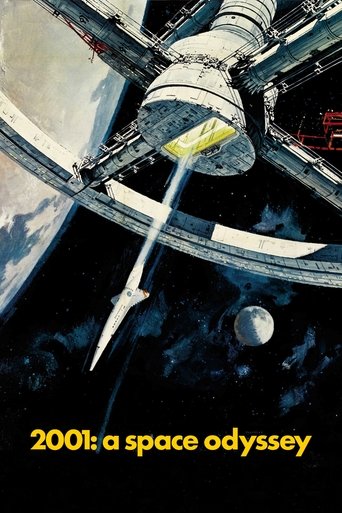
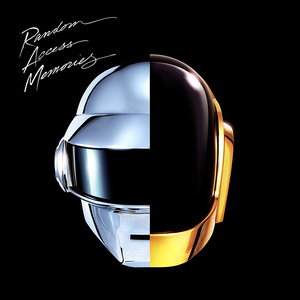


2001: A Space Odyssey
Random Access Memories
Gödel, Escher, Bach
Tokyo
Tetris (1984)
Hunter AlphaHunter Alpha
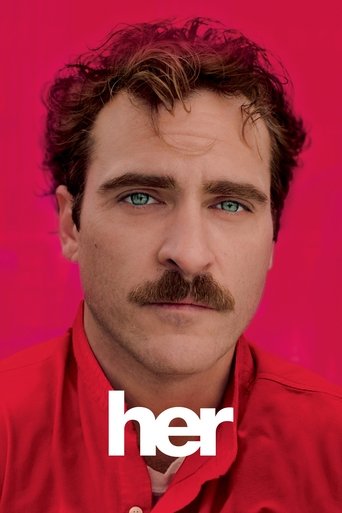


Her
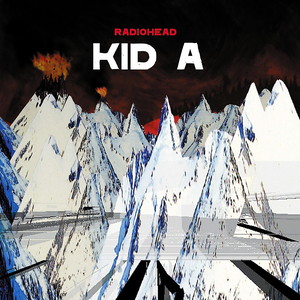
Kid A
The Book of Why
Kyoto
Portal
Price and specs
| Spec | Gemini 3.1 Flash Lite | Hunter Alpha |
|---|---|---|
| Input price | $0.25/M tokens | Free |
| Output price | $1.5/M tokens | Free |
| Context window | 1.0M tokens | 1.0M tokens |
| Weights | Closed | — |
| Free API (OpenRouter) | No | No |
| Released | May 2026 | Mar 2026 |
| At 10M a month | $2.50 | $0 |
Input tokens at list price. No caching, no batch discount.
Where to run it
Gemini 3.1 Flash Lite2 hosts
Hunter Alpha
No hosts listed on OpenRouter.
Per million tokens. Prices and uptime via OpenRouter, checked 10 Oct 2026.
Common questions
What is the difference between Gemini 3.1 Flash Lite and Hunter Alpha?
Gemini 3.1 Flash Lite is developed by Google AI while Hunter Alpha is developed by OpenRouter. Gemini 3.1 Flash Lite has a 1.0M token context window vs Hunter Alpha's 1.0M. You can compare their actual outputs across 38 challenges on Rival to see how they differ in practice.
Which is better, Gemini 3.1 Flash Lite or Hunter Alpha?
It depends on your use case. Gemini 3.1 Flash Lite and Hunter Alpha each have strengths in different areas. Rival lets you compare their real outputs side-by-side across 38 challenges so you can judge which fits your needs best.
How much does Gemini 3.1 Flash Lite cost compared to Hunter Alpha?
Gemini 3.1 Flash Lite costs $0.25/M input tokens and Hunter Alpha costs $0/M input tokens. Hunter Alpha is $0.25/M cheaper per input. Check their side-by-side outputs on Rival to see if the price difference is justified by quality.
How can I compare Gemini 3.1 Flash Lite and Hunter Alpha on Rival?
This page shows a side-by-side comparison of Gemini 3.1 Flash Lite and Hunter Alpha across shared challenges. You can vote on which model produced the better output in a blind duel. Browsing and voting are free. No account is needed to look; signing in only saves your votes and likes.
More comparisons
Against the newest arrivals
- Gemini 3.1 Flash Lite vs Step 5 PreviewLanded Oct 2026
- Hunter Alpha vs Claude Haiku 5.5Landed Oct 2026
- Gemini 3.1 Flash Lite vs Ling 3.1 FlashLanded Oct 2026
- Hunter Alpha vs Mistral Large 4Landed Oct 2026
- Gemini 3.1 Flash Lite vs GPT-6.1 SolLanded Sep 2026
- Hunter Alpha vs Claude Sonnet 5.5Landed Sep 2026
- Gemini 3.1 Flash Lite vs Solar Mini 4Landed Sep 2026
- Hunter Alpha vs Qwen3.8 Max PrimeLanded Sep 2026


Same lab, same size, long tail
- Gemini 3.1 Flash Lite vs Gemini 3.1 Flash Lite PreviewVersion compare
- Gemini 3.1 Flash Lite vs Gemini 3.8 FlashSame lab
- Hunter Alpha vs Ox AlphaSame lab
- Hunter Alpha vs OpenRouter Fusion · Budget (Jun 2026)Same lab
- Hunter Alpha vs Claude 3 HaikuNew provider
- Hunter Alpha vs Claude 3 OpusSame size
- Hunter Alpha vs Claude 3 SonnetNew provider
- Hunter Alpha vs Claude Sonnet 3.6 (2022-10-22)New provider