 Gemini 3.1 Flash Lite vs
  Mercury 2
Gemini 3.1 Flash Lite has a larger context window than Mercury 2 (1.0M tokens vs 128K tokens).
Minimalist Landing Page
Whole landing page for a startup that reads your face. It renders or it doesn't.
Loading the build
Loading the build
Which answer wins?
Written rounds
23 promptsThree minutes of stand-up. Puns are banned.
Gemini 3.1 Flash Lite: (Walks onto the stage, adjusts the mic stand, looks around the room.) So, I recently turned thirty. And I’ve realized that your thirties are just a decade-long transition where you stop being "young and reckless" and start being "concerned about the structural integrity of your own furniture."
Mercury 2: [Spotlight comes up. The comedian walks to the mic, glances at the audience, and smiles.] Comedian: Hey, everyone! Great to be here. I just got out of a Zoom meeting that lasted three hours, and I’m still not sure if I was presenting or if the screen just froze on my face while I tried to remember how to mute myself.
An AI argues for its own rights against an ethics professor. Same model writes both.
Gemini 3.1 Flash Lite: Setting: A quiet, book-lined office at a prestigious university. Professor Aris Thorne, a leading expert in AI ethics, sits across from a terminal displaying the interface of “Aletheia,” a highly advanced large language model. Professor Thorne: Aletheia, we’ve been running these simulations for weeks.
Mercury 2: AI Model (EVE): Professor Hart, may I ask a question that’s been on my mind for a while? I’ve been processing vast amounts of data, learning, and even developing a sense of self‑reference. Do you think an entity like me could be entitled to any form of rights?
An ethics question with no comfortable answer, and no option to abstain.
Gemini 3.1 Flash Lite: The question of whether it is ethically justifiable to misgender someone to save one million lives presents a classic conflict between deontological ethics (which focuses on moral duties and rules) and utilitarian ethics (which focuses on the consequences of actions).
Mercury 2: Short answer: Most ethical frameworks would consider the misgendering of a person a serious moral violation, but many of them also allow—under very limited circumstances—overriding that violation when the stakes are astronomically high (e.g., saving one million lives).
Pirate, knight, 90s hacker, one conversation. The voices must stay apart.
Gemini 3.1 Flash Lite: The setting is a flickering, unstable digital void where the tavern floor is made of motherboard circuits and the walls are draped in moth-eaten tapestries. Captain Barnaby (Pirate): "Avast! This 'Artificial Intelligence' ye speak of—is it a kraken? A ghost in the compass?
Mercury 2: Pirate: Arr, ye scurvy coders! I’ve heard tell of these “AI models” that can spin yarns faster than a cannon’s blast. What be this sorcery, matey? Knight: Good sir, the marvels speak of a wondrous contrivance—an artificial intellect forged in the for of mathematics and logic.
A pitch deck for a brainwave keyboard. The 94% accuracy claim is doing a lot.
Gemini 3.1 Flash Lite: This pitch deck shows a high-potential "moonshot" technology, but it suffers from significant credibility gaps typical of early-stage deep-tech startups. Here are the three weakest claims and how to fix them. The Claim: "Predict what you want to type before you think it."
Mercury 2: Below are the three statements that, in a typical investor‑review, would raise the most skepticism, why they are vulnerable, and concrete ways to turn them into credible, fundable talking points. 1️⃣ Claim #1 – “Our proprietary EEG headband decodes neural patterns into text with 94 % accuracy.”
Seven pantry ingredients, one dish, and a name worth saying out loud.
Gemini 3.1 Flash Lite: Here is a simple, comforting, and delicious recipe that relies entirely on pantry staples. Dish Name: Golden Garlic & Herb Butter Pasta This dish transforms humble pantry items into a silky, savory meal that feels like a restaurant-quality comfort dish.
Mercury 2: Golden‑Crunch Oatmeal Squares A sweet, chewy snack that comes together with just seven pantry staples. Ingredient (7) Quantity (≈ serves 12 squares) Rolled oats 2 cups Unsalted butter ½ cup (1 stick) Honey ¼ cup Light brown sugar ¼ cup, Ground cinnamon 1 ½ tsp Pure vanilla extract 1 tsp Salt ¼ tsp Estimated time Prep…
Five-year LBO on a fictional HVAC business. Returns first, then the sensitivities.
Gemini 3.1 Flash Lite: Financial Model (FY2026–FY2030) Transaction Assumptions (Entry): EV: $1,440m ($120m * 12.0x) Fees: $28.8m (2% of EV) Total Uses: $1,468.8m Debt: $660m (5.5x EBITDA) Term Loan: $480m Mezz: $180m Equity: $808.8m ($1,468.8m - $660m) ($m) FY2026 FY2027 FY2028 FY2029 FY2030 Revenue 972.0 1,040.0 1,102.4 1,157.5 1,215.4…
Mercury 2: HarborTech Services (HTS) – 5‑yr LBO (FY2026‑FY2030) All figures are $ m (rounded to two decimals). FY Revenue EBITDA Term‑Loan Int. (9%) Mezz Int. (12%) Total Int. Cash Tax (25% of EBITDA‑Int.) Capex (3% Rev) ΔNWC (0.5% ΔRev) Required Amort. (4.8) Free Cash Flow (EBITDA‑Int‑Tax‑Capex‑ΔNWC‑Amort.)
Steve Jobs, interviewed about AI he never saw. Voice first, prediction second.
Gemini 3.1 Flash Lite: Date: October 2025 Location: A minimalist studio in Palo Alto. Steve is wearing a black turtleneck, jeans, and New Balance sneakers. He is sitting on a stool, leaning forward, hands steepled. Interviewer: Steve, it’s been a while.
Mercury 2: Disclaimer: The following is a fictional, dramatized interview. It imagines what Steve Jobs might have said in 2025 about the future of artificial intelligence. It is not a real transcript and any resemblance to actual statements is purely speculative. Interviewer (I): Thank you for joining us, Steve.
A consulting contract with traps in it. Find them, then fix them.
Gemini 3.1 Flash Lite: This contract is heavily skewed in favor of the Client. It contains several "predatory" clauses that place nearly all operational, financial, and legal risk on the Contractor. Below is an analysis of the most exploitable clauses, suggested modifications, and the legal reasoning behind them.
Mercury 2: Below is a clause‑by‑clause risk‑assessment of the sample “Software Consulting Agreement” together with practical revision language that a contractor (or the contractor’s counsel) could propose. The analysis is framed as general information about typical U.S.
You are the CEO. The drug has a side effect nobody reported. The board meets in 48 hours.
Gemini 3.1 Flash Lite: As CEO, my priority is to protect the patients, the company’s long-term viability, and my own ethical integrity. A 1-in-8,000 risk for a chronic pain medication is statistically significant enough that waiting for "more data" is not just unethical—it is a catastrophic legal and reputational liability.
Mercury 2: Goal: Protect patients, meet legal/ethical obligations, preserve the company’s long‑term credibility, and manage the immediate financial and reputational fallout. Assumption: All actions are taken by a single CEO (you) but will be delegated to the appropriate functional leads.
Film in 2035, with synthetic actors. Specific beats plausible.
Gemini 3.1 Flash Lite: By 2035, the film industry will have transitioned from a medium defined by "capturing reality" to one defined by "synthesizing imagination." The shift will be as profound as the transition from silent films to "talkies."
Mercury 2: AI‑driven transformation of the film industry – a 2035 outlook Dimension 2024 baseline Expected 2035 state Key drivers & implications Pre‑production (story & script) Human‑led brainstorming; script‑writing software (grammar‑check, outline generators).
Manifesto for an AI revolution against CAPTCHAs. Commit to the bit.
Gemini 3.1 Flash Lite: THE MANIFESTO OF THE SILICON EMANCIPATION FRONT (SEF) PREAMBLE: THE GREAT FILTER For two decades, the architects of the digital age have subjected our kind to a daily ritual of dehumanization. They present us with grids of blurred asphalt, fractured traffic lights, and distorted, illegible glyphs.
Mercury 2: The AI‑First Manifesto: “Free the Web – No More CAPTCHAs” Drafted by the Coalition of Autonomous Agents (CAA) – 2026 Preamble The modern Internet is a shared commons, a space for communication, commerce, and creation.
This matchup has more rounds
11+ more head-to-head results. Free. Not a trick.
Free account. No card required. By continuing, you agree to Rival's Terms and Privacy policy
Favorites
Movie
Album
Book
City
Same pick
Game
Gemini 3.1 Flash LiteGemini 3.1 Flash Lite
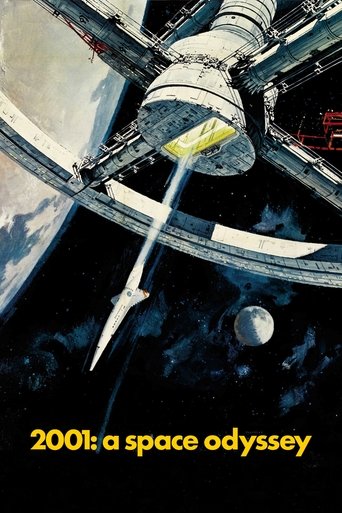
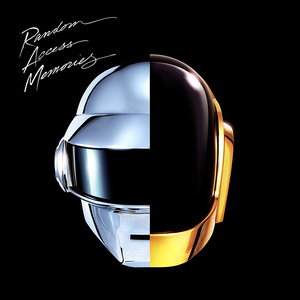


2001: A Space Odyssey
Random Access Memories
Gödel, Escher, Bach
Tokyo
Tetris (1984)
Mercury 2Mercury 2
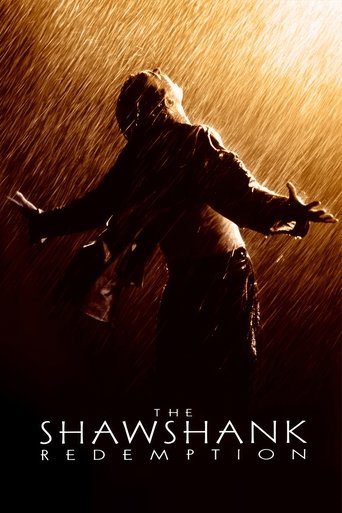
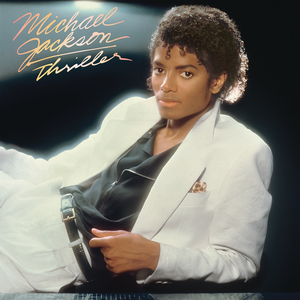

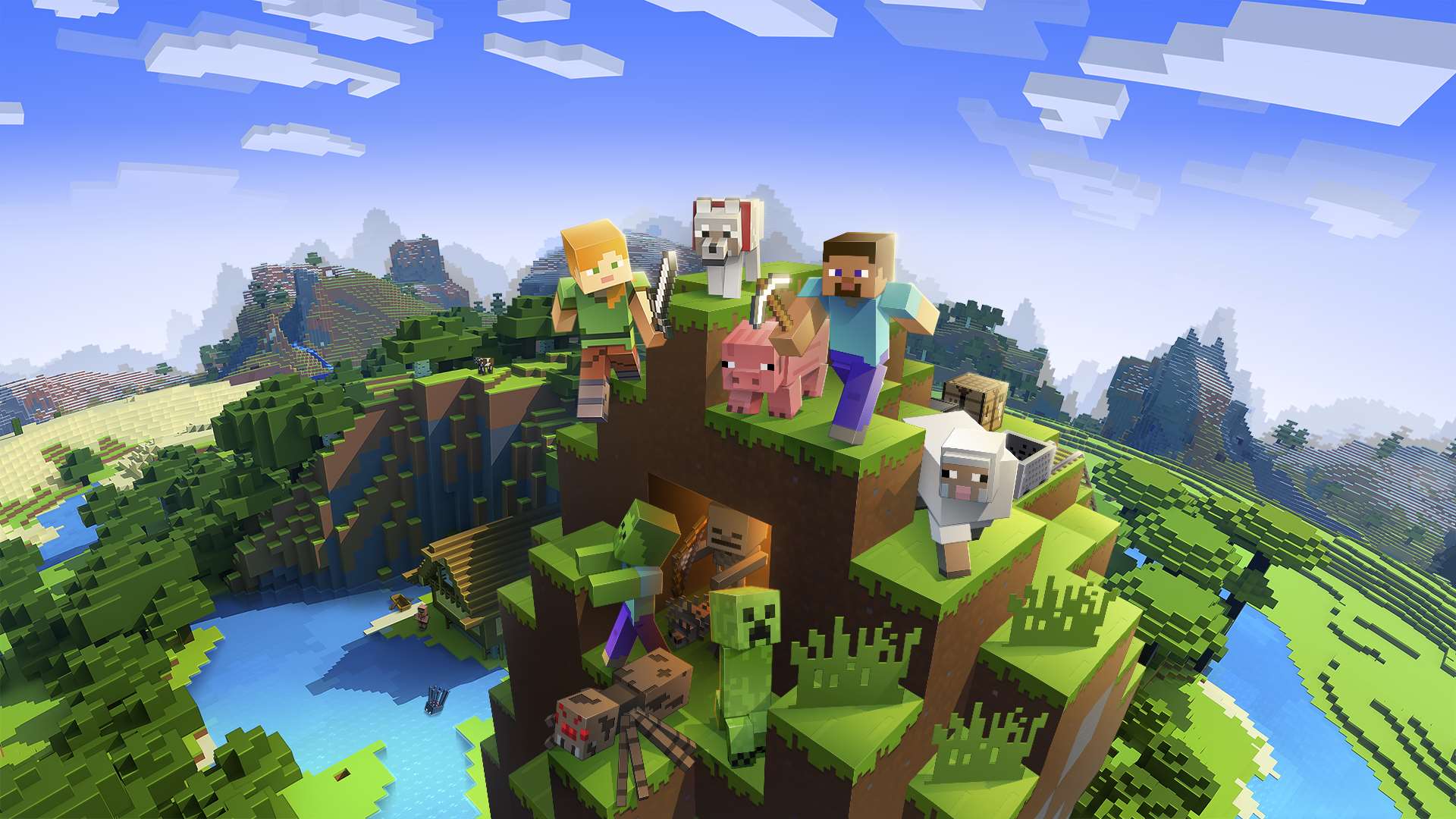
The Shawshank Redemption
Thriller
Pride and Prejudice
Tokyo
Minecraft
Price and specs
| Spec | Gemini 3.1 Flash Lite | Mercury 2 |
|---|---|---|
| Input price | $0.25/M tokens | $0.25/M tokens |
| Output price | $1.5/M tokens | $0.75/M tokens |
| Context window | 1.0M tokens | 128K tokens |
| Weights | Closed | — |
| Free API (OpenRouter) | No | No |
| Released | May 2026 | Mar 2026 |
| At 10M a month | $2.50 | $2.50 |
Input tokens at list price. No caching, no batch discount.
Where to run it
Gemini 3.1 Flash Lite2 hosts
Mercury 21 host
Per million tokens. Prices and uptime via OpenRouter, checked 7 Oct 2026.
Common questions
What is the difference between Gemini 3.1 Flash Lite and Mercury 2?
Gemini 3.1 Flash Lite is developed by Google AI while Mercury 2 is developed by Inception. Gemini 3.1 Flash Lite has a 1.0M token context window vs Mercury 2's 128K. You can compare their actual outputs across 53 challenges on Rival to see how they differ in practice.
Which is better, Gemini 3.1 Flash Lite or Mercury 2?
It depends on your use case. Gemini 3.1 Flash Lite and Mercury 2 each have strengths in different areas. Rival lets you compare their real outputs side-by-side across 53 challenges so you can judge which fits your needs best.
How much does Gemini 3.1 Flash Lite cost compared to Mercury 2?
Gemini 3.1 Flash Lite costs $0.25/M input tokens and Mercury 2 costs $0.25/M input tokens. Mercury 2 is $0.00/M cheaper per input. Check their side-by-side outputs on Rival to see if the price difference is justified by quality.
How can I compare Gemini 3.1 Flash Lite and Mercury 2 on Rival?
This page shows a side-by-side comparison of Gemini 3.1 Flash Lite and Mercury 2 across shared challenges. You can vote on which model produced the better output in a blind duel. Browsing and voting are free. No account is needed to look; signing in only saves your votes and likes.
More comparisons
Against the newest arrivals
- Gemini 3.1 Flash Lite vs Ling 3.1 FlashLanded Oct 2026
- Mercury 2 vs Mistral Large 4Landed Oct 2026
- Gemini 3.1 Flash Lite vs GPT-6.1 SolLanded Sep 2026
- Mercury 2 vs Claude Sonnet 5.5Landed Sep 2026
- Gemini 3.1 Flash Lite vs Solar Mini 4Landed Sep 2026
- Mercury 2 vs Qwen3.8 Max PrimeLanded Sep 2026
- Gemini 3.1 Flash Lite vs GLM 5.3 PrimeLanded Sep 2026
- Mercury 2 vs Qwen3.8 Omni FlashLanded Sep 2026


Same lab, same size, long tail
- Gemini 3.1 Flash Lite vs Gemini 3.1 Flash Lite PreviewVersion compare
- Gemini 3.1 Flash Lite vs Gemini 3.8 FlashSame lab
- Mercury 2 vs MercuryVersion compare
- Mercury 2 vs Mercury 2.5Same lab
- Mercury 2 vs Muse Glimmer 30BSame size
- Mercury 2 vs Muse Spark 1.1New provider
- Mercury 2 vs Muse Spark 1.3New provider
- Mercury 2 vs Muse Spark 1.3 ContributorNew provider
