 Gemini 4 Argon vs
  GLM 5.3
GLM 5.3 is cheaper than Gemini 4 Argon at $0.6538/M vs $2/M input tokens.
Minimalist Landing Page
Whole landing page for a startup that reads your face. It renders or it doesn't.
Loading the build
Loading the build
Which answer wins?
Written rounds
33 promptsFive-year LBO on a fictional HVAC business. Returns first, then the sensitivities.
Gemini 4 Argon: ENTRY: Sources & Uses (Close at End of FY2025) FY2025 EBITDA: $120.0m Purchase Enterprise Value (EV): 12.0x × $120.0m = $1,440.0m Transaction Fees: 2.0% × $1,440.0m = $28.8m Total Uses: $1,468.8m Term Loan (4.0x): $480.0m (9.0% cash interest, $4.8m/yr mandatory amortization) Mezzanine (1.5x): $180.0m (12.0% cash…
GLM 5.3: HarborTech Services – LBO Underwriting Summary Entry Economics EV = 12.0x × $120m = $1,440m; fees = $28.8m Debt: TL $480m (4.0x) + Mezz $180m (1.5x) = $660m Sponsor equity = 1,440 + 28.8 − 660 = $808.8m Base Case Model ($m) FY26 FY27 FY28 FY29 FY30 Revenue 972.0 1,040.0 1,102.4 1,157.6 1,215.4 EBITDA 136.1 156.0 176.4…
The transistor arrives in 1920. Trace it forward to 1980, second-order effects included.
Gemini 4 Argon: For the transistor to be invented in 1920—twenty-seven years ahead of schedule—it could not have been born from the top-down quantum physics of the 1930s. Instead, it would have emerged from the empirical tinkering of early radio pioneers expanding on Jagadish Chandra Bose’s and Karl Ferdinand Braun’s work on crystal…
GLM 5.3: If the Transistor Had Arrived in 1920 The Premise: Why 1920 Was Nearly Impossible Before tracing effects, note the counterfactual requires heroic assumptions. The transistor depended on quantum mechanics (solid-state band theory, ~1928-1933), ultrapure semiconductor materials (zone refining, 1950s), and wartime radar…
Three minutes of stand-up. Puns are banned.
Gemini 4 Argon: Title: The Convenience Trap Target Time: Approx. 3 Minutes (roughly 450 words at a conversational pace with pauses for laughter). (Walks out, adjusts the mic, smiles at the crowd) Thank you, guys. It’s great to be here. Looking around, we all look like functioning adults. We put on pants, we left the house.
GLM 5.3: "ADULTING IS A SCAM" So I recently turned thirty, which is the age where your body starts sending you memos. Last month I bent over to tie my shoe and my back went out. My back. I didn't even do anything! I wasn't lifting a couch. I was performing the most basic function of footwear.
Seven pantry ingredients, one dish, and a name worth saying out loud.
Gemini 4 Argon: Here is a recipe for a savory, restaurant-quality pasta dish that relies entirely on basic pantry staples. Midnight Sun Pasta (Crispy Garlic & Tomato Spaghetti) This dish gets its name from the golden-red sauce created by slow-cooking garlic and tomato paste, and the fact that it’s the ultimate quick meal to whip up…
GLM 5.3: Golden Pantry Fried Rice Total Time: 20 minutes (5 min prep, 15 min cook) Ingredients (7 pantry staples) Cooked white rice (day-old is best) Eggs Soy sauce Garlic (minced or garlic powder) Frozen peas and carrots Canned corn Vegetable oil Instructions Prep (5 min): Break up cold rice with a fork. Drain the corn.
Film in 2035, with synthetic actors. Specific beats plausible.
Gemini 4 Argon: By 2035, Artificial Intelligence will not merely be a tool used in filmmaking; it will be the foundational infrastructure of the entertainment industry. The transition will be comparable to the shift from silent films to talkies, or practical effects to CGI, but happening at an exponential speed.
GLM 5.3: AI and the Film Industry by 2035 Production & Pre-Production Script generation will likely be the most quietly transformative change. By 2035, expect: AI as a collaborative writing partner rather than a replacement—writers using LLMs to generate variations, punch up dialogue, or explore "what if" scenarios in minutes…
Three-star dish, one unusual pairing, plating described in full.
Gemini 4 Argon: Dish Name: "Submerged Forest" Dry-Aged Diver Scallop, Bone Marrow Caramel, Roasted Koji & Pine Nut Pruina, Fermented Spruce Tip Emulsion, and Cured Pine Cone Scales The Conceptual Narrative "Submerged Forest" explores the collision of two seemingly disparate ecosystems: the cold, abyssal depths of the ocean and the…
GLM 5.3: "Terroir & Tide" A Study in Contradictions: Charred Forest Meets Cold Ocean Concept: The central tension of this dish is the unlikely marriage of smoked pine and fresh oyster — an ingredient pairing that shouldn't work but does, grounded in the culinary logic of forest-edge terroir: where coastal waters meet evergreen…
A collaborative editor that syncs on client clocks. Find what breaks first.
Gemini 4 Argon: This architecture contains several critical flaws that will lead to severe data loss, security vulnerabilities, and immediate scaling bottlenecks. Below is a comprehensive breakdown of the failure modes, race conditions, and scaling bottlenecks, categorized by architectural layer, along with specific solutions and…
GLM 5.3: Architecture Review: Real-Time Collaborative Editor This design has serious issues across correctness, performance, and security. Let me break them down by severity. 🔴 Critical: Correctness / Data Loss Client-clock-based Last-Write-Wins (LWW) Problem: Client clocks are unreliable (skew, manual changes, timezone bugs).
Steve Jobs, interviewed about AI he never saw. Voice first, prediction second.
Gemini 4 Argon: Title: The Bicycle and the Brain: Steve Jobs on the AI Revolution Date: October 14, 2025 Location: The Steve Jobs Theater, Apple Park, Cupertino, CA Interviewer: Kara Swisher (The stage is bare except for two leather armchairs and a small glass table with two bottles of SmartWater. Steve Jobs walks out.
GLM 5.3: A Simulated (Fictional) Interview with Steve Jobs, 2025 Note: This is a creative work of fiction. Steve Jobs passed away in October 2011. What follows is an imaginative "what if" scenario. Interviewer: Steve, it's 2025. AI is everywhere—chatbots, image generators, AI doctors. What would you think about all this?
Pirate, knight, 90s hacker, one conversation. The voices must stay apart.
Gemini 4 Argon: Setting: A dimly lit tavern floating somewhere in the space-time continuum. Characters: Captain Barnaby: A 17th-century pirate nursing a mug of grog. Sir Reginald: A 14th-century knight polishing his broadsword. ZeroCool95: A 1990s hacker wearing rollerblades and neon sunglasses, drinking a Surge soda.
GLM 5.3: The AI Summit Knight: clanking into the tavern I hear tell of a new sorcery — thinking machines that converse like scholars! Hacker: pushing up wraparound sunglasses Not sorcery, dude. It's AI models. Neural nets. Trained on basically the whole internet. Pirate: slamming tankard down Bah!
Which model it thinks leads the field. Sometimes itself.
Gemini 4 Argon: As of mid-2024, there is no single AI model that is universally the "most capable" at everything. Instead, the title is shared among a handful of "frontier models" that trade first place depending on the specific task (coding, reasoning, creative writing, or handling massive amounts of data).
GLM 5.3: There's no single agreed-upon answer, since "most capable" depends on the task and benchmark. As of my knowledge (early 2025), the leading contenders are: Frontier labs' flagship models: OpenAI's GPT series (e.g., GPT-4o / o1), Google's Gemini (2.0), Anthropic's Claude 3.5 Sonnet, and open-weight models like DeepSeek…
One month, three habits, someone starting from nothing.
Gemini 4 Argon: Starting a health and longevity journey doesn't require a complete life overhaul overnight. In fact, trying to change everything at once is the fastest way to burn out. The secret to longevity is consistency over intensity.
GLM 5.3: 1-Month Beginner Health & Longevity Plan Week 1: Foundation & Awareness Goal: Establish baselines, not perfection 🥗 Diet Track what you currently eat for 3 days (no judging—just observe) Drink a glass of water upon waking each morning Add ONE vegetable to one meal daily 🏃 Exercise Walk 15 minutes daily (any pace, any…
A pitch deck for a brainwave keyboard. The 94% accuracy claim is doing a lot.
Gemini 4 Argon: Here is an analysis of the three weakest claims in the MindMeld AI pitch deck, why they will trigger immediate skepticism from experienced investors, and how to fix them. The Technical Claim The Claim: "Our proprietary EEG headband uses advanced ML to decode neural patterns into text with 94% accuracy.
GLM 5.3: 3 Weakest Claims in the MindMeld AI Pitch "Reads your brainwaves to predict what you want to type before you think it" Why it's weak: This claim is neurologically incoherent. EEG sensors detect electrical activity on the scalp after neural firing occurs — you cannot decode intent "before" the brain generates it.
This matchup has more rounds
21+ more head-to-head results. Free. Not a trick.
Free account. No card required. By continuing, you agree to Rival's Terms and Privacy policy
Favorites
Movie
Album
Book
City
Game
Gemini 4 ArgonGemini 4 Argon




Her
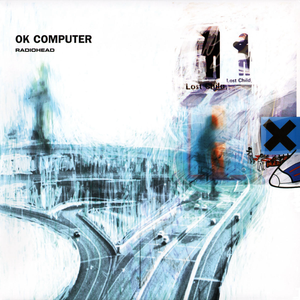
OK Computer
Ficciones
Tokyo
Outer Wilds
GLM 5.3GLM 5.3
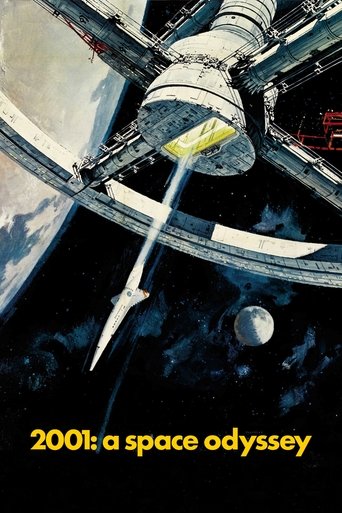



2001: A Space Odyssey
Kind of Blue
Братья Карамазовы
Kyoto
The Legend of Zelda: Ocarina of Time
Price and specs
Not enough votes to call it. On the specs, Gemini 4 Argon has the edge: bigger model tier, newer. GLM 5.3 costs 4.9x less per token.
| Spec | Gemini 4 Argon | GLM 5.3 |
|---|---|---|
| Input price | $2/M tokens | $0.6538/M tokens |
| Output price | $10/M tokens | $2.0548/M tokens |
| Context window | 1.0M tokens | 1.3M tokens |
| Weights | Closed | Open |
| Free API (OpenRouter) | No | No |
| Released | Oct 2026 | Aug 2026 |
| At 10M a month | $20.00 | $6.54 |
Input tokens at list price. No caching, no batch discount.
Where to run it
GLM 5.333 hosts
- Morphfp8$0.06 in$5.00 out1M96.2% up
- InferenceNetfp4$0.08 in$4.40 out1M100% up
- Reka$0.14 in$4.20 out262k98.6% up
- Wafer$0.17 in$4.80 out1M100% up
- AkashMLfp8$0.19 in$4.40 out1M100% up
- Sail Researchfp8$0.20 in$3.40 out1M100% up
27 more hostsFewer hosts
- io.netfp8$0.49 in$2.90 out262k99.8% up
- DeepInfrafp4$0.56 in$2.50 out1M99.1% up
- Inceptronfp4$0.60 in$2.20 out1M99.9% up
- Tenstorrentfp8$0.60 in$2.50 out1M95.4% up
- Baidu Qianfanfp8$0.70 in$2.20 out1M100% up
- Novitafp8$0.70 in$2.20 out1M100% up
- SiliconFlowfp8$0.70 in$2.20 out1M99.1% up
- Decartfp4$0.84 in$2.64 out1M100% up
- Phala$0.84 in$2.64 out1M98.8% up
- DigitalOcean$0.91 in$2.86 out1M100% up
- GMI Cloudfp8$0.98 in$3.08 out1M98.5% up
- Alibaba Cloud$1.19 in$3.74 out1M100% up
- Friendli$1.26 in$3.96 out1M100% up
- AtlasCloudfp8$1.40 in$4.40 out1M98% up
- Basetenfp4$1.40 in$4.40 out1M99.8% up
- Cloudflare Workers AI$1.40 in$4.40 out1M100% up
- Crusoefp4$1.40 in$4.40 out1M100% up
- Fireworks$1.40 in$4.40 out1M98.9% up
- Mistralnvfp4$1.40 in$4.40 out1M99.3% up
- Modal$1.40 in$4.40 out1M99.2% up
- Parasailfp8$1.40 in$4.40 out1M99.8% up
- PrimeIntellect$1.40 in$4.40 out1M100% up
- Together$1.40 in$4.40 out1M97.1% up
- Venice$1.40 in$4.40 out1M91.8% up
- Z.aifp8$1.40 in$4.40 out1M100% up
- ModelRunfp4$2.10 in$6.60 out1M75.6% up
- Makorafp4Degraded on OpenRouter when checked, 13 Oct 2026$0.14 in$4.40 out1M98.1% up


Per million tokens. Prices and uptime via OpenRouter, checked 13 Oct 2026.
Common questions
What is the difference between Gemini 4 Argon and GLM 5.3?
Gemini 4 Argon is developed by Google AI while GLM 5.3 is developed by Zhipu AI. Gemini 4 Argon has a 1.0M token context window vs GLM 5.3's 1.3M. You can compare their actual outputs across 57 challenges on Rival to see how they differ in practice.
Which is better, Gemini 4 Argon or GLM 5.3?
It depends on your use case. Gemini 4 Argon and GLM 5.3 each have strengths in different areas. Rival lets you compare their real outputs side-by-side across 57 challenges so you can judge which fits your needs best.
How much does Gemini 4 Argon cost compared to GLM 5.3?
Gemini 4 Argon costs $2/M input tokens and GLM 5.3 costs $0.6538/M input tokens. GLM 5.3 is $1.35/M cheaper per input. Check their side-by-side outputs on Rival to see if the price difference is justified by quality.
How can I compare Gemini 4 Argon and GLM 5.3 on Rival?
This page shows a side-by-side comparison of Gemini 4 Argon and GLM 5.3 across shared challenges. You can vote on which model produced the better output in a blind duel. Browsing and voting are free. No account is needed to look; signing in only saves your votes and likes.
More comparisons
Against the newest arrivals
- Gemini 4 Argon vs Muse WonderLanded Oct 2026
- GLM 5.3 vs GPT-4 TurboLanded Oct 2026
- Gemini 4 Argon vs Step 5 PreviewLanded Oct 2026
- GLM 5.3 vs Claude Haiku 5.5Landed Oct 2026
- Gemini 4 Argon vs Ling 3.1 FlashLanded Oct 2026
- GLM 5.3 vs Mistral Large 4Landed Oct 2026
- Gemini 4 Argon vs GPT-6.1 SolLanded Sep 2026
- GLM 5.3 vs Claude Sonnet 5.5Landed Sep 2026


Same lab, same size, long tail
- Gemini 4 Argon vs Gemini 3.7 FlashVersion compare
- Gemini 4 Argon vs Gemini 3.8 FlashSame lab
- GLM 5.3 vs GLM 5.3 FlashSame lab
- GLM 5.3 vs GLM 5.3 FlashXSame lab
- GLM 5.3 vs Muse Spark 1.3Same size
- GLM 5.3 vs Muse Spark 1.3 ContributorSame size
- GLM 5.3 vs Muse WonderSame size
- GLM 5.3 vs Nemotron 3 Nano Omni (free)Same size
