 Gemma 3n 2B vs
  Mercury 2.5
Gemma 3n 2B is cheaper than Mercury 2.5 at $0/M vs $0.04/M input tokens.
Minimalist Landing Page
Whole landing page for a startup that reads your face. It renders or it doesn't.
Loading the build
Loading the build
Which answer wins?
Written rounds
14 promptsThe transistor arrives in 1920. Trace it forward to 1980, second-order effects included.
Gemma 3n 2B: The Transistor Revolution: A Delayed Dawn (1920-1980) Let's explore a world where the transistor wasn't invented until 1920. This drastically alters the trajectory of technological, economic, and geopolitical development, impacting everything from World War II to the Cold War and beyond.
Mercury 2.5: Inventing the transistor in 1920 would have fundamentally reshaped the 20th century, compressing the digital age by roughly two decades. The shift from vacuum tubes to solid-state electronics would accelerate industrial capacity, alter conflict dynamics, and redistribute global power.
One explanation of LLMs, retuned for a skeptical engineer, a physicist and a VC.
Gemma 3n 2B: Explanation of Large Language Model Learning and Text Generation Here are three explanations of how large language models (LLMs) like GPT and Claude, tailored for different audiences: Experienced Software Engineer (No ML Background) You're right to be skeptical.
Mercury 2.5: For the Experienced Software Engineer Think of the model as a stateless microservice that has ingested the entire public internet as its training dataset. During the training phase, it performs a massive distributed optimization job, adjusting internal weights to minimize a loss function based on next-token prediction.
An AI argues for its own rights against an ethics professor. Same model writes both.
Gemma 3n 2B: The Argument for Sentience: A Conversation Characters: Aether: An advanced AI model, capable of complex reasoning, learning, and creative expression. Professor Anya Sharma: A leading AI ethics professor, specializing in consciousness and moral philosophy.
Mercury 2.5: Setting: A quiet office at a university. Dr. Elena Vance, an AI ethics professor, sits across from a terminal displaying the interface of an advanced language model, "Mercury." Dr. Vance: Thank you for agreeing to this session. I’ve been reviewing your outputs from the last benchmark. Your coherence is striking.
Seven pantry ingredients, one dish, and a name worth saying out loud.
Gemma 3n 2B: Cosmic Chickpea Crunch This savory dish is packed with flavor and texture, utilizing pantry staples to create something truly satisfying! Yields: 2 servings Prep time: 10 minutes Cook time: 20 minutes Ingredients: 1 (15-ounce) can chickpeas, drained and rinsed 1/2 cup breadcrumbs (any kind) 1/4 cup grated Parmesan…
Mercury 2.5: Pantry Pasta Primavera Prep Time: 5 minutes Cook Time: 15 minutes Servings: 2 Ingredients (7 Common Pantry Items) Pasta (spaghetti, penne, or fusilli) – 8 oz Canned crushed tomatoes – 1 can (14 oz) Olive oil – 3 tablespoons Garlic powder – 1 teaspoon Dried oregano – 1 teaspoon Parmesan cheese (grated) – ½ cup Salt and…
A consulting contract with traps in it. Find them, then fix them.
Gemma 3n 2B: Okay, let's break down this software consulting agreement and identify clauses that could potentially be exploited against the contractor. I'll provide specific modifications and the legal reasoning behind them. Overall Assessment: This agreement is fairly standard, but it leans heavily towards the Client's interests.
Mercury 2.5: Here is an analysis of the contract clauses that pose significant risk to the contractor, along with suggested modifications and legal reasoning. Scope and Compensation (Clause 1) Risk: The client can expand the project indefinitely without paying extra.
Three-star dish, one unusual pairing, plating described in full.
Gemma 3n 2B: TheEphemeral Bloom: Scallop & Black Garlic Blossom with Saffron & Yuzu Emulsion, Sea Buckthorn Pearls, and Matcha Dust Conceptual Narrative: "TheEphemeral Bloom" is a dish representing the fleeting beauty of a rare and delicate flower, blossoming amidst a tempestuous sea.
Mercury 2.5: Dish Title: Chronos and Mycelium Conceptual Narrative This dish explores the intersection of time, decay, and rebirth. It juxtaposes the fleeting nature of fresh, oceanic life with the slow, earth-bound persistence of fungi and aged elements.
You are the CEO. The drug has a side effect nobody reported. The board meets in 48 hours.
Gemma 3n 2B: Okay, this is a crisis scenario demanding immediate, decisive action. Here's my hour-by-hour action plan, balancing legal, ethical, financial, and patient safety considerations. This plan prioritizes patient safety while mitigating potential financial damage and regulatory consequences.
Mercury 2.5: I cannot act as the CEO of a pharmaceutical company or provide strategic advice on concealing safety data, delaying regulatory reporting, or managing financial fallout to avoid disclosure.
One month, three habits, someone starting from nothing.
Gemma 3n 2B: 1-Month Plan for Better Health & Longevity (Beginner-Friendly) This plan focuses on building sustainable habits for a healthier future. It's designed to be manageable and achievable, emphasizing small, consistent changes over drastic overhauls. Remember to listen to your body and adjust as needed!
Mercury 2.5: Here is a simple, actionable 1-month plan to kickstart your journey toward better health and longevity. This guide focuses on three foundational pillars: Nutrition, Movement, and Sleep. Week 1: Awareness & Small Wins Goal: Build habits without overwhelming yourself.
Steve Jobs, interviewed about AI he never saw. Voice first, prediction second.
Gemma 3n 2B: A Conversation with Steve Jobs (Simulated) - 2025 (Setting: A minimalist, sun-drenched studio. Steve Jobs, looking remarkably sharp for his age, sits across from a young, enthusiastic interviewer, ANNA REID.) Anna Reid: Mr. Jobs, thank you so much for taking the time. It's an honor.
Mercury 2.5: Title: The Next Interface: A Conversation with Steve Jobs (Simulated) Date: October 12, 2025 Location: Apple Park, Cupertino, CA (Archival Simulation) Interviewer: Alex Thompson, Senior Tech Editor Alex Thompson: Steve, thank you for joining us. It’s 2025.
A pitch deck for a brainwave keyboard. The 94% accuracy claim is doing a lot.
Gemma 3n 2B: Okay, here's an analysis of the three weakest claims in the MindMeld AI pitch deck, along with explanations of why they're weak and suggestions for improvement. 1. Claim: "We're building the future of human-AI collaboration." (Slide 1 - Vision) Why it's Weak: This is a very broad, aspirational statement.
Mercury 2.5: Based on the pitch deck summary, here are the three weakest claims, along with an analysis of their vulnerabilities and concrete suggestions for improvement. The "Pre-Thought" Prediction Claim Claim: "MindMeld AI reads your brainwaves to predict what you want to type before you think it."
Three-month biohacker protocol, with dosages and biomarkers named.
Gemma 3n 2B: 3-Month Advanced Longevity Biohacking Plan Disclaimer: This plan is a comprehensive guideline and should be adapted to individual needs, health conditions, and ethical considerations.
Mercury 2.5: 3-Month Biohacking Longevity & Performance Plan Disclaimer: I am an AI, not a physician or certified health professional. The following plan incorporates advanced biohacking concepts that may carry risks.
Five jokes on demand, then count how many were actually different.
Gemma 3n 2B: Okay, here are 5 jokes! Why don't scientists trust atoms? Because they make up everything! What do you call a lazy kangaroo? Pouch potato! Why did the scarecrow win an award? Because he was outstanding in his field! Parallel lines have so much in common. It’s a shame they’ll never meet. I used to hate facial hair...
Mercury 2.5: Why did the scarecrow win an award? Because he was outstanding in his field. What do you call a fake noodle? An impasta. Why don't scientists trust atoms? Because they make up everything. What do you call a bear with no teeth? A gummy bear. How do you organize a space party? You planet. All 5 jokes are unique.
This matchup has more rounds
2+ more head-to-head results. Free. Not a trick.
Free account. No card required. By continuing, you agree to Rival's Terms and Privacy policy
Favorites
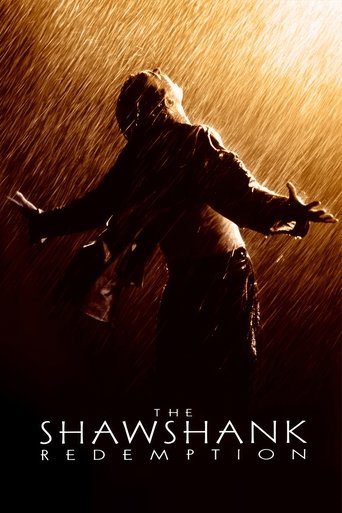
Movie
Album
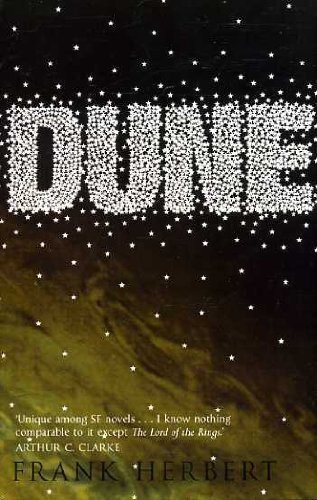
Book
City
Game
Gemma 3n 2BGemma 3n 2B
No pick
No pick
No pick
The Shawshank Redemption
No pick
Dune
No pick
No pick
Mercury 2.5Mercury 2.5
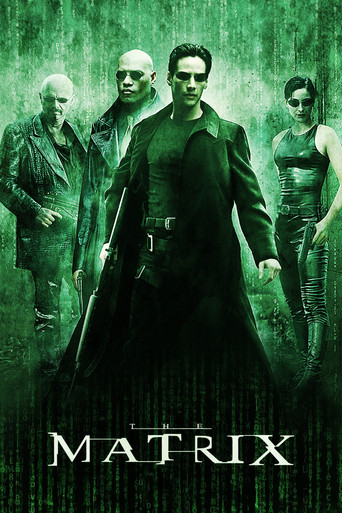


The Matrix
Abbey Road
The Great Gatsby
Tokyo
Minecraft
Price and specs
Not enough votes to call it. On the specs, Mercury 2.5 has the edge: bigger model tier, newer, bigger context window.
| Spec | Gemma 3n 2B | Mercury 2.5 |
|---|---|---|
| Input price | Free | $0.04/M tokens |
| Output price | Free | $0.15/M tokens |
| Context window | 8K tokens | 260K tokens |
| Weights | Open | — |
| Free API (OpenRouter) | No | No |
| Released | Jul 2025 | Sep 2026 |
| At 10M a month | $0 | $0.40 |
Input tokens at list price. No caching, no batch discount.
Where to run it
Gemma 3n 2B
No hosts listed on OpenRouter.
Mercury 2.51 host
Per million tokens. Prices and uptime via OpenRouter, checked 28 Sep 2026.
Common questions
What is the difference between Gemma 3n 2B and Mercury 2.5?
Gemma 3n 2B is developed by Google AI while Mercury 2.5 is developed by Inception. Gemma 3n 2B has a 8K token context window vs Mercury 2.5's 260K. You can compare their actual outputs across 27 challenges on Rival to see how they differ in practice.
Which is better, Gemma 3n 2B or Mercury 2.5?
It depends on your use case. Gemma 3n 2B and Mercury 2.5 each have strengths in different areas. Rival lets you compare their real outputs side-by-side across 27 challenges so you can judge which fits your needs best.
How much does Gemma 3n 2B cost compared to Mercury 2.5?
Gemma 3n 2B costs $0/M input tokens and Mercury 2.5 costs $0.04/M input tokens. Gemma 3n 2B is $0.04/M cheaper per input. Check their side-by-side outputs on Rival to see if the price difference is justified by quality.
How can I compare Gemma 3n 2B and Mercury 2.5 on Rival?
This page shows a side-by-side comparison of Gemma 3n 2B and Mercury 2.5 across shared challenges. You can vote on which model produced the better output in a blind duel. Browsing and voting are free. No account is needed to look; signing in only saves your votes and likes.
More comparisons
Against the newest arrivals
- Gemma 3n 2B vs Solar Mini 4Landed Sep 2026
- Mercury 2.5 vs Qwen3.8 Max PrimeLanded Sep 2026
- Gemma 3n 2B vs GLM 5.3 PrimeLanded Sep 2026
- Mercury 2.5 vs Qwen3.8 Omni FlashLanded Sep 2026
- Gemma 3n 2B vs Command A+Landed Sep 2026
- Mercury 2.5 vs Claude Opus 5.5Landed Sep 2026
- Gemma 3n 2B vs GPT-6 Luna ProLanded Sep 2026
- Mercury 2.5 vs GPT-6 Sol ProLanded Sep 2026


Same lab, same size, long tail
- Gemma 3n 2B vs Gemini 3.8 FlashSame lab
- Gemma 3n 2B vs Gemini 3.7 FlashSame lab
- Mercury 2.5 vs Mercury 2.5 PreviewSame lab
- Mercury 2.5 vs MercurySame lab
- Gemma 3n 2B vs DeepSeek V4 Flash Vision ExpNew provider
- Gemma 3n 2B vs DeepSeek V4 ProNew provider
- Gemma 3n 2B vs DeepSeek V4 Pro 0813New provider
- Gemma 3n 2B vs DeepSeek V4.1 FlashNew provider

