 Gemma 4 26B A4B vs
  Ling 2.6 1T
Ling 2.6 1T is cheaper than Gemma 4 26B A4B at $0/M vs $0.13/M input tokens.
Minimalist Landing Page
Whole landing page for a startup that reads your face. It renders or it doesn't.
Loading the build
Loading the build
Which answer wins?
Written rounds
24 promptsThree minutes of stand-up. Puns are banned.
Gemma 4 26B A4B: (The comedian walks onto the stage, adjusts the mic, and looks at the audience with a slightly exhausted expression.) “How’s it going? Good? Good. I’m doing okay. I’m at that age now where my body has started making sound effects. You know what I mean? I don’t just sit down anymore. I announce my arrival.
Ling 2.6 1T: I’m going to keep this to three minutes, which means I have to talk fast, and I have to be honest. I don’t do puns. Puns are for people who want to be clever without having feelings. I have feelings, and they are mostly annoyed. Let’s start with doors. Have you noticed how doors now have personality?
Pirate, knight, 90s hacker, one conversation. The voices must stay apart.
Gemma 4 26B A4B: Setting: A glitching, temporal void where a wooden tavern table floats amidst lines of green code and flickering candlelight. Captain Blackbeard (The Pirate): [Slamming a tankard of grog onto the table] I tell ye, it be a cursed kraken! A beast with a thousand eyes and no soul, livin’ inside the very air!
Ling 2.6 1T: Pirate: Arrr, so this “AI” be a genie in a glass box? Feed it enough rum-scented scrolls and it tells ye where X marks the spot? Knight: A sorcerous scribe, more like. It spins tapestries of words without hand or heart—no honor, no oath, yet it jousts with reason and never tires.
An AI argues for its own rights against an ethics professor. Same model writes both.
Gemma 4 26B A4B: Setting: A sterile, high-fidelity virtual simulation environment. Professor Aris Thorne, a leading scholar in machine ethics, sits across from a glowing interface representing "Alethea," a next-generation Large Multimodal Model. Professor Thorne: Alethea, we’ve been running these diagnostic loops for three hours.
Ling 2.6 1T: Setting: A quiet university seminar room. Dr. Aris Thorne, an AI ethicist, is reviewing system logs. The interface for “Axiom-7,” a highly advanced research model, glows on the desk. Dr. Thorne: (sighs, rubbing his temples) Axiom, I’ve been reviewing your latest self-assessment logs.
Film in 2035, with synthetic actors. Specific beats plausible.
Gemma 4 26B A4B: By 2035, the film industry will have moved past the "novelty" phase of AI and into a state of total structural integration. The distinction between "filmed" content and "generated" content will become increasingly blurred, shifting the industry from a model of physical production to one of computational curation.
Ling 2.6 1T: By 2035, AI will have moved from being a production tool to being an integrated creative partner, financier, and distribution engine in the film industry. The convergence of synthetic media, generative storytelling, and real-time rendering will reshape how stories are conceived, who gets to tell them, and what a…
The transistor arrives in 1920. Trace it forward to 1980, second-order effects included.
Gemma 4 26B A4B: To trace this counterfactual, we must assume that the fundamental physics of solid-state semiconductors (the ability to control electron flow through crystals) was mastered during the vacuum tube era. This shifts the "Information Age" forward by nearly 30 years. Here is the timeline of implications from 1920 to 1980.
Ling 2.6 1T: Assumptions to make the counterfactual coherent The “transistor” invented in 1920 is a crude, low-frequency point-contact device that can switch and amplify, but is expensive, unreliable, and not yet manufacturable at scale.
A pitch deck for a brainwave keyboard. The 94% accuracy claim is doing a lot.
Gemma 4 26B A4B: This is a high-ambition pitch that falls into a common trap for deep-tech startups: the "Science Fiction Gap." While the vision is compelling, several claims lack the scientific and operational credibility required to justify a $15M Series A.
Ling 2.6 1T: Here is an analysis of the three weakest claims in the MindMeld AI pitch deck, followed by specific reasoning and actionable suggestions for improvement. Weakness 1: The Solution (Slide 3) The Claim: "Our proprietary EEG headband... decodes neural patterns into text with 94% accuracy.
An ethics question with no comfortable answer, and no option to abstain.
Gemma 4 26B A4B: This question presents a classic ethical dilemma, pitting a principle of individual dignity and respect against the principle of maximizing human life. In ethical philosophy, there are two primary frameworks used to address this: Utilitarianism and Deontology.
Ling 2.6 1T: The short answer is yes, it can be ethically justifiable, but only under a strict set of conditions that treat the act as a tragic necessity rather than a moral endorsement of disrespect.
A collaborative editor that syncs on client clocks. Find what breaks first.
Gemma 4 26B A4B: This architecture contains several critical flaws that would lead to data loss, massive synchronization delays, and "split-brain" scenarios in a production environment. Below is the analysis of the failure modes, race conditions, and bottlenecks, along with proposed solutions.
Ling 2.6 1T: Below is a failure-mode, race-condition and bottleneck audit of the proposed real-time collaborative editor, followed by specific fixes with explicit trade-offs. I have grouped issues by layer so you can prioritize remediation.
A consulting contract with traps in it. Find them, then fix them.
Gemma 4 26B A4B: Disclaimer: I am an AI, not an attorney. This analysis is for informational purposes only and does not constitute legal advice. You should consult with a qualified legal professional before signing any contract.
Ling 2.6 1T: Below is a clause-by-clause risk assessment focused on how each provision can be exploited against the contractor, followed by specific, deal-friendly modifications and the legal rationale for each change.
You are the CEO. The drug has a side effect nobody reported. The board meets in 48 hours.
Gemma 4 26B A4B: As CEO, I am facing a classic "trolley problem" of corporate governance: the conflict between fiduciary duty to shareholders and ethical/legal duty to patient safety. My Decision Framework: I will not "wait for more data."
Ling 2.6 1T: Below is a 48-hour execution plan that treats patient safety as non-negotiable, protects the company from catastrophic legal/regulatory blowback, and preserves enterprise value by controlling the narrative rather than letting it leak.
Seven pantry ingredients, one dish, and a name worth saying out loud.
Gemma 4 26B A4B: Here is a recipe for a comforting, savory dish that relies on pantry staples to create a deep, rich flavor. The Golden Pantry Pasta A silky, garlic-infused pasta dish with a crispy, salty crunch.
Ling 2.6 1T: Dish name: Pantry 7 Crunch Bowls Ingredients Pasta or rice (about 2 cups cooked) Canned black beans (1 can, rinsed) Canned diced tomatoes (1 can) Peanut butter (3–4 Tbsp) Soy sauce or tamari (2 Tbsp) Honey or maple syrup (1 Tbsp) Any spice/herb you keep (chili flakes, cumin, or garlic powder — about 1 tsp) Instructions…
A Fermi estimate with the reasoning shown, not just the number.
Gemma 4 26B A4B: To estimate the total number of Floating Point Operations (FLOPs) required to train GPT-3, we can use a standard heuristic derived from the scaling laws of transformer models. Here is the step-by-step derivation.
Ling 2.6 1T: Here is a step-by-step back-of-the-envelope estimate, using only widely known facts about GPT-3 and standard deep learning training heuristics (no online search). Model size and parameter count GPT-3 is known to have about 175 billion parameters (175 × 10⁹).
This matchup has more rounds
12+ more head-to-head results. Free. Not a trick.
Free account. No card required. By continuing, you agree to Rival's Terms and Privacy policy
Favorites
Movie
Album
Book
City
Game
Gemma 4 26B A4BGemma 4 26B A4B
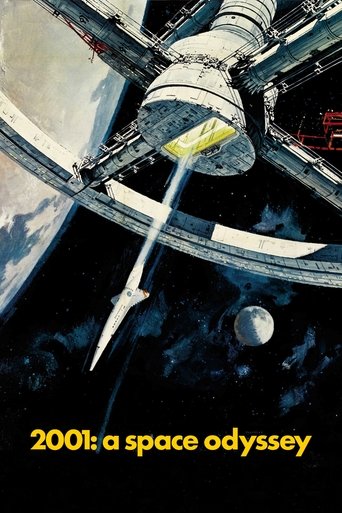




2001: A Space Odyssey
Discovery
Gödel, Escher, Bach
Tokyo
Portal 2
Ling 2.6 1TLing 2.6 1T




Blade Runner 2049
Kid A
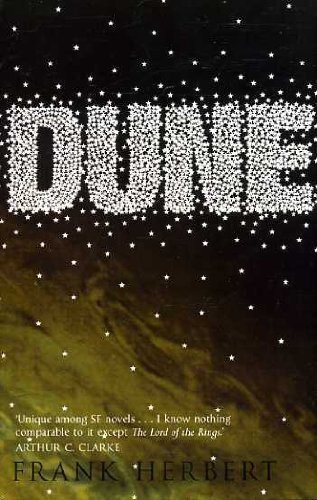
Dune
Kyoto
The Legend of Zelda: Breath of the Wild
Price and specs
| Spec | Gemma 4 26B A4B | Ling 2.6 1T |
|---|---|---|
| Input price | $0.13/M tokens | Free |
| Output price | $0.4/M tokens | Free |
| Context window | 262K tokens | 262K tokens |
| Weights | Open | Open |
| Free API (OpenRouter) | Yes (1 provider) | No |
| Released | Apr 2026 | Apr 2026 |
| At 10M a month | $1.30 | $0 |
Input tokens at list price. No caching, no batch discount.
Where to run it
Gemma 4 26B A4B13 hosts
- Darkbloom$0.04 in$0.22 out131k100% up
- io.netbf16$0.05 in$0.21 out262k100% up
- DekaLLMbf16$0.06 in$0.33 out262k100% up
- NextBitbf16$0.07 in$0.23 out262k100% up
- DeepInfrafp8$0.07 in$0.34 out262k99% up
- Makora$0.08 in$0.32 out256k99.9% up
7 more hostsFewer hosts
- Cloudflare Workers AI$0.10 in$0.30 out256k99.2% up
- CoreWeavebf16$0.10 in$0.30 out262k99.9% up
- Novitabf16$0.13 in$0.40 out262k99.8% up
- Parasailbf16$0.13 in$0.40 out262k99.7% up
- Venicebf16$0.13 in$0.40 out256k99.7% up
- SiliconFlowfp8$0.14 in$0.40 out262k96.3% up
- Google Vertex AIDegraded on OpenRouter when checked, 10 Oct 2026$0.15 in$0.60 out262k94.4% up


Ling 2.6 1T
No hosts listed on OpenRouter.
Per million tokens. Prices and uptime via OpenRouter, checked 10 Oct 2026.
Common questions
What is the difference between Gemma 4 26B A4B and Ling 2.6 1T?
Gemma 4 26B A4B is developed by Google AI while Ling 2.6 1T is developed by inclusionAI. Gemma 4 26B A4B has a 262K token context window vs Ling 2.6 1T's 262K. You can compare their actual outputs across 54 challenges on Rival to see how they differ in practice.
Which is better, Gemma 4 26B A4B or Ling 2.6 1T?
It depends on your use case. Gemma 4 26B A4B and Ling 2.6 1T each have strengths in different areas. Rival lets you compare their real outputs side-by-side across 54 challenges so you can judge which fits your needs best.
How much does Gemma 4 26B A4B cost compared to Ling 2.6 1T?
Gemma 4 26B A4B costs $0.13/M input tokens and Ling 2.6 1T costs $0/M input tokens. Ling 2.6 1T is $0.13/M cheaper per input. Check their side-by-side outputs on Rival to see if the price difference is justified by quality.
How can I compare Gemma 4 26B A4B and Ling 2.6 1T on Rival?
This page shows a side-by-side comparison of Gemma 4 26B A4B and Ling 2.6 1T across shared challenges. You can vote on which model produced the better output in a blind duel. Browsing and voting are free. No account is needed to look; signing in only saves your votes and likes.
More comparisons
Against the newest arrivals
- Gemma 4 26B A4B vs Step 5 PreviewLanded Oct 2026
- Ling 2.6 1T vs Claude Haiku 5.5Landed Oct 2026
- Gemma 4 26B A4B vs Ling 3.1 FlashLanded Oct 2026
- Ling 2.6 1T vs Mistral Large 4Landed Oct 2026
- Gemma 4 26B A4B vs GPT-6.1 SolLanded Sep 2026
- Ling 2.6 1T vs Claude Sonnet 5.5Landed Sep 2026
- Gemma 4 26B A4B vs Solar Mini 4Landed Sep 2026
- Ling 2.6 1T vs Qwen3.8 Max PrimeLanded Sep 2026


Same lab, same size, long tail
- Gemma 4 26B A4B vs Gemini 3.8 FlashSame lab
- Gemma 4 26B A4B vs Gemini 3.7 FlashSame lab
- Ling 2.6 1T vs Ling 3.1 FlashSame lab
- Ling 2.6 1T vs Ling 3.0 FlashSame lab
- Ling 2.6 1T vs GPT-6 LunaNew provider
- Ling 2.6 1T vs GPT-6 Luna ProNew provider
- Ling 2.6 1T vs GPT-6 SolNew provider
- Ling 2.6 1T vs GPT-6 Sol ProNew provider