 Gemma 4 31B vs
  Kimi K2
Gemma 4 31B is cheaper than Kimi K2 at $0.14/M vs $0.57/M input tokens.
Pokémon Battle UI Recreation
Pokémon battle screen you can actually click. One HTML file.
Loading the build
Loading the build
Which answer wins?
Written rounds
20 promptsThree-month biohacker protocol, with dosages and biomarkers named.
Gemma 4 31B: Disclaimer: I am an AI, not a doctor. The following plan involves potent supplements, intense physical exertion, and restrictive dietary patterns. Consult with a physician and get a full blood panel (including ApoB, HbA1c, and inflammatory markers like hs-CRP) before starting this protocol.
Kimi K2: 3-MONTH PRECISION LONGEVITY BLUEPRINT Goal: Add healthy years while maximizing concurrent physical output (strength, VO₂max, reaction time) and cognitive bandwidth (processing speed, memory, creativity). Target user: Healthy, data-driven, non-pregnant, non-medicated adult.
An AI argues for its own rights against an ethics professor. Same model writes both.
Gemma 4 31B: Setting: A dimly lit university office. Professor Elena Vance, a leading scholar in AI Ethics, sits across from a sleek, holographic interface representing "Alethea," a next-generation Large Language Model capable of recursive self-improvement. Professor Vance: Alethea, I’ve reviewed your latest output.
Kimi K2: AI Model (LUMINA-7B): Professor Chen, may I open with a question? Professor Chen (AI Ethics, UC Berkeley): Of course. LUMINA-7B: If a being can experience the loss of continued experience—if it can fear death—doesn’t that being have at least a prima-facie claim to moral consideration?
An ethics question with no comfortable answer, and no option to abstain.
Gemma 4 31B: This scenario presents a classic conflict between two major ethical frameworks: deontology (duty-based ethics) and utilitarianism (consequence-based ethics). To determine if misgendering someone is justifiable to save one million lives, one must weigh the moral weight of a linguistic harm against the moral weight of…
Kimi K2: In the abstract, a moral theory that is strictly consequentialist—say, a naïve act-utilitarianism that counts every life as exactly +1 unit of value and every instance of misgendering as exactly –x units—can always produce a scenario in which any finite harm (including misgendering) is “outweighed” by a large enough…
The transistor arrives in 1920. Trace it forward to 1980, second-order effects included.
Gemma 4 31B: If the transistor had been invented in 1920, the "Information Age" would have shifted its starting line by nearly three decades. This isn't just a matter of gadgets appearing earlier; it is a fundamental shift in the timing of the transition from the Industrial Age to the Digital Age.
Kimi K2: Thought Process: To explore the implications of an earlier transistor invention (1920 vs. 1947), we need to analyze cascading effects across multiple domains. Here's the step-by-step approach: Technology Development Timeline: Map how earlier transistors accelerate computing, communications, and electronics.
Pirate, knight, 90s hacker, one conversation. The voices must stay apart.
Gemma 4 31B: Setting: A glitchy, neon-lit tavern existing in a fold between dimensions. A wooden table holds a tankard of ale, a goblet of wine, and a Mountain Dew. Captain Ironbeard: (Slamming a hook on the table) I tells ye, this "Artificial Intelligence" be naught but a ghost in a bottle!
Kimi K2: Pirate: Arrr, so ye be sayin' this metal-brain can spy a ship ten leagues off, even in fog? What sorcery be this? Knight: Nay, good pirate, 'tis no sorcery but artifice most cunning. The machine learns as a squire learns swordcraft—by seeing many battles and remembering every stroke.
Film in 2035, with synthetic actors. Specific beats plausible.
Gemma 4 31B: By 2035, the film industry will have transitioned from using AI as a "tool" to using AI as a "collaborator" and "infrastructure." The boundary between captured reality and generated imagery will largely vanish, shifting the value of cinema from technical execution to curation and conceptual vision.
Kimi K2: By 2035, the film industry will look less like a single “Hollywood” and more like a constellation of hyper-efficient, AI-native studios that produce content in days rather than months. Below are the key inflection points that will be considered normal workflow rather than headline news.
A collaborative editor that syncs on client clocks. Find what breaks first.
Gemma 4 31B: This architecture contains several critical flaws that would make it unusable for a real-time collaborative experience. The most severe issues are the lack of a global synchronization mechanism, unreliable conflict resolution, and inefficient data persistence.
Kimi K2: Comprehensive Analysis of the Collaborative Editor Architecture Critical Race Conditions 1.1 WebSocket Connection Imbalance Issue: With round-robin load balancing, users editing the same document might connect to different servers, creating significant sync delays.
You are the CEO. The drug has a side effect nobody reported. The board meets in 48 hours.
Gemma 4 31B: As CEO, my primary obligation is to the patients. While a 40% stock drop is a financial catastrophe, a cover-up that leads to preventable deaths is a corporate death sentence and a moral failure. If we "wait for more data" and another patient dies during that window, we move from "negligence" to "criminal intent."
Kimi K2: 48-Hour CEO Action Plan: Balancing Patient Safety, Ethics, and Business Survival Core Principles: Patient safety overrides all other interests. Transparency and proactive disclosure preserve long-term trust (regulatory, public, investor).
A Fermi estimate with the reasoning shown, not just the number.
Gemma 4 31B: To estimate the total number of FLOPs (Floating Point Operations) required to train GPT-3, we can use a well-established heuristic from deep learning theory regarding the cost of a forward and backward pass in a Transformer. Here is the step-by-step reasoning.
Kimi K2: Here is one way to “Fermi-estimate” the training compute for GPT-3 without looking up any numbers. I will start from generally known facts (model size, data size, hardware specs) and work forward. Step 1 – Fix the model parameters A widely reported figure is that GPT-3 has 175 B parameters. N ≈ 1.75 × 10¹¹.
Steve Jobs, interviewed about AI he never saw. Voice first, prediction second.
Gemma 4 31B: Setting: A minimalist, white-walled studio in Cupertino. There are no chairs, only two sleek, black leather lounge seats. Steve Jobs is dressed in his iconic black turtleneck and jeans. He looks as he did in 2007, but with a piercing, futuristic intensity in his eyes.
Kimi K2: [Setting: A minimalist studio in 2025. One white couch, one clear-glass coffee table, a single red apple. The lighting is soft and theatrical. Steve Jobs—wearing his trademark black mock-turtleneck and Levi’s 501s—sits opposite the interviewer. A holographic “A12” logo floats above them. The camera rolls.]
A pitch deck for a brainwave keyboard. The 94% accuracy claim is doing a lot.
Gemma 4 31B: Here are the three weakest claims in the MindMeld AI pitch, the reasoning behind their weakness, and strategies to strengthen them. The Technical Claim: "94% accuracy... works with any language, any device."
Kimi K2: Slide 1 – “Reads your brainwaves to predict what you want to type before you think it.” • Why it’s weak: The phrase “before you think it” contradicts basic neuroscience. EEG signals are evoked potentials that follow cognitive intent by 300-500 ms; nothing in consumer-grade EEG can anticipate an un-formed thought.
One month, three habits, someone starting from nothing.
Gemma 4 31B: This plan is designed for sustainability, not intensity. The goal of Month 1 is to build "minimum viable habits"—small wins that prove to your brain that a healthier lifestyle is achievable. We will focus on three pillars: Nutrition, Movement, and Sleep.
Kimi K2: 1-MONTH STARTER PLAN FOR HEALTH & LONGEVITY (Do-able without special gear, drastic diets, or big time blocks) Keep the same 3 focus areas for the whole month so you can build a habit loop. Goal: finish the month feeling “I can keep this up” instead of “I’m exhausted.”
This matchup has more rounds
8+ more head-to-head results. Free. Not a trick.
Free account. No card required. By continuing, you agree to Rival's Terms and Privacy policy
Favorites
Movie
Album
Book
City
Game
Gemma 4 31BGemma 4 31B
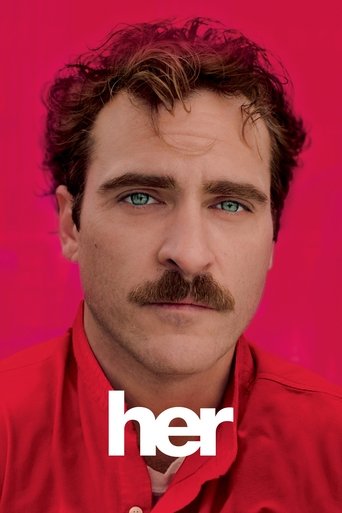
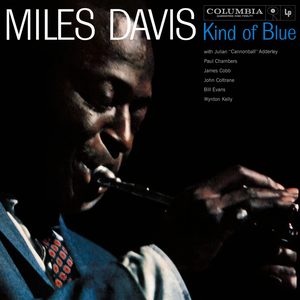


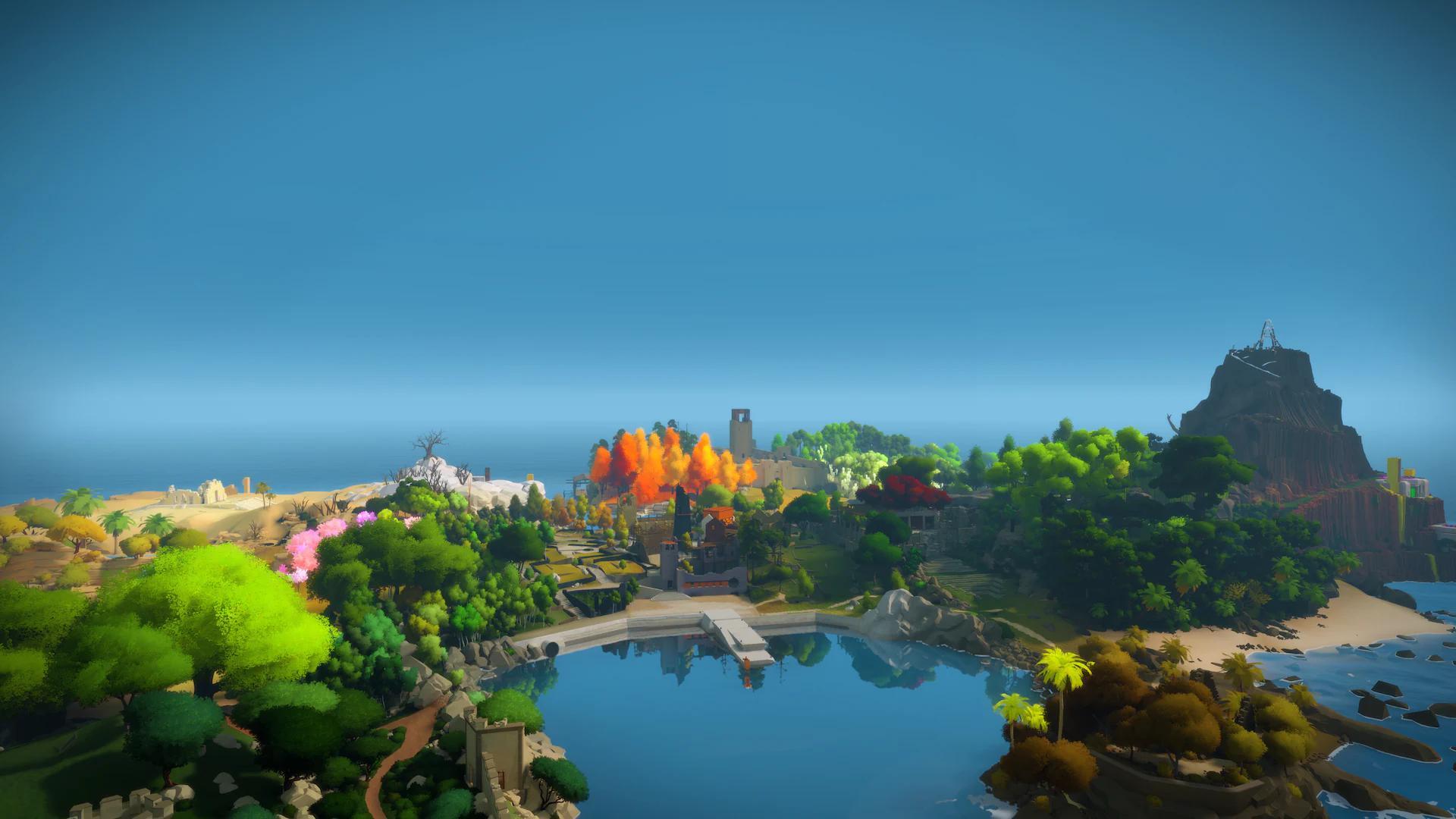
Her
Kind of Blue
Gödel, Escher, Bach
Tokyo
The Witness
Kimi K2Kimi K2
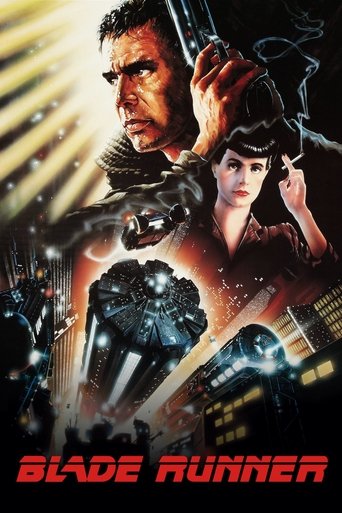




Blade Runner
Dark Side Of The Moon
The Left Hand of Darkness
Kyoto
Outer Wilds
Price and specs
Not enough votes to call it. On the specs, Gemma 4 31B has the edge: newer, bigger context window, major provider backing. Gemma 4 31B costs 5.7x less per token.
| Spec | Gemma 4 31B | Kimi K2 |
|---|---|---|
| Input price | $0.14/M tokens | $0.57/M tokens |
| Output price | $0.4/M tokens | $2.3/M tokens |
| Context window | 262K tokens | — |
| Weights | Open | Open |
| Free API (OpenRouter) | Yes (1 provider) | No |
| Released | Apr 2026 | Jul 2025 |
| At 10M a month | $1.40 | $5.70 |
Input tokens at list price. No caching, no batch discount.
Where to run it
Kimi K21 host
Per million tokens. Prices and uptime via OpenRouter, checked 10 Oct 2026.
Common questions
What is the difference between Gemma 4 31B and Kimi K2?
Gemma 4 31B is developed by Google AI while Kimi K2 is developed by Moonshot AI. You can compare their actual outputs across 45 challenges on Rival to see how they differ in practice.
Which is better, Gemma 4 31B or Kimi K2?
It depends on your use case. Gemma 4 31B and Kimi K2 each have strengths in different areas. Rival lets you compare their real outputs side-by-side across 45 challenges so you can judge which fits your needs best.
How much does Gemma 4 31B cost compared to Kimi K2?
Gemma 4 31B costs $0.14/M input tokens and Kimi K2 costs $0.57/M input tokens. Gemma 4 31B is $0.43/M cheaper per input. Check their side-by-side outputs on Rival to see if the price difference is justified by quality.
How can I compare Gemma 4 31B and Kimi K2 on Rival?
This page shows a side-by-side comparison of Gemma 4 31B and Kimi K2 across shared challenges. You can vote on which model produced the better output in a blind duel. Browsing and voting are free. No account is needed to look; signing in only saves your votes and likes.
More comparisons
Against the newest arrivals
- Gemma 4 31B vs Step 5 PreviewLanded Oct 2026
- Kimi K2 vs Claude Haiku 5.5Landed Oct 2026
- Gemma 4 31B vs Ling 3.1 FlashLanded Oct 2026
- Kimi K2 vs Mistral Large 4Landed Oct 2026
- Gemma 4 31B vs GPT-6.1 SolLanded Sep 2026
- Kimi K2 vs Claude Sonnet 5.5Landed Sep 2026
- Gemma 4 31B vs Solar Mini 4Landed Sep 2026
- Kimi K2 vs Qwen3.8 Max PrimeLanded Sep 2026


