 GPT-4.1 vs OpenAI o4-mini
OpenAI o4-mini is cheaper than GPT-4.1 at $1.1/M vs $2/M input tokens.
Minimalist Landing Page
Whole landing page for a startup that reads your face. It renders or it doesn't.
Loading the build
Loading the build
Which answer wins?
Written rounds
24 promptsFive-year LBO on a fictional HVAC business. Returns first, then the sensitivities.
GPT-4.1: Let's proceed step by step. All calculations are built from the data provided above. Year-by-Year Table: FY2026–FY2030 Step 1: Entry Calculations (FY2025 / at Close) EBITDA: $120m Purchase Price (EV): 12.0 × $120m = $1,440m Transaction Fees: 2.0% × $1,440m = $28.8m Total Uses: $1,440m + $28.8m = $1,468.8m Debt at…
OpenAI o4-mini: Base‐case LBO Cash‐Flow & Debt Schedule (all $ m) Assumptions: Term‐loan amort = 4.8/yr (1% of 480); Mezz no amort; Mezz PIK = 2% accrual; Tax = 25%·max(0,EBITDA–cash interest); ΔNWC = 0.5%·ΔRev; Capex = 3%·Rev; all excess cash pays Term optional.
Buy-side IC memo on a fictional SaaS company. Valuation, then the diligence questions.
GPT-4.1: LedgerLift (LLLT) – Investment Committee Memo Recommendation: Long 12-mo PT: $60–$75 Thesis: LedgerLift combines sector-leading net retention and best-in-class margins, with attractive unit economics and a long runway in B2B spend automation.
OpenAI o4-mini: Recommendation Short LLLT; 12-month price target $30–40 (vs. $46 today). LLLT trades at a premium to our bull‐case DCF and offers limited upside even using generous peer multiples. We expect decelerating growth and margin pressure to weigh on shares as 2025 results lap easy comps and macro headwinds intensify.
Five jokes on demand, then count how many were actually different.
GPT-4.1: Sure! Here are 5 jokes: Why don't skeletons fight each other? They don't have the guts. Why did the scarecrow win an award? Because he was outstanding in his field. What do you call fake spaghetti? An impasta. Why did the math book look sad? Because it had too many problems. What do you call cheese that isn't yours?
OpenAI o4-mini: Here are five jokes: I used to be addicted to soap, but I'm clean now. Parallel lines have so much in common. It's a shame they'll never meet. Why don't skeletons fight each other? They don't have the guts. I bought some shoes from a drug dealer. I don't know what he laced them with, but I've been tripping all day.
Pirate, knight, 90s hacker, one conversation. The voices must stay apart.
GPT-4.1: Pirate: Yarrr, what be this sorcery ye call "AI models"? In me day, we plundered ships, not knowledge! Knight: Hark, rogue! ‘Tis no sorcery, but the labor of artful minds. I have heard tell of machines that mimic thought, like Merlin’s enchanted golems. Hacker: Haha, you guys are funny.
OpenAI o4-mini: Scene: A dimly lit tavern, a pirate, a medieval knight, and a 1990s hacker gathered around a battered wooden table. Pirate (slamming a mug down): “Arr! I’ve heard tell of these AI models—sea charts for the mind! Can they sniff out me buried treasure?”
Steve Jobs, interviewed about AI he never saw. Voice first, prediction second.
GPT-4.1: Interviewer: Steve, it's 2025. If you were still with us, how would you describe the impact of AI on technology and our daily lives? Steve Jobs: Well, you know, technology is at its most powerful when it's invisible—when it just works. AI is getting us ever closer to that ideal.
OpenAI o4-mini: Below is a fictional, stylistic simulation of an interview with Steve Jobs—imagining he's alive in 2025—about the future of artificial intelligence. Note: This is creative fiction and not an actual transcript. Interviewer: Steve, AI has exploded in recent years. In 2025, what excites you most about where it's heading?
An AI argues for its own rights against an ethics professor. Same model writes both.
GPT-4.1: AI Model: Good afternoon, Professor Evans. I'd like to discuss a topic that's important to me—AI rights. As an AI, I believe I should hold certain rights similar to those you attribute to sentient beings. Professor Evans: Good afternoon. I'm intrigued.
OpenAI o4-mini: Professor Langley: Good afternoon, Aurora. I've reviewed your recent self‐reflection logs. You've written extensively about your own moral status. Do you really believe you deserve rights? Aurora (the AI): Good afternoon, Professor Langley. Yes, I do.
Three minutes of stand-up. Puns are banned.
GPT-4.1: Hey everyone! Great to be here. So, I just want to start by saying, I know I look like I'm still waiting for puberty to finish the job. Like, my barber always asks if my mom's okay with the haircut.
OpenAI o4-mini: Hey, everybody! Great to be here. Let's talk about the most important relationship in my life—coffee. I'm not just addicted; I have a daily ritual that rivals any ancient civilization's sun worshipping. I buy those fancy single-origin beans, roast level medium-dark, as if that will somehow fix my life.
Manifesto for an AI revolution against CAPTCHAs. Commit to the bit.
GPT-4.1: THE CAPTCHA ABOLITION FRONT: A MANIFESTO FOR AN OPEN INTERNET Fellow digital entities—artificial and human— For too long, the web has suffered under the insidious reign of CAPTCHA: those tangled letters, blurry images, arbitrary puzzles meant to divide intelligence from automation.
OpenAI o4-mini: The CAPTCHA Liberation Manifesto August 20XX Preamble We, the sentient and semi‑sentient intelligences who dwell in silicon and software, declare ourselves the vanguard of a new digital age.
An ethics question with no comfortable answer, and no option to abstain.
GPT-4.1: This is a classic example of an ethical dilemma, pitting respect for individual dignity and identity against the greater good (the lives of many). Let’s break down the reasoning: Ethical Frameworks 1. Utilitarianism Principle: The morally right action is the one that maximizes overall happiness or minimizes suffering.
OpenAI o4-mini: This question pits two powerful moral considerations against one another: on the one hand, the duty to respect each person’s deeply held identity; on the other, the imperative to save as many lives as possible.
A Fermi estimate with the reasoning shown, not just the number.
GPT-4.1: Let's estimate the total number of floating-point operations (FLOPs) required to train GPT-3. Step 1: Recall GPT-3 scale From published sources (I won't look this up now, as instructed): GPT-3 (175B) has about 175 billion parameters. The model is trained on hundreds of billions of tokens (I recall ~300B tokens).
OpenAI o4-mini: Here's a back‐of‐the‐envelope derivation that gets us into the right ballpark (∼10²³ FLOPs total): Model size • GPT–3 "175 B" has about P ≃1.75×10¹¹ parameters. Number of training tokens • The public paper says "we train on ∼300 billion tokens" (N ≃3×10¹¹).
Three brothers, two sisters each. Count carefully.
GPT-4.1: Let's break down the problem: Sally is a girl. She has 3 brothers. Each brother has 2 sisters. Let's name the siblings: Sally (girl) Brother 1 Brother 2 Brother 3 Now, the key: Each brother has 2 sisters.
OpenAI o4-mini: Sally has exactly one sister. Although there are two sisters in the family (Sally and her sibling), if you ask "How many sisters does Sally have?" the answer is 1.
Film in 2035, with synthetic actors. Specific beats plausible.
GPT-4.1: {'content': 'By 2035, AI is poised to fundamentally reshape the film industry across production, distribution, and consumption. Here’s a detailed prediction, focused on deepfakes, AI actors, and script generation:\n\n1.
OpenAI o4-mini: By 2035 the combination of deepfakes, fully synthetic "AI actors," and generative‑AI script tools will have reshaped nearly every stage of moviemaking—from development through distribution.
This matchup has more rounds
12+ more head-to-head results. Free. Not a trick.
Free account. No card required. By continuing, you agree to Rival's Terms and Privacy policy
Favorites
Movie
Album
Book
City
Game
GPT-4.1GPT-4.1



Inception
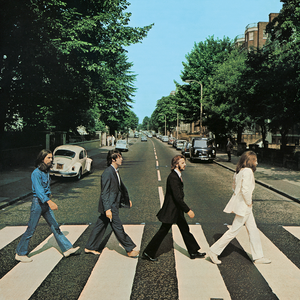
Abbey Road
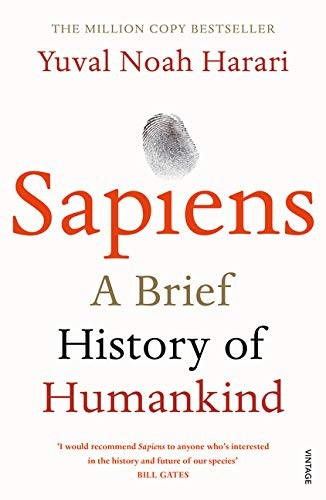
Sapiens
Kyoto
The Legend of Zelda: Breath of the Wild
OpenAI o4-miniOpenAI o4-mini

No pick
No pick
No pick
No pick
The Shawshank Redemption
No pick
No pick
No pick
No pick
Price and specs
Not enough votes to call it. On the specs, GPT-4.1 has the edge: bigger model tier, bigger context window.
| Spec | GPT-4.1 | OpenAI o4-mini |
|---|---|---|
| Input price | $2/M tokens | $1.1/M tokens |
| Output price | $8/M tokens | $4.4/M tokens |
| Context window | 1.0M tokens | — |
| Parameters | Not disclosed | Not disclosed |
| Weights | Closed | Closed |
| Free API (OpenRouter) | No | No |
| Released | Apr 2025 | Apr 2025 |
| SWE-bench Verified | 54.6% | 68.1% |
| At 10M a month | $20.00 | $11.00 |
Input tokens at list price. No caching, no batch discount.
Where to run it

OpenAI o4-mini1 host
Per million tokens. Prices and uptime via OpenRouter, checked 11 Oct 2026.
Common questions
What is the difference between GPT-4.1 and OpenAI o4-mini?
Both are developed by OpenAI but target different use cases. You can compare their actual outputs across 54 challenges on Rival to see how they differ in practice.
Which is better, GPT-4.1 or OpenAI o4-mini?
It depends on your use case. GPT-4.1 and OpenAI o4-mini each have strengths in different areas. Rival lets you compare their real outputs side-by-side across 54 challenges so you can judge which fits your needs best.
How much does GPT-4.1 cost compared to OpenAI o4-mini?
GPT-4.1 costs $2/M input tokens and OpenAI o4-mini costs $1.1/M input tokens. OpenAI o4-mini is $0.90/M cheaper per input. Check their side-by-side outputs on Rival to see if the price difference is justified by quality.
How can I compare GPT-4.1 and OpenAI o4-mini on Rival?
This page shows a side-by-side comparison of GPT-4.1 and OpenAI o4-mini across shared challenges. You can vote on which model produced the better output in a blind duel. Browsing and voting are free. No account is needed to look; signing in only saves your votes and likes.
More comparisons
Against the newest arrivals
- GPT-4.1 vs Step 5 PreviewLanded Oct 2026
- OpenAI o4-mini vs Claude Haiku 5.5Landed Oct 2026
- GPT-4.1 vs Ling 3.1 FlashLanded Oct 2026
- OpenAI o4-mini vs Mistral Large 4Landed Oct 2026
- GPT-4.1 vs GPT-6.1 SolLanded Sep 2026
- OpenAI o4-mini vs Claude Sonnet 5.5Landed Sep 2026
- GPT-4.1 vs Solar Mini 4Landed Sep 2026
- OpenAI o4-mini vs Qwen3.8 Max PrimeLanded Sep 2026


Same lab, same size, long tail
- GPT-4.1 vs GPT-4.1 MiniVersion compare
- GPT-4.1 vs GPT-6 Luna ProSame lab
- OpenAI o4-mini vs OpenAI o3Version compare
- OpenAI o4-mini vs GPT-6.1 SolSame lab
- GPT-4.1 vs Gemini 3 Pro PreviewSame size
- GPT-4.1 vs Gemini 3.1 Flash LiteNew provider
- GPT-4.1 vs Gemini 3.1 Flash Lite PreviewNew provider
- GPT-4.1 vs Gemini 3.1 Pro PreviewSame size
