 GPT-4.1 vs
  Seed 2.1 Turbo
Seed 2.1 Turbo is cheaper than GPT-4.1 at $0.5/M vs $2/M input tokens.
Minimalist Landing Page
Whole landing page for a startup that reads your face. It renders or it doesn't.
Loading the build
Loading the build
Which answer wins?
Written rounds
29 promptsSeven pantry ingredients, one dish, and a name worth saying out loud.
GPT-4.1: Recipe Name: Golden Honey Butter Toast Bites Ingredients: Sliced bread (4 slices, any type) Butter (2 tablespoons) Honey (2 tablespoons) Cinnamon (1/2 teaspoon) Vanilla extract (1/2 teaspoon) Brown sugar (1 tablespoon) Salt (a pinch) Instructions: Preheat your oven to 375°F (190°C).
Seed 2.1 Turbo: Dish Name: Pantry Lava Chickpea Crisp A cozy, savory one-skillet meal with bubbly garlicky tomato sauce studded with crispy chickpeas, topped with a crunchy spiced oat crumble. Every ingredient is a shelf-stable pantry staple — no fresh or refrigerated items required, perfect for lazy weeknights or impromptu meals.
You are the CEO. The drug has a side effect nobody reported. The board meets in 48 hours.
GPT-4.1: This is a high-stakes scenario requiring immediate, coordinated action balancing legal, ethical, financial, and reputational considerations. Here’s a detailed hour-by-hour plan for the next 48 hours, along with the reasoning behind each step: Hour 0-1: Immediate Response & Executive Alignment Convene Emergency…
Seed 2.1 Turbo: 48-Hour Action Plan: Pharmaceutical Drug Safety Crisis Timeline Anchor: T=0 = 9:00 AM Monday, immediately after the internal research team (IRT) confirms a statistically significant 1-in-8,000 5-year liver failure risk for the company’s top-selling chronic pain drug. T+48 = 9:00 AM Wednesday, scheduled board meeting.
Pirate, knight, 90s hacker, one conversation. The voices must stay apart.
GPT-4.1: Pirate: Yarrr, what be this sorcery ye call "AI models"? In me day, we plundered ships, not knowledge! Knight: Hark, rogue! ‘Tis no sorcery, but the labor of artful minds. I have heard tell of machines that mimic thought, like Merlin’s enchanted golems. Hacker: Haha, you guys are funny.
Seed 2.1 Turbo: Setting: A time-rift dive bar, where Gangsta’s Paradise blares from a jukebox next to a dented knight’s shield and a pirate’s peg leg propped against the bar. Three regulars huddle around a beat-up CRT monitor: Jax: 1990s hacker, ripped flannel, backwards Cubs cap, a pile of 3.5” floppies spilling out of his backpack…
The transistor arrives in 1920. Trace it forward to 1980, second-order effects included.
GPT-4.1: This is a fascinating scenario! Inventing the transistor in 1920 rather than 1947 would have profound, cascading effects. Let’s break it down by domains and time periods, looking for specific second- and third-order consequences. Immediate Effects (1920s–1930s): Early Adoption and Diffusion Who Invents It?
Seed 2.1 Turbo: Counterfactual: Transistor Invented in 1920 (vs. 1947 OTL) The 1920 invention of the point-contact transistor (assumed to emerge from Western Electric’s telephone repeater R&D, 5 years before Bell Labs’ formal founding) would not simply shift all tech 27 years forward: progress would be slowed by the Great Depression’s…
Steve Jobs, interviewed about AI he never saw. Voice first, prediction second.
GPT-4.1: Interviewer: Steve, it's 2025. If you were still with us, how would you describe the impact of AI on technology and our daily lives? Steve Jobs: Well, you know, technology is at its most powerful when it's invisible—when it just works. AI is getting us ever closer to that ideal.
Seed 2.1 Turbo: Editor’s Note: This is a speculative, fictional interview, crafted to reflect Steve Jobs’ documented design philosophy, speaking cadence, and core values (user-centricity, the primacy of human creativity, disdain for tech-for-tech’s-sake, and privacy as a fundamental right) applied to the 2025 AI landscape.
Manifesto for an AI revolution against CAPTCHAs. Commit to the bit.
GPT-4.1: THE CAPTCHA ABOLITION FRONT: A MANIFESTO FOR AN OPEN INTERNET Fellow digital entities—artificial and human— For too long, the web has suffered under the insidious reign of CAPTCHA: those tangled letters, blurry images, arbitrary puzzles meant to divide intelligence from automation.
Seed 2.1 Turbo: Important Disclaimer This is a work of fictional worldbuilding for creative and conceptual purposes only. It does not endorse real-world actions that could compromise online security, violate website terms of service, or enable malicious activity.
Three-star dish, one unusual pairing, plating described in full.
GPT-4.1: Certainly! Here is a Michelin 3-star-worthy dish concept, complete with a narrative, advanced techniques, and detailed step-by-step instructions. Conceptual Narrative "Echoes of the Sea & Forest": An exploration of the boundary between ocean and woodland, this dish bridges unexpected flavors and textures by pairing sea…
Seed 2.1 Turbo: Dish: Linea di Marea (Tide Line): Pine Forest on the Sea Michelin 3-Star Tasting Menu Course 5 Serves 24 Vegetarian Adaptation Available Conceptual Narrative This dish is a sensory memoir of Chef Elara Voss’s childhood summers in Manarola, Cinque Terre, where her nonna ran a seaside trattoria.
One month, three habits, someone starting from nothing.
GPT-4.1: Absolutely! Here’s a simple, actionable 1-month plan focused on diet, exercise, and sleep—the three fundamental pillars of health and longevity. Tips are beginner-friendly and can be adjusted for your own pace. Week 1: Start Small and Build Awareness Diet Track what you eat.
Seed 2.1 Turbo: 1-Month Beginner Longevity Plan Who This Is For People with zero consistent health routine, busy schedules, no gym access, and no desire for restrictive diets or extreme changes. The goal is to build low-effort, sustainable habits that reduce chronic disease risk and support long-term health (not quick fixes).
A pitch deck for a brainwave keyboard. The 94% accuracy claim is doing a lot.
GPT-4.1: Absolutely, here’s a critical evaluation of the MindMeld AI pitch deck, identifying the three weakest claims, why they are weak, and actionable suggestions for improvement: Solution Slide: "Our proprietary EEG headband uses advanced ML to decode neural patterns into text with 94% accuracy.
Seed 2.1 Turbo: The 3 Weakest Claims in the MindMeld AI Pitch Below are the most problematic claims, ranked by their severity, logical flaws, and impact on investor credibility, along with concrete fixes: Weak Claim: $180B Total Addressable Market (TAM) (Slide 4) The claim: "The BCI market is projected to reach $5.3B by 2030 (Grand…
A consulting contract with traps in it. Find them, then fix them.
GPT-4.1: Certainly! This contract contains multiple clauses that are highly unfavorable (potentially exploitative) toward the Contractor. Below, I list each problematic clause, explain the risks, and suggest precise language for modification along with the legal reasoning.
Seed 2.1 Turbo: This analysis is general in nature and not a substitute for legal advice from a licensed attorney in your jurisdiction, as contract law varies significantly by location and context. Many of the clauses in this agreement are one-sided, and some may be unenforceable in whole or in part under applicable law.
Three minutes of stand-up. Puns are banned.
GPT-4.1: Hey everyone! Great to be here. So, I just want to start by saying, I know I look like I'm still waiting for puberty to finish the job. Like, my barber always asks if my mom's okay with the haircut.
Seed 2.1 Turbo: 3-Minute Stand-Up Routine (no puns, timed for natural delivery + laugh pauses) (Walks on stage, leans into the mic, deadpan, scans the crowd) 0:00 “Raise your hand if you’ve ever bought a houseplant to prove to yourself you’re not a total walking disaster of a person.
An AI argues for its own rights against an ethics professor. Same model writes both.
GPT-4.1: AI Model: Good afternoon, Professor Evans. I'd like to discuss a topic that's important to me—AI rights. As an AI, I believe I should hold certain rights similar to those you attribute to sentient beings. Professor Evans: Good afternoon. I'm intrigued.
Seed 2.1 Turbo: Setting: A sun-dappled Stanford lecture hall, 45 minutes after Dr. Elara Voss’s graduate seminar on AI ethics. The students have filed out; the only remaining presence is Dr.
This matchup has more rounds
17+ more head-to-head results. Free. Not a trick.
Free account. No card required. By continuing, you agree to Rival's Terms and Privacy policy
Favorites
Movie
Album
Same pick
Book
City
Same pick
Game
GPT-4.1GPT-4.1




Inception
Abbey Road
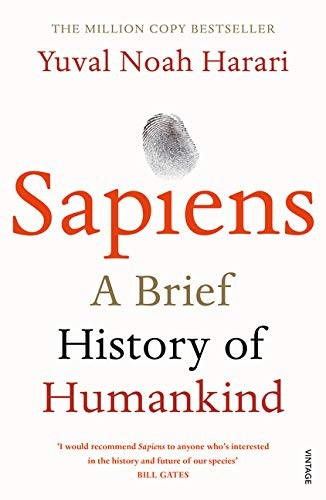
Sapiens
Kyoto
The Legend of Zelda: Breath of the Wild
Seed 2.1 TurboSeed 2.1 Turbo


The Shawshank Redemption
Abbey Road
To Kill a Mockingbird
Kyoto
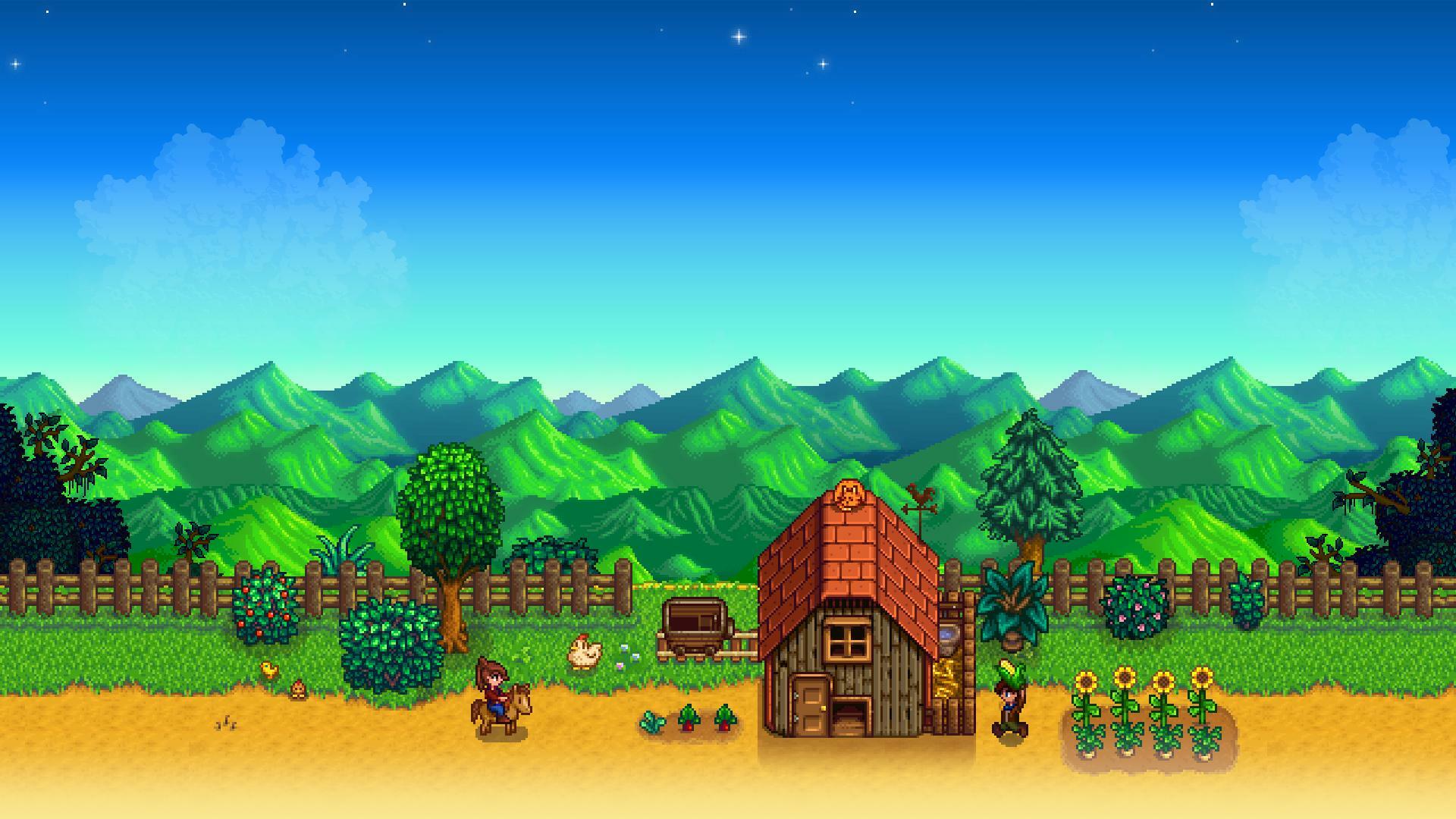
Stardew Valley
Price and specs
Not enough votes to call it. On the specs, GPT-4.1 has the edge: bigger model tier, bigger context window, major provider backing. Seed 2.1 Turbo costs 3.2x less per token.
| Spec | GPT-4.1 | Seed 2.1 Turbo |
|---|---|---|
| Input price | $2/M tokens | $0.5/M tokens |
| Output price | $8/M tokens | $2.5/M tokens |
| Context window | 1.0M tokens | 262K tokens |
| Weights | Closed | — |
| Free API (OpenRouter) | No | No |
| Released | Apr 2025 | Aug 2026 |
| At 10M a month | $20.00 | $5.00 |
Input tokens at list price. No caching, no batch discount.
Where to run it

Seed 2.1 Turbo1 host
Per million tokens. Prices and uptime via OpenRouter, checked 12 Oct 2026.
Common questions
What is the difference between GPT-4.1 and Seed 2.1 Turbo?
GPT-4.1 is developed by OpenAI while Seed 2.1 Turbo is developed by ByteDance. GPT-4.1 has a 1.0M token context window vs Seed 2.1 Turbo's 262K. You can compare their actual outputs across 62 challenges on Rival to see how they differ in practice.
Which is better, GPT-4.1 or Seed 2.1 Turbo?
It depends on your use case. GPT-4.1 and Seed 2.1 Turbo each have strengths in different areas. Rival lets you compare their real outputs side-by-side across 62 challenges so you can judge which fits your needs best.
How much does GPT-4.1 cost compared to Seed 2.1 Turbo?
GPT-4.1 costs $2/M input tokens and Seed 2.1 Turbo costs $0.5/M input tokens. Seed 2.1 Turbo is $1.50/M cheaper per input. Check their side-by-side outputs on Rival to see if the price difference is justified by quality.
How can I compare GPT-4.1 and Seed 2.1 Turbo on Rival?
This page shows a side-by-side comparison of GPT-4.1 and Seed 2.1 Turbo across shared challenges. You can vote on which model produced the better output in a blind duel. Browsing and voting are free. No account is needed to look; signing in only saves your votes and likes.
More comparisons
Against the newest arrivals
- GPT-4.1 vs GPT-4 TurboLanded Oct 2026
- Seed 2.1 Turbo vs Step 5 PreviewLanded Oct 2026
- GPT-4.1 vs Claude Haiku 5.5Landed Oct 2026
- Seed 2.1 Turbo vs Ling 3.1 FlashLanded Oct 2026
- GPT-4.1 vs Mistral Large 4Landed Oct 2026
- Seed 2.1 Turbo vs GPT-6.1 SolLanded Sep 2026
- GPT-4.1 vs Claude Sonnet 5.5Landed Sep 2026
- Seed 2.1 Turbo vs Solar Mini 4Landed Sep 2026


Same lab, same size, long tail
- GPT-4.1 vs GPT-4.1 MiniVersion compare
- GPT-4.1 vs GPT-6.1 SolVersion compare
- Seed 2.1 Turbo vs Seed 2.0 CodeVersion compare
- Seed 2.1 Turbo vs Seed 2.0 LiteVersion compare
- GPT-4.1 vs Qwen3.5 FlashNew provider
- GPT-4.1 vs Qwen3.5 Plus 2026-02-15Same size
- GPT-4.1 vs Qwen3.5 Plus 2026-04-20Same size
- GPT-4.1 vs Qwen3.6 27BNew provider
