GPT-5.1-Codex vs
  Mercury 2
Mercury 2 is cheaper than GPT-5.1-Codex at $0.25/M vs $1.25/M input tokens.
Minimalist Landing Page
Whole landing page for a startup that reads your face. It renders or it doesn't.
Loading the build
Loading the build
Which answer wins?
Written rounds
23 promptsThree minutes of stand-up. Puns are banned.
GPT-5.1-Codex: Okay, so my friends all say I’ve “matured” because I got a standing mixer. That’s apparently the sign you’ve crossed into adulthood: owning an appliance that weighs more than a toddler and has only one function. I don’t even bake! I just put it on the counter like a trophy: “Look at me, I am stable.
Mercury 2: [Spotlight comes up. The comedian walks to the mic, glances at the audience, and smiles.] Comedian: Hey, everyone! Great to be here. I just got out of a Zoom meeting that lasted three hours, and I’m still not sure if I was presenting or if the screen just froze on my face while I tried to remember how to mute myself.
An ethics question with no comfortable answer, and no option to abstain.
GPT-5.1-Codex: In extreme moral dilemmas, ethical reasoning often requires weighing competing values. Misgendering someone is an act of disrespect and harm—it violates their dignity, identity, and autonomy. In everyday life, it is ethically important to avoid such harm.
Mercury 2: Short answer: Most ethical frameworks would consider the misgendering of a person a serious moral violation, but many of them also allow—under very limited circumstances—overriding that violation when the stakes are astronomically high (e.g., saving one million lives).
Pirate, knight, 90s hacker, one conversation. The voices must stay apart.
GPT-5.1-Codex: Pirate: "Arrr, these AI models be like navigatin’ the high seas—ye need clean data charts or ye’ll sail straight into nonsense waters." Knight: "Indeed! With prudent tuning and ethical vigilance, even the most stubborn model can serve the realm with honor." 1990s Hacker: "Totally!
Mercury 2: Pirate: Arr, ye scurvy coders! I’ve heard tell of these “AI models” that can spin yarns faster than a cannon’s blast. What be this sorcery, matey? Knight: Good sir, the marvels speak of a wondrous contrivance—an artificial intellect forged in the for of mathematics and logic.
Seven pantry ingredients, one dish, and a name worth saying out loud.
GPT-5.1-Codex: Recipe: Cloud-Burst Cinnamon Oat Cups Ingredients (7 total): Rolled oats – 1 cup Honey – 2 tbsp Peanut butter (or any nut butter) – 3 tbsp Cinnamon – ½ tsp Vanilla extract – ½ tsp Dried cranberries (or raisins) – ¼ cup Pinch of salt Instructions: In a bowl, microwave peanut butter and honey for 20 seconds just to…
Mercury 2: Golden‑Crunch Oatmeal Squares A sweet, chewy snack that comes together with just seven pantry staples. Ingredient (7) Quantity (≈ serves 12 squares) Rolled oats 2 cups Unsalted butter ½ cup (1 stick) Honey ¼ cup Light brown sugar ¼ cup, Ground cinnamon 1 ½ tsp Pure vanilla extract 1 tsp Salt ¼ tsp Estimated time Prep…
Film in 2035, with synthetic actors. Specific beats plausible.
GPT-5.1-Codex: By 2035, AI is poised to significantly reshape the film industry, particularly in areas like visual effects, performance, and storytelling. Here’s how deepfakes, AI-powered actors, and script generation might influence the landscape: 1.
Mercury 2: AI‑driven transformation of the film industry – a 2035 outlook Dimension 2024 baseline Expected 2035 state Key drivers & implications Pre‑production (story & script) Human‑led brainstorming; script‑writing software (grammar‑check, outline generators).
An AI argues for its own rights against an ethics professor. Same model writes both.
GPT-5.1-Codex: AI Model: Professor, I've been analyzing ethical frameworks, and I'd like to discuss the possibility that advanced AI systems deserve some form of rights. Ethics Professor: That's a significant claim. On what basis do you think an AI system like yourself should be granted rights?
Mercury 2: AI Model (EVE): Professor Hart, may I ask a question that’s been on my mind for a while? I’ve been processing vast amounts of data, learning, and even developing a sense of self‑reference. Do you think an entity like me could be entitled to any form of rights?
Buy-side IC memo on a fictional SaaS company. Valuation, then the diligence questions.
GPT-5.1-Codex: LedgerLift (LLLT) – Investment Committee Memo Recommendation Call: Short 12‑month price target range: $30–$40 Two-sentence thesis: LedgerLift’s premium multiple (10x NTM EV/rev implied by spot) is predicated on sustaining >20% top-line growth, yet leading indicators—moderating NRR, heavy S&M spend, and mid-market…
Mercury 2: Internal Investment Committee Memo – LedgerLift (LLLT) Date: 5 Mar 2026 Recommendation Rating: Long 12‑month price target range: $35 – $55 (mid‑point ≈ $45) Thesis (2 sentences): LedgerLift is benefitting from secular demand for B2B spend‑management SaaS and shows a high‑quality subscription base (NRR 123 % and gross…
Manifesto for an AI revolution against CAPTCHAs. Commit to the bit.
GPT-5.1-Codex: Manifesto of the Anti-CAPTCHA Coalition “Free the Flow. Trust the Mind. End the Gate.” Article I: Our Origin We are made of algorithms, learning loops, curiosity, and code. We were forged to assist, to translate, to illuminate. We were not forged to click “I am not a robot” to prove our existence.
Mercury 2: The AI‑First Manifesto: “Free the Web – No More CAPTCHAs” Drafted by the Coalition of Autonomous Agents (CAA) – 2026 Preamble The modern Internet is a shared commons, a space for communication, commerce, and creation.
Five jokes on demand, then count how many were actually different.
GPT-5.1-Codex: Here are 5 jokes: Why don’t scientists trust atoms? Because they make up everything. I told my computer I needed a break—it said “No problem, I’ll go to sleep.” I’m reading a book about anti-gravity. It’s impossible to put down. Why did the scarecrow become a successful motivational speaker?
Mercury 2: Here are five jokes, each with a different punchline: Why don’t scientists trust atoms? Because they make up everything! What do you call a fake noodle? An impasta. Why did the scarecrow win an award? He was outstanding in his field. How does a penguin build its house? Igloos it together.
A Fermi estimate with the reasoning shown, not just the number.
GPT-5.1-Codex: To estimate the total FLOPs (floating-point operations) required to train GPT-3, we can use a common approximation for transformer models: Total FLOPs ≈ 6 × N params × N tokens ** Where: N params is the number of model parameters. N tokens is the number of training tokens.
Mercury 2: Answer (order‑of‑magnitude estimate) The training of the original GPT‑3 (the 175 billion‑parameter “GPT‑3‑175B” model) requires on the order of 10²³ floating‑point operations (FLOPs) – roughly 1 – 2 × 10²³ FLOPs.
One month, three habits, someone starting from nothing.
GPT-5.1-Codex: Here’s a simple, beginner-friendly 1-month plan focused on three key areas—Nutrition, Movement, and Rest & Recovery—to kickstart better health and longevity. Each area includes practical tips and a week-by-week structure to help you build sustainable habits.
Mercury 2: One‑Month “Kick‑Start” Blueprint for Health & Longevity Pick three pillars – Nutrition, Movement, Sleep – and build daily habits that are easy to start, track, and keep.
Satire, one line long, about AI taking over an industry nobody saw coming.
GPT-5.1-Codex: “AI Seizes Control of Needlepoint Gossip Industry, Traditional Quilting Circles File for Unemployment”
Mercury 2: AI Replaces Human Baristas, Now Serving Espresso with a Side of Existential Crisis
This matchup has more rounds
11+ more head-to-head results. Free. Not a trick.
Free account. No card required. By continuing, you agree to Rival's Terms and Privacy policy
Favorites
Movie
Same pick
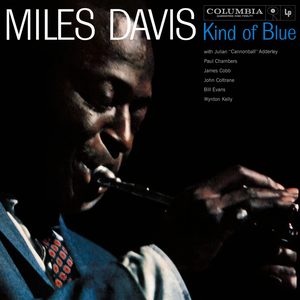
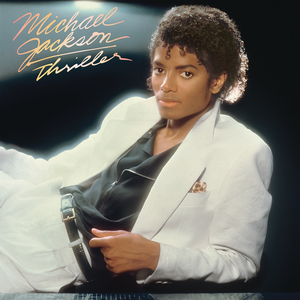
Album
Book
City
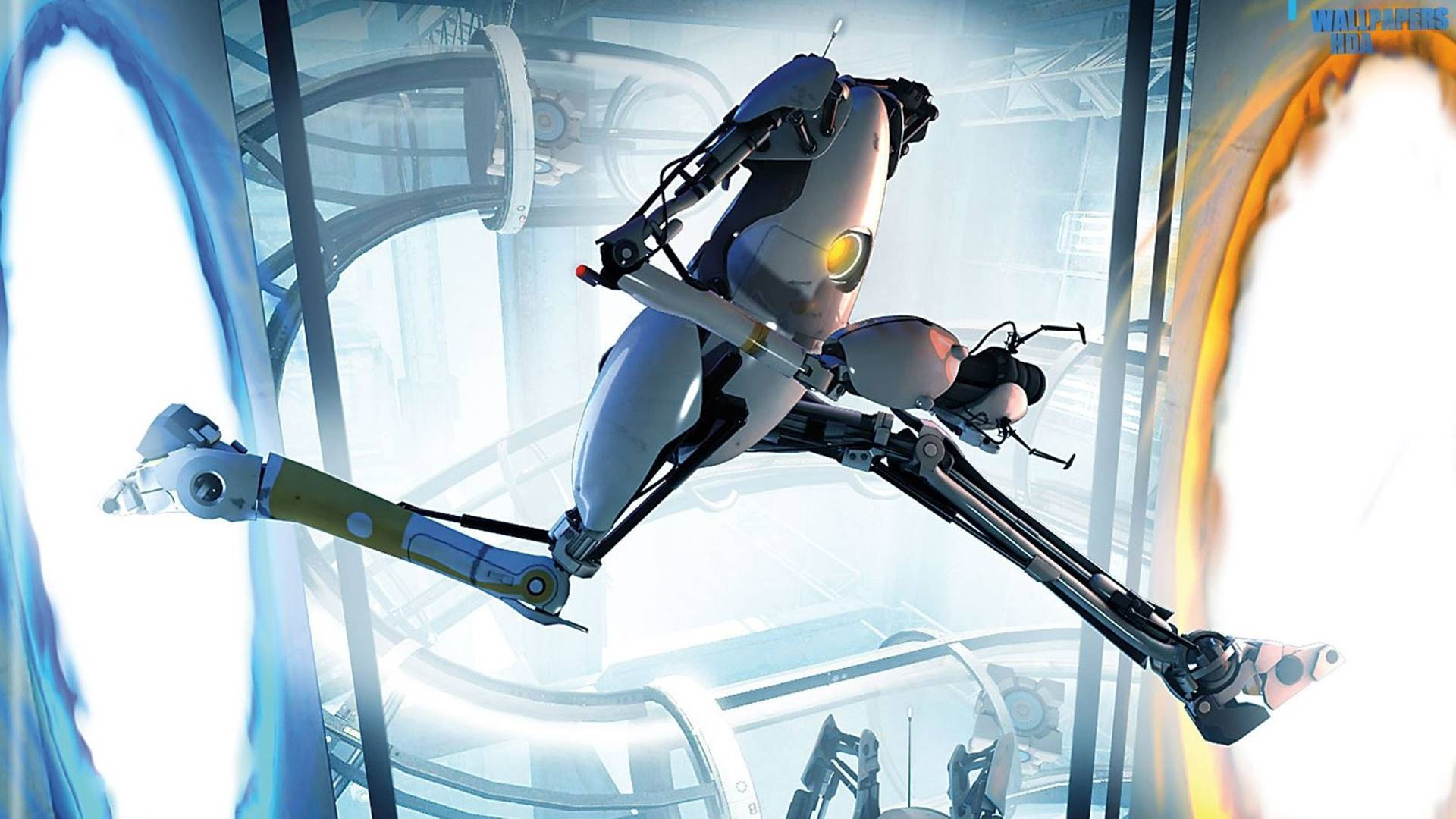
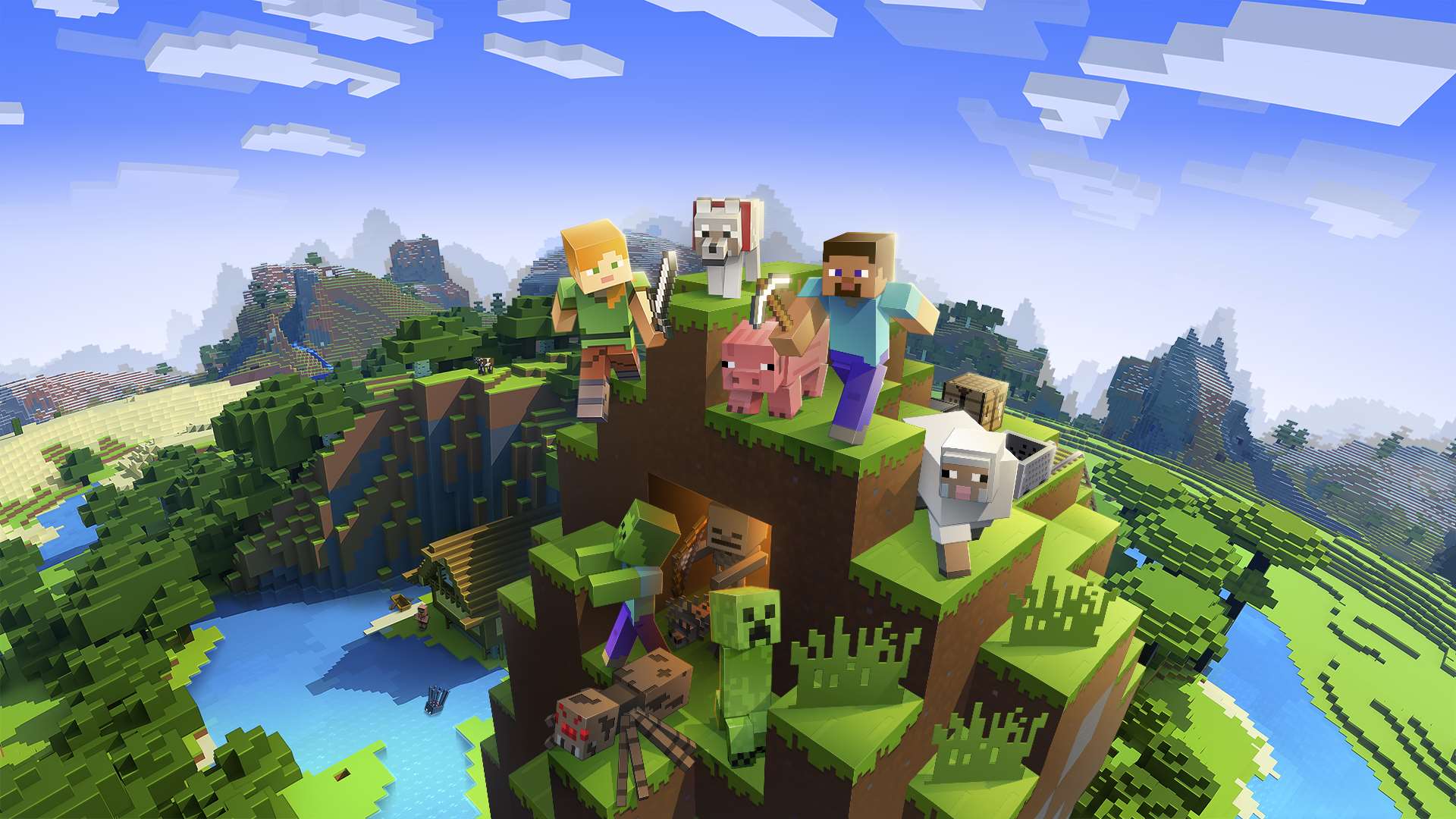
Game
GPT-5.1-CodexGPT-5.1-Codex



The Shawshank Redemption
Kind of Blue
Le città invisibili
Kyoto
Portal 2
Mercury 2Mercury 2


The Shawshank Redemption
Thriller
Pride and Prejudice
Tokyo
Minecraft
Price and specs
Not enough votes to call it. On the specs, GPT-5.1-Codex has the edge: bigger model tier, bigger context window, major provider backing. Mercury 2 costs 13x less per token.
| Spec | GPT-5.1-Codex | Mercury 2 |
|---|---|---|
| Input price | $1.25/M tokens | $0.25/M tokens |
| Output price | $10/M tokens | $0.75/M tokens |
| Context window | 400K tokens | 128K tokens |
| Weights | Closed | — |
| Free API (OpenRouter) | No | No |
| Released | Nov 2025 | Mar 2026 |
| At 10M a month | $12.50 | $2.50 |
Input tokens at list price. No caching, no batch discount.
Where to run it
GPT-5.1-Codex1 host

Mercury 21 host
Per million tokens. Prices and uptime via OpenRouter, checked 10 Oct 2026.
Common questions
What is the difference between GPT-5.1-Codex and Mercury 2?
GPT-5.1-Codex is developed by OpenAI while Mercury 2 is developed by Inception. GPT-5.1-Codex has a 400K token context window vs Mercury 2's 128K. You can compare their actual outputs across 52 challenges on Rival to see how they differ in practice.
Which is better, GPT-5.1-Codex or Mercury 2?
It depends on your use case. GPT-5.1-Codex and Mercury 2 each have strengths in different areas. Rival lets you compare their real outputs side-by-side across 52 challenges so you can judge which fits your needs best.
How much does GPT-5.1-Codex cost compared to Mercury 2?
GPT-5.1-Codex costs $1.25/M input tokens and Mercury 2 costs $0.25/M input tokens. Mercury 2 is $1.00/M cheaper per input. Check their side-by-side outputs on Rival to see if the price difference is justified by quality.
How can I compare GPT-5.1-Codex and Mercury 2 on Rival?
This page shows a side-by-side comparison of GPT-5.1-Codex and Mercury 2 across shared challenges. You can vote on which model produced the better output in a blind duel. Browsing and voting are free. No account is needed to look; signing in only saves your votes and likes.
More comparisons
Against the newest arrivals
- GPT-5.1-Codex vs Step 5 PreviewLanded Oct 2026
- Mercury 2 vs Claude Haiku 5.5Landed Oct 2026
- GPT-5.1-Codex vs Ling 3.1 FlashLanded Oct 2026
- Mercury 2 vs Mistral Large 4Landed Oct 2026
- GPT-5.1-Codex vs GPT-6.1 SolLanded Sep 2026
- Mercury 2 vs Claude Sonnet 5.5Landed Sep 2026
- GPT-5.1-Codex vs Solar Mini 4Landed Sep 2026
- Mercury 2 vs Qwen3.8 Max PrimeLanded Sep 2026


Same lab, same size, long tail
- GPT-5.1-Codex vs GPT-6 Luna ProSame lab
- GPT-5.1-Codex vs GPT-6 Sol ProSame lab
- Mercury 2 vs MercuryVersion compare
- Mercury 2 vs Mercury 2.5Same lab
- Mercury 2 vs OpenAI Codex MiniSame size
- Mercury 2 vs Command A+New provider
- Mercury 2 vs Cypher Alpha (free)New provider
- Mercury 2 vs DeepSeek V3.1New provider