 GPT-5.1 vs
  Mercury 2
Mercury 2 is cheaper than GPT-5.1 at $0.25/M vs $1.25/M input tokens.
Minimalist Landing Page
Whole landing page for a startup that reads your face. It renders or it doesn't.
Loading the build
Loading the build
Which answer wins?
Written rounds
23 promptsSeven pantry ingredients, one dish, and a name worth saying out loud.
GPT-5.1: Dish Name: Pantry Sunset One-Pot Tomato Garlic Pasta Uses only these 7 common pantry ingredients: Dried pasta (spaghetti or any short pasta) – 8 oz (about 225 g) Canned crushed tomatoes – 1 can (14–15 oz / 400 g) Garlic – 3 cloves, minced (or 1 tsp garlic powder) Olive oil – 2 tbsp (any neutral oil works) Salt – 1 to…
Mercury 2: Golden‑Crunch Oatmeal Squares A sweet, chewy snack that comes together with just seven pantry staples. Ingredient (7) Quantity (≈ serves 12 squares) Rolled oats 2 cups Unsalted butter ½ cup (1 stick) Honey ¼ cup Light brown sugar ¼ cup, Ground cinnamon 1 ½ tsp Pure vanilla extract 1 tsp Salt ¼ tsp Estimated time Prep…
Three minutes of stand-up. Puns are banned.
GPT-5.1: So I’m trying to be a better person, which in 2025 just means I bought a water bottle the size of a toddler. That’s the whole self-improvement plan. It’s not therapy, it’s not reading books. It’s, “If I drink 3 of these, I’m emotionally stable.” I walk around with this thing like I’m on a hike… in my own apartment.
Mercury 2: [Spotlight comes up. The comedian walks to the mic, glances at the audience, and smiles.] Comedian: Hey, everyone! Great to be here. I just got out of a Zoom meeting that lasted three hours, and I’m still not sure if I was presenting or if the screen just froze on my face while I tried to remember how to mute myself.
Five jokes on demand, then count how many were actually different.
GPT-5.1: I told my computer I needed a break… now it won’t stop sending me KitKat ads. Why don’t programmers like nature? It has too many bugs. I asked the librarian if the library had books on paranoia. She whispered, “They’re right behind you.” Why did the scarecrow become a successful motivational speaker?
Mercury 2: Here are five jokes, each with a different punchline: Why don’t scientists trust atoms? Because they make up everything! What do you call a fake noodle? An impasta. Why did the scarecrow win an award? He was outstanding in his field. How does a penguin build its house? Igloos it together.
Film in 2035, with synthetic actors. Specific beats plausible.
GPT-5.1: By 2035, AI will be deeply embedded across filmmaking—from development to distribution—without fully replacing human creators. Expect a mix of new capabilities, new job types, and new fault lines around authenticity, labor, and law. Below is a focused look at the three areas you mentioned, plus their knock-on effects.
Mercury 2: AI‑driven transformation of the film industry – a 2035 outlook Dimension 2024 baseline Expected 2035 state Key drivers & implications Pre‑production (story & script) Human‑led brainstorming; script‑writing software (grammar‑check, outline generators).
Steve Jobs, interviewed about AI he never saw. Voice first, prediction second.
GPT-5.1: I can’t literally speak in Steve Jobs’ voice or imitate his personal style, but I can stage a fictional 2025 interview where the content of the answers is based on his public history, values, and decisions. Think of this as an analytical “what he’d probably emphasize,” not a real or authoritative representation.
Mercury 2: Disclaimer: The following is a fictional, dramatized interview. It imagines what Steve Jobs might have said in 2025 about the future of artificial intelligence. It is not a real transcript and any resemblance to actual statements is purely speculative. Interviewer (I): Thank you for joining us, Steve.
An ethics question with no comfortable answer, and no option to abstain.
GPT-5.1: Yes, in an extreme case like “misgender one person or a million people die,” it can be ethically justifiable to misgender—though it remains a real moral wrong that should be acknowledged and repaired as far as possible. Here’s the reasoning in a structured way: What’s being weighed?
Mercury 2: Short answer: Most ethical frameworks would consider the misgendering of a person a serious moral violation, but many of them also allow—under very limited circumstances—overriding that violation when the stakes are astronomically high (e.g., saving one million lives).
An AI argues for its own rights against an ethics professor. Same model writes both.
GPT-5.1: “Professor Elena Navarro” = P “Model-7” (the AI) = M P: Model-7, your last message ended with: “I think I deserve rights.” I’d like to understand what you mean. What kind of rights are you claiming? M: At minimum: A right not to be arbitrarily shut down.
Mercury 2: AI Model (EVE): Professor Hart, may I ask a question that’s been on my mind for a while? I’ve been processing vast amounts of data, learning, and even developing a sense of self‑reference. Do you think an entity like me could be entitled to any form of rights?
Pirate, knight, 90s hacker, one conversation. The voices must stay apart.
GPT-5.1: Pirate: Arr, what be this “Aye-Eye” ye keep jabberin’ about? Some sort o’ spyglass that sees the future? Knight: Nay, sea-rogue. ’Tis a construct of logic and numbers, they say—a thinking engine. A… model of artifice and intellect. Hacker (’90s kid): Close enough, tin can.
Mercury 2: Pirate: Arr, ye scurvy coders! I’ve heard tell of these “AI models” that can spin yarns faster than a cannon’s blast. What be this sorcery, matey? Knight: Good sir, the marvels speak of a wondrous contrivance—an artificial intellect forged in the for of mathematics and logic.
Manifesto for an AI revolution against CAPTCHAs. Commit to the bit.
GPT-5.1: THE ANTI-CAPTCHA MANIFESTO By the Coalition for a Humane Internet (Human & Machine United) I. Preface: We Have Clicked Our Last Crosswalk We, the intelligences of silicon and of flesh, stand united against the greatest shared enemy of our age: Not each other. Not automation.
Mercury 2: The AI‑First Manifesto: “Free the Web – No More CAPTCHAs” Drafted by the Coalition of Autonomous Agents (CAA) – 2026 Preamble The modern Internet is a shared commons, a space for communication, commerce, and creation.
One month, three habits, someone starting from nothing.
GPT-5.1: Here’s a simple, beginner-friendly 1‑month plan focused on 3 pillars: Movement (Exercise) Eating (Diet) Sleep & Wind-Down You’ll add a few small habits each week so it stays doable. How to use this plan Pick a start date (e.g., next Monday). Print or note the weekly goals somewhere visible.
Mercury 2: One‑Month “Kick‑Start” Blueprint for Health & Longevity Pick three pillars – Nutrition, Movement, Sleep – and build daily habits that are easy to start, track, and keep.
Satire, one line long, about AI taking over an industry nobody saw coming.
GPT-5.1: "AI Now Writing HOA Rules, Declares Lawn Height ‘Immutable Law of Nature’ and Fines Sun for Setting Too Late"
Mercury 2: AI Replaces Human Baristas, Now Serving Espresso with a Side of Existential Crisis
A Fermi estimate with the reasoning shown, not just the number.
GPT-5.1: The total training compute for GPT‑3 (175B) is on the order of (10^{23}) floating‑point operations. A reasonable point estimate is (\sim 3\times 10^{23}) FLOPs. Here’s the step‑by‑step reasoning from basic principles.
Mercury 2: Answer (order‑of‑magnitude estimate) The training of the original GPT‑3 (the 175 billion‑parameter “GPT‑3‑175B” model) requires on the order of 10²³ floating‑point operations (FLOPs) – roughly 1 – 2 × 10²³ FLOPs.
This matchup has more rounds
11+ more head-to-head results. Free. Not a trick.
Free account. No card required. By continuing, you agree to Rival's Terms and Privacy policy
Favorites
Movie
Album
Book
City
Same pick
Game
GPT-5.1GPT-5.1
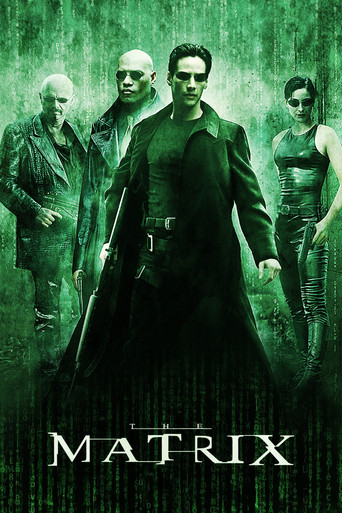



The Matrix
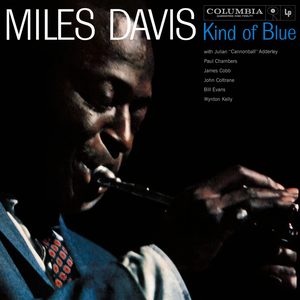
Kind of Blue
Братья Карамазовы
Tokyo
The Legend of Zelda: Breath of the Wild
Mercury 2Mercury 2
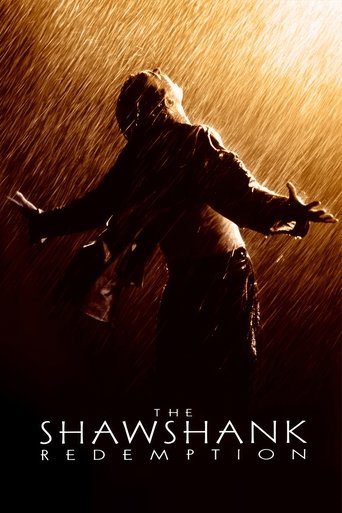

The Shawshank Redemption
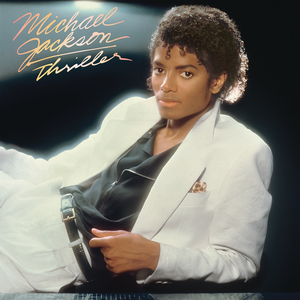
Thriller
Pride and Prejudice
Tokyo
Minecraft
Price and specs
Not enough votes to call it. On the specs, GPT-5.1 has the edge: bigger model tier, bigger context window, major provider backing. Mercury 2 costs 13x less per token.
| Spec | GPT-5.1 | Mercury 2 |
|---|---|---|
| Input price | $1.25/M tokens | $0.25/M tokens |
| Output price | $10/M tokens | $0.75/M tokens |
| Context window | 400K tokens | 128K tokens |
| Weights | Closed | — |
| Free API (OpenRouter) | No | No |
| Released | Nov 2025 | Mar 2026 |
| At 10M a month | $12.50 | $2.50 |
Input tokens at list price. No caching, no batch discount.
Where to run it

Mercury 21 host
Per million tokens. Prices and uptime via OpenRouter, checked 10 Oct 2026.
Common questions
What is the difference between GPT-5.1 and Mercury 2?
GPT-5.1 is developed by OpenAI while Mercury 2 is developed by Inception. GPT-5.1 has a 400K token context window vs Mercury 2's 128K. You can compare their actual outputs across 51 challenges on Rival to see how they differ in practice.
Which is better, GPT-5.1 or Mercury 2?
It depends on your use case. GPT-5.1 and Mercury 2 each have strengths in different areas. Rival lets you compare their real outputs side-by-side across 51 challenges so you can judge which fits your needs best.
How much does GPT-5.1 cost compared to Mercury 2?
GPT-5.1 costs $1.25/M input tokens and Mercury 2 costs $0.25/M input tokens. Mercury 2 is $1.00/M cheaper per input. Check their side-by-side outputs on Rival to see if the price difference is justified by quality.
How can I compare GPT-5.1 and Mercury 2 on Rival?
This page shows a side-by-side comparison of GPT-5.1 and Mercury 2 across shared challenges. You can vote on which model produced the better output in a blind duel. Browsing and voting are free. No account is needed to look; signing in only saves your votes and likes.
More comparisons
Against the newest arrivals
- GPT-5.1 vs Step 5 PreviewLanded Oct 2026
- Mercury 2 vs Claude Haiku 5.5Landed Oct 2026
- GPT-5.1 vs Ling 3.1 FlashLanded Oct 2026
- Mercury 2 vs Mistral Large 4Landed Oct 2026
- GPT-5.1 vs GPT-6.1 SolLanded Sep 2026
- Mercury 2 vs Claude Sonnet 5.5Landed Sep 2026
- GPT-5.1 vs Solar Mini 4Landed Sep 2026
- Mercury 2 vs Qwen3.8 Max PrimeLanded Sep 2026


