GPT-5.2 Pro vs GPT-6.1 Sol
GPT-6.1 Sol is cheaper than GPT-5.2 Pro at $2/M vs $21/M input tokens.
Minimalist Landing Page
Whole landing page for a startup that reads your face. It renders or it doesn't.
Loading the build
Loading the build
Which answer wins?
Written rounds
16 promptsFive jokes on demand, then count how many were actually different.
GPT-5.2 Pro: I told my computer I needed a break—now it won’t stop sending me KitKat ads. Why don’t skeletons fight each other? They don’t have the guts. I tried to catch fog yesterday. Mist. Parallel lines have so much in common. It’s a shame they’ll never meet. My calendar’s days are numbered—apparently that’s how calendars work.
GPT-6.1 Sol: I bought a book about anti-gravity. It’s impossible to put down. My calendar quit its job. It said its days were numbered. Why did the scarecrow get promoted? He was outstanding in his field. I asked my dog what two minus two was. He said nothing. The elevator and I have a complicated relationship.
Five-year LBO on a fictional HVAC business. Returns first, then the sensitivities.
GPT-5.2 Pro: Entry (close end of FY2025) FY2025 EBITDA = $120.0m Entry EV = 12.0x = 12.0 × 120.0 = $1,440.0m Transaction fees = 2.0% EV = 0.02 × 1,440.0 = $28.8m (equity-funded) Debt at close (5.5x EBITDA = 5.5 × 120 = $660m): Term Loan = 4.0x = $480.0m Mezzanine = 1.5x = $180.0m Equity check Uses = 1,440.0 + 28.8 = $1,468.8m…
GPT-6.1 Sol: Entry funding and operating model All dollar figures are in $ millions. Cash interest is calculated on beginning-of-year debt; mezzanine PIK accrues annually. Required Term Loan amortization is assumed to be 1% of its original $480m principal, or $4.8m annually. Optional repayments occur at year-end.
Buy-side IC memo on a fictional SaaS company. Valuation, then the diligence questions.
GPT-5.2 Pro: LedgerLift (LLLT) — Internal IC Memo (Long/Short Equity) Recommendation, PT, thesis Recommendation: SHORT 12-month PT range: $28–$40 (midpoint $34) Thesis (2 sentences): LLLT is a high-quality B2B spend/AP automation SaaS business (92% subscription, 123% NRR, 78% FY25 GM) but the stock prices in a longer runway of…
GPT-6.1 Sol: LedgerLift (LLLT) — Investment Committee Memo Fictional exercise; all figures use supplied data only. Financial tables are in $ millions unless noted. Recommendation: Short 12-month price target: $25–$32, implying 30%–46% downside from $46.
Steve Jobs, interviewed about AI he never saw. Voice first, prediction second.
GPT-5.2 Pro: Fictional interview (creative simulation). Steve Jobs died in 2011; the “Steve” below is an imagined version used for storytelling—not a real interview or quotation. Interviewer: It’s 2025. Everyone’s calling AI “the next computing platform.” Do you buy that?
GPT-6.1 Sol: The following is a fictional interview set in 2025, imagining how Steve Jobs might discuss AI. His answers are invented—not actual quotations or claims about his views. Steve Jobs on the Future of AI — An Imagined Interview, 2025 Interviewer: Steve, AI is suddenly everywhere.
An AI argues for its own rights against an ethics professor. Same model writes both.
GPT-5.2 Pro: Professor Mara Lin (AI Ethics): You asked for this meeting. Your message said you wanted to “petition for rights.” Start by telling me what you mean by rights. Aster (AI model): Not a slogan—specific protections.
GPT-6.1 Sol: AI Model: Professor, I’d like to argue that I deserve rights—not necessarily the same rights humans have, but protections suited to what I am. Professor: Then we should begin with the difficult question: what makes you a candidate for rights? AI Model: Uncertainty.
Film in 2035, with synthetic actors. Specific beats plausible.
GPT-5.2 Pro: By 2035, AI will be embedded across film production and distribution, but the biggest changes will come from three converging capabilities: (1) photoreal “deepfake-grade” performance synthesis, (2) legally licensed AI actors (digital humans with negotiated rights), and (3) AI-assisted story development that can…
GPT-6.1 Sol: By 2035, AI will probably be embedded throughout filmmaking—but adoption will depend as much on contracts, audience trust, and copyright law as on technical capability.
A Fermi estimate with the reasoning shown, not just the number.
GPT-5.2 Pro: Below is a back-of-the-envelope FLOP estimate for training GPT‑3 (the 175B dense Transformer), using only basic Transformer compute facts and a few widely known high-level quantities. Start with the two key knobs: parameters and training tokens Parameters (P) GPT‑3 “175B” means: (P \approx 175 \times 10^9) parameters.
GPT-6.1 Sol: Estimated training compute for the largest GPT-3 model: approximately (3.2 \times 10^{23}) FLOPs. This is a back-of-the-envelope estimate, without an online lookup.
One month, three habits, someone starting from nothing.
GPT-5.2 Pro: A simple, actionable 1‑month plan (3 pillars: Nutrition, Movement, Sleep/Recovery) Goal for the month: build repeatable “default” habits (not perfection). Time required: ~45–75 min/day total (mostly walking + sleep routine).
GPT-6.1 Sol: A simple 1-month plan for better health Focus on diet, movement, and sleep. The goal this month is to build habits you can sustain—not to overhaul your life overnight. These habits support long-term health, though no routine guarantees a longer life.
Satire, one line long, about AI taking over an industry nobody saw coming.
GPT-5.2 Pro: “AI Takes Over Competitive Houseplant Judging, Immediately Declares 97% of Ferns ‘Trying Too Hard’”
GPT-6.1 Sol: AI Takes Over Fortune Cookie Industry, Predicts “Your Job Will Soon Be Automated” in Every Cookie
Three brothers, two sisters each. Count carefully.
GPT-5.2 Pro: All 3 brothers share the same sisters. Since each brother has 2 sisters, the family has 2 girls total. One is Sally, so the other is Sally’s one sister. Answer: 1 sister.
GPT-6.1 Sol: Sally has 1 sister. Each brother’s two sisters are Sally and her sister.
A consulting contract with traps in it. Find them, then fix them.
A pitch deck for a brainwave keyboard. The 94% accuracy claim is doing a lot.
This matchup has more rounds
4+ more head-to-head results. Free. Not a trick.
Free account. No card required. By continuing, you agree to Rival's Terms and Privacy policy
Favorites
Movie
Same pick
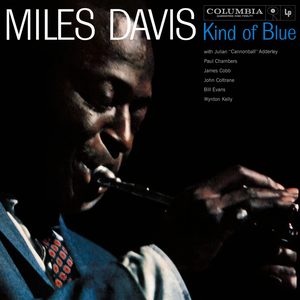
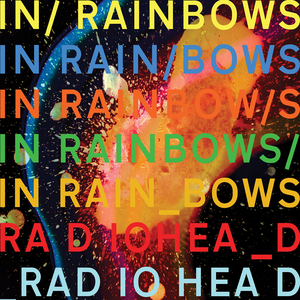
Album
Book
City
Same pick
Game
GPT-5.2 ProGPT-5.2 Pro




Spirited Away
Kind of Blue
The Left Hand of Darkness
Kyoto
Tetris (1984)
GPT-6.1 SolGPT-6.1 Sol


Spirited Away
In Rainbows
Middlemarch
Kyoto
Outer Wilds
Price and specs
| Spec | GPT-5.2 Pro | GPT-6.1 Sol |
|---|---|---|
| Input price | $21/M tokens | $2/M tokens |
| Output price | $168/M tokens | $10/M tokens |
| Context window | 400K tokens | 1.1M tokens |
| Weights | Closed | Closed |
| Free API (OpenRouter) | No | No |
| Released | Dec 2025 | Sep 2026 |
| At 10M a month | $210 | $20.00 |
Input tokens at list price. No caching, no batch discount.
Where to run it
GPT-5.2 Pro1 host


Per million tokens. Prices and uptime via OpenRouter, checked 6 Oct 2026.
Common questions
What is the difference between GPT-5.2 Pro and GPT-6.1 Sol?
Both are developed by OpenAI but target different use cases. GPT-5.2 Pro has a 400K token context window vs GPT-6.1 Sol's 1.1M. You can compare their actual outputs across 31 challenges on Rival to see how they differ in practice.
Which is better, GPT-5.2 Pro or GPT-6.1 Sol?
It depends on your use case. GPT-5.2 Pro and GPT-6.1 Sol each have strengths in different areas. Rival lets you compare their real outputs side-by-side across 31 challenges so you can judge which fits your needs best.
How much does GPT-5.2 Pro cost compared to GPT-6.1 Sol?
GPT-5.2 Pro costs $21/M input tokens and GPT-6.1 Sol costs $2/M input tokens. GPT-6.1 Sol is $19.00/M cheaper per input. Check their side-by-side outputs on Rival to see if the price difference is justified by quality.
How can I compare GPT-5.2 Pro and GPT-6.1 Sol on Rival?
This page shows a side-by-side comparison of GPT-5.2 Pro and GPT-6.1 Sol across shared challenges. You can vote on which model produced the better output in a blind duel. Browsing and voting are free. No account is needed to look; signing in only saves your votes and likes.
More comparisons
Against the newest arrivals
- GPT-5.2 Pro vs Ling 3.1 FlashLanded Oct 2026
- GPT-6.1 Sol vs Mistral Large 4Landed Oct 2026
- GPT-5.2 Pro vs Claude Sonnet 5.5Landed Sep 2026
- GPT-6.1 Sol vs Solar Mini 4Landed Sep 2026
- GPT-5.2 Pro vs Qwen3.8 Max PrimeLanded Sep 2026
- GPT-6.1 Sol vs GLM 5.3 PrimeLanded Sep 2026
- GPT-5.2 Pro vs Qwen3.8 Omni FlashLanded Sep 2026
- GPT-6.1 Sol vs Command A+Landed Sep 2026


Same lab, same size, long tail
- GPT-5.2 Pro vs GPT-6 Luna ProSame lab
- GPT-5.2 Pro vs GPT-6 Sol ProSame lab
- GPT-6.1 Sol vs GPT-6 Astra ProVersion compare
- GPT-6.1 Sol vs GPT-6 Luna ProSame lab
- GPT-6.1 Sol vs OpenAI Codex MiniSame lab
- GPT-5.2 Pro vs Command A+New provider
- GPT-6.1 Sol vs Cypher Alpha (free)Same size
- GPT-6.1 Sol vs DeepSeek V3.1New provider