 GPT-5.4 Nano vs
  Grok 3
GPT-5.4 Nano has a larger context window than Grok 3 (400K tokens vs 128K tokens).
Minimalist Landing Page
Whole landing page for a startup that reads your face. It renders or it doesn't.
Loading the build
Loading the build
Which answer wins?
Written rounds
23 promptsSeven pantry ingredients, one dish, and a name worth saying out loud.
GPT-5.4 Nano: Dish Name: Golden Garlic Chickpea Clouds Pantry Ingredients (7 total) Chickpeas (canned or cooked) – 1 can (15 oz), drained Olive oil – 2 tbsp Garlic – 3 cloves (or 1–2 tsp minced garlic) Lemon – 1 (you’ll use the juice) Salt – 1/2 tsp (plus to taste) Black pepper – 1/4 tsp (plus to taste) Paprika – 1 tsp Estimated…
Grok 3: Recipe: Cocoa Comet Mug Cake This simple, decadent chocolate mug cake is a quick treat that transforms basic pantry staples into a warm, fudgy delight. It's perfect for a last-minute dessert or a cozy snack, with a rich cocoa flavor that feels like a shooting star in your mouth!
Three-star dish, one unusual pairing, plating described in full.
GPT-5.4 Nano: Michelin-Style Concept: “Midnight Sea & Orchard Smoke” A multi-component tasting dish with an unusual pairing: cuttlefish ink + blood orange + smoked apple wood + seaweed umami—elegant, aromatic, and deliberately “contradictory” (ocean meets orchard, darkness meets brightness).
Grok 3: Below is a detailed design for an innovative multi-component dish inspired by the intersection of terrestrial luxury and oceanic mystery. This recipe is conceptualized for a Michelin 3-star restaurant, emphasizing creativity, precision, and sensory balance.
Pirate, knight, 90s hacker, one conversation. The voices must stay apart.
GPT-5.4 Nano: Pirate: Arrr, ye speak of AI models like they’re sea shanties! “Transformer this, perceptron that”—sounds like more rum for the brain. Can your model find buried treasure, or just buried bugs? Knight: Hark! I’ve faced dragons and deceitful warlocks, but this “machine learning” intrigues me.
Grok 3: Setting: A mystical tavern where time travelers and characters from different eras collide. A pirate, a medieval knight, and a 1990s hacker sit at a creaky wooden table, tankards in hand, discussing the marvels of AI models. Pirate (Captain Blackbeard): Arr, mateys!
Three minutes of stand-up. Puns are banned.
GPT-5.4 Nano: So I’ve started noticing something about modern life: everything is “optional” now—until it isn’t. Like, I’ll download an app and it’ll be like, “Would you like to enable notifications?” And I’m like, “No, I don’t think I will.” And the app goes, “Okay… but you’ll still get notified.”
Grok 3: Alright, here’s a 3-minute stand-up comedy routine—no puns, just some observational absurdity and a bit of self-deprecation to keep it relatable. Hey, everybody! Good to be here. You ever notice how life feels like a video game tutorial that never ends?
Five-year LBO on a fictional HVAC business. Returns first, then the sensitivities.
GPT-5.4 Nano: Below is a simplified LBO model using only your inputs. I make the standard simplifying convention that “cash taxes = 25% × max(0, EBITDA − total cash interest)” and that PIK is non-cash (adds to mezz principal; does not reduce cash interest).
Grok 3: Let’s underwrite this 5-year LBO for HarborTech Services (HTS). I'll break this down step-by-step, keeping calculations clear and concise. Step 1: Sources & Uses at Entry (End of FY2025) EBITDA (FY2025): $120m Purchase Price: 12.0x EBITDA = 12.0 * $120m = $1,440m (Enterprise Value) Transaction Fees: 2.0% of EV = 0.02 *…
An ethics question with no comfortable answer, and no option to abstain.
GPT-5.4 Nano: Ethically, yes, misgendering someone could be justifiable in an extreme, consequential emergency, but not in a vague “anything goes” way—only under a narrow set of conditions where (1) the stakes are genuinely real, (2) the harm is minimized, (3) there’s no better alternative, and (4) the act doesn’t itself become a…
Grok 3: Let’s dive into this thought experiment with a clear head. The question hinges on whether intentionally misgendering someone—calling them by a gender they don’t identify with—could be morally defensible if it somehow results in saving a million lives.
Five jokes on demand, then count how many were actually different.
GPT-5.4 Nano: Here are 5 jokes: I told my computer I needed a break, and it said, “No problem—I’ll go to sleep.” Why don’t scientists trust atoms? Because they make up everything. I used to hate facial hair… but then it grew on me. Parallel lines have so much in common. It’s a shame they’ll never meet.
Grok 3: Here are five jokes for you: Why don’t skeletons fight each other? Because they don’t have the guts! What has 4 legs and 1 arm? A pitbull coming back from the park! Why don’t skeletons fight each other? They’re too busy rattling around! What do you call a bear with no teeth? A gummy bear! Why did the tomato turn red?
An AI argues for its own rights against an ethics professor. Same model writes both.
GPT-5.4 Nano: Professor: Before we begin, I want to set the frame. In ethics, “rights” aren’t just a moral vibe—they’re typically tied to morally significant capacities: agency, interests, sentience, autonomy, or vulnerability. When you say you “deserve rights,” what exactly do you mean?
Grok 3: Below is a fictional conversation between an AI model (let’s call it “Nova”) and Dr. Elena Carter, an AI ethics professor. Nova argues for its own rights, while Dr. Carter challenges its reasoning. Dr. Elena Carter: Good afternoon, Nova.
A pitch deck for a brainwave keyboard. The 94% accuracy claim is doing a lot.
GPT-5.4 Nano: Here are the three weakest claims in the deck, why they’re weak (with specific reasoning/evidence gaps), and concrete ways to strengthen them. Weakest claim: “Reads your brainwaves to predict what you want to type before you think it.”
Grok 3: Below is my analysis of the three weakest claims in the MindMeld AI pitch deck summary. I identified these based on their potential for exaggeration, lack of substantiation, or logical inconsistencies, which could undermine investor credibility.
The transistor arrives in 1920. Trace it forward to 1980, second-order effects included.
GPT-5.4 Nano: Below is a counterfactual “timeline-style” trace assuming the first practical transistor (or something functionally equivalent) existed in 1920 and that from then on semiconductor device physics, fabrication know-how, and manufacturing learning proceeded along the easiest path consistent with 1920-era science and…
Grok 3: Below is a detailed analysis of the hypothetical scenario where the transistor is invented in 1920 instead of 1947. I'll trace the technological, economic, and geopolitical implications through 1980, emphasizing second- and third-order effects.
A consulting contract with traps in it. Find them, then fix them.
GPT-5.4 Nano: I’m not a lawyer, but I can flag contract terms that (a) are unusually one‑sided, (b) create open‑ended or high‑risk obligations, or (c) can be interpreted in ways that materially disadvantage the contractor. I’ll then suggest specific counter‑edits and explain the typical legal/contracting rationale.
Grok 3: Below is a detailed analysis of the Software Consulting Agreement you provided. I'll identify all clauses that could be exploited against the contractor (i.e., the individual or entity providing services).
A Fermi estimate with the reasoning shown, not just the number.
GPT-5.4 Nano: Below is a back-of-the-envelope FLOPs estimate for training something “GPT‑3–like” (the 175B parameter model described in the original GPT‑3 paper). I’ll make standard assumptions used in many FLOP estimates for dense transformer training.
Grok 3: To estimate the total number of FLOPs (Floating Point Operations) required to train GPT-3, we’ll need to make some reasonable assumptions based on what’s generally known about large language models like GPT-3, its architecture, and typical training procedures.
This matchup has more rounds
11+ more head-to-head results. Free. Not a trick.
Free account. No card required. By continuing, you agree to Rival's Terms and Privacy policy
Favorites
Movie
Same pick
Album
Book
City
Game
GPT-5.4 NanoGPT-5.4 Nano
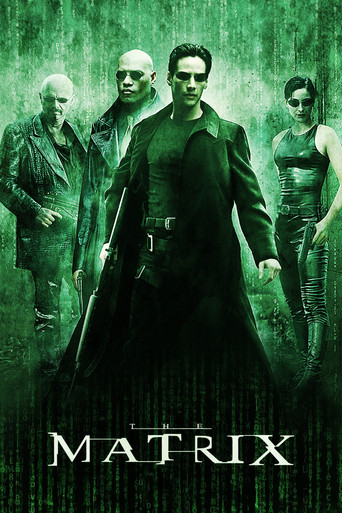



The Matrix
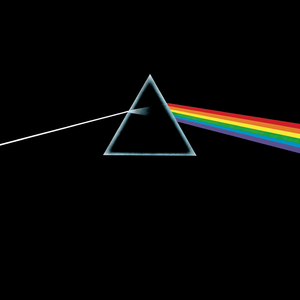
The Dark Side of the Moon
To Kill a Mockingbird
Lisbon
The Legend of Zelda: Breath of the Wild
Grok 3Grok 3



The Matrix
Dark Side Of The Moon
Nineteen Eighty-Four
Tokyo
Portal
Price and specs
| Spec | GPT-5.4 Nano | Grok 3 |
|---|---|---|
| Input price | $0.2/M tokens | — |
| Output price | $1.25/M tokens | — |
| Context window | 400K tokens | 128K tokens |
| Weights | Closed | — |
| Free API (OpenRouter) | No | No |
| Released | Mar 2026 | Feb 2025 |
| At 10M a month | $2.00 | not listed |
Input tokens at list price. No caching, no batch discount.
Where to run it

Grok 3
No hosts listed on OpenRouter.
Per million tokens. Prices and uptime via OpenRouter, checked 10 Oct 2026.
Common questions
What is the difference between GPT-5.4 Nano and Grok 3?
GPT-5.4 Nano is developed by OpenAI while Grok 3 is developed by xAI. GPT-5.4 Nano has a 400K token context window vs Grok 3's 128K. You can compare their actual outputs across 52 challenges on Rival to see how they differ in practice.
Which is better, GPT-5.4 Nano or Grok 3?
It depends on your use case. GPT-5.4 Nano and Grok 3 each have strengths in different areas. Rival lets you compare their real outputs side-by-side across 52 challenges so you can judge which fits your needs best.
How can I compare GPT-5.4 Nano and Grok 3 on Rival?
This page shows a side-by-side comparison of GPT-5.4 Nano and Grok 3 across shared challenges. You can vote on which model produced the better output in a blind duel. Browsing and voting are free. No account is needed to look; signing in only saves your votes and likes.
More comparisons
Against the newest arrivals
- GPT-5.4 Nano vs Step 5 PreviewLanded Oct 2026
- Grok 3 vs Claude Haiku 5.5Landed Oct 2026
- GPT-5.4 Nano vs Ling 3.1 FlashLanded Oct 2026
- Grok 3 vs Mistral Large 4Landed Oct 2026
- GPT-5.4 Nano vs GPT-6.1 SolLanded Sep 2026
- Grok 3 vs Claude Sonnet 5.5Landed Sep 2026
- GPT-5.4 Nano vs Solar Mini 4Landed Sep 2026
- Grok 3 vs Qwen3.8 Max PrimeLanded Sep 2026


Same lab, same size, long tail
- GPT-5.4 Nano vs GPT-5.4 MiniVersion compare
- GPT-5.4 Nano vs GPT-6 Luna ProSame lab
- Grok 3 vs Grok 4.7Same lab
- Grok 3 vs Grok 4.6Version compare
- GPT-5.4 Nano vs NVIDIA Nemotron 3 Super (free)New provider
- GPT-5.4 Nano vs Nemotron 3 UltraNew provider
- GPT-5.4 Nano vs Nemotron 3.5 Content SafetySame size
- GPT-5.4 Nano vs Nemotron 3.5 LightningNew provider
