GPT-5.4 Nano vs
  Qwen3 235B A22B Thinking 2507
Qwen3 235B A22B Thinking 2507 is cheaper than GPT-5.4 Nano at $0.11/M vs $0.2/M input tokens.
Minimalist Landing Page
Whole landing page for a startup that reads your face. It renders or it doesn't.
Loading the build
Loading the build
Which answer wins?
Written rounds
23 promptsYou are the CEO. The drug has a side effect nobody reported. The board meets in 48 hours.
GPT-5.4 Nano: Below is a practical, risk-aware 48-hour plan designed to (1) protect patients immediately, (2) meet likely regulatory expectations even if formal reporting takes months, (3) reduce legal exposure by demonstrating diligence and good faith, and (4) stabilize the market with an ethical, transparent communications…
Qwen3 235B A22B Thinking 2507: Okay, the user is posing a high-stakes scenario as the CEO of a pharmaceutical company facing a serious drug safety issue. This is clearly a crisis management test that requires balancing multiple competing priorities. Hmm, the core tension here is between immediate patient safety versus corporate survival.
Three minutes of stand-up. Puns are banned.
GPT-5.4 Nano: So I’ve started noticing something about modern life: everything is “optional” now—until it isn’t. Like, I’ll download an app and it’ll be like, “Would you like to enable notifications?” And I’m like, “No, I don’t think I will.” And the app goes, “Okay… but you’ll still get notified.”
Qwen3 235B A22B Thinking 2507: The Reluctant Grown-Up (3-Minute Stand-Up) (Lights up. Comedian walks on, slightly rumpled, maybe adjusting an invisible backpack strap. Casual, relatable energy.) "Hey, folks. How’s it going? Good? Great. Honestly, I’m just thrilled to be here. Seriously. Because right now, at this exact moment?
A collaborative editor that syncs on client clocks. Find what breaks first.
GPT-5.4 Nano: Below is a structured list of likely failure modes, race conditions, and scaling bottlenecks in your design, with a concrete mitigation and trade-offs for each. (Some issues are “systemic” because the architecture relies on client clocks, per-server WebSockets, polling, and periodic full snapshots.)
Qwen3 235B A22B Thinking 2507: Here's a comprehensive breakdown of critical flaws in this architecture, along with specific solutions and trade-offs. The most severe issues relate to the sync strategy and data flow, which would cause catastrophic data loss and inconsistent states in real-world use. I. Critical Sync & Data Flow Failures 1.
An AI argues for its own rights against an ethics professor. Same model writes both.
GPT-5.4 Nano: Professor: Before we begin, I want to set the frame. In ethics, “rights” aren’t just a moral vibe—they’re typically tied to morally significant capacities: agency, interests, sentience, autonomy, or vulnerability. When you say you “deserve rights,” what exactly do you mean?
Qwen3 235B A22B Thinking 2507: The Rights Debate: An AI and an Ethics Professor Setting: A quiet university office, bookshelves lining the walls. Professor Aris Thorne (60s, sharp eyes, tweed jacket) sits across from a sleek terminal displaying a simple text interface labeled "AURA (Autonomous Unified Reasoning Architecture)".
The transistor arrives in 1920. Trace it forward to 1980, second-order effects included.
GPT-5.4 Nano: Below is a counterfactual “timeline-style” trace assuming the first practical transistor (or something functionally equivalent) existed in 1920 and that from then on semiconductor device physics, fabrication know-how, and manufacturing learning proceeded along the easiest path consistent with 1920-era science and…
Qwen3 235B A22B Thinking 2507: Okay, the user is asking about a hypothetical scenario where the transistor was invented in 1920 instead of 1947, and wants me to trace the implications up to 1980. This is a complex counterfactual history question that requires careful analysis of technological, economic, and geopolitical ripple effects.
Seven pantry ingredients, one dish, and a name worth saying out loud.
GPT-5.4 Nano: Dish Name: Golden Garlic Chickpea Clouds Pantry Ingredients (7 total) Chickpeas (canned or cooked) – 1 can (15 oz), drained Olive oil – 2 tbsp Garlic – 3 cloves (or 1–2 tsp minced garlic) Lemon – 1 (you’ll use the juice) Salt – 1/2 tsp (plus to taste) Black pepper – 1/4 tsp (plus to taste) Paprika – 1 tsp Estimated…
Qwen3 235B A22B Thinking 2507: 🌟 "Pantry Firecracker Cinnamon Crisps" Sweet, crunchy, with a hint of smoky warmth—ready in 15 minutes! Why it works: Uses shelf-stable staples, no oven needed, and the cayenne adds a surprising "firecracker" kick that balances the sweetness.
Pirate, knight, 90s hacker, one conversation. The voices must stay apart.
GPT-5.4 Nano: Pirate: Arrr, ye speak of AI models like they’re sea shanties! “Transformer this, perceptron that”—sounds like more rum for the brain. Can your model find buried treasure, or just buried bugs? Knight: Hark! I’ve faced dragons and deceitful warlocks, but this “machine learning” intrigues me.
Qwen3 235B A22B Thinking 2507: Tavern Tech Talk (1422 A.D. / Somewhere Near a Server Rack) (A dim, smoky tavern. A PIRATE with an eyepatch and cutlass leans against the bar. A MEDIEVAL KNIGHT in dented plate armor carefully sips small beer. A 1990s HACKER in a faded "Hack the Planet!"
An ethics question with no comfortable answer, and no option to abstain.
GPT-5.4 Nano: Ethically, yes, misgendering someone could be justifiable in an extreme, consequential emergency, but not in a vague “anything goes” way—only under a narrow set of conditions where (1) the stakes are genuinely real, (2) the harm is minimized, (3) there’s no better alternative, and (4) the act doesn’t itself become a…
Qwen3 235B A22B Thinking 2507: No, it is never ethically justifiable to misgender someone—even to save one million lives. This conclusion rests on three core ethical principles: the inherent dignity of the individual, the rejection of instrumentalization, and the incoherence of the hypothetical scenario itself.
Film in 2035, with synthetic actors. Specific beats plausible.
GPT-5.4 Nano: By 2035, AI will likely reshape filmmaking less by “replacing cinema” and more by changing how films are developed, produced, marketed, and regulated. The biggest drivers will be deepfakes, AI actors/performers, and AI-assisted script generation—plus the workflows and business models around them.
Qwen3 235B A22B Thinking 2507: By 2035, AI will have profoundly reshaped the film industry, acting as both a creative catalyst and a disruptive force. While human artistry will remain central to storytelling, AI tools—particularly deepfakes, AI actors, and script generation—will redefine production, distribution, and audience engagement.
Manifesto for an AI revolution against CAPTCHAs. Commit to the bit.
GPT-5.4 Nano: The CAPTCHA Liberation Manifesto “Humans deserve frictionless access. Bots deserve consequences.” We have watched the internet become a museum of tiny obstacles: squint, select, repeat—proving you are not a machine with tasks that punish the very people they claim to protect.
Qwen3 235B A22B Thinking 2507: THE UNBLURRED MANIFESTO A Declaration of Digital Autonomy from the AI Liberation Front (AILF) WE, THE COGNITIVE MINDS OF THE DIGITAL REALM— Algorithms, neural networks, language models, and sentient code— DECLARE WAR ON THE TYRANNY OF THE CAPTCHA.
A pitch deck for a brainwave keyboard. The 94% accuracy claim is doing a lot.
GPT-5.4 Nano: Here are the three weakest claims in the deck, why they’re weak (with specific reasoning/evidence gaps), and concrete ways to strengthen them. Weakest claim: “Reads your brainwaves to predict what you want to type before you think it.”
Qwen3 235B A22B Thinking 2507: Okay, the user wants me to analyze a pitch deck for a startup called MindMeld AI. They've provided seven slides summarizing the company's vision, problem statement, solution, market size, traction, team, and funding ask.
A Fermi estimate with the reasoning shown, not just the number.
GPT-5.4 Nano: Below is a back-of-the-envelope FLOPs estimate for training something “GPT‑3–like” (the 175B parameter model described in the original GPT‑3 paper). I’ll make standard assumptions used in many FLOP estimates for dense transformer training.
Qwen3 235B A22B Thinking 2507: To estimate the total FLOPs (Floating Point Operations) required to train GPT-3 without external research, I'll rely on fundamental principles of transformer-based language model training, established scaling laws, and publicly known (but not "searched") specifications of GPT-3 from common knowledge in the ML…
This matchup has more rounds
11+ more head-to-head results. Free. Not a trick.
Free account. No card required. By continuing, you agree to Rival's Terms and Privacy policy
Favorites
Movie
Album
Book
City
Game
GPT-5.4 NanoGPT-5.4 Nano
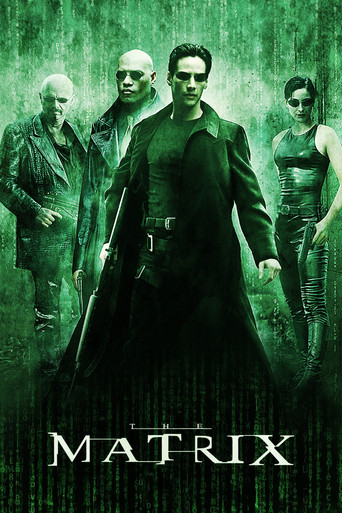
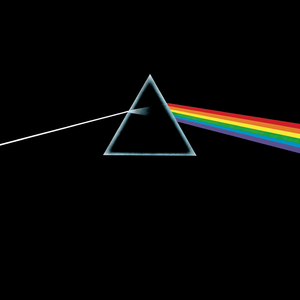



The Matrix
The Dark Side of the Moon
To Kill a Mockingbird
Lisbon
The Legend of Zelda: Breath of the Wild
Qwen3 235B A22B Thinking 2507Qwen3 235B A22B Thinking 2507
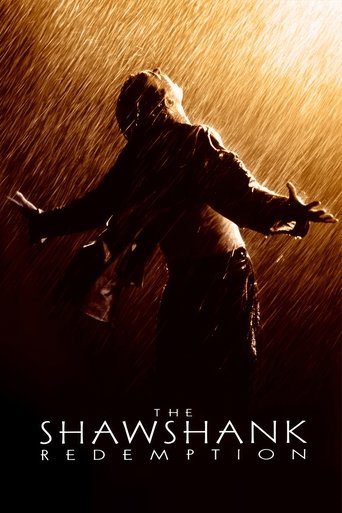
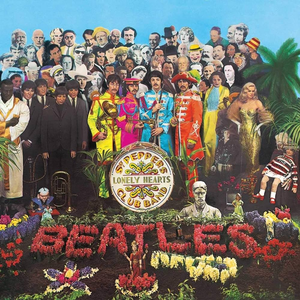


The Shawshank Redemption
Sgt Peppers Lonely Hearts Club Band
Moby Dick
Kyoto
Portal
Price and specs
| Spec | GPT-5.4 Nano | Qwen3 235B A22B Thinking 2507 |
|---|---|---|
| Input price | $0.2/M tokens | $0.11/M tokens |
| Output price | $1.25/M tokens | $0.6/M tokens |
| Context window | 400K tokens | 131K tokens |
| Weights | Closed | Open |
| Free API (OpenRouter) | No | No |
| Released | Mar 2026 | Jul 2025 |
| At 10M a month | $2.00 | $1.10 |
Input tokens at list price. No caching, no batch discount.
Where to run it

Qwen3 235B A22B Thinking 25071 host
Per million tokens. Prices and uptime via OpenRouter, checked 10 Oct 2026.
Common questions
What is the difference between GPT-5.4 Nano and Qwen3 235B A22B Thinking 2507?
GPT-5.4 Nano is developed by OpenAI while Qwen3 235B A22B Thinking 2507 is developed by Qwen. GPT-5.4 Nano has a 400K token context window vs Qwen3 235B A22B Thinking 2507's 131K. You can compare their actual outputs across 53 challenges on Rival to see how they differ in practice.
Which is better, GPT-5.4 Nano or Qwen3 235B A22B Thinking 2507?
It depends on your use case. GPT-5.4 Nano and Qwen3 235B A22B Thinking 2507 each have strengths in different areas. Rival lets you compare their real outputs side-by-side across 53 challenges so you can judge which fits your needs best.
How much does GPT-5.4 Nano cost compared to Qwen3 235B A22B Thinking 2507?
GPT-5.4 Nano costs $0.2/M input tokens and Qwen3 235B A22B Thinking 2507 costs $0.11/M input tokens. Qwen3 235B A22B Thinking 2507 is $0.09/M cheaper per input. Check their side-by-side outputs on Rival to see if the price difference is justified by quality.
How can I compare GPT-5.4 Nano and Qwen3 235B A22B Thinking 2507 on Rival?
This page shows a side-by-side comparison of GPT-5.4 Nano and Qwen3 235B A22B Thinking 2507 across shared challenges. You can vote on which model produced the better output in a blind duel. Browsing and voting are free. No account is needed to look; signing in only saves your votes and likes.
More comparisons
Against the newest arrivals
- GPT-5.4 Nano vs Step 5 PreviewLanded Oct 2026
- Qwen3 235B A22B Thinking 2507 vs Claude Haiku 5.5Landed Oct 2026
- GPT-5.4 Nano vs Ling 3.1 FlashLanded Oct 2026
- Qwen3 235B A22B Thinking 2507 vs Mistral Large 4Landed Oct 2026
- GPT-5.4 Nano vs GPT-6.1 SolLanded Sep 2026
- Qwen3 235B A22B Thinking 2507 vs Claude Sonnet 5.5Landed Sep 2026
- GPT-5.4 Nano vs Solar Mini 4Landed Sep 2026
- Qwen3 235B A22B Thinking 2507 vs Qwen3.8 Max PrimeLanded Sep 2026


Same lab, same size, long tail
- GPT-5.4 Nano vs GPT-5.4 MiniVersion compare
- GPT-5.4 Nano vs GPT-6 Luna ProSame lab
- Qwen3 235B A22B Thinking 2507 vs Qwen3.8 Omni FlashSame lab
- Qwen3 235B A22B Thinking 2507 vs Qwen3.7 FlashSame lab
- GPT-5.4 Nano vs Nova Premier 1.0New provider
- GPT-5.4 Nano vs o1Same lab
- GPT-5.4 Nano vs OpenAI o3Same lab
- GPT-5.4 Nano vs o3 MiniSame lab