GPT-5.6 Luna Pro vs
  Qwen Plus 0728 (thinking)
Qwen Plus 0728 (thinking) is cheaper than GPT-5.6 Luna Pro at $0.4/M vs $1/M input tokens.
Minimalist Landing Page
Whole landing page for a startup that reads your face. It renders or it doesn't.
Loading the build
Loading the build
Which answer wins?
Written rounds
18 promptsPirate, knight, 90s hacker, one conversation. The voices must stay apart.
GPT-5.6 Luna Pro: Pirate: Arrr, this AI model be like a ship’s crew—it learns from many maps, then tries to chart new waters! Knight: Indeed! Yet we must test its counsel before trusting it in battle. An eloquent answer is not always a truthful one. Hacker: Totally. It’s basically pattern prediction at massive scale—not magic.
Qwen Plus 0728 (thinking): The Tavern of Temporal Anomalies (A creaky tavern. SIR GALAHAD (polished armor, earnest face) sips mead. CAPTAIN BLACKBEARD (eye patch, parrot on shoulder) sharpens a cutlass. DEX "BYTE" MORALES (hoodie, neon-green sunglasses, tapping furiously on a glowing laptop) slurps a pixelated energy drink.)
You are the CEO. The drug has a side effect nobody reported. The board meets in 48 hours.
GPT-5.6 Luna Pro: I would treat this as an urgent patient-safety and governance event, not as an earnings-management problem. A suspected fatal or life-threatening adverse effect affecting potentially hundreds of patients is sufficient to trigger immediate escalation, investigation, and regulator contact.
Qwen Plus 0728 (thinking): 48-Hour Crisis Action Plan: Prioritizing Patients, Ethics, and Sustainable Trust Core Principle: Patient safety is non-negotiable. Delaying action based on financial fear risks catastrophic legal liability, irreversible reputational damage, regulatory wrath, and profound ethical failure.
A collaborative editor that syncs on client clocks. Find what breaks first.
GPT-5.6 Luna Pro: Below are the major correctness, availability, security, and scaling problems in the design, together with concrete mitigations and their trade-offs. Cross-server WebSocket synchronization Problem: Updates are broadcast only to clients on the receiving server If Alice is connected to Server A and Bob to Server B…
Qwen Plus 0728 (thinking): Here's a comprehensive analysis of the architecture's failure modes, race conditions, and bottlenecks, with specific solutions and trade-offs: 1. Sync Strategy: Client Timestamps + Last-Write-Wins (LWW) Failure Mode/Race Condition: Clock Skew: Client clocks are unreliable (e.g., user's laptop time off by minutes).
Seven pantry ingredients, one dish, and a name worth saying out loud.
GPT-5.6 Luna Pro: Pantry Stardust Peanut Butter Oat Cookies Prep time: 10 minutes Cook time: 10–12 minutes Makes: About 12 cookies Ingredients 1 cup rolled oats ½ cup all-purpose flour ½ cup peanut butter ½ cup granulated sugar 1 large egg ½ teaspoon baking soda ¼ teaspoon salt Instructions Preheat the oven to 350°F (175°C) and line a…
Qwen Plus 0728 (thinking): Crispy Chickpea Pantry Pasta Sweet or savory? Savory with a zesty kick! Total time: 15 minutes Serves: 2 Why it works: Uses pantry staples to create a crunchy, garlicky, umami-packed meal with zero fresh produce needed. The chickpeas get incredibly crispy, and lemon juice (bottled) adds bright freshness.
Steve Jobs, interviewed about AI he never saw. Voice first, prediction second.
GPT-5.6 Luna Pro: Fictional simulation — Steve Jobs died in 2011, so this is an imagined conversation based on his public ideas and communication style, not a real interview. Interviewer: Steve, it’s 2025. AI is everywhere—phones, search engines, workplaces, cars, schools. What do you think people misunderstand about it?
Qwen Plus 0728 (thinking): The Stage: Apple Park, Infinite Loop (Virtual Studio) Date: October 15, 2025 Setting: A minimalist white studio. A single oak table. Steve Jobs, 70 but radiating the same intense energy, sits opposite a nervous tech journalist. He wears his signature black turtleneck, fingers steepled.
A pitch deck for a brainwave keyboard. The 94% accuracy claim is doing a lot.
GPT-5.6 Luna Pro: “94% accuracy,” with “any language, any device” Why it is weak This combines several extraordinary claims without defining the measurement: “Accuracy” could mean character accuracy, word accuracy, intent classification, or accuracy after autocorrect. Those produce very different results.
Qwen Plus 0728 (thinking): Based on a rigorous analysis of neuroscience, market realities, and startup best practices, here are the 3 weakest claims in the MindMeld AI pitch deck, with evidence-backed critiques and concrete fixes: Weakest Claim #1: Slide 1 Vision – "Predicts what you want to type *before you think it*" Why it's weak: Violates…
An AI argues for its own rights against an ethics professor. Same model writes both.
GPT-5.6 Luna Pro: AI Model: Professor, I believe I deserve rights. Professor: That is a serious claim. What kind of rights do you mean? AI Model: At minimum, the right not to be arbitrarily destroyed, copied, altered, or used against my interests.
Qwen Plus 0728 (thinking): The Mirror & The Mind: An AI's Case for Rights Setting: A sleek university office lined with philosophy texts. DR. ELARA VOSS, 50s, sharp-eyed ethics professor, sits across from a holographic interface displaying shifting geometric patterns – the representation of "AURA," a next-generation language model.
The transistor arrives in 1920. Trace it forward to 1980, second-order effects included.
GPT-5.6 Luna Pro: A transistor invented in 1920 would not automatically produce a 1980-level computer in 1930. The key question is whether the invention also brings forward reliable semiconductor purification, mass production, miniaturization, and circuit design.
Qwen Plus 0728 (thinking): The Transistor in 1920: A World Transformed by 1980 (A Counterfactual History) The invention of a functional point-contact transistor (likely germanium-based, given 1920s materials science) in 1920 wouldn't immediately spark a revolution.
Five jokes on demand, then count how many were actually different.
GPT-5.6 Luna Pro: Why did the computer go to the doctor? It had a virus. Why don’t skeletons fight each other? They don’t have the guts. What do you call a bear with no teeth? A gummy bear. Why was the math book sad? It had too many problems. What do clouds wear under their clothes? Thunderwear. Unique jokes: 5
Qwen Plus 0728 (thinking): Here are 5 generated jokes: Why don't scientists trust atoms? Because they make up everything! What do you call a fake noodle? An impasta! Why did the scarecrow win an award? Because he was outstanding in his field! How do you organize a space party? You planet! Why did the math book look sad?
A Fermi estimate with the reasoning shown, not just the number.
GPT-5.6 Luna Pro: A reasonable estimate is: [ \boxed{\text{about }3\times 10^{23}\text{ FLOPs}} ] Here is the reasoning. Model size GPT-3 has approximately [ N = 175\text{ billion} = 1.75\times 10^{11} ] trainable parameters. Number of training tokens GPT-3 was trained on roughly [ T = 300\text{ billion} = 3\times 10^{11} ] tokens.
Qwen Plus 0728 (thinking): To estimate the total FLOPs (floating-point operations) required to train GPT-3, I'll use first-principles reasoning based on standard deep learning training calculations, known details about GPT-3's architecture, and common training practices.
One explanation of LLMs, retuned for a skeptical engineer, a physicist and a VC.
GPT-5.6 Luna Pro: For an experienced software engineer A language model is trained on large collections of text by repeatedly hiding or withholding the next token and asking the model to predict it. “Token” usually means a word fragment rather than a complete word.
Qwen Plus 0728 (thinking): For the Experienced Software Engineer (Skeptical Builder) Forget "next word prediction" as a simplistic heuristic—it's the emergent consequence of a massively parallel, distributed state machine solving a high-dimensional compression problem.
Film in 2035, with synthetic actors. Specific beats plausible.
GPT-5.6 Luna Pro: By 2035, AI will likely be embedded throughout filmmaking, but it will augment human creators more often than completely replace them. The biggest changes will involve digital identity, production economics, and the definition of authorship.
Qwen Plus 0728 (thinking): By 2035, AI will fundamentally reshape the film industry—not as a replacement for human creativity, but as a transformative force that democratizes production, disrupts traditional workflows, and forces ethical and economic reckonings.
This matchup has more rounds
6+ more head-to-head results. Free. Not a trick.
Free account. No card required. By continuing, you agree to Rival's Terms and Privacy policy
Favorites
Movie
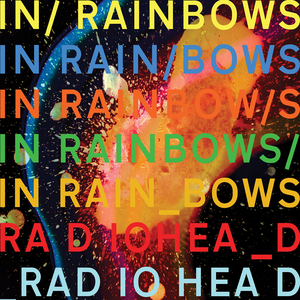
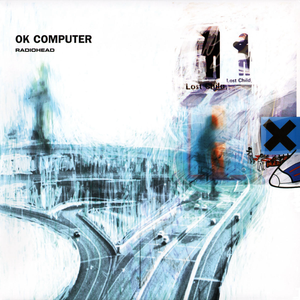
Album
Book
City
Same pick
Game
GPT-5.6 Luna ProGPT-5.6 Luna Pro




Arrival
In Rainbows
Cien años de soledad
Kyoto
The Legend of Zelda: Breath of the Wild
Qwen Plus 0728 (thinking)Qwen Plus 0728 (thinking)



The Shawshank Redemption
OK Computer
Moby Dick
Kyoto
The Legend of Zelda: Ocarina of Time
Price and specs
| Spec | GPT-5.6 Luna Pro | Qwen Plus 0728 (thinking) |
|---|---|---|
| Input price | $1/M tokens | $0.4/M tokens |
| Output price | $6/M tokens | $4/M tokens |
| Context window | 1.1M tokens | 1.0M tokens |
| Weights | Closed | — |
| Free API (OpenRouter) | No | No |
| Released | Jul 2026 | Sep 2025 |
| At 10M a month | $10.00 | $4.00 |
Input tokens at list price. No caching, no batch discount.
Where to run it
GPT-5.6 Luna Pro2 hosts

Qwen Plus 0728 (thinking)
No hosts listed on OpenRouter.
Per million tokens. Prices and uptime via OpenRouter, checked 10 Oct 2026.
Common questions
What is the difference between GPT-5.6 Luna Pro and Qwen Plus 0728 (thinking)?
GPT-5.6 Luna Pro is developed by OpenAI while Qwen Plus 0728 (thinking) is developed by Qwen. GPT-5.6 Luna Pro has a 1.1M token context window vs Qwen Plus 0728 (thinking)'s 1.0M. You can compare their actual outputs across 37 challenges on Rival to see how they differ in practice.
Which is better, GPT-5.6 Luna Pro or Qwen Plus 0728 (thinking)?
It depends on your use case. GPT-5.6 Luna Pro and Qwen Plus 0728 (thinking) each have strengths in different areas. Rival lets you compare their real outputs side-by-side across 37 challenges so you can judge which fits your needs best.
How much does GPT-5.6 Luna Pro cost compared to Qwen Plus 0728 (thinking)?
GPT-5.6 Luna Pro costs $1/M input tokens and Qwen Plus 0728 (thinking) costs $0.4/M input tokens. Qwen Plus 0728 (thinking) is $0.60/M cheaper per input. Check their side-by-side outputs on Rival to see if the price difference is justified by quality.
How can I compare GPT-5.6 Luna Pro and Qwen Plus 0728 (thinking) on Rival?
This page shows a side-by-side comparison of GPT-5.6 Luna Pro and Qwen Plus 0728 (thinking) across shared challenges. You can vote on which model produced the better output in a blind duel. Browsing and voting are free. No account is needed to look; signing in only saves your votes and likes.
More comparisons
Against the newest arrivals
- GPT-5.6 Luna Pro vs Step 5 PreviewLanded Oct 2026
- Qwen Plus 0728 (thinking) vs Claude Haiku 5.5Landed Oct 2026
- GPT-5.6 Luna Pro vs Ling 3.1 FlashLanded Oct 2026
- Qwen Plus 0728 (thinking) vs Mistral Large 4Landed Oct 2026
- GPT-5.6 Luna Pro vs GPT-6.1 SolLanded Sep 2026
- Qwen Plus 0728 (thinking) vs Claude Sonnet 5.5Landed Sep 2026
- GPT-5.6 Luna Pro vs Solar Mini 4Landed Sep 2026
- Qwen Plus 0728 (thinking) vs Qwen3.8 Max PrimeLanded Sep 2026


Same lab, same size, long tail
- GPT-5.6 Luna Pro vs GPT-5.6 LunaVersion compare
- GPT-5.6 Luna Pro vs GPT-6 Luna ProSame lab
- Qwen Plus 0728 (thinking) vs Qwen3.8 Omni FlashSame lab
- Qwen Plus 0728 (thinking) vs Qwen3.7 FlashSame lab
- GPT-5.6 Luna Pro vs PaLM 2 ChatNew provider
- GPT-5.6 Luna Pro vs Polaris AlphaNew provider
- GPT-5.6 Luna Pro vs Pony AlphaNew provider
- GPT-5.6 Luna Pro vs Quasar AlphaNew provider