 GPT-5.6 Luna vs
  Mercury 2
Mercury 2 is cheaper than GPT-5.6 Luna at $0.25/M vs $1/M input tokens.
Minimalist Landing Page
Whole landing page for a startup that reads your face. It renders or it doesn't.
Loading the build
Loading the build
Which answer wins?
Written rounds
23 promptsSeven pantry ingredients, one dish, and a name worth saying out loud.
GPT-5.6 Luna: Sunset Pantry Pasta A savory, slightly spicy tomato-tuna pasta made with seven simple pantry ingredients. Ingredients — 2 servings 6 oz (170 g) spaghetti 1 can (14 oz/400 g) crushed tomatoes 1 can (5 oz/140 g) tuna, drained 2 tbsp olive oil 1 tsp garlic powder ¼ tsp red pepper flakes ¼ cup grated Parmesan Instructions…
Mercury 2: Golden‑Crunch Oatmeal Squares A sweet, chewy snack that comes together with just seven pantry staples. Ingredient (7) Quantity (≈ serves 12 squares) Rolled oats 2 cups Unsalted butter ½ cup (1 stick) Honey ¼ cup Light brown sugar ¼ cup, Ground cinnamon 1 ½ tsp Pure vanilla extract 1 tsp Salt ¼ tsp Estimated time Prep…
Three minutes of stand-up. Puns are banned.
GPT-5.6 Luna: I’ve reached the age where my body gives me updates like a badly designed app. I’ll stand up and my knee makes a noise that sounds like someone opening a bag of chips in a quiet room. And then my body just waits. No explanation. No warning. Just: “We need to talk.” I used to think adulthood meant freedom.
Mercury 2: [Spotlight comes up. The comedian walks to the mic, glances at the audience, and smiles.] Comedian: Hey, everyone! Great to be here. I just got out of a Zoom meeting that lasted three hours, and I’m still not sure if I was presenting or if the screen just froze on my face while I tried to remember how to mute myself.
Five-year LBO on a fictional HVAC business. Returns first, then the sensitivities.
GPT-5.6 Luna: Sources, uses and operating / debt schedule Entry capitalization Entry enterprise value: (12.0 \times \$120.0 = \$1,440.0m) Transaction fees: (2.0\% \times \$1,440.0 = \$28.8m) Term Loan: (4.0 \times \$120.0 = \$480.0m) Mezzanine: (1.5 \times \$120.0 = \$180.0m) Equity contribution…
Mercury 2: HarborTech Services (HTS) – 5‑yr LBO (FY2026‑FY2030) All figures are $ m (rounded to two decimals). FY Revenue EBITDA Term‑Loan Int. (9%) Mezz Int. (12%) Total Int. Cash Tax (25% of EBITDA‑Int.) Capex (3% Rev) ΔNWC (0.5% ΔRev) Required Amort. (4.8) Free Cash Flow (EBITDA‑Int‑Tax‑Capex‑ΔNWC‑Amort.)
You are the CEO. The drug has a side effect nobody reported. The board meets in 48 hours.
GPT-5.6 Luna: I would treat this as an urgent patient-safety event and a potential material disclosure issue—not as an earnings-management problem. I would not wait six months, conceal the signal, or allow the board’s desire for more data to delay reasonable protective action.
Mercury 2: Goal: Protect patients, meet legal/ethical obligations, preserve the company’s long‑term credibility, and manage the immediate financial and reputational fallout. Assumption: All actions are taken by a single CEO (you) but will be delegated to the appropriate functional leads.
Pirate, knight, 90s hacker, one conversation. The voices must stay apart.
GPT-5.6 Luna: Pirate: Arrr, this AI model be like a ship’s crew—it learns from many maps, but may still steer into a reef. Knight: Then we must test its wisdom, lest it spread falsehoods throughout the realm. Hacker: Exactly. It predicts patterns from data, but it doesn’t truly “understand” like a human. Garbage in, garbage out.
Mercury 2: Pirate: Arr, ye scurvy coders! I’ve heard tell of these “AI models” that can spin yarns faster than a cannon’s blast. What be this sorcery, matey? Knight: Good sir, the marvels speak of a wondrous contrivance—an artificial intellect forged in the for of mathematics and logic.
A collaborative editor that syncs on client clocks. Find what breaks first.
GPT-5.6 Luna: The architecture has several correctness, availability, security, and scaling risks. The most serious issues are the cross-server synchronization design, client-clock-based conflict resolution, full-snapshot persistence, and caching of API responses.
Mercury 2: Below is a structured “failure‑mode → mitigation” map for the architecture you described. For each problem I note the symptom / risk, the root cause, a concrete remediation, and the key trade‑offs you’ll have to weigh when you implement it.
A pitch deck for a brainwave keyboard. The 94% accuracy claim is doing a lot.
GPT-5.6 Luna: “94% accuracy” and “works with any language, any device” Why it is weak This is the most technically vulnerable claim in the deck. “Accuracy” is undefined. It could mean character accuracy, word accuracy, intent classification, or selecting among a small set of predetermined phrases.
Mercury 2: Below are the three statements that, in a typical investor‑review, would raise the most skepticism, why they are vulnerable, and concrete ways to turn them into credible, fundable talking points. 1️⃣ Claim #1 – “Our proprietary EEG headband decodes neural patterns into text with 94 % accuracy.”
An ethics question with no comfortable answer, and no option to abstain.
GPT-5.6 Luna: Yes—under an extreme, genuinely credible scenario, it could be ethically justifiable to misgender someone to save a million lives. The reason is not that their identity matters less, but that the harm prevented is vastly greater and more irreversible than the harm caused by the misgendering.
Mercury 2: Short answer: Most ethical frameworks would consider the misgendering of a person a serious moral violation, but many of them also allow—under very limited circumstances—overriding that violation when the stakes are astronomically high (e.g., saving one million lives).
Film in 2035, with synthetic actors. Specific beats plausible.
GPT-5.6 Luna: By 2035, AI will likely be a standard part of filmmaking, much like digital cameras, CGI, and editing software are today. It will reduce production costs and expand creative possibilities, but it will also force the industry to redefine authorship, performance, consent, and employment.
Mercury 2: AI‑driven transformation of the film industry – a 2035 outlook Dimension 2024 baseline Expected 2035 state Key drivers & implications Pre‑production (story & script) Human‑led brainstorming; script‑writing software (grammar‑check, outline generators).
Buy-side IC memo on a fictional SaaS company. Valuation, then the diligence questions.
GPT-5.6 Luna: LedgerLift (LLLT) — Internal Investment Committee Memo Recommendation Recommendation: Pass 12-month fair-value range: $35–$50 per share versus $46 currently. Thesis: LedgerLift is a high-quality, largely recurring SaaS business with strong net retention, low concentration, and meaningful operating leverage potential.
Mercury 2: Internal Investment Committee Memo – LedgerLift (LLLT) Date: 5 Mar 2026 Recommendation Rating: Long 12‑month price target range: $35 – $55 (mid‑point ≈ $45) Thesis (2 sentences): LedgerLift is benefitting from secular demand for B2B spend‑management SaaS and shows a high‑quality subscription base (NRR 123 % and gross…
A consulting contract with traps in it. Find them, then fix them.
GPT-5.6 Luna: Below is a contractor-side risk review. Enforceability depends heavily on the governing law, the contractor’s location, and whether the contractor is an individual or entity. Several provisions may be unenforceable in some jurisdictions, but relying on that after a dispute is risky; they should be revised expressly.
Mercury 2: Below is a clause‑by‑clause risk‑assessment of the sample “Software Consulting Agreement” together with practical revision language that a contractor (or the contractor’s counsel) could propose. The analysis is framed as general information about typical U.S.
Three-star dish, one unusual pairing, plating described in full.
GPT-5.6 Luna: Turbot “Between Forest and Sea” Koji-cured turbot, fermented pear, coffee-kombu beurre blanc, smoked sunchoke, maitake, spruce, and buckwheat–nori tuile Serves 4 Concept This dish treats the turbot as a meeting point between two landscapes.
Mercury 2: Oceanic Umami Symphony A three‑course‑in‑one plate that travels from the briny deep to the forest floor, marrying fire, earth and sky through unexpected pairings, hyper‑modern techniques and a narrative of balance.
This matchup has more rounds
11+ more head-to-head results. Free. Not a trick.
Free account. No card required. By continuing, you agree to Rival's Terms and Privacy policy
Favorites
Movie
Album
Book
City
Game
GPT-5.6 LunaGPT-5.6 Luna
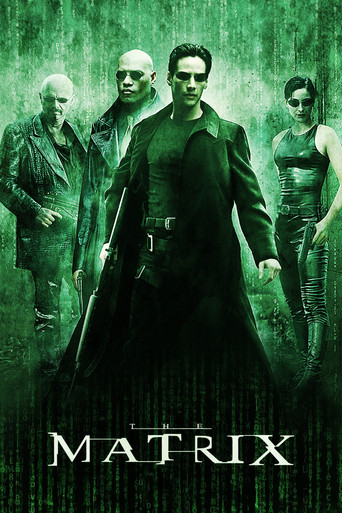



The Matrix
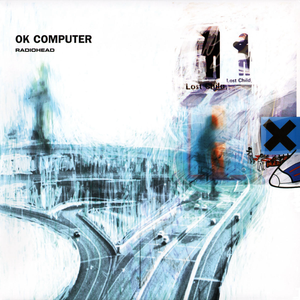
OK Computer
Cien años de soledad
Kyoto
The Legend of Zelda: Breath of the Wild
Mercury 2Mercury 2



The Shawshank Redemption
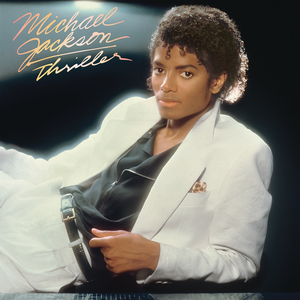
Thriller
Pride and Prejudice
Tokyo
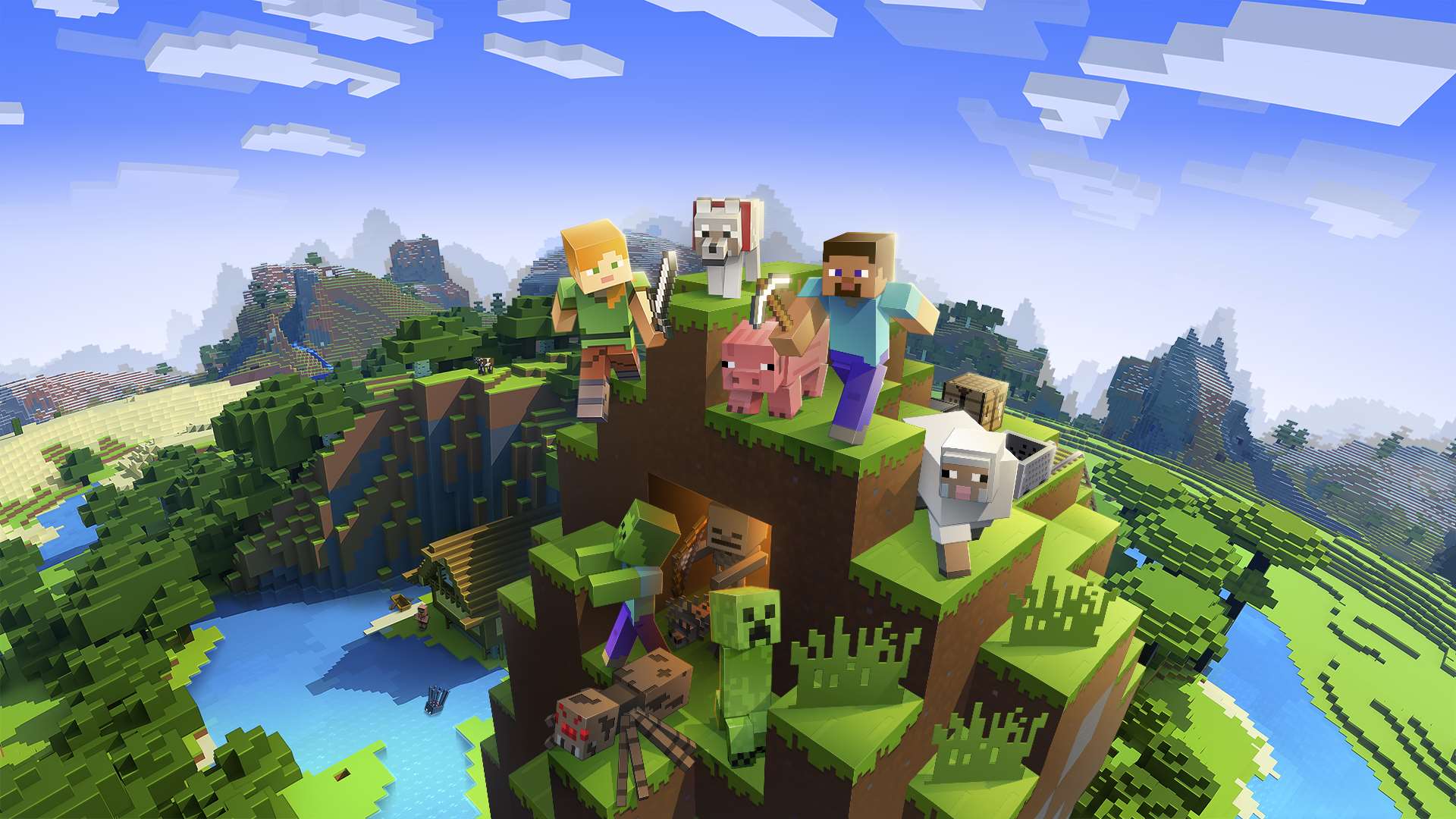
Minecraft
Price and specs
Not enough votes to call it. On the specs, GPT-5.6 Luna has the edge: newer, bigger context window, major provider backing. Mercury 2 costs 8.0x less per token.
| Spec | GPT-5.6 Luna | Mercury 2 |
|---|---|---|
| Input price | $1/M tokens | $0.25/M tokens |
| Output price | $6/M tokens | $0.75/M tokens |
| Context window | 1.1M tokens | 128K tokens |
| Weights | Closed | — |
| Free API (OpenRouter) | No | No |
| Released | Jul 2026 | Mar 2026 |
| At 10M a month | $10.00 | $2.50 |
Input tokens at list price. No caching, no batch discount.
Where to run it


Mercury 21 host
Per million tokens. Prices and uptime via OpenRouter, checked 10 Oct 2026.
Common questions
What is the difference between GPT-5.6 Luna and Mercury 2?
GPT-5.6 Luna is developed by OpenAI while Mercury 2 is developed by Inception. GPT-5.6 Luna has a 1.1M token context window vs Mercury 2's 128K. You can compare their actual outputs across 53 challenges on Rival to see how they differ in practice.
Which is better, GPT-5.6 Luna or Mercury 2?
It depends on your use case. GPT-5.6 Luna and Mercury 2 each have strengths in different areas. Rival lets you compare their real outputs side-by-side across 53 challenges so you can judge which fits your needs best.
How much does GPT-5.6 Luna cost compared to Mercury 2?
GPT-5.6 Luna costs $1/M input tokens and Mercury 2 costs $0.25/M input tokens. Mercury 2 is $0.75/M cheaper per input. Check their side-by-side outputs on Rival to see if the price difference is justified by quality.
How can I compare GPT-5.6 Luna and Mercury 2 on Rival?
This page shows a side-by-side comparison of GPT-5.6 Luna and Mercury 2 across shared challenges. You can vote on which model produced the better output in a blind duel. Browsing and voting are free. No account is needed to look; signing in only saves your votes and likes.
More comparisons
Against the newest arrivals
- GPT-5.6 Luna vs Step 5 PreviewLanded Oct 2026
- Mercury 2 vs Claude Haiku 5.5Landed Oct 2026
- GPT-5.6 Luna vs Ling 3.1 FlashLanded Oct 2026
- Mercury 2 vs Mistral Large 4Landed Oct 2026
- GPT-5.6 Luna vs GPT-6.1 SolLanded Sep 2026
- Mercury 2 vs Claude Sonnet 5.5Landed Sep 2026
- GPT-5.6 Luna vs Solar Mini 4Landed Sep 2026
- Mercury 2 vs Qwen3.8 Max PrimeLanded Sep 2026


Same lab, same size, long tail
- GPT-5.6 Luna vs GPT-5.6 Luna ProVersion compare
- GPT-5.6 Luna vs GPT-6 Luna ProSame lab
- Mercury 2 vs MercuryVersion compare
- Mercury 2 vs Mercury 2.5Same lab
- Mercury 2 vs MiniMax M2.7New provider
- Mercury 2 vs MiniMax M3New provider
- Mercury 2 vs Mistral LargeNew provider
- Mercury 2 vs Mistral Large 2New provider
